Home
About us
Destinations
Travel Guides
Recipes
Featured
Photos As Art
Abstract Prints
Locations
Travel Gear
Travel Resources
Favorites
Photo Framer
Explore Photos
Contact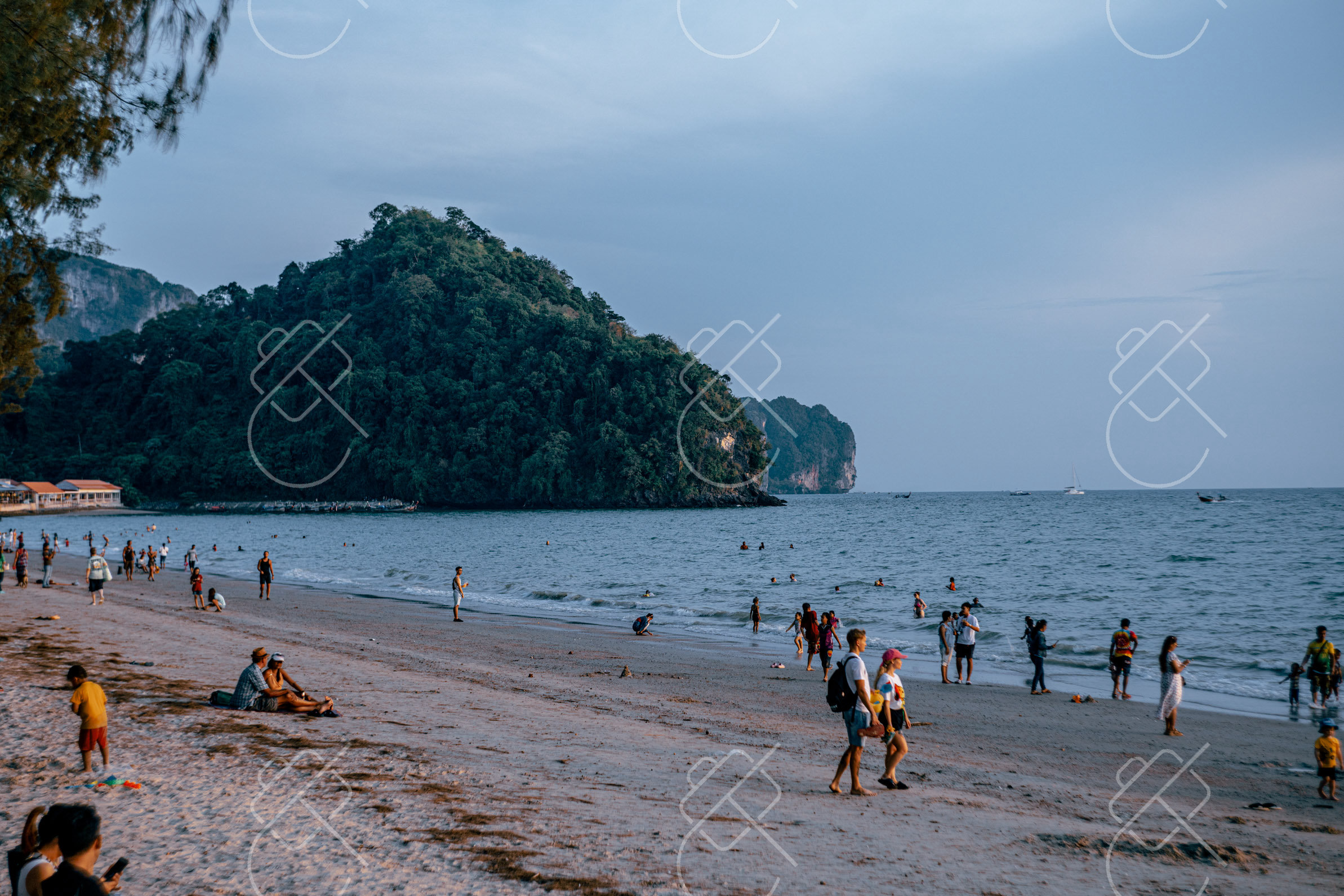 Destinations & Itineraries
From November 2022 to April 2023 we followed the warm, dry weather through five countries: the Philippines (8 November – 7 December), Thailand (7 December – 21 January, with New Year in Chiang Rai), Australia (21 January – 19 February), New Zealand's South Island (23 February – 18 March) and Japan from 18 March for the cherry blossom. For winter 2026–27 the same order still works, and each country's weather agency backs it up. The Philippine dry season runs December to May (PAGASA). Thailand's cool season lasts until about mid-February (TMD). Southern Australia and New Zealand are in summer from December to February. Tokyo's cherry trees usually open around 24 March (JMA). The one leg we would change is tropical Queensland in February: Cairns averages 436 mm of rain that month (BoM). Below is each leg with our dates, why the month works, the official climate figures and our itinerary pages for each country.
Published October 21, 2026
These are our real dates from the 526-day trip. The logic is to stay in each region during its best weather and leave before it turns: the tropics in their dry season, the southern hemisphere in its summer, then north to Japan as spring arrives.
• November to early December: the Philippines. Manila, then Palawan (Sabang, Port Barton, El Nido, Coron), then Cebu (Oslob, Moalboal, Cebu City).
• December to mid-January: Thailand. Bangkok, the old capitals (Ayutthaya, Lop Buri, Sukhothai), Lampang, Chiang Mai, Chiang Rai over New Year (28 December – 4 January), Mae Hong Son, then south to Khao Sok and Ao Nang, and back to Bangkok.
• Late January to mid-February: Australia. Melbourne (21–25 January), the Great Ocean Road at Apollo Bay, the Grampians at Halls Gap, Coonawarra, Adelaide, Alice Springs, then Queensland (Townsville, Magnetic Island, Cairns, the Daintree) and Sydney.
• Late February to mid-March: New Zealand's South Island. A self-drive loop from Christchurch via Lake Pukaki, Glenorchy, Te Anau, Milford Sound, Queenstown, Wanaka, Fox Glacier and Arthur's Pass.
• From mid-March: Japan. Tokyo from 18 March, then through the Alps to Kyoto, Osaka and Hiroshima.
It is the winter mirror of our where to travel this summer list.
PAGASA, the Philippine weather agency, divides the year into a rainy season from June to November and a dry season from December to May, which it splits into a cool dry season (December to February) and a hot dry season (March to May). It puts the peak of the typhoon season from July to October, with an average of 20 tropical cyclones a year in the Philippine Area of Responsibility.
We arrived on 8 November, at the tail of the rainy season, and left on 7 December as the dry season began. If you have the choice, December to February is the safer window for Palawan, where the island-hopping boats out of El Nido and Coron depend on calm seas; in November, plan a spare day in case tours are cancelled. Our El Nido guide and Coron guide give the same best months.
Our 4-week Philippines route lists every stop with its days, and the 2-week Palawan cut is the short version.
The Thai Meteorological Department dates the country's cool season (winter) from roughly mid-October to mid-February, when the northeast monsoon brings dry air from the north. In its winter outlook of 14 October 2026, as reported by the Thai press, TMD expects winter in upper Thailand to start around the third week of October 2026, about a week later than average, and end around mid-February 2027, with the coldest spell from late December to early February.
That is why we did the north first, in December and January: our Chiang Rai guide gives highs in the high 20s°C and mornings that can drop to around 10 to 13°C, and the agricultural burning that brings smoke to the north builds from February. We were in Chiang Rai from 28 December to 4 January, which is peak season, so book that week early.
The Andaman coast (Khao Sok, Ao Nang) came last, in mid-January, during its calm-sea months. The Gulf islands are the exception: the same monsoon brings heavy rain to the southern east coast in November and December, so a winter route ends on the Andaman side.
Our 6-week Thailand route has every stop, and Thailand in 2 weeks is the short version.
Australia in January and February is summer, but "warm" means three different things depending on where you are. These are Bureau of Meteorology station averages:
• Melbourne (Olympic Park): January mean maximum 26.8°C, minimum 16.5°C, 53 mm of rain. The record at this station only starts in 2013. Our Melbourne guide warns that summer weather there changes fast, so pack a layer.
• Alice Springs (airport): mean maximum 36.6°C in January and 35.3°C in February, with about 42 mm of rain a month and around 10 hours of sunshine a day. This is heat, not beach weather; plan walks for early morning.
• Cairns (airport): February mean maximum 31.3°C, but 436 mm of rain over about 16 rain days, the wettest month of the year. Townsville gets 313 mm in February. BoM's northern wet season runs from about October to April.
So the south (Melbourne, the Great Ocean Road, Adelaide) is at its best in January and February, and the tropical north is not. We went to Queensland in early February anyway. Our Tropical North Queensland guide is honest that May to October is better, both for drier weather and to avoid the November-to-May marine stinger season. If you want a winter route, put Queensland in the shoulder months, or swap it for more time in the south.
Late February into March is the end of the southern summer. NIWA's 1991–2020 averages give Christchurch a mean daily maximum of 22.2°C in February and 20.3°C in March, Queenstown 21.8°C and 19.1°C, and Lake Tekapo, near Lake Pukaki, 22.2°C in February. The days are warm and the nights cool.
The exception is the west of the Southern Alps. Milford Sound averages 467 mm of rain in February and 571 mm in March (about 6,545 mm a year), so take the fiord cruise in whatever weather you get. Heavy rain also brings out the waterfalls on the cliffs.
We spent 23 days on the South Island from 23 February to 18 March 2023. Our 23-day road trip itinerary has every stop and drive, the 10-day version is the short cut, and our Lake Pukaki guide covers the stop under Aoraki / Mount Cook.
We flew to Tokyo on 18 March 2023. That year the JMA's sample tree in Tokyo opened on 14 March and reached full bloom on 22 March, against the 1991–2020 normals of 24 March and 31 March. Further along our route, Kanazawa's trees reached full bloom on 30 March 2023, while we were there. March is still cool: Tokyo's normal March high is 14.2°C and its low 5.0°C (JMA).
For 2027, our cherry blossom forecast tracks the official forecasts as they come out, and our 33-day Japan itinerary is the route we took north to south through the Alps. If you'd rather go to Japan in the winter months themselves, see Japan in winter for the weather and New Year closures.
Shorter version for winter 2026–27: with one month, do Thailand's north and the Andaman coast in December and January. With two, put the Philippines (from December) in front of it. With three or more, add southern Australia and New Zealand for February and March, then finish in Japan in late March.
Read our guides to El Nido and Coron in the dry season, Melbourne in January and the Australian Open 2027, Chiang Mai haze, Morocco in winter, Nyepi 2027 in Bali and Venice Carnival 2027 before fixing dates.
Thailand and the Philippines are in their dry season, with Thailand's cool season lasting to about mid-February. Southern Australia is in summer: Melbourne's January mean maximum is 26.8°C. Avoid tropical Queensland if you want dry weather, since it is the wet season there.
It is the shoulder month. PAGASA's rainy season runs June to November and the dry season December to May, and the typhoon peak is July to October. We were there from 8 November, but December to February is the safer window for island-hopping boats in Palawan.
Cool rather than cold: highs in the high 20s°C, with mornings that can drop to about 10 to 13°C in Chiang Rai. TMD's 2026 outlook expects the coldest spell from late December to early February. Bring a jacket for the mornings.
Only if you accept wet-season weather. Bureau of Meteorology averages give Cairns 436 mm of rain over about 16 rain days in February, the wettest month, and marine stingers are present from November to May. May to October is the better time.
Late summer: NIWA averages give Christchurch a 20.3°C mean daily maximum in March and Queenstown 19.1°C. Milford Sound is very wet year-round, about 571 mm in March.
The JMA normal is 24 March for first flowering and 31 March for full bloom. In 2023, when we arrived on 18 March, Tokyo opened on 14 March and reached full bloom on 22 March, so check the forecast for the year you go.
Entry rules change, and they depend on your nationality — always confirm the current requirements on the official government site before you book or apply. Only use official government (.gov) portals; ignore look-alike agency sites.
Search verified local fleets with low security deposits and exact model delivery on Localrent.
Get the best deals on flights to Thailand with Expedia.