Home
About us
Destinations
Travel Guides
Recipes
Featured
Photos As Art
Abstract Prints
Locations
Travel Gear
Travel Resources
Favorites
Photo Framer
Explore Photos
ContactChiang Rai is Thailand's northernmost province capital, a relaxed river town three hours past Chiang Mai that punches far above its size thanks to three modern art temples: the all-white Wat Rong Khun, the sapphire Wat Rong Suea Ten, and Thawan Duchanee's dark Baan Dam. Between them sit a gilded clock tower, an easygoing night bazaar, and some of the best khao soi in the north. This guide covers what to see, what it costs, when to go, and how to fit it into two days.
Published October 13, 2026
Tap any photo to open it full-screen and order a print.
Two days is right for Chiang Rai: one day for the White Temple, the Blue Temple, and the Black House (they sit south and north of town, so a hired driver or Grab hop between them works best), and one for a day trip north to the Golden Triangle and Mae Sai. Many people try it as a long day trip from Chiang Mai, but at about three hours each way by bus that leaves you rushing the temples and missing the night bazaar and the clock tower after dark. Stay at least one night.
November to January is Chiang Rai's best season: dry, sunny, and cool enough that you'll want a jacket in the early mornings. February to April brings heat and, increasingly, smoke from agricultural burning that can cut visibility and air quality badly. The rainy season from May to October is green and quiet, with lower prices.
Daytime highs in the high 20s°C and mornings that can drop near 10-13°C, especially in the hills. Skies are clear and the temples photograph best; it's also peak season, so book around Christmas and New Year, when the clock-tower area hosts a countdown party.
Temperatures climb into the mid-30s°C, and field burning across northern Thailand and its neighbors often pushes PM2.5 pollution to unhealthy levels, peaking in March. Check an air-quality app before booking; Songkran (13-15 April) brings water fights to town.
Showers arrive mostly in the afternoons and clear the smoke, rice paddies turn green, and hotel prices fall. Mornings are usually fine for the temples.
The wettest stretch, with heavier, longer rain in August and September and occasional flooding along the Kok River. October dries out toward the end of the month and is a good-value shoulder month.
Wat Rong Khun (White Temple) — Chalermchai Kositpipat's mirrored white temple, under construction since 1997; 200 baht for foreigners since January 2026.
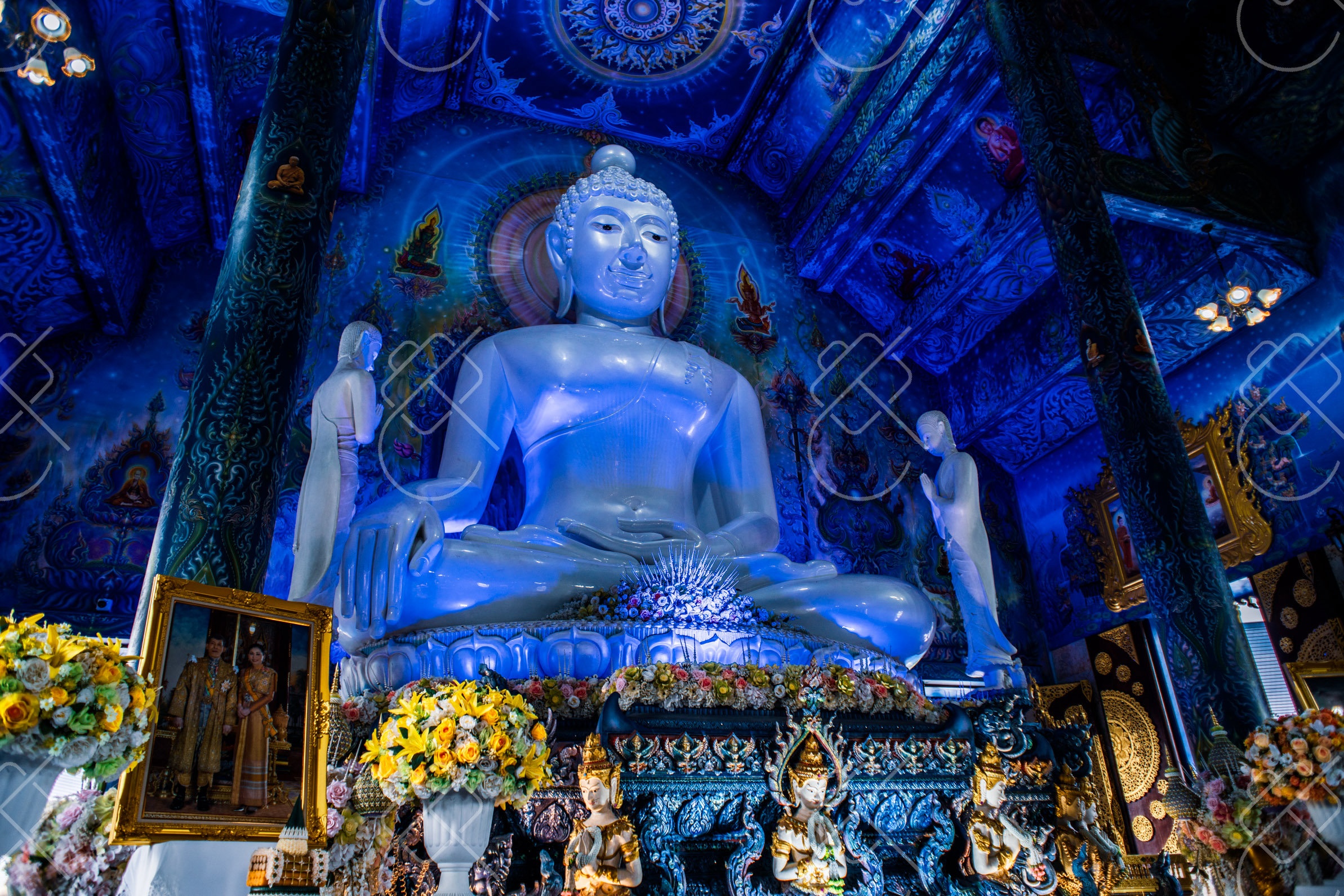
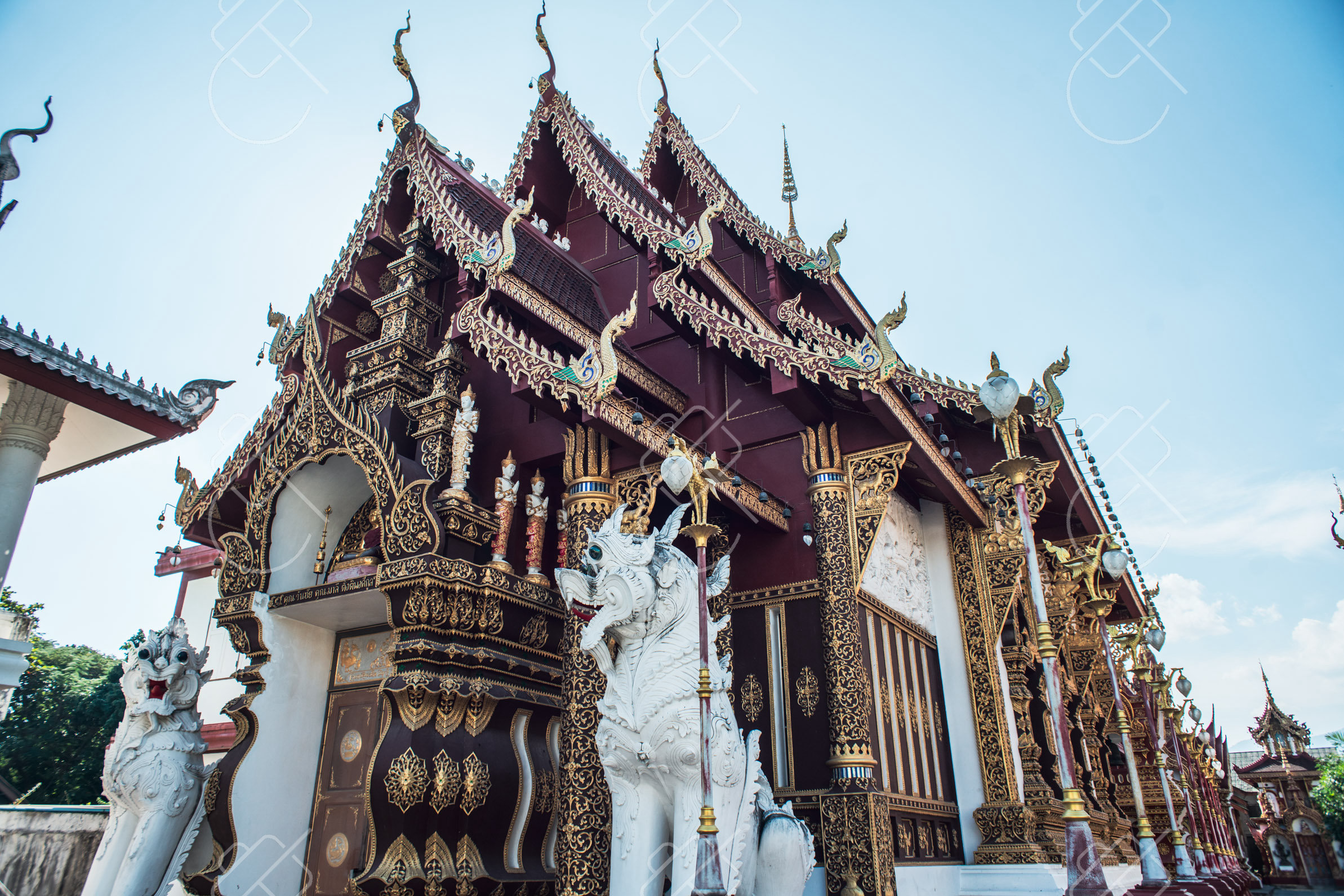
Wat Rong Suea Ten (Blue Temple) — A sapphire-and-gold temple finished in 2016, with a white Buddha glowing inside a deep-blue hall; free.
Baan Dam (Black House) — Artist Thawan Duchanee's compound of some 40 dark teak buildings full of horns, skins, and bones; around 80 baht.
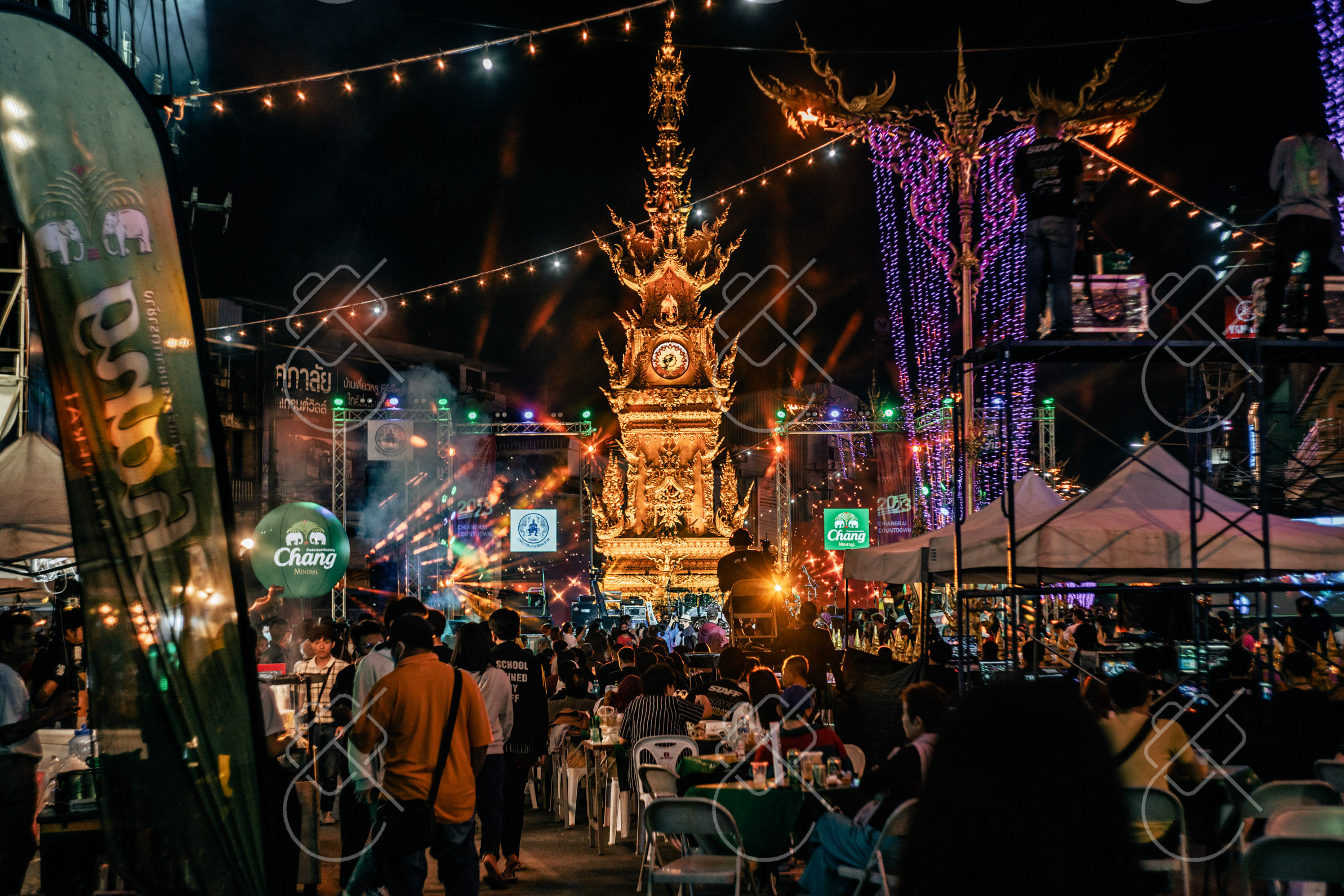
Chiang Rai Clock Tower — A gilded tower by the White Temple's architect, lit up in a color-changing show in the evenings.
Golden Triangle (Sop Ruak) — The point where Thailand, Laos, and Myanmar meet on the Mekong, about 70 km north, with the Hall of Opium museum.
Night Bazaar — The nightly market off Phaholyothin Road, with a food court, crafts, and a stage of folk dancers.
Wat Huay Pla Kang — A nine-tiered pagoda and a towering white Guanyin statue on a hillside just northwest of town.
Wat Phra Kaew Chiang Rai — Where the Emerald Buddha was found in 1434, when lightning cracked open a chedi; quiet and central.
Saturday Walking Street — Thanalai Road closes to traffic on Saturday evenings for food stalls, handicrafts, and street musicians.
Chiang Rai is a small, unhurried city on the Kok River near the borders with Laos and Myanmar, founded in 1262 as the first capital of the Lanna kingdom and now best known for its trio of extravagant modern temples.
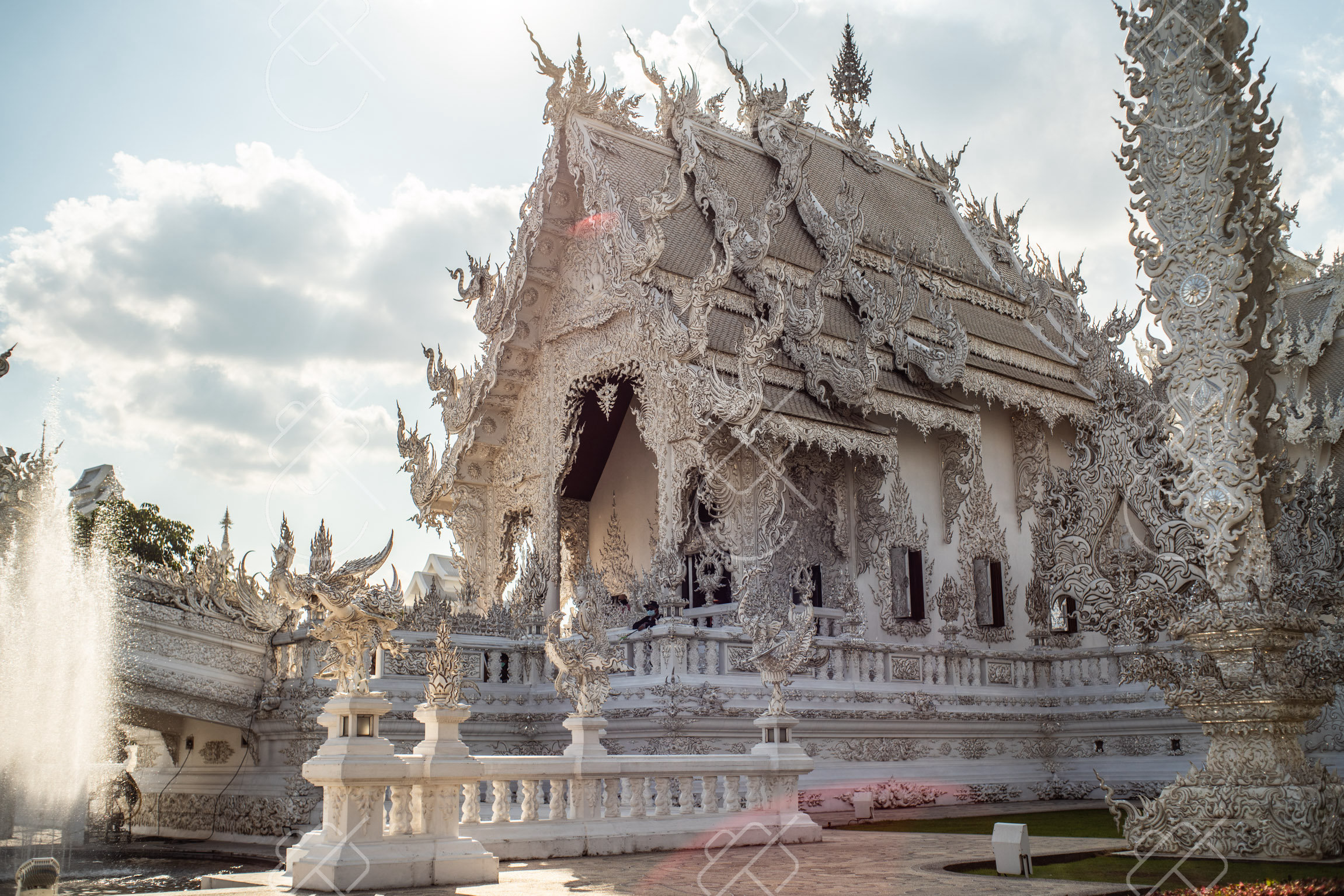
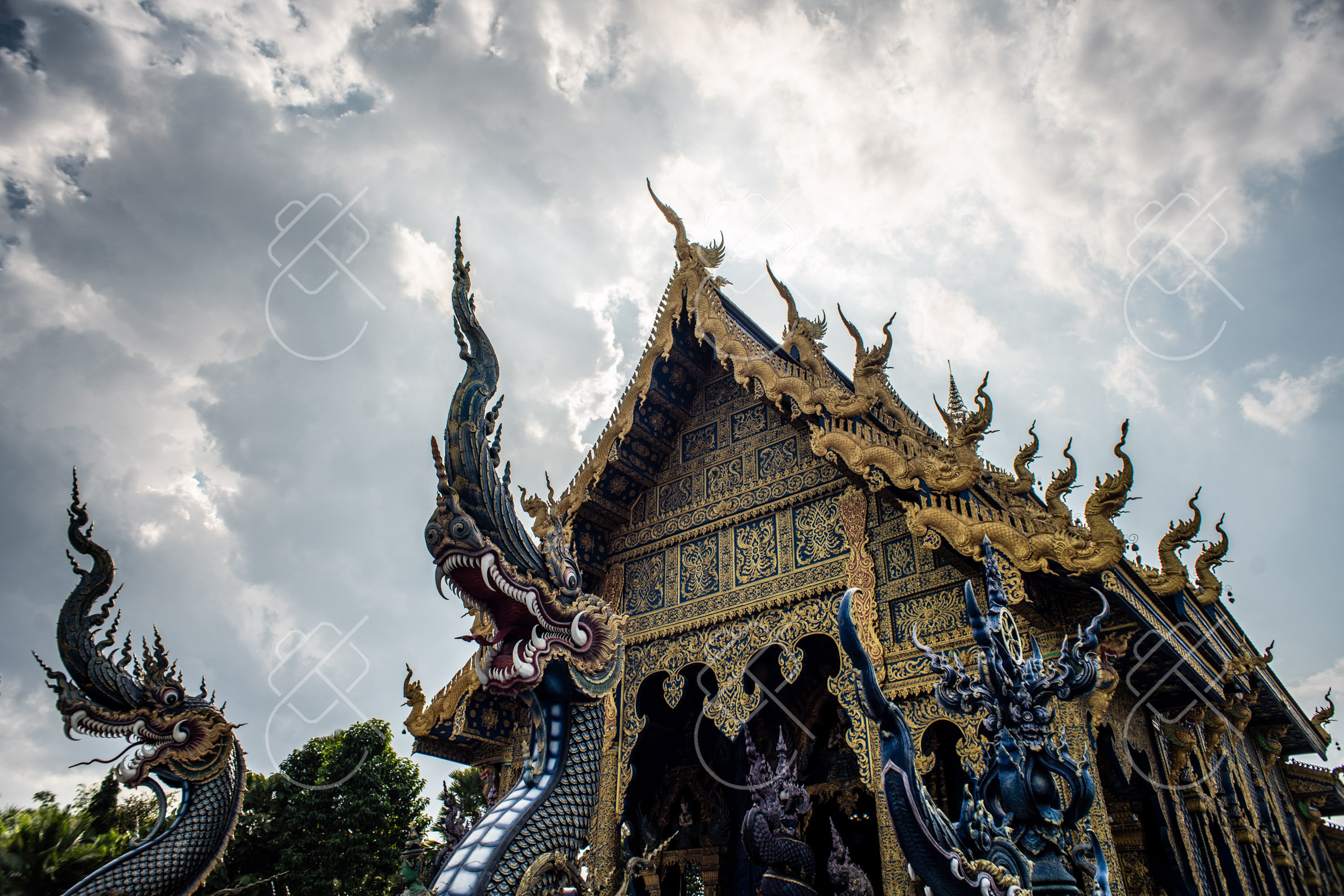
The White Temple, Wat Rong Khun, sits about 13 km south of town and is the reason most visitors come. The local artist Chalermchai Kositpipat began rebuilding a run-down village temple here in 1997 and plans for the work to run decades past his own lifetime: everything is white plaster set with mirrored glass, reached by a bridge over a pit of sculpted hands reaching up from hell. Inside the ubosot (photos banned), murals of demons share the walls with Spider-Man, Neo from The Matrix, and a burning World Trade Center. Since 1 January 2026 foreigners pay 200 baht (up from 100), and the gates are open roughly 8am to 5:30pm; arrive at opening, before tour vans from Chiang Mai land around 10am. Back toward the city, the Blue Temple, Wat Rong Suea Ten, was built from 2005 to 2016 by Phuttha Kabkaew, a former student of Chalermchai, on the ruins of an abandoned temple. It is free, open into the evening, and its interior, a white Buddha set against deep-blue walls, is one of the most photographed rooms in Thailand.
The white ubosot of Wat Rong Khun, every gable crusted with plaster flames and mirrored glass
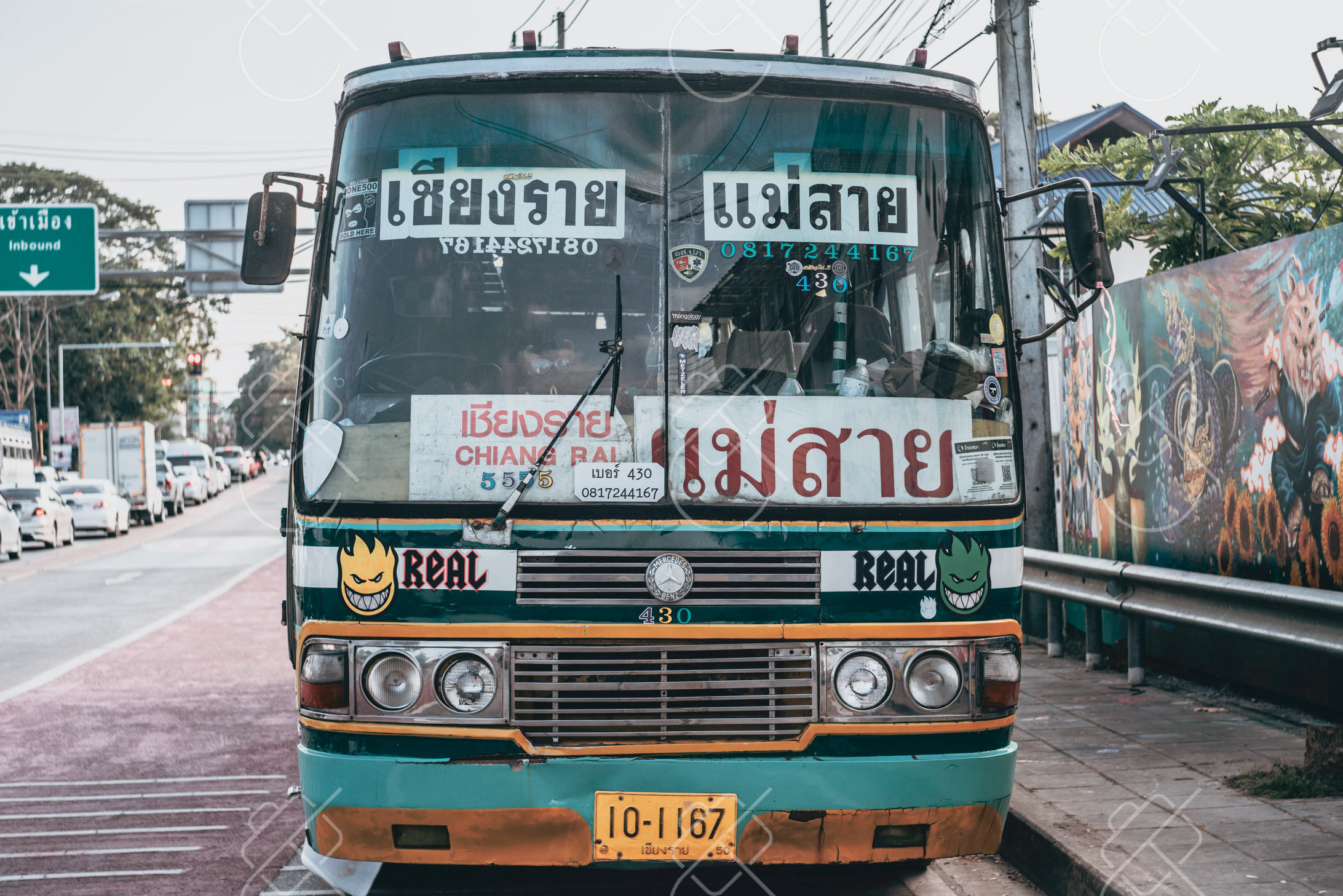
North of town, Baan Dam (the Black House) is the opposite mood: around 40 dark teak and stone buildings created by the painter Thawan Duchanee, who died in 2014, filled with buffalo horns, crocodile skins, snake skeletons, and long carved tables. Entry is around 80 baht and it opens roughly 9am to 5pm. In the center, the gilded clock tower at the junction of Banphaprakan and Jetyod roads, also designed by Chalermchai and unveiled in 2008, lights up in shifting colors a few times each evening, and the Night Bazaar a few blocks east fills its food court with hot-pot grills and khao soi stalls. Chiang Rai's old city is a five-minute walk between them, and green local buses to the Myanmar border at Mae Sai leave from Bus Terminal 1 beside the bazaar. On Saturday evenings, Thanalai Road closes to traffic for the walking street, which is better for food than the Night Bazaar itself.
November through January, when skies are clear and the mornings cool; avoid March if you can, when the smoke haze from the burning season is usually at its worst.
Stay in the compact center between the clock tower and the Night Bazaar, close to Bus Terminal 1, for walking access to dinner, the evening light show, and the buses north.
Order khao soi, the coconut-curry egg-noodle soup topped with crispy noodles, plus sai oua, the herb-packed northern Thai sausage, and finish with a pineapple from nearby Nang Lae, which locals rate as Thailand's sweetest.
Do the White Temple at 8am opening, the Black House after it reopens from any lunch break, and the Blue Temple last, since it stays open until around 8pm and its blues glow under the evening lights.
A loose, walkable route — bend it to your pace and the light.
Take a Grab or hired driver south to the White Temple for its 8am opening, and give it 60-90 minutes: the bridge over the reaching hands, the murals inside, and the lavishly gold building that is, famously, the toilet block. Head back through town for lunch and a bowl of khao soi, then continue 13 km north to Baan Dam for the Black House's dark halls and bone-strewn tables.
Finish at the Blue Temple in the late afternoon, when the crowds thin and the sapphire walls start to glow. Back in the center, catch the clock tower's light show after dark, then walk to the Night Bazaar for dinner at the food court.
Where to shoot: The White Temple's bridge and reflecting pond · The sea of sculpted hands below the bridge · The Blue Temple's white Buddha · The clock tower lit up at night
Tip: Cover shoulders and knees at all three sites, and carry small bills: the White Temple's ticket booth and most drivers prefer exact change.
Head north early for the Golden Triangle at Sop Ruak, about 70 km away, where the Mekong and Ruak rivers mark the meeting point of Thailand, Laos, and Myanmar. The Hall of Opium museum explains why the region became the world's opium heartland, and longtail boats run short trips on the Mekong from the riverfront.
On the way back, stop at the border market in Mae Sai (check the current rules before planning to cross into Tachileik, since day-crossing rules for foreigners here change often), then return to town for the Saturday Walking Street if it's the weekend, or Wat Huay Pla Kang's giant white Guanyin statue at sunset if it isn't.
Where to shoot: The three-country viewpoint at Sop Ruak · Longtail boats on the Mekong · The Mae Sai border gate · Wat Huay Pla Kang at sunset
Tip: Hiring a car and driver for the day is the easiest way to combine Sop Ruak, Mae Sai, and Doi Tung; local green buses reach Mae Sai cheaply but don't connect well to the Golden Triangle.
With a third day, drive up to Doi Mae Salong, a hill village settled by Chinese Nationalist soldiers after 1949 and now covered in oolong tea terraces, or to Doi Tung for the Mae Fah Luang Garden and the Royal Villa. Chiang Saen, on the Mekong near the Golden Triangle, has 14th-century Lanna ruins, and Phu Chi Fa on the Lao border is the classic sunrise sea-of-clouds viewpoint in the cool season. Chiang Mai is about three to three and a half hours away by Green Bus if you're continuing south.
Get the best deals on a hotel in Chiang Rai before you book elsewhere — Booking.com.
Transit cards, local customs, visa rules, and practical travel guides for this region.
See every destination from the 526-day journey:
Browse all destinationsCurious about the gear behind these photos? See the gear list.