
Home
About us
Destinations
Travel Guides
Recipes
Featured
Photos As Art
Abstract Prints
Locations
Travel Gear
Travel Resources
Favorites
Photo Framer
Explore Photos
ContactSoutheast Asia packs an unusually dense run of sights into a warm, tropical band of countries. Thailand offers gilded Buddhist temples, floating markets and southern islands; Vietnam threads a long, narrow country from karst bays in the north to the Mekong Delta in the south; Indonesia stretches across thousands of islands of volcanoes, temples and terraced rice; and the Philippines scatters limestone islands and coral seas across more than seven thousand islands. The climate divides the year into wet and dry seasons rather than four, so timing a trip is mostly a matter of avoiding the monsoon — which varies from country to country and even region to region.
Published September 10, 2025
Tap any photo to open it full-screen and order a print.
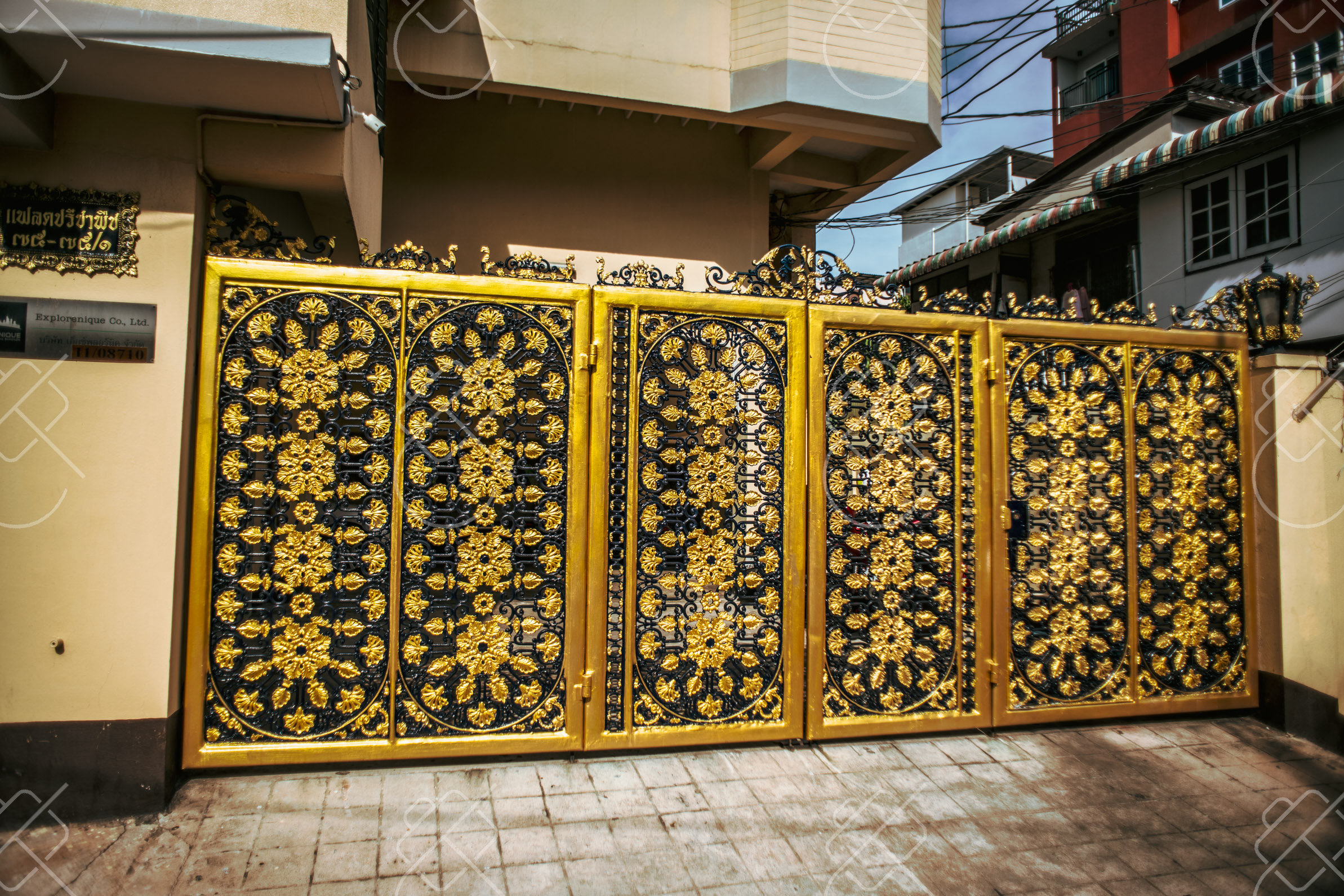
Thailand ranges from the gilded temples and canals of Bangkok through the mountain-ringed old city of Chiang Mai to the limestone bays and beaches of the south. Buddhist temples, ornate and gold-spired, appear at every turn, and the country's tropical islands and karst seascapes rank among the most beautiful in Asia.
Bangkok concentrates the country's grandest temples: the Grand Palace and the adjoining Wat Phra Kaew, the spired riverside Wat Arun that glows at sunset, and the reclining Buddha of Wat Pho. The city also offers floating markets, the tangle of canals known as klongs, and night markets. North, Chiang Mai sits ringed by mountains and dotted with hundreds of temples, including the hilltop Wat Phra That Doi Suthep, and serves as the gateway to elephant sanctuaries and hill-tribe country.
The south is made for the coast. The Andaman shore around Krabi, Phang Nga Bay and the Phi Phi islands is defined by sheer limestone karst rising straight from turquoise water, while the Gulf islands such as Koh Samui and Koh Tao offer calmer beaches. The two coasts have opposite weather patterns, so one side is usually in its dry season while the other is wet — a useful fact when planning a beach itinerary.
November–February is the cool, dry peak season ideal for beaches and temples, with April's Songkran water festival a highlight; the May–October rains bring lush landscapes and lower prices.
In Bangkok, stay near the river or the Old City (Rattanakosin) to reach the major temples easily; in the south, Krabi or Ao Nang makes a practical base for the karst bays and island day trips.
Thai cooking balances sweet, sour, salty and spicy: pad thai and green curry are widely known, but regional dishes such as northern khao soi, the salad som tam, and mango sticky rice reward exploring the street stalls and markets.
Temples enforce a strict dress code covering shoulders and knees, and shoes must be removed before entering halls; carry a light scarf or sarong, which keeps you covered for entry and doubles as a sun shade.
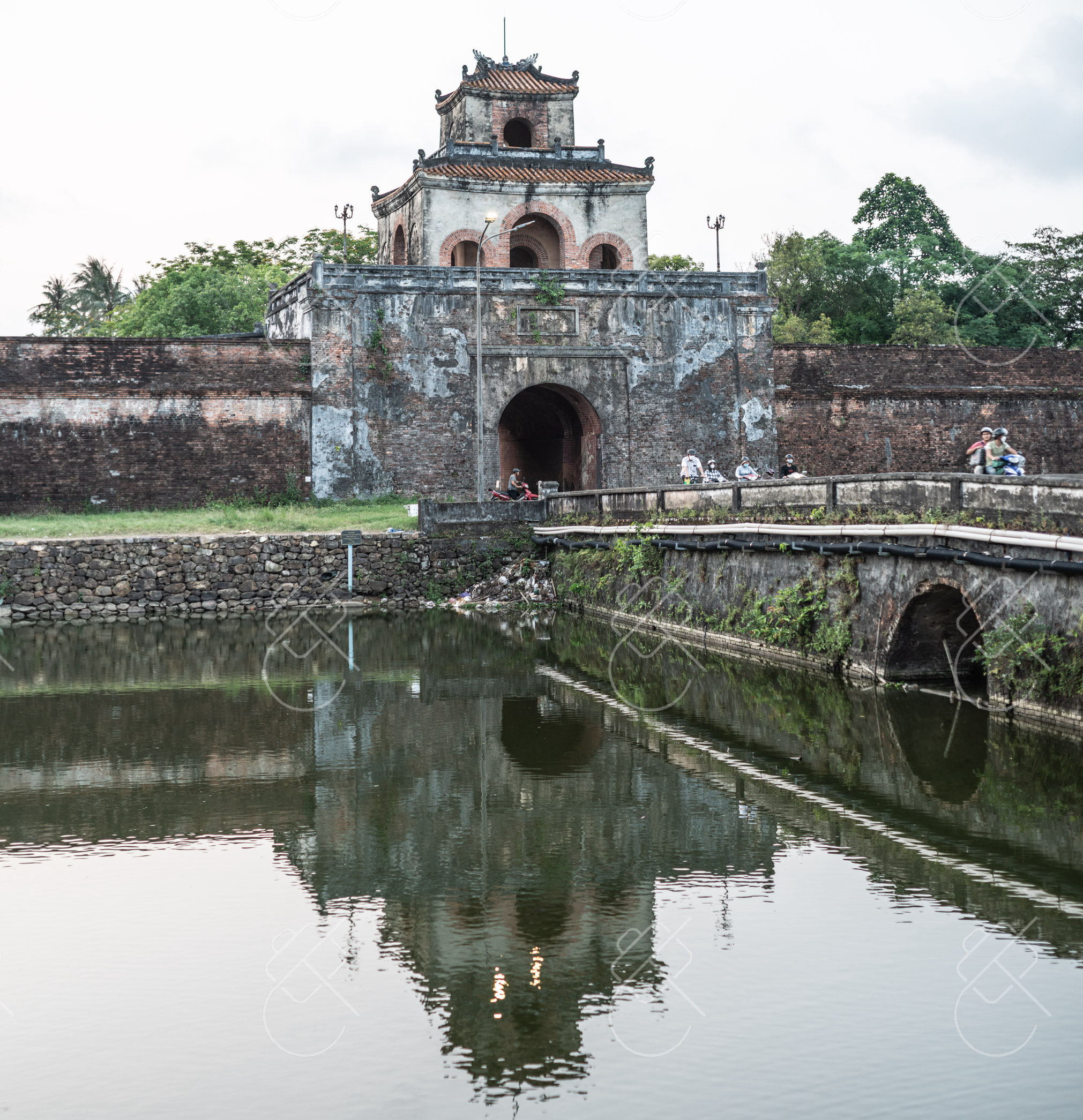
From the karst seascape of Ha Long Bay and the terraced rice mountains of the north, through the imperial city of Hue and the lantern-lit town of Hoi An in the center, down to the canals and floating markets of the Mekong Delta in the south, Vietnam covers an enormous amount of ground for one country. The contrast between bustling motorbike-filled cities and quiet rural landscapes is the recurring theme.
The north holds Vietnam's signature scenes. Ha Long Bay and the neighboring Lan Ha Bay are seas of forested limestone islands rising from jade-green water, usually explored from cruise boats or kayaks. Inland, the mountain regions of Sapa and Ha Giang terrace entire hillsides into rice paddies that turn gold before the autumn harvest, worked by ethnic-minority communities. Hanoi, the capital, layers a chaotic Old Quarter, colonial-era architecture and lakeside temples.
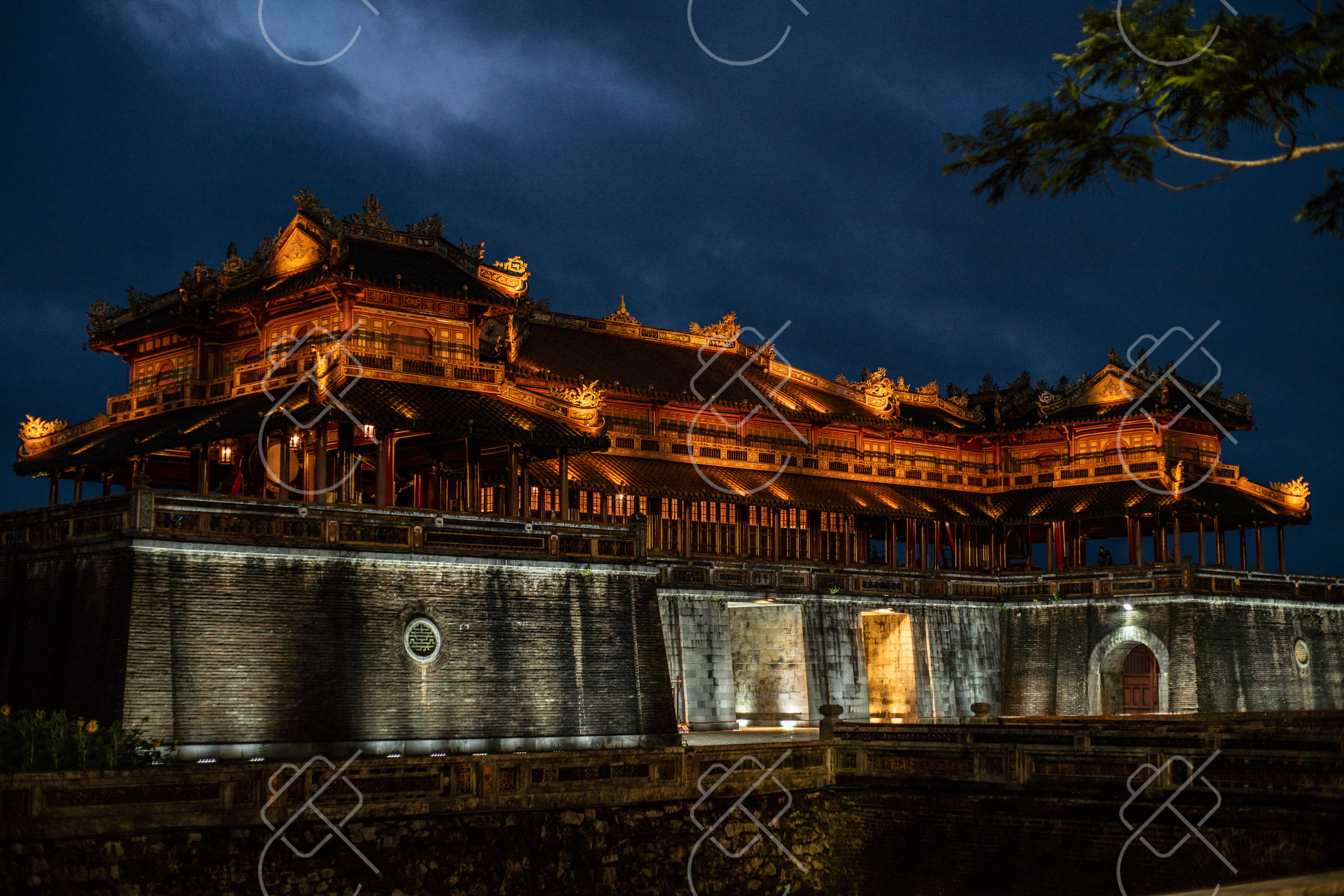
Central and southern Vietnam shift the mood again. Hoi An preserves a UNESCO-listed old town of yellow merchant houses strung with silk lanterns, glowing at night and mirrored in the river. Hue holds the moated Imperial City of the Nguyen dynasty. Far south, Ho Chi Minh City pulses with traffic and markets, and the Mekong Delta spreads into a network of canals, floating markets and palm-lined waterways.
The country spans climates, but spring (February–April) and autumn (September–November) generally offer the most pleasant nationwide weather; visit the north for cool dry winters and the south year-round.
Stay in Hanoi's Old Quarter for the northern sights and Ha Long cruises; Hoi An's old town or nearby beach is the most charming central base, an easy day trip from Hue and Da Nang.
Vietnamese food is fresh and herb-forward: the noodle soup pho, the baguette sandwich banh mi, fresh spring rolls, and Hue's spicy bun bo Hue, with strong regional differences from north to south.
Crossing the street amid Vietnam's constant motorbike traffic is an adventure in itself; to watch the flow in safety, settle on an elevated cafe balcony above a busy intersection and take in the swarm below.
Ha Long Bay and the neighboring Lan Ha Bay are seas of forested limestone islands rising from jade-green water, usually explored from cruise boats or kayaks.
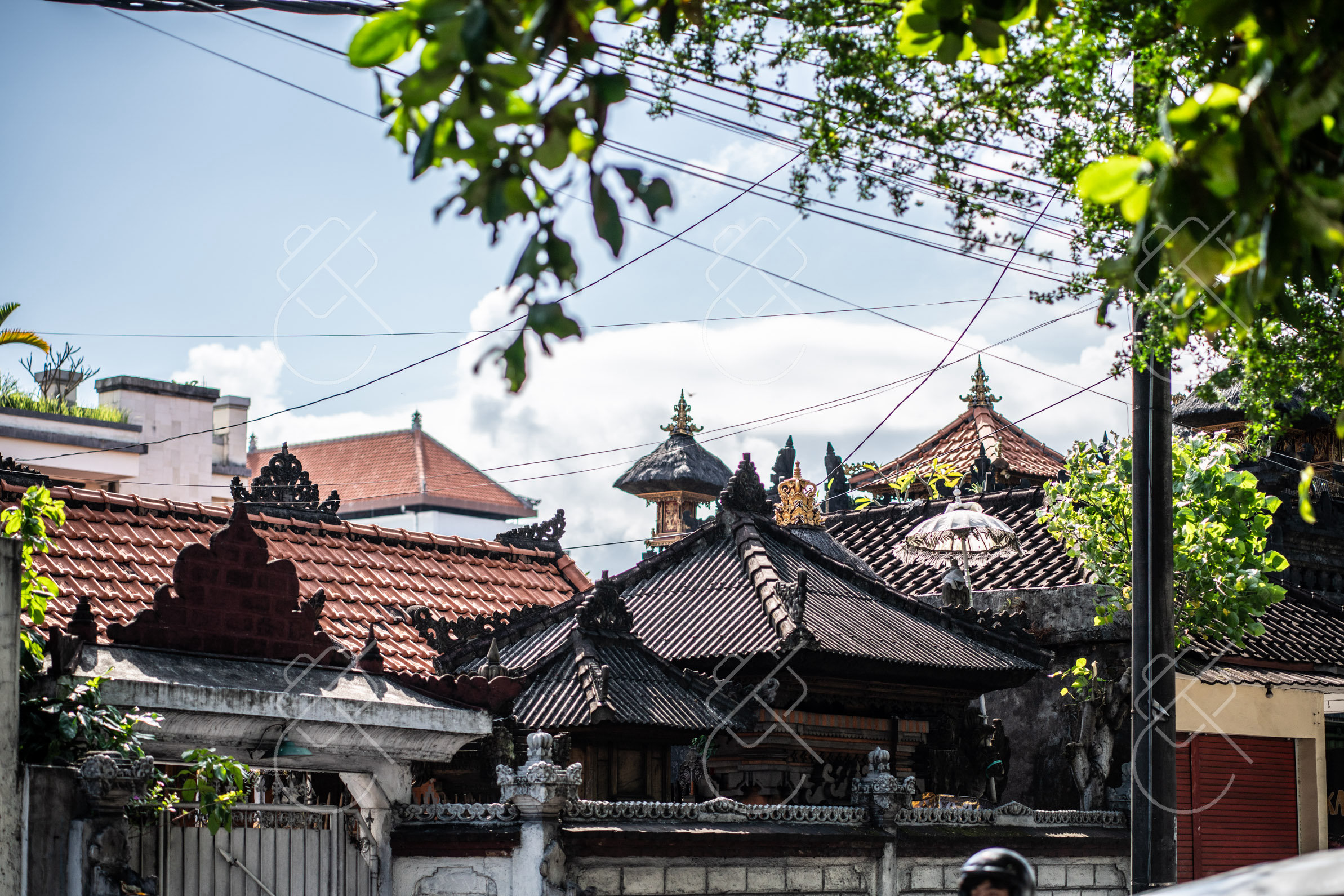
Indonesia spans thousands of islands of active volcanoes, ancient temples and terraced rice fields. Bali concentrates Hindu temples, green rice terraces and surf beaches, while Java holds the vast Buddhist temple of Borobudur and the dramatic volcanic landscapes of Bromo and Ijen. The archipelago straddles the equator, so it stays warm year-round and splits into wet and dry seasons.
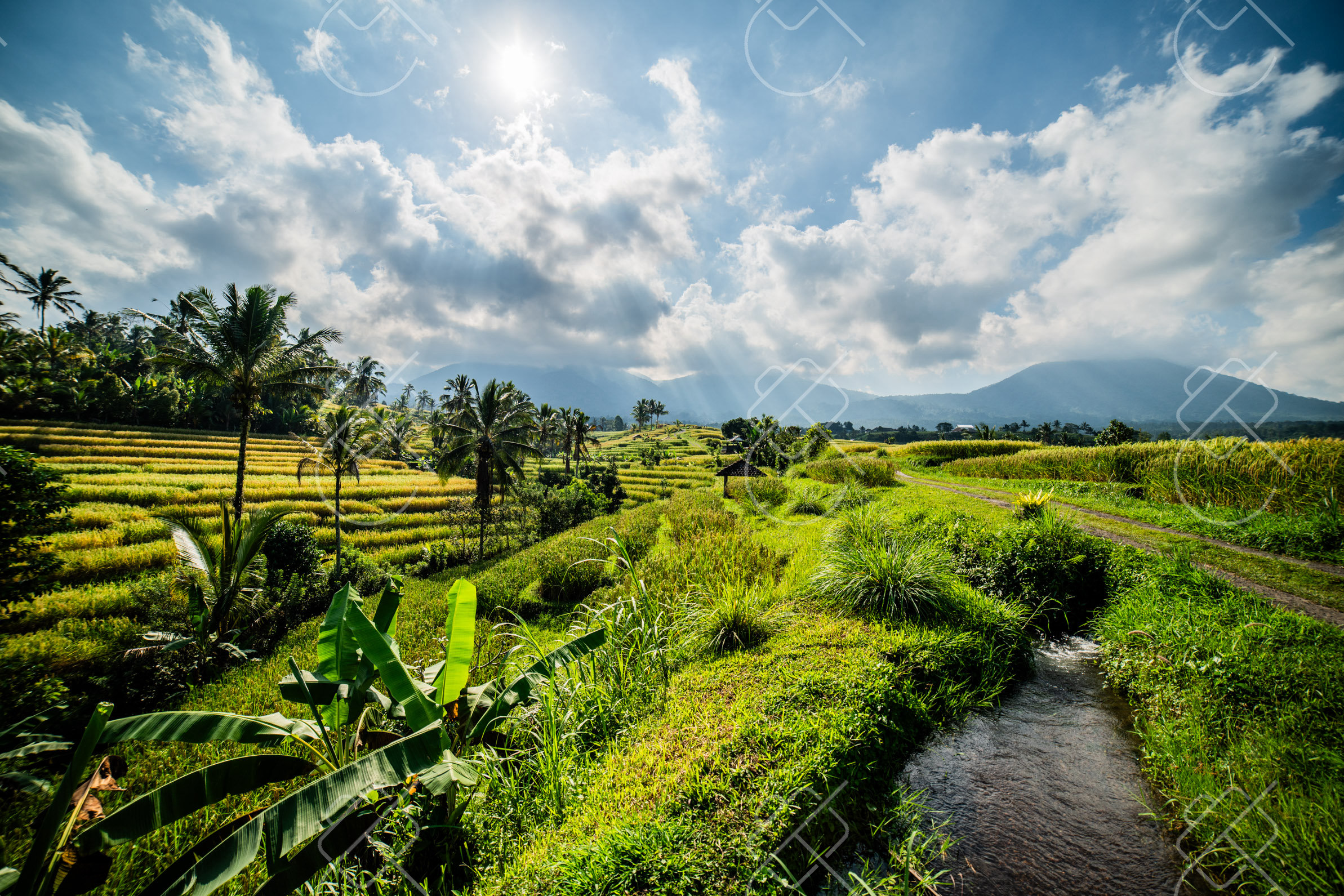
Bali is the most-visited island and the most temple-dense, from the sea temple of Tanah Lot silhouetted at sunset to the lake temple of Ulun Danu Beratan and the layered Hindu shrines of Besakih on the slopes of Mount Agung. The terraced rice fields at Tegalalang and Jatiluwih, the Tukad Cepung waterfall and the gateway of Lempuyang draw much of Bali's traffic, while Ubud serves as the cultural and inland hub.
Java holds some of Indonesia's most powerful landscapes. Borobudur, the world's largest Buddhist temple, is a vast stone mandala that emerges at sunrise from mist with distant volcanoes behind it, and the nearby Prambanan is a soaring Hindu complex. To the east, the Bromo-Tengger-Semeru region presents a smoking cone in a sea of volcanic sand, viewed from a clifftop at dawn, and the Ijen volcano is known for its blue sulfur flames and a turquoise crater lake.
April–October is the dry season, ideal for Bali's beaches and exploring islands and volcanoes, while the November–March wet season brings downpours but greener scenery and quieter, cheaper travel.
On Bali, Ubud suits temples, rice terraces and culture while the southern beaches suit surf and coast; on Java, base near Yogyakarta for Borobudur and Prambanan.
Indonesian staples include nasi goreng and mie goreng (fried rice and noodles), satay skewers with peanut sauce, the rich beef rendang, and Bali's ceremonial spit-roast pig, babi guling.
The volcanoes at Bromo and Ijen and the sunrise at Borobudur all demand very early starts, often before dawn; build those pre-sunrise hikes into the plan, since the views cloud over and the crowds build through the morning.
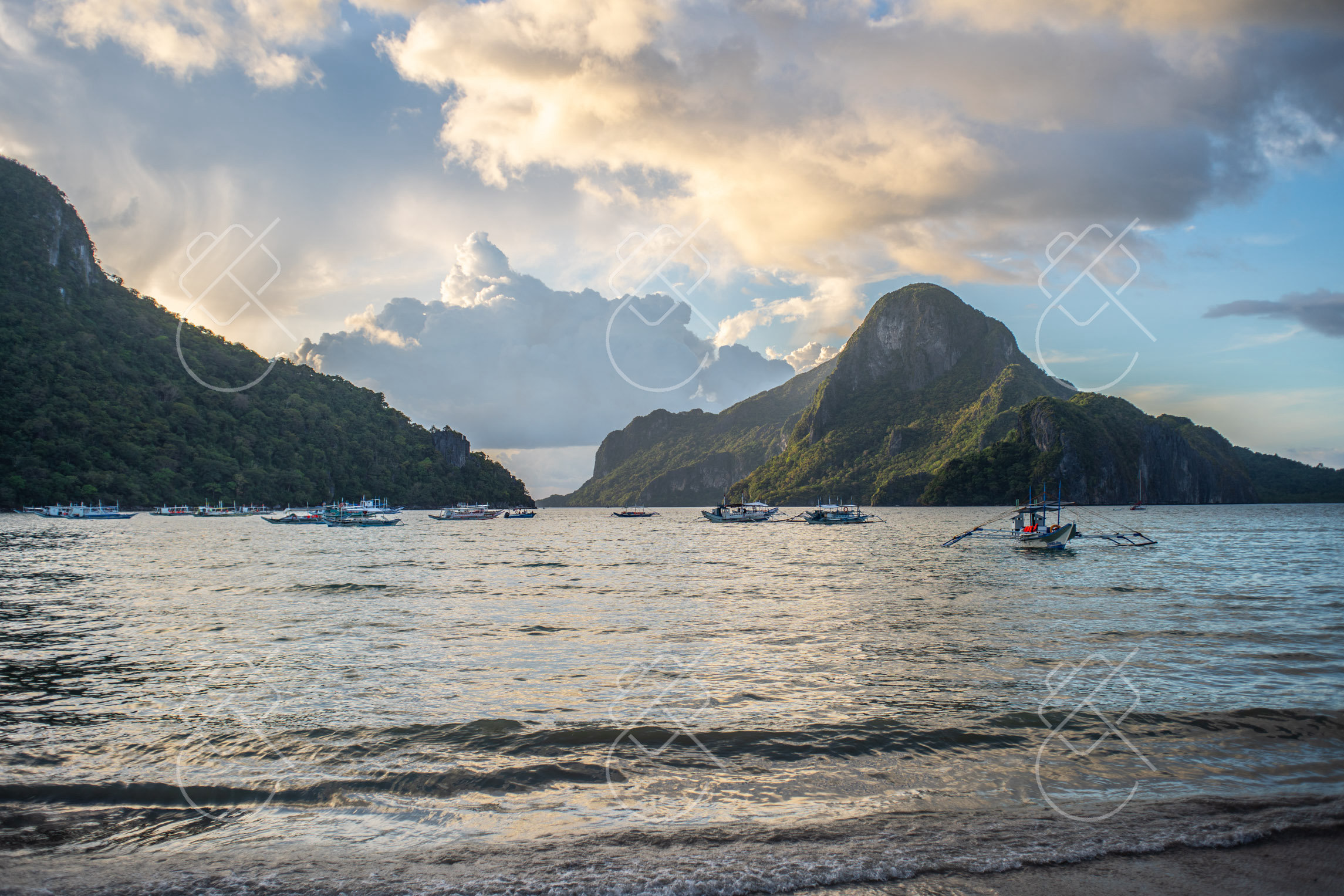
The Philippines comprises more than 7,000 islands and is defined by its seascapes: the limestone lagoons of Palawan, the coral reefs and white sand of the central Visayas, and the ancient mountain rice terraces of northern Luzon. English is widely spoken, and the country sits squarely in the tropics with a pronounced wet season.
Palawan holds the country's most celebrated coastal scenery. El Nido and the surrounding Bacuit Bay are a maze of sheer limestone islands, hidden lagoons and white beaches explored by boat, while the underground river near Puerto Princesa and the remote lagoons of Coron add to the archipelago's pull. The water clarity and karst formations make it one of the great coastal destinations in Asia.
Beyond Palawan, the islands diversify. The central Visayas offer the Chocolate Hills of Bohol — hundreds of rounded mounds that turn brown in the dry season — along with diving and whale-shark encounters around Cebu. In northern Luzon, the Banaue and Batad rice terraces, carved into the mountains by the Ifugao people over centuries, climb in vast amphitheaters that are greenest before the harvest.
November–April is the dry season and prime time for island-hopping and beaches, with festivals like January's Sinulog; avoid the June–October typhoon and rainy months for the steadiest conditions.
El Nido is the natural base for Palawan's lagoons and island-hopping; for the rice terraces, stay in or near Banaue and Batad, and use Cebu or Bohol as a base for the central Visayas.
Filipino cooking is savory and often tangy: adobo (meat braised in vinegar and soy), the sour soup sinigang, lechon (whole roast pig), and fresh grilled seafood throughout the coastal islands.
Island-hopping boats in Palawan and the Visayas throw salt spray and bright reflected light over everything aboard, so bring a dry bag to protect your gear and stash anything you want to keep clear of the water.
Hoi An preserves a UNESCO-listed old town of yellow merchant houses strung with silk lanterns, glowing at night and mirrored in the river.
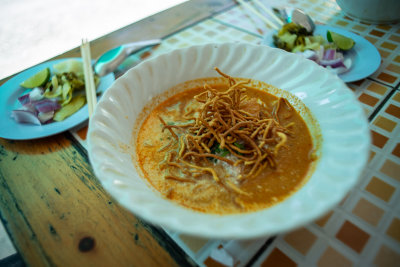
A bowl of khao soi, a golden coconut-curry noodle soup topped with crispy fried noodles and served with pickled greens. It is the signature dish of Chiang Mai and northern Thailand.
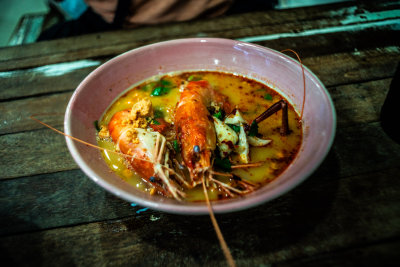
A creamy bowl of tom yum goong crowned with a whole river prawn, fragrant with lemongrass, chili and herbs. This hot-and-sour soup is one of Thailand's most iconic dishes.
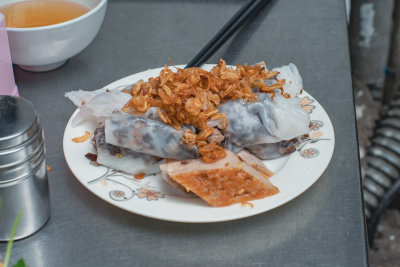
Bánh cuốn are delicate steamed rice-flour crêpes rolled around minced pork and wood-ear mushrooms, topped with fried shallots and served with nuoc cham.
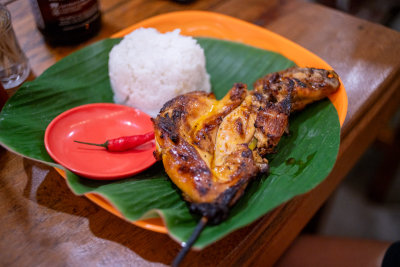
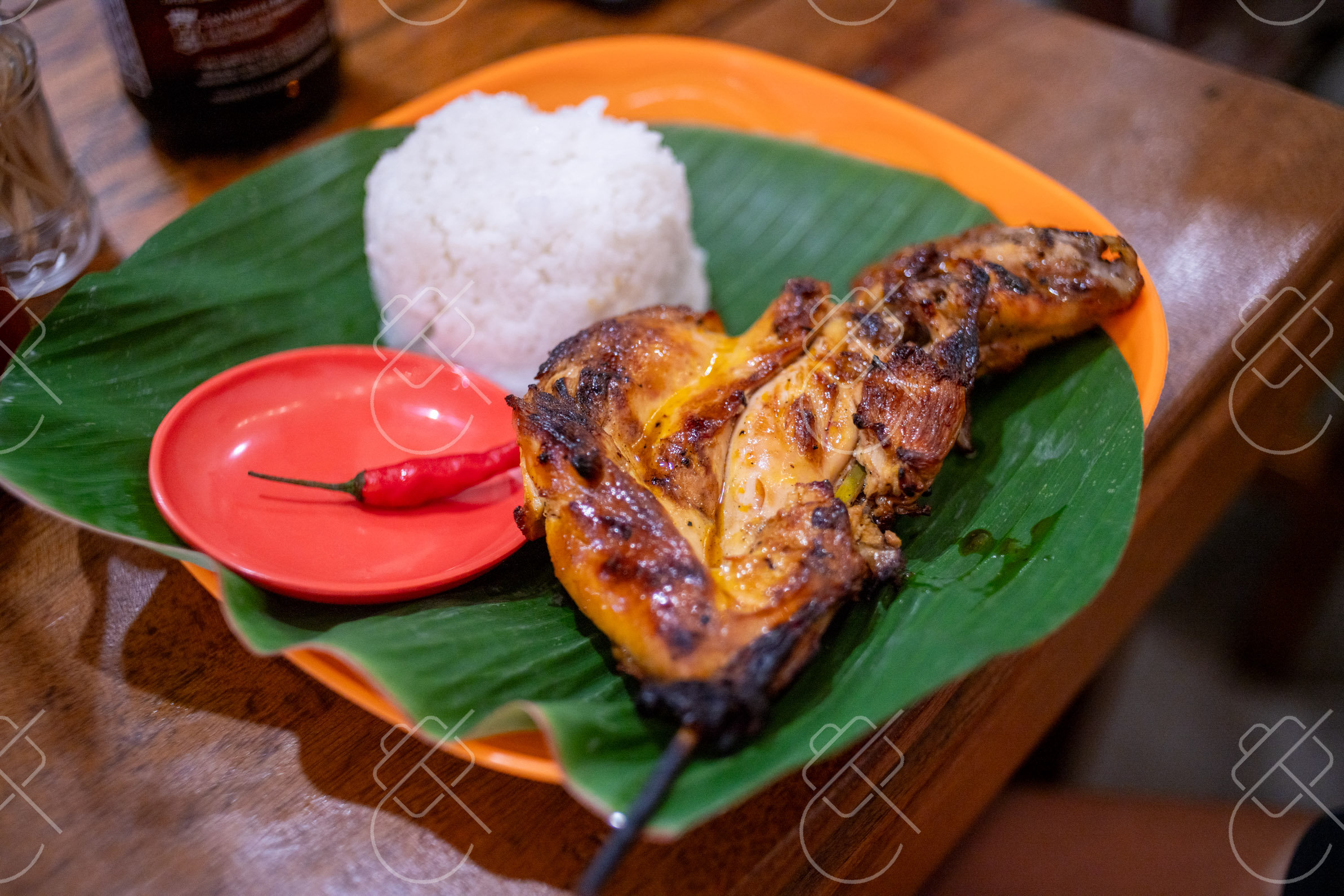
Chicken inasal is the Philippines' beloved grilled chicken, marinated in calamansi, lemongrass, and annatto for a smoky, tangy flavor. It comes with garlic rice and a fiery dipping sauce, a staple of Filipino roadside eateries.
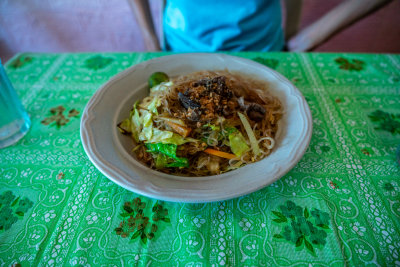
Pancit — stir-fried rice noodles tossed with vegetables, a little meat or shrimp and a squeeze of calamansi — is the everyday Filipino noodle dish.
Between island boats and waterfalls, a waterproof action camera caught what the big camera couldn't.
Explore regional routes with verified local fleets, zero hidden charges, and transparent insurance on Localrent.
Get the best deals on Southeast Asia hotels before they're gone — see Booking.com.
Transit cards, local customs, visa rules, and practical travel guides for this region.
See every destination from the 526-day journey:
Browse all destinationsCurious about the gear behind these photos? See the gear list.