Home
About us
Destinations
Travel Guides
Recipes
Featured
Photos As Art
Abstract Prints
Locations
Travel Gear
Travel Resources
Favorites
Photo Framer
Explore Photos
Contact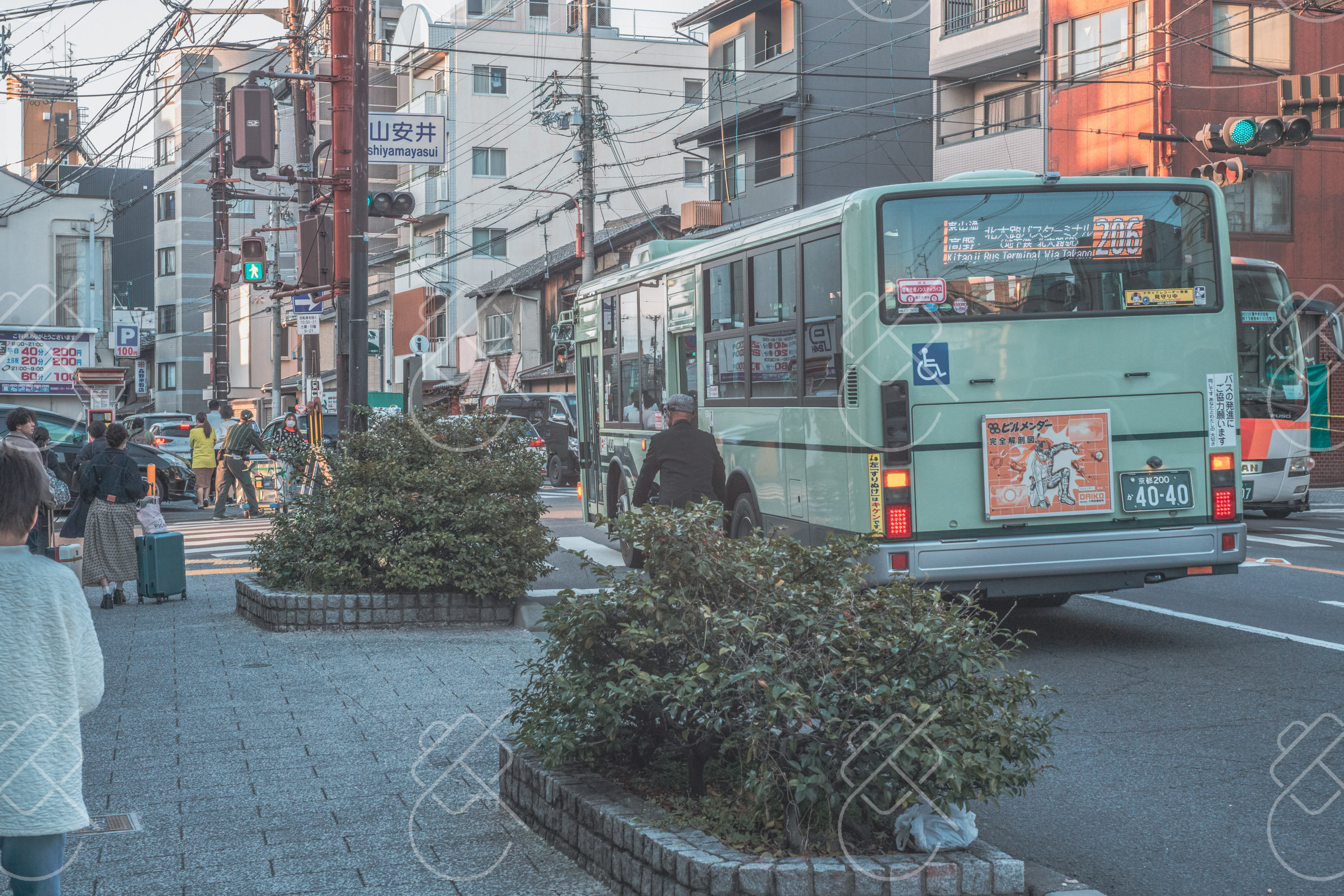 Transit & logistics
A Kyoto city bus ride costs a flat ¥230 for adults (¥120 for children) anywhere in the central fare zone, paid by IC card or cash when you get off. That is still the fare for everyone in autumn 2026. Kyoto City plans a two-tier "citizen-priority" fare from fiscal year 2027 (April 2027 onward), with residents paying about ¥200 and non-residents, including tourists, about ¥350 to ¥400; one report puts the figure at ¥360. It is a proposal, not yet law: it still needs an ordinance change and national transport ministry approval. Meanwhile, the subway and trains are often faster than the crowded buses.
Published August 30, 2026
Inside the central flat-fare zone, which covers almost every sight first-time visitors go to, every ride costs ¥230 for adults and ¥120 for children. On most routes you board at the back or middle door and pay at the front when you get off (a few busy routes now board at the front, so follow the door signs): tap an ICOCA, Suica or Pasmo, or put exact coins in the box (the machine next to the driver changes ¥1,000 notes). Outer routes beyond the zone charge by distance.
The old ¥700 bus-only day pass was withdrawn in 2023–24. The current option is the Subway & Bus 1-Day Pass, ¥1,100 for adults, which covers city buses and both subway lines; it pays off from about five rides. A Subway 1-Day Pass costs ¥800.
In February 2026 Kyoto's mayor announced a "citizen-priority price" (shimin yūsen kakaku) for city buses, which the city describes as a first for public transport in Japan. Reported figures are:
• Kyoto residents: about ¥200 (down from ¥230)
• Non-residents, including Japanese visitors and foreign tourists: about ¥350 to ¥400; one later report says ¥360
• Commuter passes: unchanged
Residents would prove eligibility by linking an IC card to their My Number card; cash payers would pay the higher fare. The target is fiscal 2027, which begins in April 2027. As of September 2026, Japanese reports said the city was still finalizing details with the Ministry of Land, Infrastructure, Transport and Tourism and with private bus companies, and the city's own material says amounts may change. Treat any figure as provisional until Kyoto City Transportation Bureau publishes the approved fare.
The same package proposes a higher Nijo Castle admission for non-residents. Kyoto's accommodation tax already rose sharply in March 2026; see our Kyoto hotel tax guide for the per-night rates.
Kyoto's buses serve residents' daily trips as well as tourists, and the routes from Kyoto Station to Kiyomizu-dera, Gion and Ginkaku-ji (routes 100, 206 and others) are packed for much of the day, especially in cherry blossom and autumn foliage seasons. Large suitcases make it worse, and buses often fill at Kyoto Station so that passengers at later stops cannot board. This crowding is the main reason the city wants tourists to pay more.
Practical habits help: avoid the buses with luggage (use a taxi, the subway or hotel luggage forwarding), travel before 9:00, and walk short hops in Higashiyama, where a bus is often slower than your feet.
• Karasuma subway line (north–south): Kyoto Station to Shijo, Karasuma-Oike and Imadegawa. Fares run from ¥220 to ¥360 by distance.
• Tozai subway line (east–west): Karasuma-Oike to Sanjo Keihan, Higashiyama (for Heian Shrine) and Keage (Nanzen-ji), and west to Nijojo-mae for Nijo Castle.
• Keihan Line: runs along the Kamo River through Gion-Shijo and on to Fushimi-Inari. From Kyoto Station, the JR Nara Line reaches Inari, right at the Fushimi Inari gate, in two stops.
• JR Sagano Line: Kyoto Station to Saga-Arashiyama in about 15 minutes, far faster than the bus to Arashiyama. Hankyu also serves Arashiyama from Kawaramachi and Karasuma.
A typical day in Higashiyama works well as subway or Keihan in, walking between temples, and train out. Our 3 days in Kyoto itinerary is built this way, with a bus only where no train goes, such as Kinkaku-ji.
Since June 2024 Kyoto has run two Sightseeing Express buses (Kankō Tokkyū) with fewer stops: EX100 from Kyoto Station to Ginkaku-ji via Gion and Heian Shrine, and EX101 between Kyoto Station and Gojo-zaka for Kiyomizu-dera. The fare is ¥500 per ride, more than double the regular fare, and they run on a limited schedule, mainly on weekends and holidays; check the timetable at Kyoto Station before planning around them.
They are less crowded than routes 100 and 206 and can be worth it with heavy bags or limited time, though the subway and Keihan remain cheaper. Whether the proposed citizen-priority pricing would also change the EX fare had not been announced as of autumn 2026.
¥230 per ride for adults and ¥120 for children in the central flat-fare zone, the same as for residents as of autumn 2026. The Sightseeing Express buses EX100 and EX101 cost ¥500.
It is proposed, not decided. Kyoto plans to charge non-residents about ¥350 to ¥400 and residents about ¥200 from fiscal 2027, but it needs an ordinance change and transport ministry approval first.
The city is aiming for fiscal year 2027, which starts in April 2027. The date and amounts are provisional until the approved fare is published.
The bus-only day pass was withdrawn. The Subway & Bus 1-Day Pass costs ¥1,100 for adults and covers city buses and both subway lines.
Use the Karasuma and Tozai subway lines, the Keihan Line for Gion and Fushimi Inari, and the JR Sagano Line or Hankyu for Arashiyama, and walk within Higashiyama.
Entry rules change, and they depend on your nationality — always confirm the current requirements on the official government site before you book or apply. Only use official government (.gov) portals; ignore look-alike agency sites.
Get the best deals on a hotel in Japan before you book elsewhere — Booking.com.