Home
About us
Destinations
Travel Guides
Recipes
Featured
Photos As Art
Abstract Prints
Locations
Travel Gear
Travel Resources
Favorites
Photo Framer
Explore Photos
Contact Seasonal travel
December to May is the Philippines’ broad dry-season window, according to PAGASA, with December–February its cooler part. That makes it a useful starting point for planning El Nido and Coron, but it is not a promise of calm seas. Our actual stays were El Nido, 15–21 November 2022, and Coron, 21–25 November 2022: the tail of the broad rainy season, not a midwinter dry-season visit. This guide separates that route experience from seasonal planning. Checked 21 October 2026.
Published October 21, 2026
PAGASA divides the national climate into rainy June–November and dry December–May, then divides the dry season into cool December–February and hot March–May. Local rainfall varies; do not read a national seasonal description as an El Nido marine forecast.
For our suggested winter route, start with December–February if cooler conditions matter to you. Consider March–May if your schedule suits it, while allowing for the hotter part of the season. We would choose the month before picking a tightly sequenced set of boat trips.
November can still work, as our own dates show, but having visited then is not proof that every November is suitable. Compare the El Nido guide and Coron guide to decide which places matter most to you.
Check PAGASA’s weather and marine warnings near departure and ask your operator whether the specific sailing or tour is running. Sunny weather at your hotel does not establish conditions along an open-water crossing.
We suggest putting your most important boat outing early in each stay, with an uncommitted day afterwards. Use a land-based day if conditions change. Ask about cancellation, rescheduling and refund terms before paying, rather than assuming all operators handle disruption the same way.
Keep a buffer before an international flight. A ferry-to-airport connection on the final day leaves little room to recover if a sailing changes. This recommendation is about reducing itinerary risk; it does not predict a cancellation on your date.
Our route allowed six nights in El Nido and four in Coron. For a shorter trip, our suggestion is to choose one base if you have only a few days; fitting both into a brief stay spends a large share of the holiday on transfers.
With roughly a week or more, compare the transfer options first, then assign nights around them. Our El Nido to Coron ferry versus flight guide covers the choice; check current operators and schedules before booking accommodation.
For El Nido, the Tour A, B, C and D comparison helps avoid booking several similar outings. Do not assume a named tour guarantees every stop regardless of sea conditions or local restrictions.
Bring sun protection, a secure dry bag for valuables and footwear suited to your planned outings. Ask the operator what equipment is included and what you must bring. Keep your passport and onward-travel essentials protected on transfer days.
Our two-week Palawan itinerary is the shorter planning route; our four-week Philippines itinerary records the actual trip. For a longer seasonal journey, see our November-to-March winter route.
PAGASA’s national dry-season window is December–May, with cooler December–February and hotter March–May. Local conditions and marine warnings still matter.
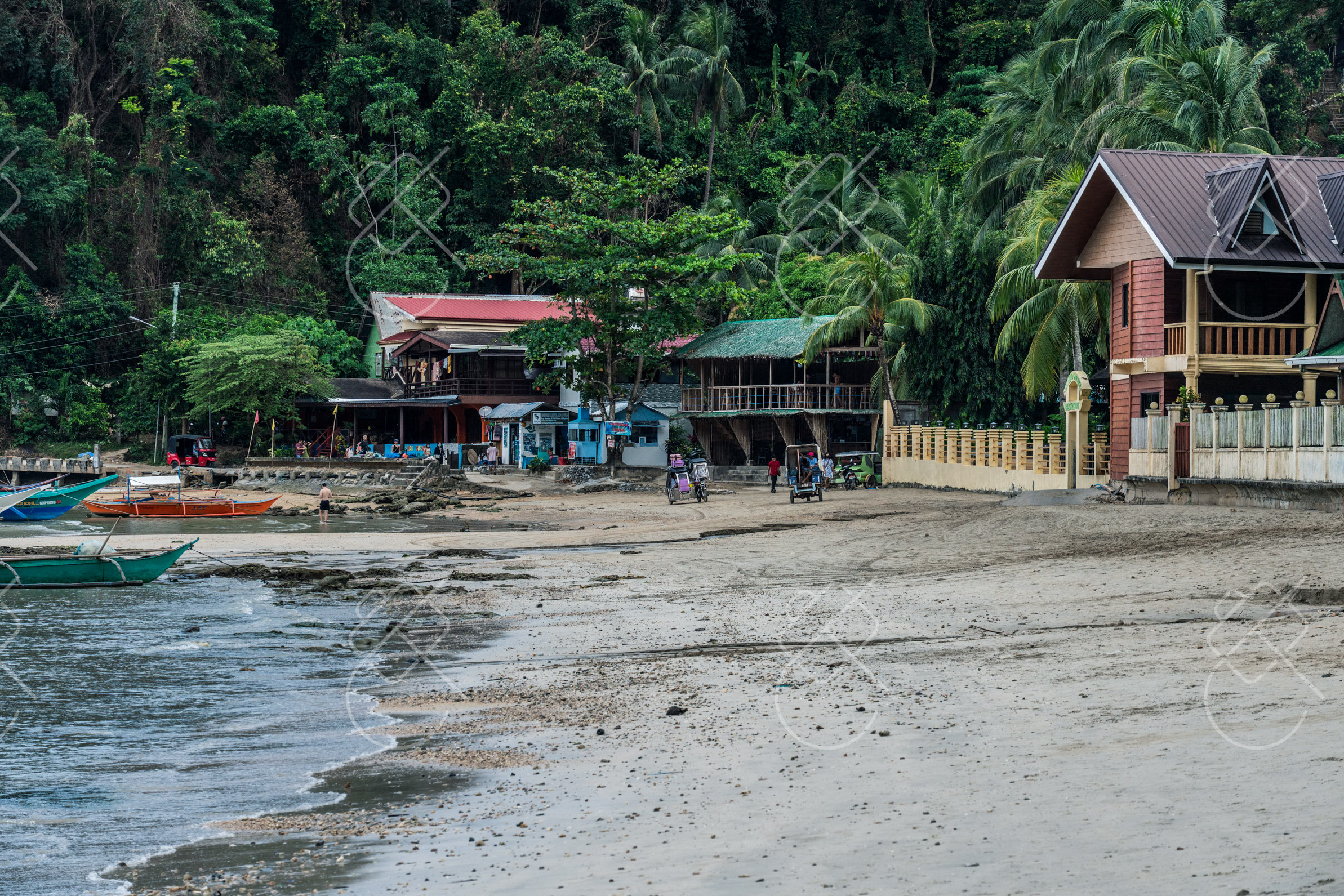
We stayed in El Nido on 15–21 November and Coron on 21–25 November 2022, at the end of the broad rainy-season window.
No. Check the marine warnings and the operator’s sailing status, and leave a buffer before an international flight.
Entry rules change, and they depend on your nationality — always confirm the current requirements on the official government site before you book or apply. Only use official government (.gov) portals; ignore look-alike agency sites.