Home
About us
Destinations
Travel Guides
Recipes
Featured
Photos As Art
Abstract Prints
Locations
Travel Gear
Travel Resources
Favorites
Photo Framer
Explore Photos
Contact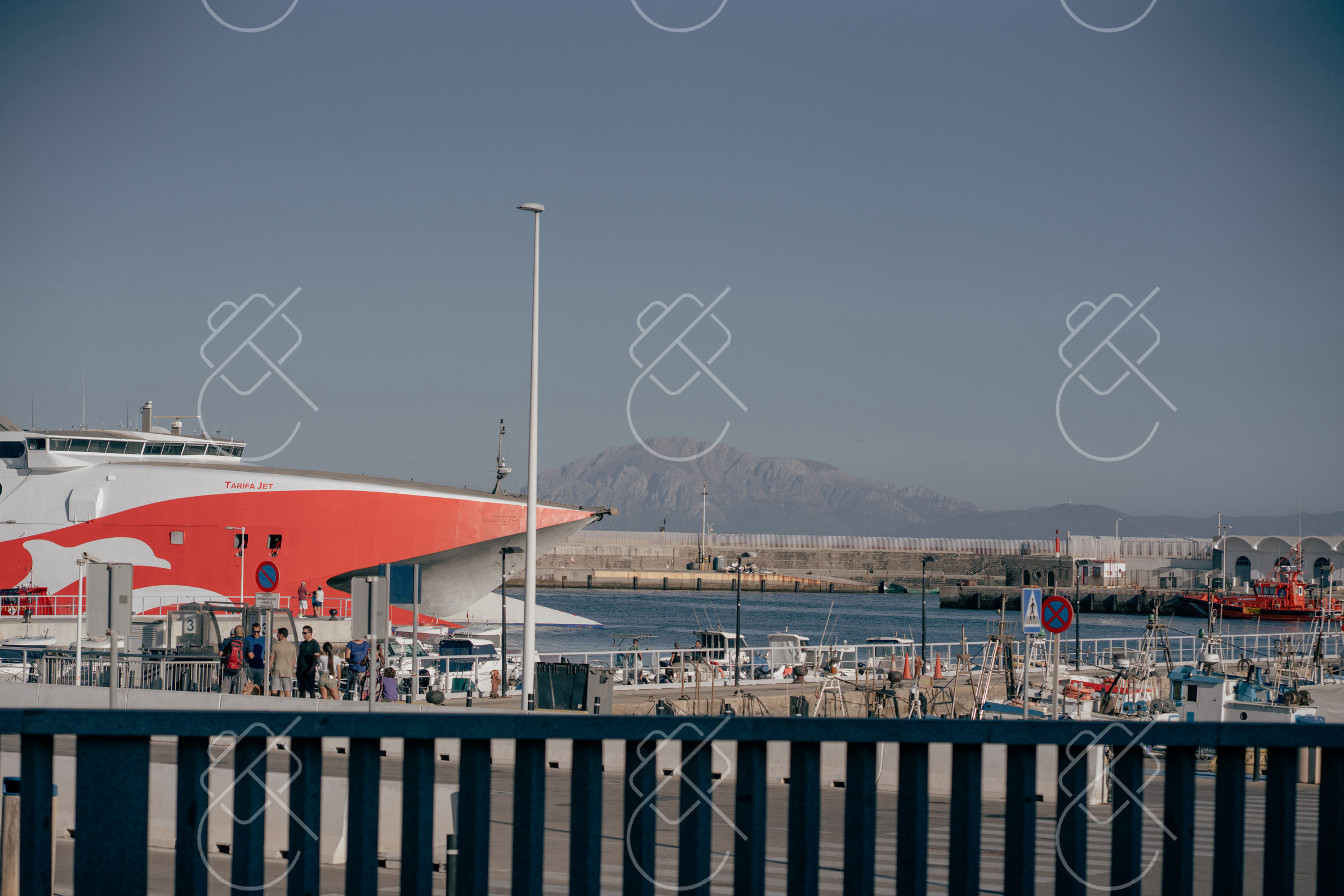 Transit & logistics
The fast ferry from Tarifa to Tangier takes about 1 hour and docks at Tangier Ville port, a short walk from the medina. In 2026 the route is run by Baleària and AML (Africa Morocco Link), with roughly 5 to 15 sailings a day depending on season, and one-way fares on booking sites start around €30 to €40. Moroccan passport control is done on board during the crossing. Here is how the crossing works, what happens on arrival, the time difference, and whether to do Tangier as a day trip or continue by train.
Published August 18, 2026
The route changed hands in 2025. FRS, whose red-and-white fast ferries ran it for years (later under DFDS), stopped sailing it on May 5, 2025 after the Algeciras port authority awarded the line to Baleària. AML (Africa Morocco Link) also runs high-speed ferries between Tarifa and Tangier Ville. Older blog posts that mention FRS or Inter Shipping on this route are out of date.
Crossings take about an hour; the quickest are listed at just under 60 minutes. Booking sites in 2026 show around 5 to 15 departures a day, more in summer. Fares vary by date and operator: one-way adult tickets typically start around €30 to €40, and Baleària's own estimate for a foot-passenger return is about €82. Rough seas in the Strait occasionally cancel sailings, especially when the levante wind blows, so do not plan a tight connection on the return.
The port is at the foot of Tarifa's old town, a few minutes' walk from the center. Aim to be at the terminal about an hour before departure. You go through Spanish exit control before boarding; since April 10, 2026 non-EU travelers are registered in the EU's Entry/Exit System (EES) with fingerprints and a photo instead of getting a stamp.
Once the ferry is moving, a Moroccan police officer sets up a desk in the passenger lounge. Join the queue straight away, hand over your passport and get it stamped there. Do not leave the ship without that stamp, or you will be sent back. Bring a passport, not a national ID card. Most Western passport holders get 90 days visa-free; check your nationality in our Morocco visa guide.
Foot passengers leave the ship first, pass a quick passport check and a luggage X-ray, and walk out of the port building. Tangier Ville port sits right below the old city: the medina walls and the Kasbah are about a 10 to 15 minute walk uphill, and the Grand Socco square a little further. Blue petits taxis wait outside; agree the fare or insist on the meter before getting in.
Morocco's dirham is a closed currency, so you cannot buy it in Spain. There are ATMs and exchange counters near the port and in the medina; our dirham and ATM guide explains the fees. Small euro amounts are often accepted on day-trip routes, but at poor rates.
Morocco stays on GMT+1 all year, except during Ramadan when it moves back to GMT. Spain is GMT+1 in winter and GMT+2 in summer. In practice:
• Late March to late October: Morocco is 1 hour behind Spain.
• Late October to late March: the two are on the same time, except during Ramadan, when Morocco is 1 hour behind again.
Ferry departure times are given in the local time of the departure port. Before a day trip, check the last sailing back in Moroccan time and set your phone's clock to update automatically.
A day trip works well: an early ferry gives you six or seven hours for the medina, the Kasbah museum, the Café Hafa terrace and lunch. Organized day tours sold in Tarifa bundle the ferry, a guide, lunch and transfers; going independently costs less and lets you choose your own pace. The main nuisance is unofficial guides who attach themselves at the port or the medina gates, tell you a street is closed, or steer you into a shop. A firm "no, thank you" and walking on usually ends it. Licensed guides carry an official badge. More on this in our Morocco scams guide.
To go further into Morocco, take a petit taxi about 3 km to Tanger Ville train station and board the Al Boraq high-speed train: about 50 minutes to Kenitra, 1 hour 20 minutes to Rabat and about 2 hours 10 minutes to Casablanca. For Marrakech you change to a regular train, and the whole journey takes most of a day. Book on the ONCF site or app; fares are cheaper booked ahead.
About 1 hour on the fast ferries, landing at Tangier Ville port next to the medina.
Baleària and AML (Africa Morocco Link) in 2026. FRS stopped running the route on May 5, 2025, when it was awarded to Baleària.
On board. A Moroccan police officer stamps passports at a desk in the passenger lounge during the crossing, and you must have that stamp before you leave the ship.
From late March to late October Morocco is 1 hour behind Spain. In winter they share the same time, except during Ramadan, when Morocco is 1 hour behind.
Yes. An early ferry gives you six or seven hours in the medina and Kasbah, either independently or on an organized tour that bundles the ferry, guide and lunch. Check the last sailing back in Moroccan time.
Tanger Ville train station is about 3 km from the port, a short petit taxi ride. Al Boraq trains run from there to Rabat in about 1 hour 20 minutes and Casablanca in about 2 hours 10 minutes.
Entry rules change, and they depend on your nationality — always confirm the current requirements on the official government site before you book or apply. Only use official government (.gov) portals; ignore look-alike agency sites.
Get the best rates and deals on Tangier hotels through Expedia.