Home
About us
Destinations
Travel Guides
Recipes
Featured
Photos As Art
Abstract Prints
Locations
Travel Gear
Travel Resources
Favorites
Photo Framer
Explore Photos
Contact Day trips & itineraries
Anchoring the northern terminus of Germany famous Romantic Road (Romantische Strasse), Würzburg is a magnificent baroque jewel nestled among sun-drenched terraced vineyards along the winding Main River in northern Bavaria. Blessed with the UNESCO-listed Würzburg Residence—home to the world largest contiguous ceiling fresco by Venetian master Giovanni Battista Tiepolo—and crowned by the imposing hilltop Marienberg Fortress, Würzburg seamlessly blends imperial architectural grandeur with a warm, relaxed Franconian wine culture.
Published October 17, 2026
Constructed between 1720 and 1744 under the patronage of the prince-bishops of the Schönborn family and designed by visionary architect Balthasar Neumann, the Würzburg Residence (Residenz) is widely celebrated as one of the most radiant baroque palaces in Europe.
Upon entering, you ascend the grand self-supporting vaulted staircase (Treppenhaus) beneath the world largest single ceiling fresco (677 square meters), painted in 1752-1753 by Giovanni Battista Tiepolo. The fresco depicts the four known continents of the era (Europe, Asia, Africa, and America) in luminous, theatrical detail. Continue through the dazzling Kaisersaal (Imperial Hall) and the painstakingly restored Mirror Cabinet (Spiegelkabinett).
Directly behind the Residence lie the Court Gardens (Hofgarten), a masterwork of formal baroque and English landscape garden design. Admission to the gardens is completely free of charge.
Wander along symmetrical yew tree hedges, clipped lime tree arbors, and intricate wrought-iron gates created by master blacksmith Johann Georg Oegg. In spring and summer, tiered terraces burst with vibrant floral parterres framed by expressive stone statues of putti and classical allegories.
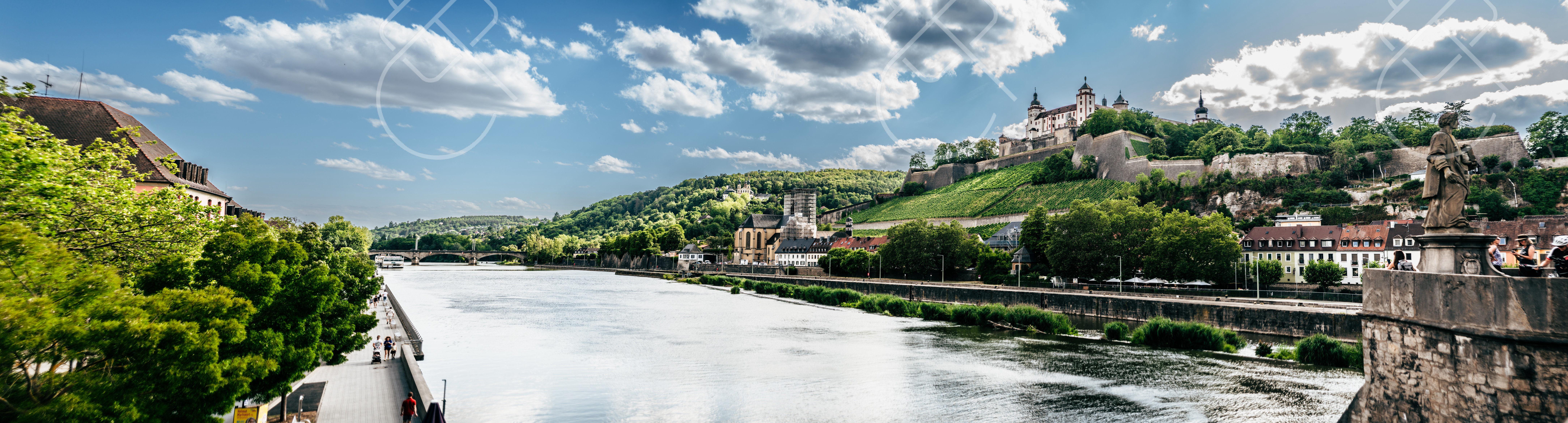
Würzburg most beloved local tradition is Bruckenschoppen—drinking a glass of local Franconian wine while standing on the pedestrianized stone Old Main Bridge (Alte Mainbrucke), built between 1473 and 1543 and lined with twelve statues of saints and bishops.
Head to the bridge wine tavern (Alte Mainmuhle), order a glass of crisp, mineral-forward Silvaner or fruity Muller-Thurgau served in a deposit glass, and lean against the weathered stone balustrade. Gaze across the river toward the steep stone vineyard slopes of the Würzburger Stein and the hilltop fortress above.
Perched 100 meters above the Main River stands Marienberg Fortress (Festung Marienberg), a formidable defensive citadel that served as the home of the prince-bishops for nearly five centuries before the Residence was built.
To reach the fortress, take the scenic 25-minute uphill walking path winding through the historic hillside vineyards and fortified outer gate bastions. The Princes Garden (Furstengarten) at the fortress edge offers the finest panoramic postcard vista overlooking the spires, red-tile roofs, and bridges of Würzburg.
Franconian wine is famously bottled in the traditional Bocksbeutel—a flattened, round-bellied glass flagon that has been a protected regional hallmark for centuries.
Pair your wine with regional Bavarian-Franconian cuisine in one of Würzburg historic hospital wine estates (such as the Burgerspital or Juliusspital). Order Frankische Bratwurst (coarse pork sausages seasoned with marjoram), Sauerbraten with potato dumplings, or crispy baked Schafele (pork shoulder).
Würzburg is a major German ICE high-speed rail hub. Direct ICE trains reach Würzburg Hauptbahnhof in just 60 minutes from Frankfurt Central Station and about 2 hours from Munich.
A full day (6 to 8 hours) is perfect to tour the Residence interior, explore the Court Gardens, enjoy wine on the Old Main Bridge, and walk up to Marienberg Fortress.
Yes. The Staatlicher Hofkeller, located directly beneath the palace, offers guided historic cellar tours illuminated by candlelight among massive carved oak wine barrels.
Compare flights to Germany and get the best deals on Expedia.