Home
About us
Destinations
Travel Guides
Recipes
Featured
Photos As Art
Abstract Prints
Locations
Travel Gear
Travel Resources
Favorites
Photo Framer
Explore Photos
ContactHue was Vietnam's capital under the Nguyen dynasty from 1802 to 1945, and the emperors left behind a walled citadel on the north bank of the Perfume River and a string of royal tombs in the hills upstream. Much of it was damaged in the 1968 Battle of Hue, and much of it is still being restored, which gives the city a mix of lacquered halls, open grass, and weathered brick. This guide covers the Imperial City and the Forbidden Purple City, the river and its pagoda, the tombs, and the food Hue is famous for across Vietnam.
Published October 9, 2026
Tap any photo to open it full-screen and order a print.
Plan two full days. Give the first to the Imperial City, which takes at least half a day on its own, plus Dong Ba Market and the riverfront. Give the second to Thien Mu Pagoda and the royal tombs of Tu Duc, Khai Dinh, and Minh Mang, which are spread along the Perfume River south of town and are easiest by scooter, Grab, or a hired driver. Hue is hot from May to August and flood-prone from September to December, so start early and keep the middle of the day for lunch and shade.
Hue's weather is sharper than Hoi An's or Da Nang's: summers are very hot and the autumn rains bring regular flooding. The best window runs from late January to April, with May still good if you start early.
Cool, often overcast, with drizzle in January and February. Tet brings flowers and festivities, though some family-run restaurants close for several days.
Dry and warming, with clear mornings for the Imperial City and the tombs. The Hue Festival and its arts programs usually happen in this window.
Hot and humid, with afternoon highs regularly in the mid to high 30s°C. Start at dawn, rest at midday, and save the riverbank for evening.
The wettest part of the year, with typhoons possible and flooding most common in October and November. Boat trips and tomb visits can be canceled, so keep plans flexible.
Imperial City (Hue Citadel) — The Nguyen emperors' walled palace complex, entered through the Noon Gate.
Tomb of Khai Dinh — A hillside tomb finished in 1931, its interior covered in ceramic and glass mosaic.
Thien Mu Pagoda — A riverside pagoda founded in 1601, with a seven-story tower over the Perfume River.
Tomb of Tu Duc — A garden of lakes, pavilions, and frangipani that the emperor used as a retreat in life.
Tomb of Minh Mang — A symmetrical complex of courtyards, lakes, and bridges set along a single axis.
Forbidden Purple City — The emperor's private quarter inside the Imperial City, partly rebuilt after 1968.
Dong Ba Market — Hue's main market by Truong Tien Bridge, good for conical hats, sesame candy, and lunch.
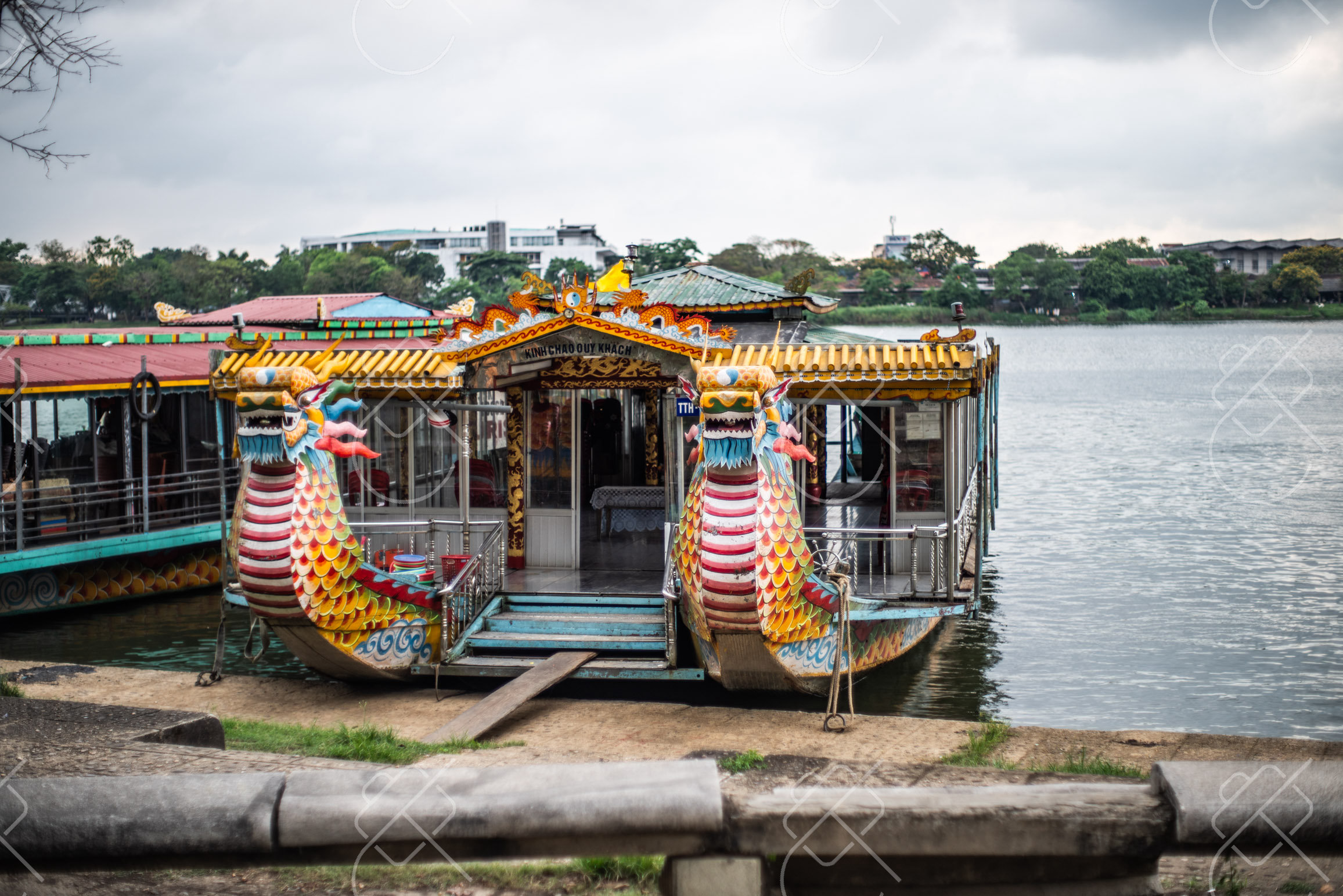
Perfume River dragon boat — A slow boat trip upriver to Thien Mu, the easiest way to see the riverbanks.
Truong Tien Bridge — The steel-truss bridge across the river, lit in changing colors after dark.
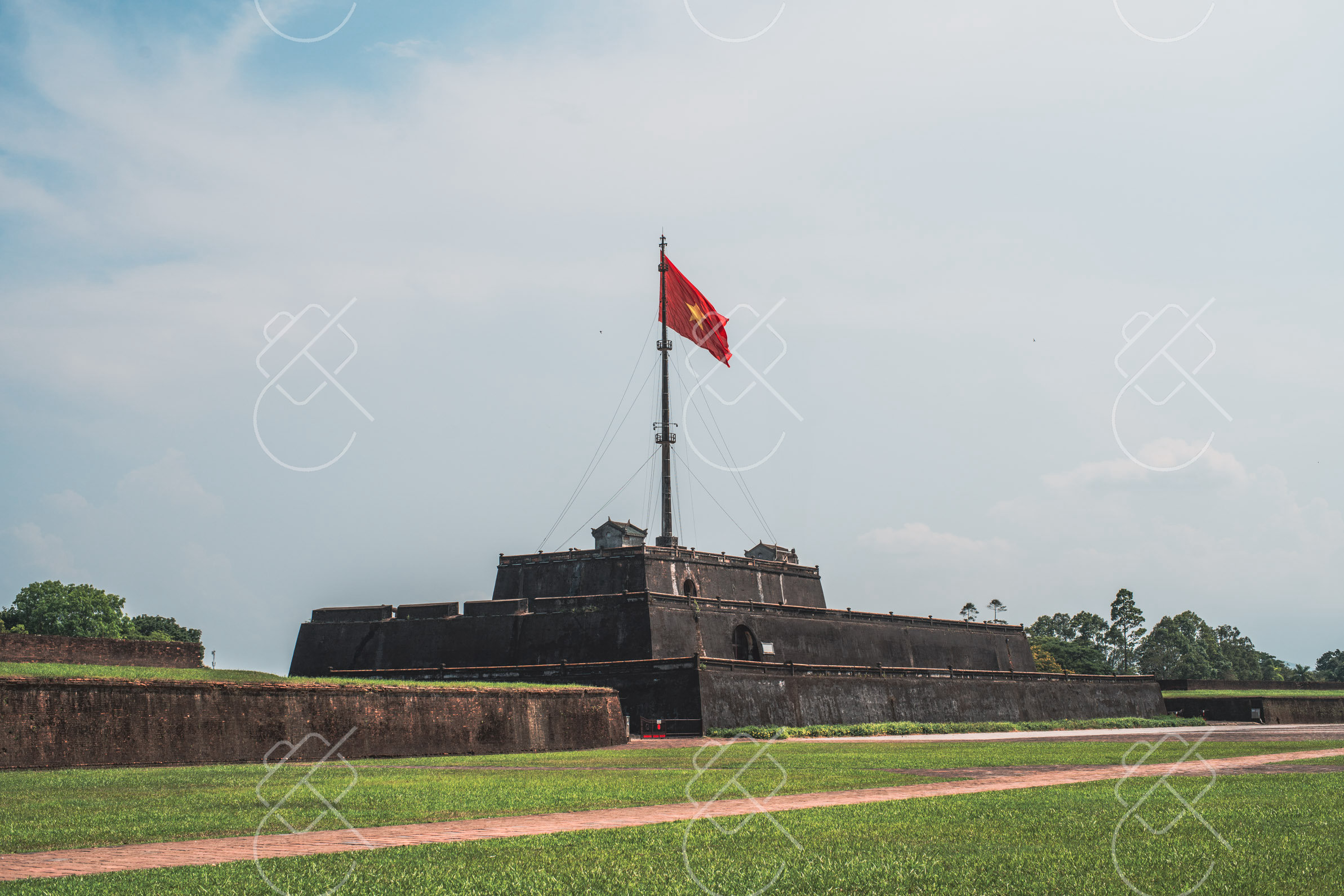
Flag Tower — The tiered brick bastion facing the river, topped by a giant national flag.
Hue is Vietnam's old imperial capital, a calm riverside city built around the Nguyen dynasty's moated citadel, with royal tombs and pagodas lining the Perfume River upstream and some of the country's spiciest, most elaborate food.
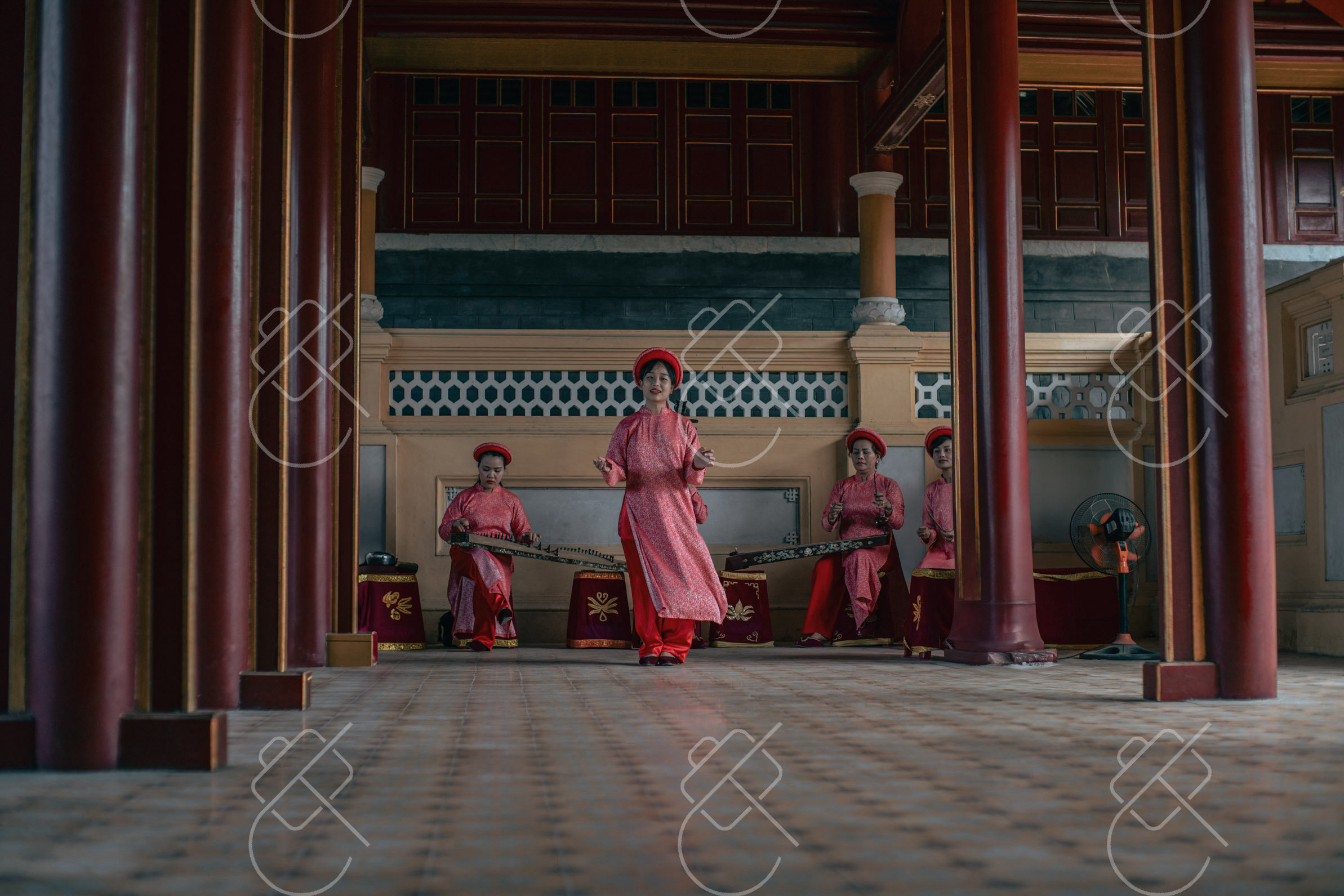
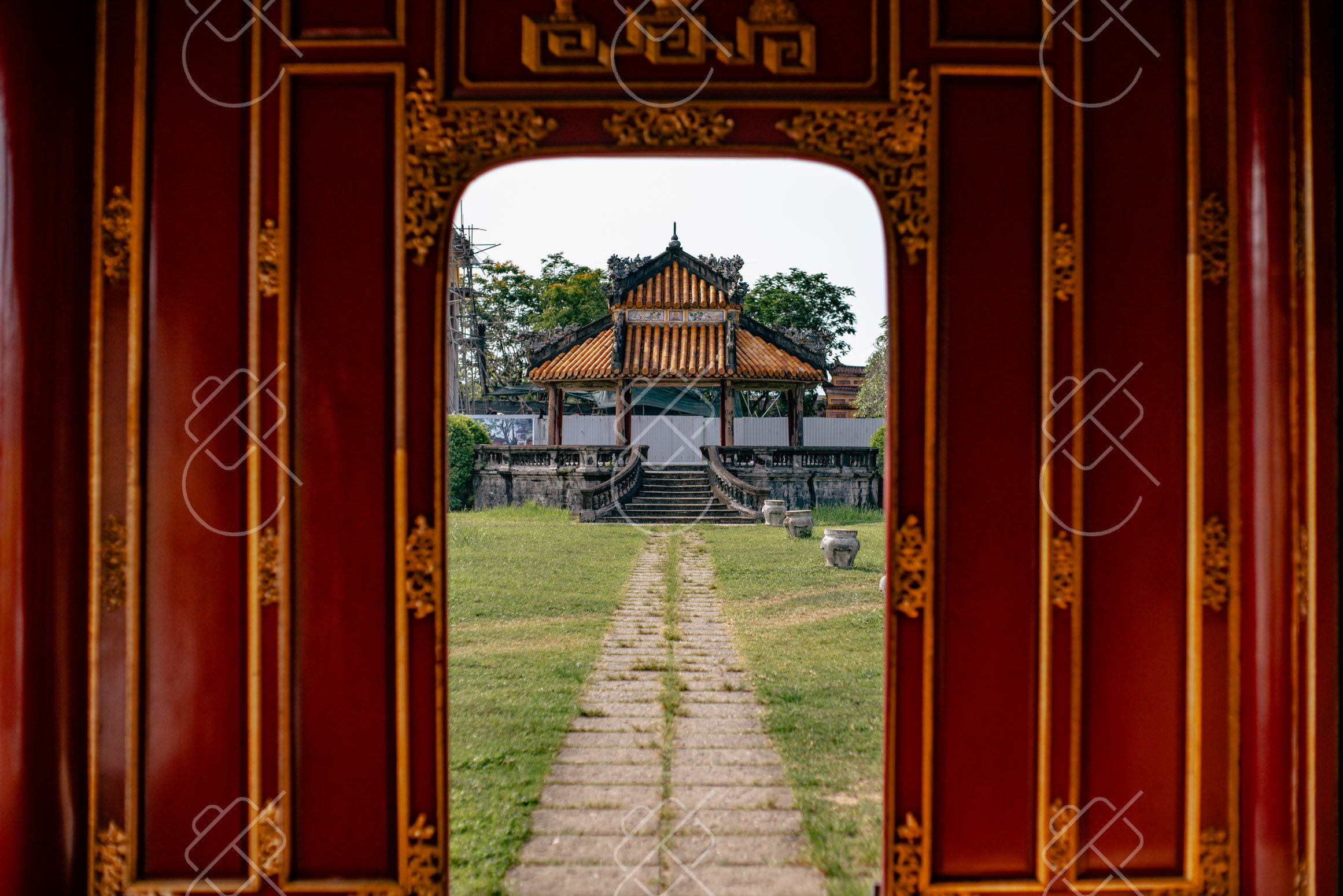
Emperor Gia Long began the citadel in the early 1800s, laying out roughly 10 kilometers of brick ramparts and moats on the north bank of the Perfume River according to geomancy. Inside it sits the Imperial City, entered through the Noon Gate (Ngo Mon), whose two-tiered pavilion was built in 1833 under Emperor Minh Mang. Beyond it, Thai Hoa Palace held the throne, and behind that the Forbidden Purple City was the emperor's private quarter, most of which was destroyed in the 1968 Battle of Hue. Today the complex is a mix of restored halls, long red-lacquered corridors, and open lawns where palaces once stood. In the Duyet Thi Duong royal theater, musicians in court costume perform nha nhac, the Nguyen court music that UNESCO recognized in 2003, and the whole Complex of Hue Monuments has been a World Heritage Site since 1993.
Court musicians in pink ao dai performing between red lacquered columns in the Imperial City
The Perfume River is the other half of Hue. Dragon-prowed tourist boats tie up along the south bank near Truong Tien Bridge and run upstream to Thien Mu Pagoda, founded in 1601, whose seven-story Phuoc Duyen tower has stood over the water since 1844. Inside the grounds is the Austin car that carried the monk Thich Quang Duc to Saigon before his self-immolation in 1963. Further south, the royal tombs are as much landscaped retreats as burial sites: Tu Duc's is a garden of lakes and pavilions, Minh Mang's runs along a single axis of courtyards and bridges, and Khai Dinh's climbs a hillside to a hall coated in mosaic made from broken porcelain and glass. Come back into town by late afternoon, when the light softens on the citadel walls and the river boats turn on their lanterns.
Late January to April, when the heat hasn't peaked and the rains have passed; April and May mornings are ideal for the Imperial City before the midday sun.
Stay on the south bank between Le Loi and Pham Ngu Lao streets, a short walk across Truong Tien Bridge to the citadel and close to the riverside restaurants.
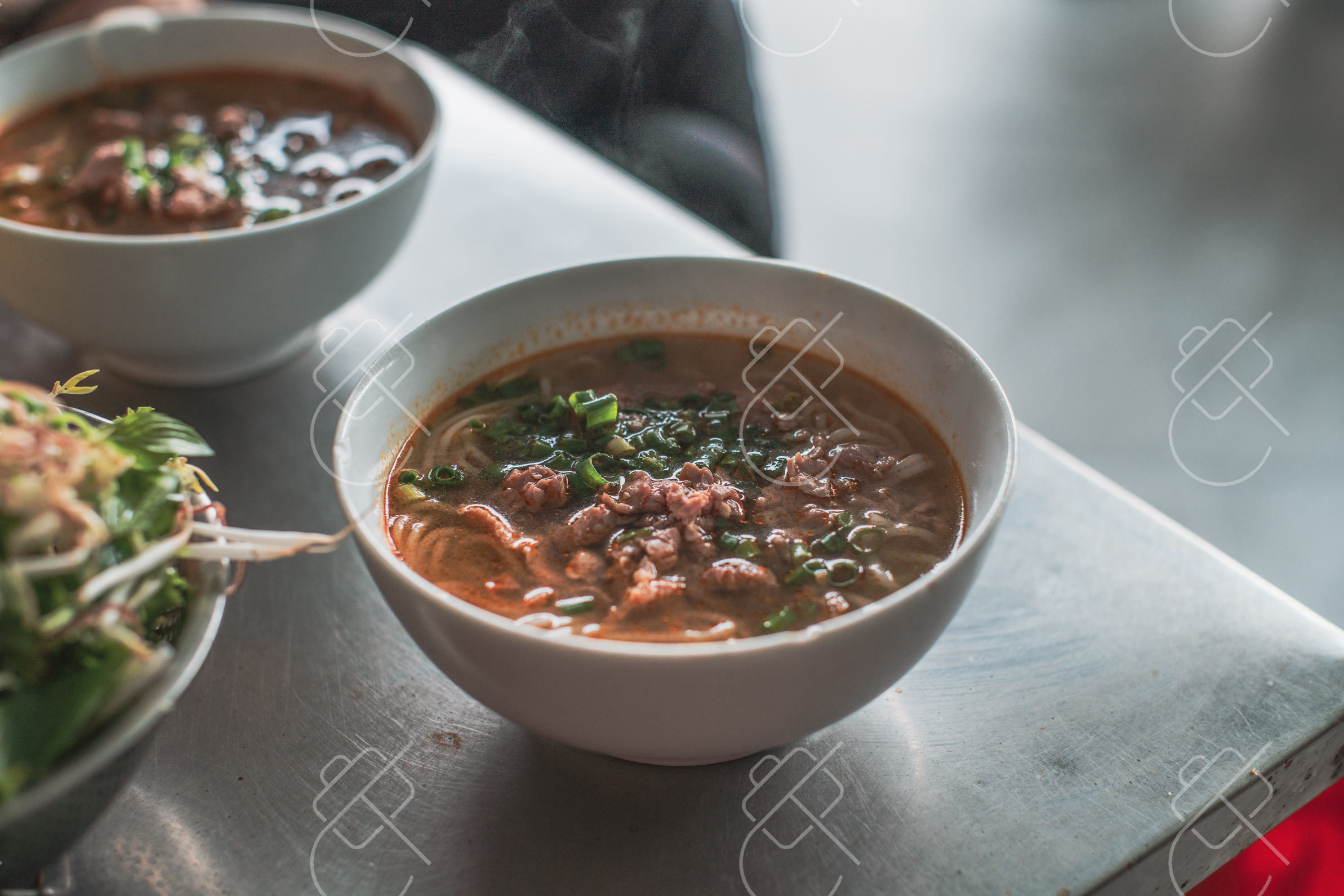
Order bun bo Hue, a lemongrass-and-chili beef noodle soup with thick round noodles, for breakfast, then try com hen (rice with baby clams) and steamed banh beo rice cakes for lunch.
Buy the combined ticket covering the Imperial City and the main tombs if you plan to see three or more sites, and carry water and a hat since the citadel has long stretches with no shade.
A loose, walkable route — bend it to your pace and the light.
Be at the Noon Gate when the Imperial City opens and spend the morning inside: Thai Hoa Palace, the Forbidden Purple City, the red corridors, and the royal theater, where court music performances run at set times during the day. Allow at least three to four hours; the complex is bigger than it looks from the gate.
Cross back toward the river for lunch at Dong Ba Market, then rest through the hottest hours. In the late afternoon, walk the riverbank under the Flag Tower and over Truong Tien Bridge, and end the evening on the south bank, where the walking street and food stalls stay busy past dark.
Where to shoot: The Noon Gate across its lotus ponds · The red lacquered corridors · Dong Ba Market's stalls · Truong Tien Bridge at dusk
Tip: Rent the audio guide or hire a guide at the gate; most of the Imperial City's halls have little signage, and the history is the point.
Take a dragon boat or ride upriver to Thien Mu Pagoda early, before tour groups arrive, and see the tower and the monastery gardens behind it. From there, head south to the Tomb of Tu Duc, the most peaceful of the tombs, with its lake and pavilions.
After lunch, continue to the Tomb of Khai Dinh for its mosaic interior and its hilltop view, and finish at the Tomb of Minh Mang as the afternoon light reaches its courtyards. Head back to town for a dinner of Hue royal-style dishes or a simple bowl of bun bo Hue.
Where to shoot: Thien Mu's Phuoc Duyen tower · Tu Duc's lake pavilion · Khai Dinh's mosaic hall · Minh Mang's courtyards in late light
Tip: The tombs are 7 to 12 kilometers from town and spread out; a driver for the day costs little more than a few separate rides and saves the afternoon.
With more time, take the coastal train or a car over the Hai Van Pass to Da Nang and Hoi An, a few hours south, with a stop at Lang Co lagoon on the way. North of Hue, a day tour of the former DMZ covers the Vinh Moc tunnels and the Ben Hai River, and the Tam Giang lagoon, east of the city, is a quiet afternoon of fish traps and sunset light.
While in Hue, Vietnam, NordVPN helped us browse securely on shared connections and stream from home at night.
Get the best deals on where to stay in Hue — Booking.com.
Transit cards, local customs, visa rules, and practical travel guides for this region.
See every destination from the 526-day journey:
Browse all destinationsCurious about the gear behind these photos? See the gear list.