Home
About us
Destinations
Travel Guides
Recipes
Featured
Photos As Art
Abstract Prints
Locations
Travel Gear
Travel Resources
Favorites
Photo Framer
Explore Photos
ContactMorocco sits at the northwest corner of Africa, separated from Spain by the narrow Strait of Gibraltar, and its cities layer Berber, Arab, Andalusian and French influences a short walk from one another. The country runs from Atlantic surf towns to the foothills of the Atlas Mountains and the edge of the Sahara, and its imperial cities are organized around walled medinas where craft souks, tiled fountains and tanneries have operated for centuries. Light is intense and warm, color is everywhere, and the call to prayer marks the rhythm of each day.
Published July 11, 2025
Tap any photo to open it full-screen and order a print.
Marrakech, the largest of Morocco's imperial cities, spreads beneath the snow-capped High Atlas at the edge of the plains. Its red-earth ramparts enclose a dense medina of souks, palaces and riads, while the open square of Jemaa el-Fnaa has been a center of trade and performance for nearly a thousand years.
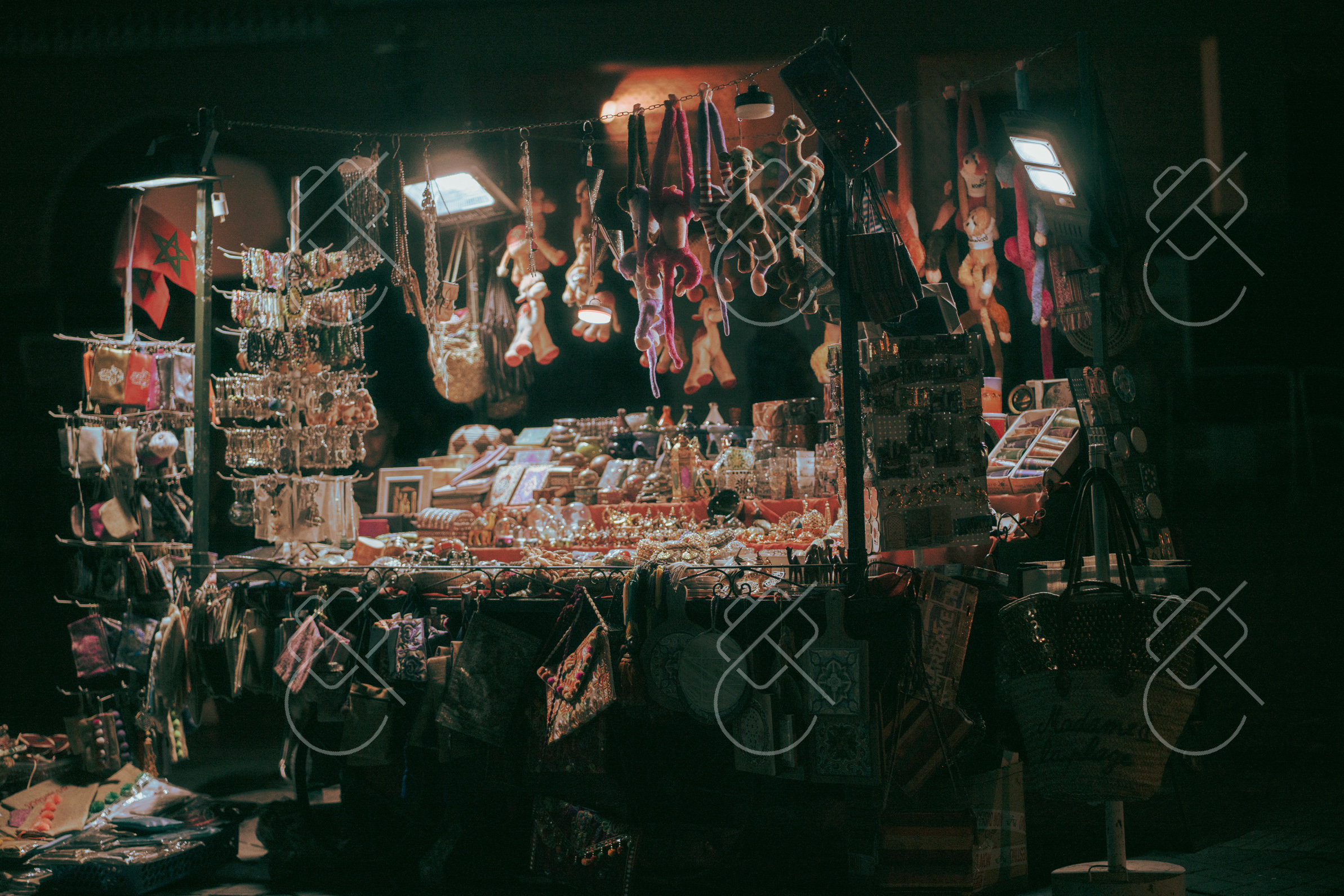
The medina is a UNESCO World Heritage site, a maze of covered souks organized loosely by trade — leather, metalwork, dyed textiles and lanterns. At its heart, Jemaa el-Fnaa fills each evening with food stalls, musicians and crowds, framed by the minaret of the Koutoubia Mosque, the city's tallest structure at around 77 meters and the model for the Giralda in Seville.
Beyond the souks, Marrakech holds some of Morocco's most ornate architecture. The 19th-century Bahia Palace is a sprawl of painted ceilings and tiled courtyards, the ruined Badi Palace frames the sky with its bare walls and stork nests, and the Saadian Tombs preserve intricately carved cedar and stucco. The Jardin Majorelle, restored by Yves Saint Laurent, offers cobalt-blue walls and cactus gardens on the city's edge.
Spring (March–May) and autumn (September–November) offer warm, comfortable weather; summer is scorching, while winter days are pleasant but nights cold.
A riad in the old medina puts visitors a short walk from the souks and Jemaa el-Fnaa, though the modern Gueliz district offers quieter, more spacious lodging.
Tagine slow-cooked in conical clay pots, harira soup, couscous traditionally served on Fridays, grilled brochettes from the night-market stalls, and sweet mint tea.
Performers in Jemaa el-Fnaa generally expect a tip for their photographs, so carry small coins and ask before taking pictures of people in the square.
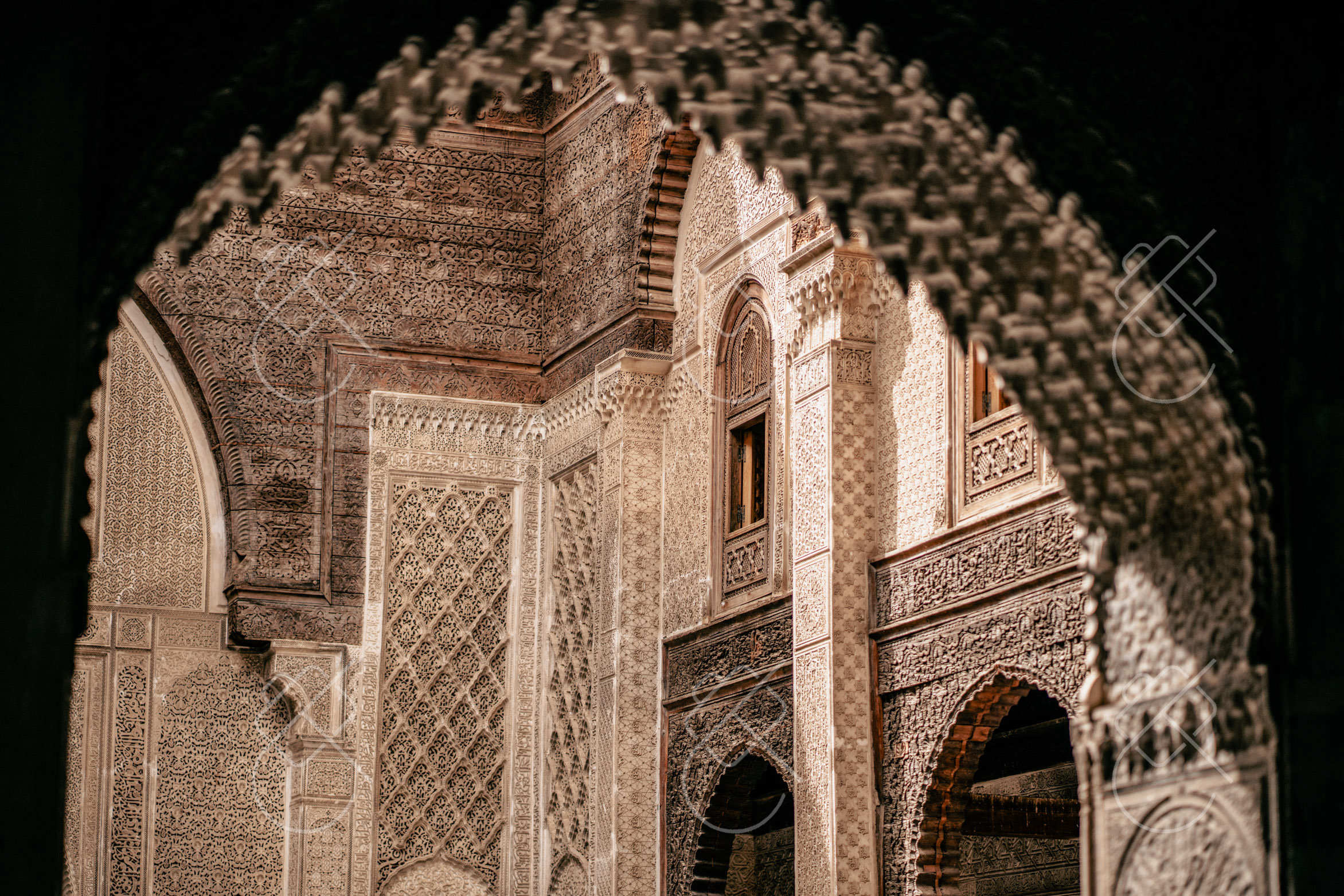
Fes is Morocco's oldest imperial city and the seat of its spiritual and intellectual heritage. Its walled medina, Fes el-Bali, is one of the largest car-free urban areas in the world, a dense warren of thousands of alleys, workshops and one of the planet's oldest universities.
Founded in the 8th century, Fes el-Bali is a UNESCO World Heritage site and home to the University of al-Qarawiyyin, established in 859 and often cited as the oldest continuously operating degree-granting institution. The medina's lanes are too narrow for cars, and goods still move by handcart and mule. The Bou Inania and Al-Attarine madrasas showcase the city's finest zellige tile, carved cedar and stucco craftsmanship.
The Chouara tannery, in operation since the medieval period, is the city's most recognizable sight — stone vats of natural dye arranged in a grid, worked by hand much as they have been for centuries, and best seen from the surrounding leather-shop terraces. The Blue Gate, Bab Bou Jeloud, marks one of the main entrances to the old city with its glazed blue-and-green tilework.
Spring and autumn bring mild temperatures ideal for wandering the medina; avoid the intense summer heat, while winters are cool and occasionally rainy.
A restored riad inside Fes el-Bali offers the deepest immersion in the medina, while the Ville Nouvelle provides easier vehicle access and modern hotels.
Pastilla, a sweet-savory pigeon or chicken pie dusted with cinnamon and sugar; lamb tagine with prunes; and bissara, a thick fava-bean soup.
The tannery terraces are reached through leather shops where vendors hand out mint sprigs to mask the smell; from the top you look down on the full grid of dye-pits.
Light is intense and warm, color is everywhere, and the call to prayer marks the rhythm of each day.
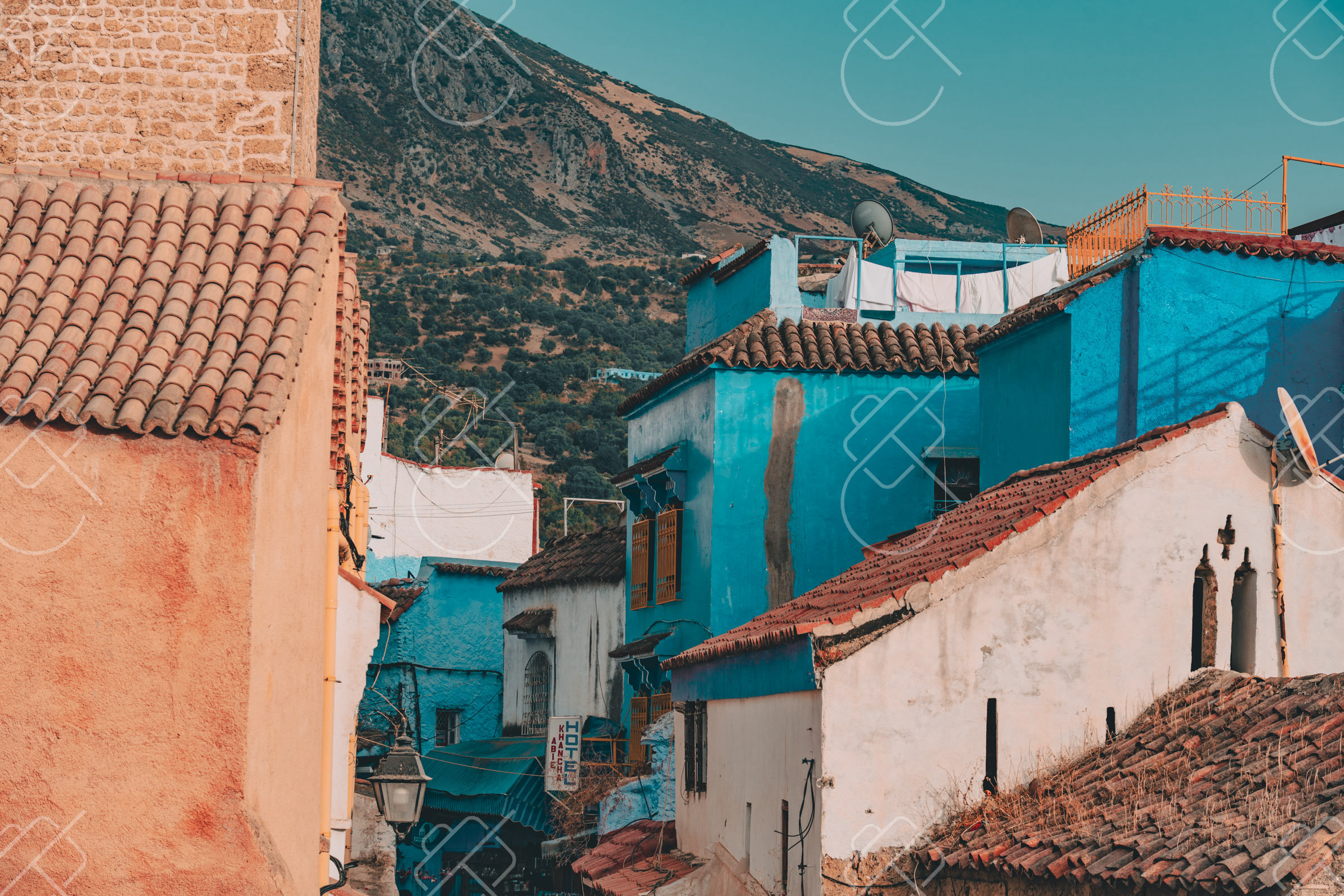
Chefchaouen sits in the Rif Mountains of northern Morocco, a small town famous for the powder-blue wash that covers its medina walls, doors and stairways. The cool mountain setting and consistent blue color make it one of the country's most distinctive places to wander.
Founded in 1471, Chefchaouen was long closed to outsiders and absorbed waves of Andalusian and Jewish refugees from Spain. The tradition of painting the medina blue is variously attributed to Jewish residents, to cooling the buildings, or to repelling insects; whatever its origin, the result is a town of narrow stepped lanes in every shade from sky to indigo, set against the green slopes of the Rif.
The medina is compact and easily explored on foot, centered on the Plaza Uta el-Hammam and the red-walled kasbah. Above the town, a short climb leads to the Spanish Mosque, a viewpoint that looks out over the blue rooftops and the surrounding mountains, especially fine at sunset. Pots of geraniums and hanging textiles add bursts of color against the blue.
Spring and autumn are ideal for the blue mountain town's mild weather and wildflowers; summer is warm and busy, winter cool with occasional snow nearby.
Basing in the medina near Plaza Uta el-Hammam keeps the blue lanes and viewpoints within an easy walk.
Goat cheese from the surrounding Rif villages, served fresh; tagines with mountain herbs; and msemen, a layered griddle flatbread.
The blue walls throw a cool cast onto everything, so the indigo tones look richest in the shade or the early hours.
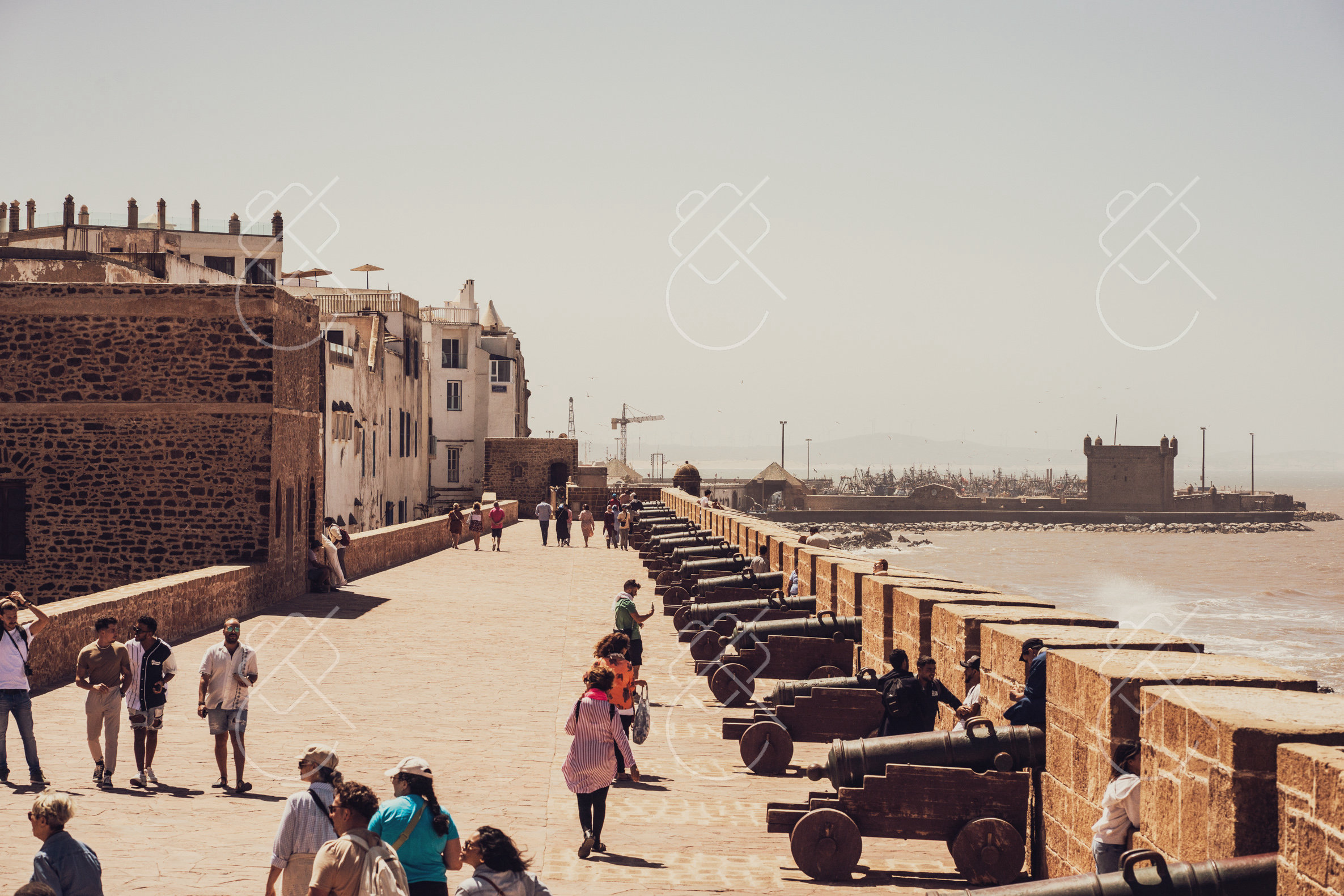
Essaouira is a fortified port on Morocco's Atlantic coast, with a whitewashed and blue-shuttered medina, a working fishing harbor, and steady trade winds that have made it a center for windsurfing. The sea light here is softer and cooler than the interior cities.
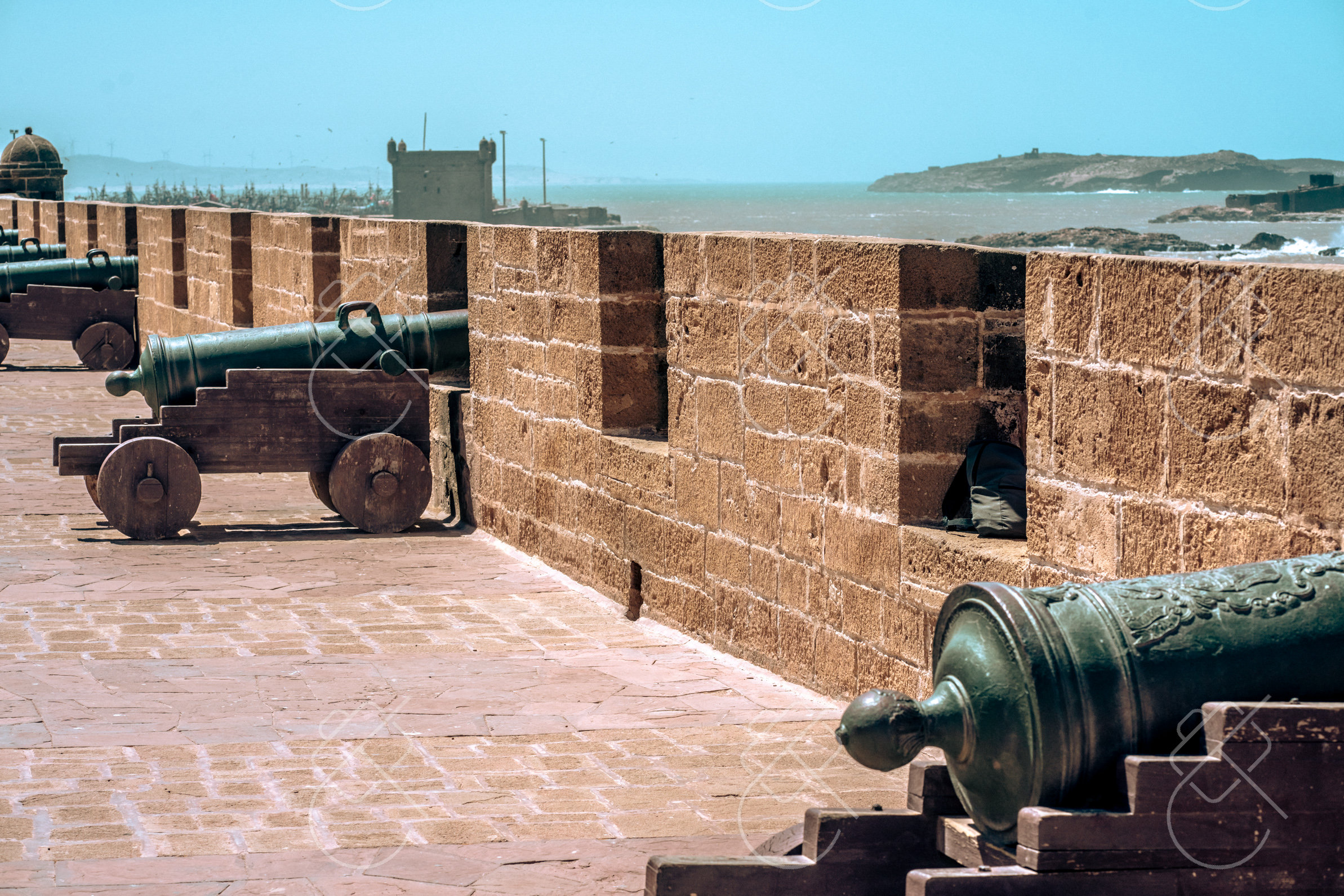
The medina, a UNESCO World Heritage site, was laid out in the 18th century by a French engineer on a regular grid unusual for Morocco, and its sea-facing ramparts, the Skala de la Ville, are lined with old bronze cannons facing the Atlantic. The town was historically known as Mogador and was an important trading port; its blue boats, gulls and weathered fishing harbor are among the best-known sights on the coast.
Wide sandy beaches stretch south of the medina, swept by wind that draws kitesurfers and windsurfers year-round. The town has a relaxed, artistic character, with argan-oil cooperatives in the surrounding countryside and a long association with Gnaoua music, celebrated each June at a major festival. The combination of fortifications, fishing fleet and Atlantic haze gives the light a distinct, muted quality.
This breezy coastal town is mild year-round; visit late spring or summer for warmth and the famous Gnaoua music festival in June, with steady ocean winds.
The walled medina puts the ramparts, harbor and beach all within a short walk, with riads behind the seafront.
Grilled fish and seafood chosen straight from the harbor stalls, sardines, and locally pressed argan oil drizzled over bread or into amlou paste.
The constant wind carries fine spray and sand, so keep cameras and bags well covered when you wander the harbor and the seafront walls.
Pots of geraniums and hanging textiles add bursts of color against the blue.
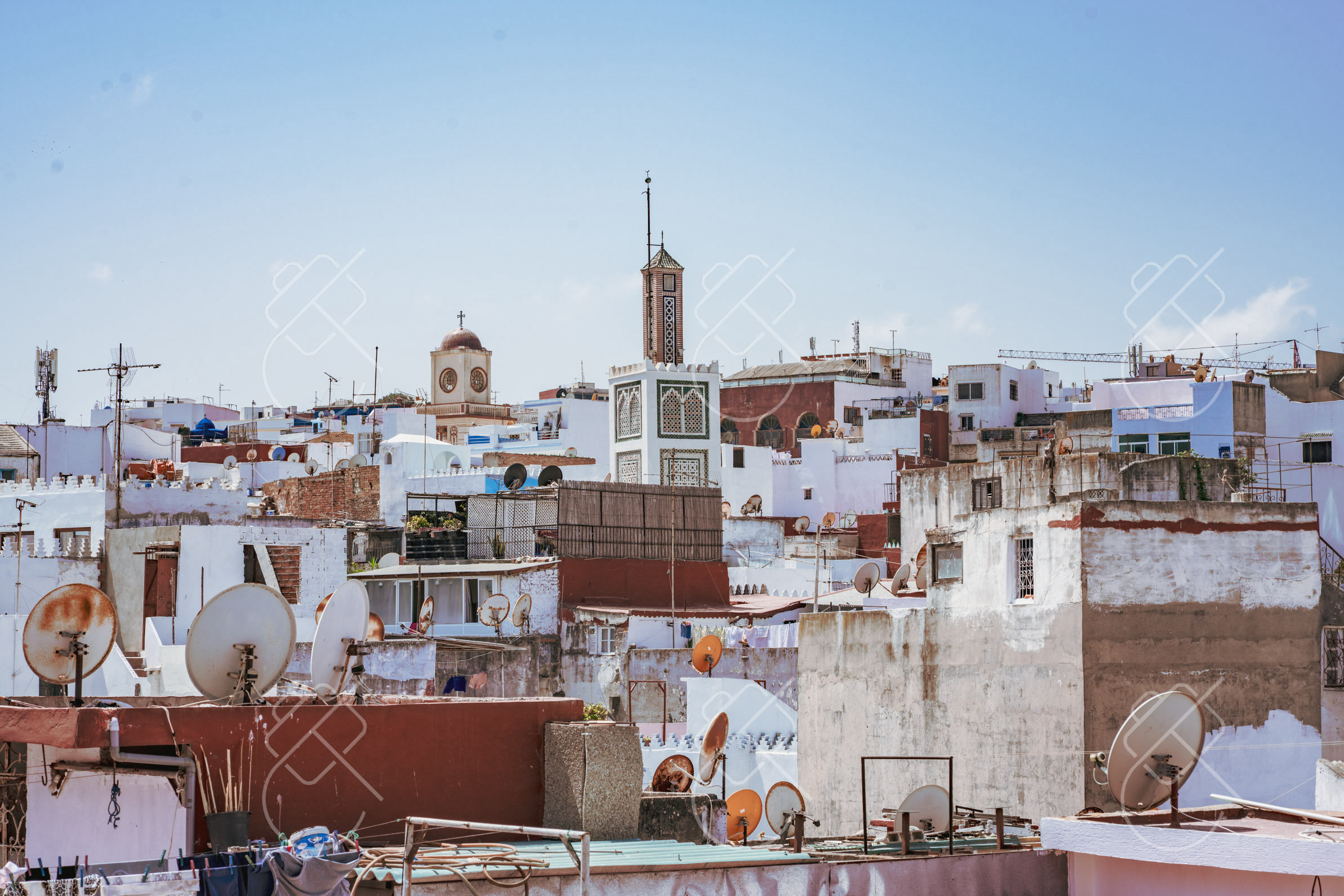
Tangier stands at the northern tip of Morocco, overlooking the Strait of Gibraltar where the Mediterranean meets the Atlantic and the Spanish coast is visible across the water. Long a cosmopolitan port and former international zone, it blends Moroccan, Spanish and European influences.
The city's whitewashed medina climbs a hillside above the harbor, topped by the Kasbah and its 17th-century Sultanate palace, the Dar el-Makhzen, now a museum. Tangier's position at the meeting of two seas and two continents has long drawn writers and artists, and its faded grand cafés and Art Deco buildings in the Ville Nouvelle reflect its international-zone past in the mid-20th century.
West of the city, the coastline leads to Cap Spartel, where a 19th-century lighthouse marks the point at which the Atlantic and Mediterranean meet, and to the Caves of Hercules, a sea cave with an opening shaped, by legend, like the map of Africa. The Grand Socco and Petit Socco squares anchor the medina's social life, and the Strait opens long views toward Spain.
Late spring through early autumn (May–October) offers warm, sunny weather perfect for the beaches and medina; summer is liveliest but busiest.
The medina and Kasbah quarter offer characterful riads and sea views, while the Ville Nouvelle has larger modern hotels near the seafront.
Fresh fish from the Atlantic and Mediterranean, calamari and prawns, alongside Spanish-influenced tapas and strong coffee in the old cafés.
From the Kasbah and Cap Spartel the Spanish coast often comes into view at dawn and dusk, when the low sun glints off the Strait.
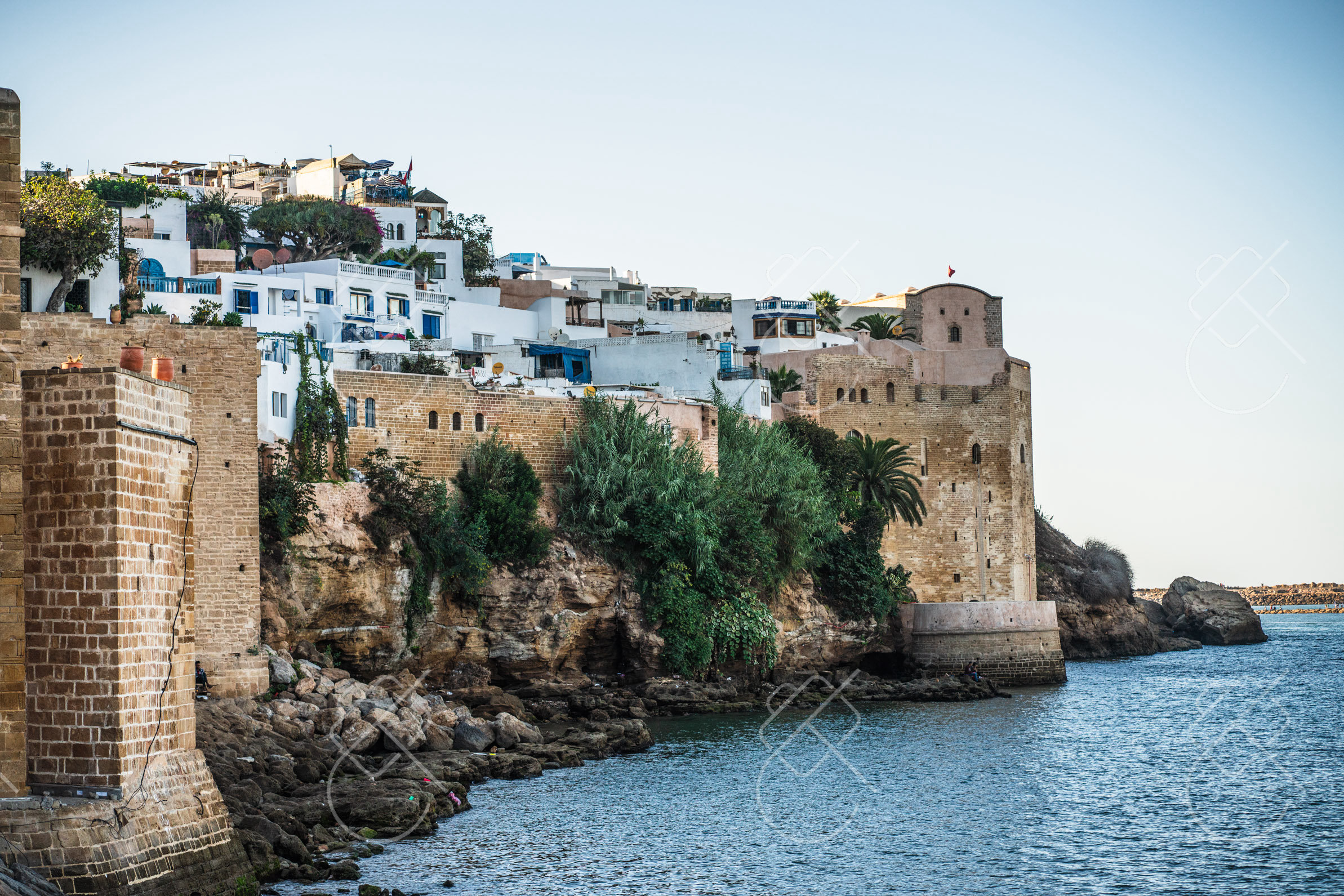
Rabat, Morocco's capital, sits on the Atlantic coast where the Bou Regreg river meets the ocean. Calmer and greener than the larger imperial cities, it combines Almohad monuments, a walled medina, and the orderly avenues of the French-built administrative quarter.
The city's historic monuments are a UNESCO World Heritage site. The Hassan Tower, an unfinished 12th-century minaret, rises above rows of stone columns from a mosque that was never completed, facing the Mausoleum of Mohammed V with its white walls, green-tiled roof and ornate interior. Nearby, the Kasbah of the Udayas is a fortified quarter of blue-and-white lanes overlooking the river mouth, recalling the blue lanes of Chefchaouen on a smaller scale.
Across the river lies Salé, Rabat's older twin town, while the Chellah is a walled necropolis where Roman ruins and Marinid tombs stand among gardens frequented by nesting storks. As the seat of government, Rabat is comparatively relaxed and uncrowded, with wide beaches and a coastal promenade adding to its open, airy feel.
Spring and autumn provide pleasant, mild weather for the capital's sights; summer is warm and tempered by ocean breezes, while winters are cool and damp.
Basing near the medina or the Kasbah of the Udayas keeps the historic core and riverfront within easy reach.
Fresh seafood from the Atlantic, tagines, and pastries from the capital's patisseries that reflect both Moroccan and French traditions.
The blue-and-white lanes of the Udayas Kasbah look best in the cooler, even light of morning before the sun climbs high.
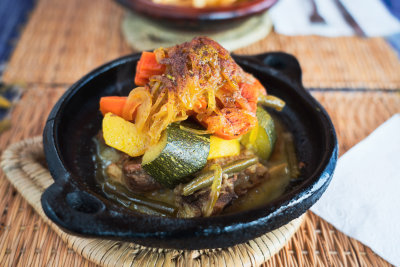
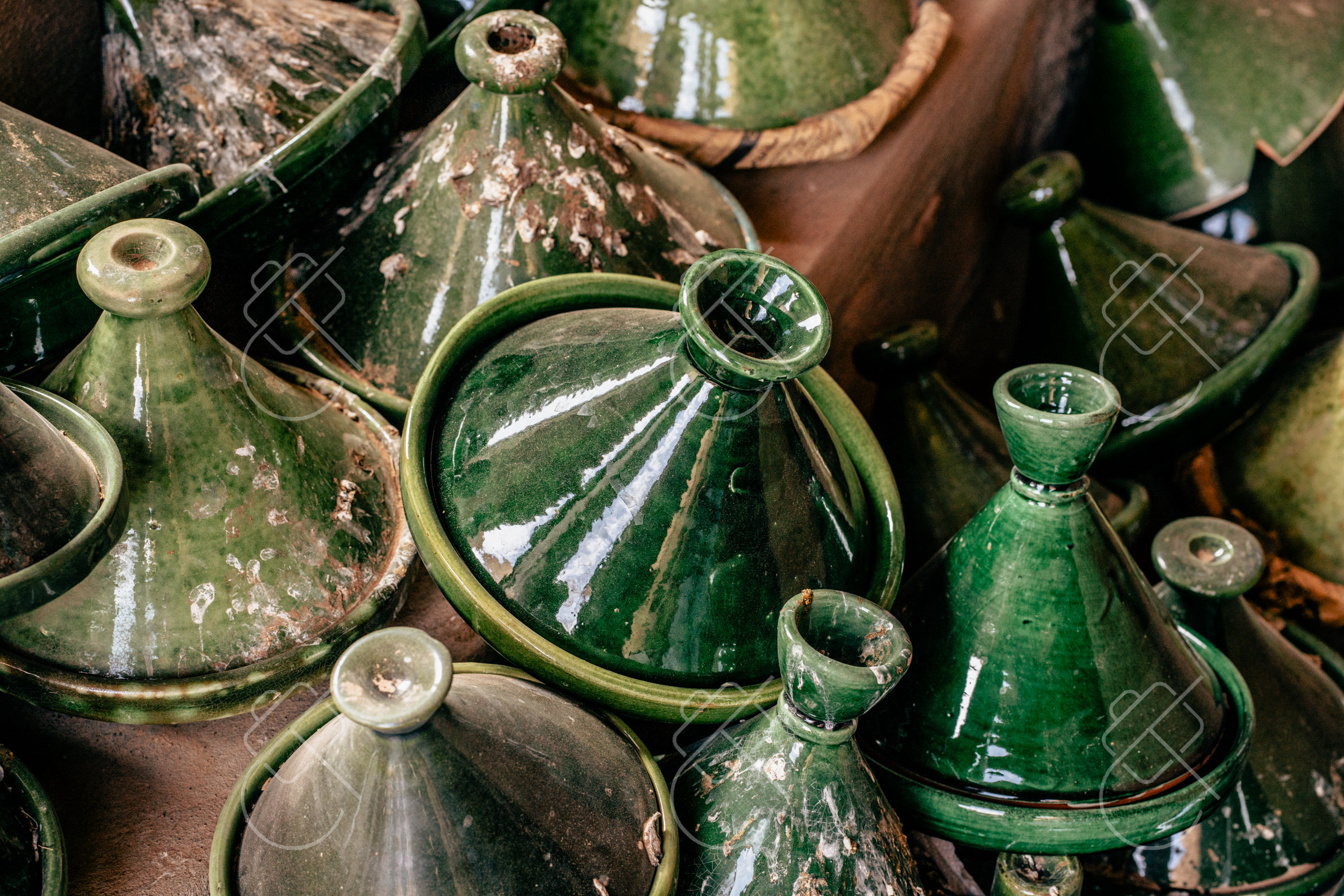
Slow-cooked in its iconic cone-lidded clay pot, the tagine layers vegetables, preserved lemon and warm spices into a fragrant, tender stew. It is the dish every traveler should try, ideally scooped up with torn rounds of fresh khobz bread.
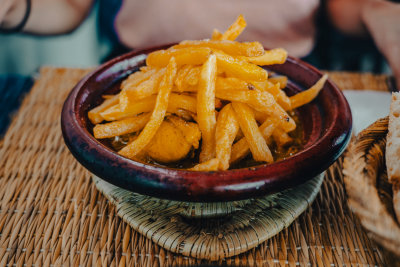
Tender, slow-cooked lamb tagine in a spiced sauce, served with a side of crisp fries — the frites that turn up alongside so many Moroccan plates. Hearty and deeply savory.
Explore regional routes with verified local fleets, zero hidden charges, and transparent insurance on Localrent.
See the best deals on Morocco hotels right now on Booking.com.
Before setting out for Morocco, World Nomads was the travel insurance policy we picked to cover the unexpected.
Transit cards, local customs, visa rules, and practical travel guides for this region.
See every destination from the 526-day journey:
Browse all destinationsCurious about the gear behind these photos? See the gear list.