
Home
About us
Destinations
Travel Guides
Recipes
Featured
Photos As Art
Abstract Prints
Locations
Travel Gear
Travel Resources
Favorites
Photo Framer
Explore Photos
ContactKyoto asks for patience. It hides its best moments in the half-light before the tour buses arrive and in the lanes just off the famous ones, and it hands them only to travellers who slow down. Three unhurried days won't exhaust a thousand-year-old capital, but with an early alarm and a loose plan they're enough to walk its great temple districts, catch the vermilion gates of Fushimi Inari before the crowds, and come home with the Kyoto you actually came for.
Published June 27, 2026 · Last updated
Tap any photo to open it full-screen and order a print.
Three days is the sweet spot for Kyoto — enough to walk its great temple districts without turning the trip into a checklist. Southern Higashiyama and its lanes take the first day, Arashiyama and the western hills the second, and Fushimi Inari and the south the third. The city is spread out and bus-dependent, so cluster each day by area rather than crisscrossing, and start every morning early: Kyoto's famous spots are magical at dawn and mobbed by ten.
We spent 4 days in Kyoto, 2–6 April 2023.
Not for tourism or business trips up to 90 days — US citizens travel under Japan's visa exemption arrangement, showing up with a valid passport and no advance application, fee, or consulate visit required.
From ¥200 to ¥10,000 per person per night, based on the room rate per person before meals and consumption tax.
It is not offensive, but it is not done and can cause confusion.
Only from a respectful distance while standing on public streets like Hanamikoji.
About 75 minutes, with trains roughly every 30 minutes.
Kyoto rewards the shoulder weeks. Late spring and mid-autumn bring the light and colour the city is famous for — and, predictably, the heaviest crowds. Travel in the quieter stretches on either side and you'll trade a little spectacle for a lot of room to breathe (and to set up a tripod).
Sakura usually peaks from late March into the first week of April, and the whole city leans into it — Maruyama Park, the Philosopher's Path, and the Kamo River banks turn pink. It is genuinely beautiful and genuinely packed; lock in lodging months ahead.
Hot, humid, and lush. June's rains bring the moss gardens to their richest green, and July's Gion Matsuri is one of Japan's great festivals. Shoot at dawn — by midday the heat is punishing and the light is flat.
The maples turn from mid-November into early December, and temples like Tofuku-ji and Eikan-do catch fire with colour. This is Kyoto at its most photogenic and, alongside spring, its most crowded — start before sunrise.
Cold, clear, and calm. The crowds thin, prices soften, and a rare snowfall dusting a Higashiyama rooftop or the Golden Pavilion is one of the great Kyoto photographs. Pack layers and start slow.
Fushimi Inari Shrine — The mountain of ten thousand vermilion torii gates — open 24 hours and best at dawn.
Kiyomizu-dera — The great wooden temple stage over Higashiyama, and the stepped lanes that climb to it.
Arashiyama Bamboo Grove — The towering green corridor west of the city — shoot it before 8am or not at all.
Kinkaku-ji (Golden Pavilion) — The gold-leafed pavilion mirrored in its pond; the definitive Kyoto postcard.
Gion — The geiko district of wooden teahouses and lantern-lit lanes, best at dusk.
Tenryu-ji — Arashiyama's Zen temple with a borrowed-scenery pond garden.
Nishiki Market — Kyoto's five-block kitchen of pickles, tofu, and street bites.
Tofuku-ji — A Zen complex whose maple valley is one of Japan's great autumn scenes.
Philosopher's Path — A canal-side walk under the cherry trees, loveliest in blossom season.
Nijo Castle — The shogun's Kyoto palace, with 'nightingale' floors that sing underfoot.
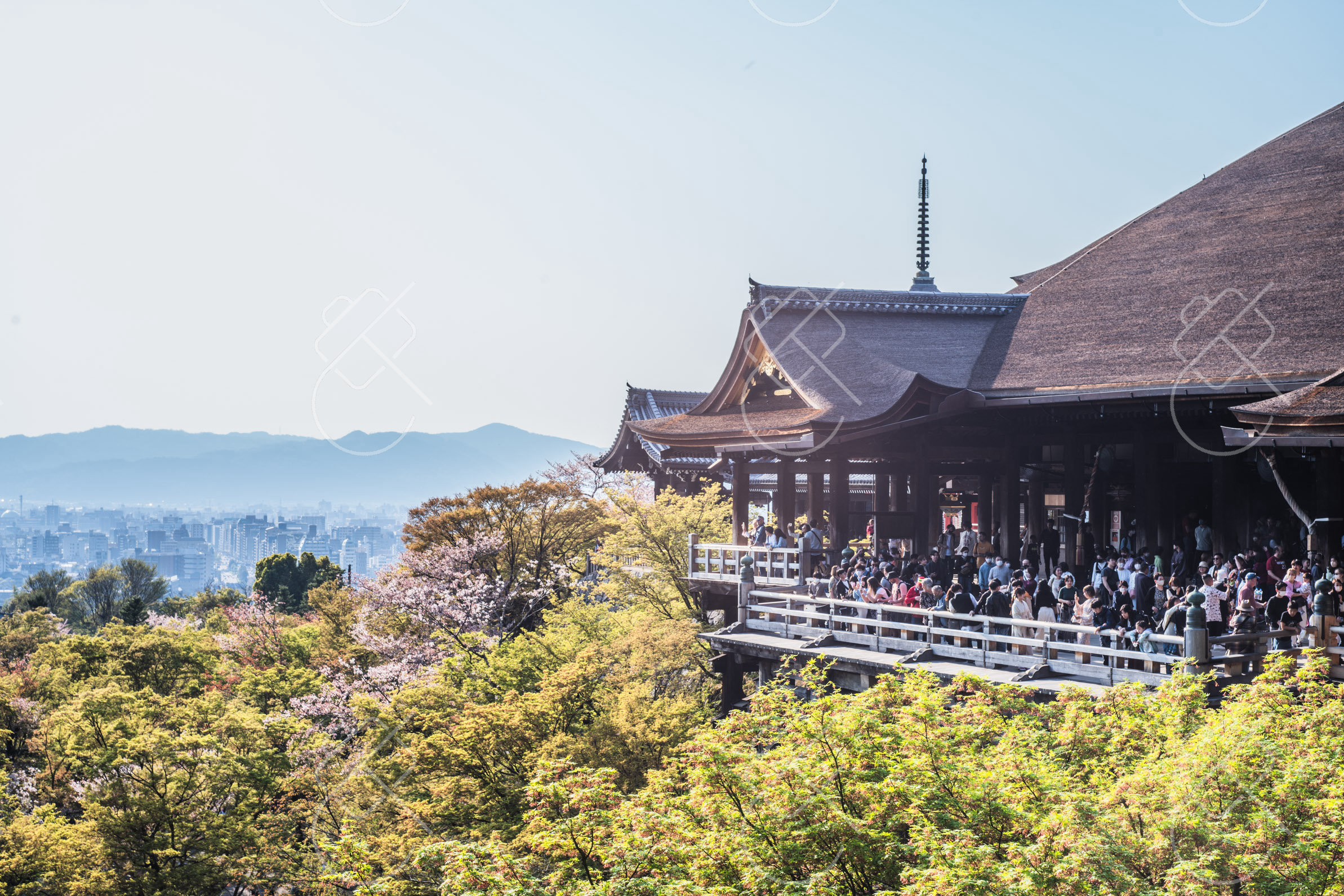
The stone lanes below Kiyomizu-dera are the Kyoto of the imagination — wooden shopfronts, a pagoda rising over the rooftops, and hills stacked with temples. It is also the busiest corner of the city by ten in the morning, which is exactly why you come at six.
Kiyomizu-dera's great wooden stage juts out over the hillside without a single nail, and the hour after it opens is the one time you'll have it in soft light and near-silence. From there the stepped lanes of Sannenzaka and Ninenzaka drop down through shuttered teahouses toward Kodai-ji and Maruyama Park.
Don't rush it. The pleasure of Higashiyama is in the side streets — a glimpse of the Yasaka Pagoda at the end of an alley, a moss-lined wall, a lantern still lit from the night before.
Dawn, without exception. Kiyomizu-dera opens around 6am; the hour that follows is the difference between an empty temple and a wall of selfie sticks.
Base yourself in Higashiyama or near Gion — you'll want to step straight out into these lanes before the city wakes.
Yudofu (simmered tofu) is the local specialty near the temples; reward the climb with matcha soft-serve on the way up.
Shoot the Yasaka Pagoda from partway up Yasaka-dori, low and centred, so the street's power lines fall away beneath the tower.
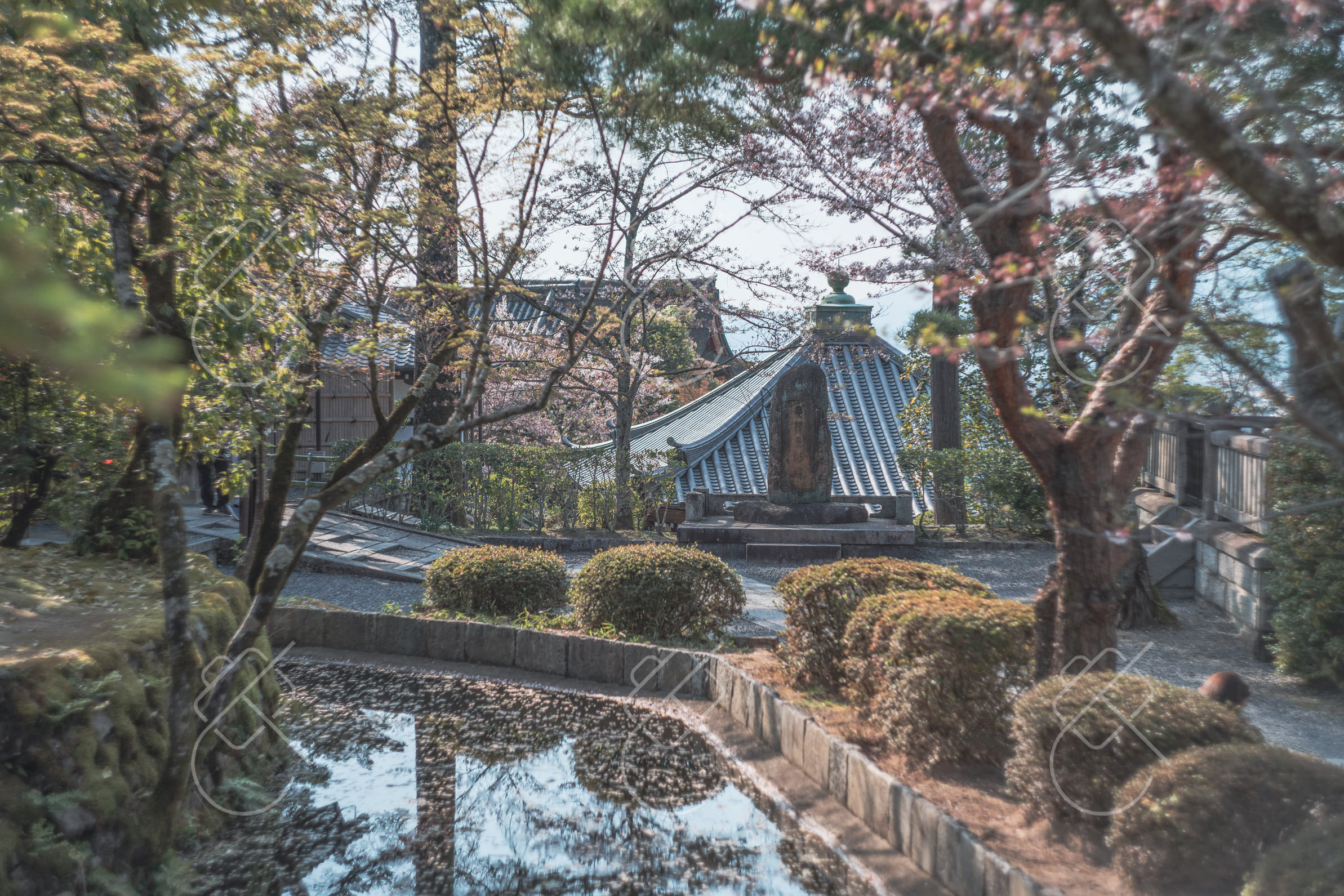
Half an hour west of the centre, the city gives way to river, mountains, and the famous bamboo grove. Arashiyama is a half-day of its own, and like everywhere in Kyoto it belongs to whoever arrives first.
The Bamboo Grove path only photographs the way you've seen it in the quiet before eight; after that it becomes a slow river of people. Just behind it, Tenryu-ji's pond garden borrows the western hills as its backdrop — one of the oldest moves in Japanese landscape design and still one of the most beautiful.
Cross the Togetsukyo Bridge, ride the little Randen tram, and if your legs are willing, climb to the Iwatayama monkey park for a view back across the whole Kyoto basin.
Be at the bamboo grove by 7–8am. There is no golden hour that makes up for the midday crowds here — only the early start does.
Soba by the river or another round of yudofu; the Randen tram terminus even has a free foot-bath to rest in.
The grove is a tunnel of vertical lines; a slightly wide lens shot straight down the path, waist-height, keeps them from converging awkwardly.
By eight the bamboo path fills and the spell breaks — Arashiyama belongs to whoever gets there first.
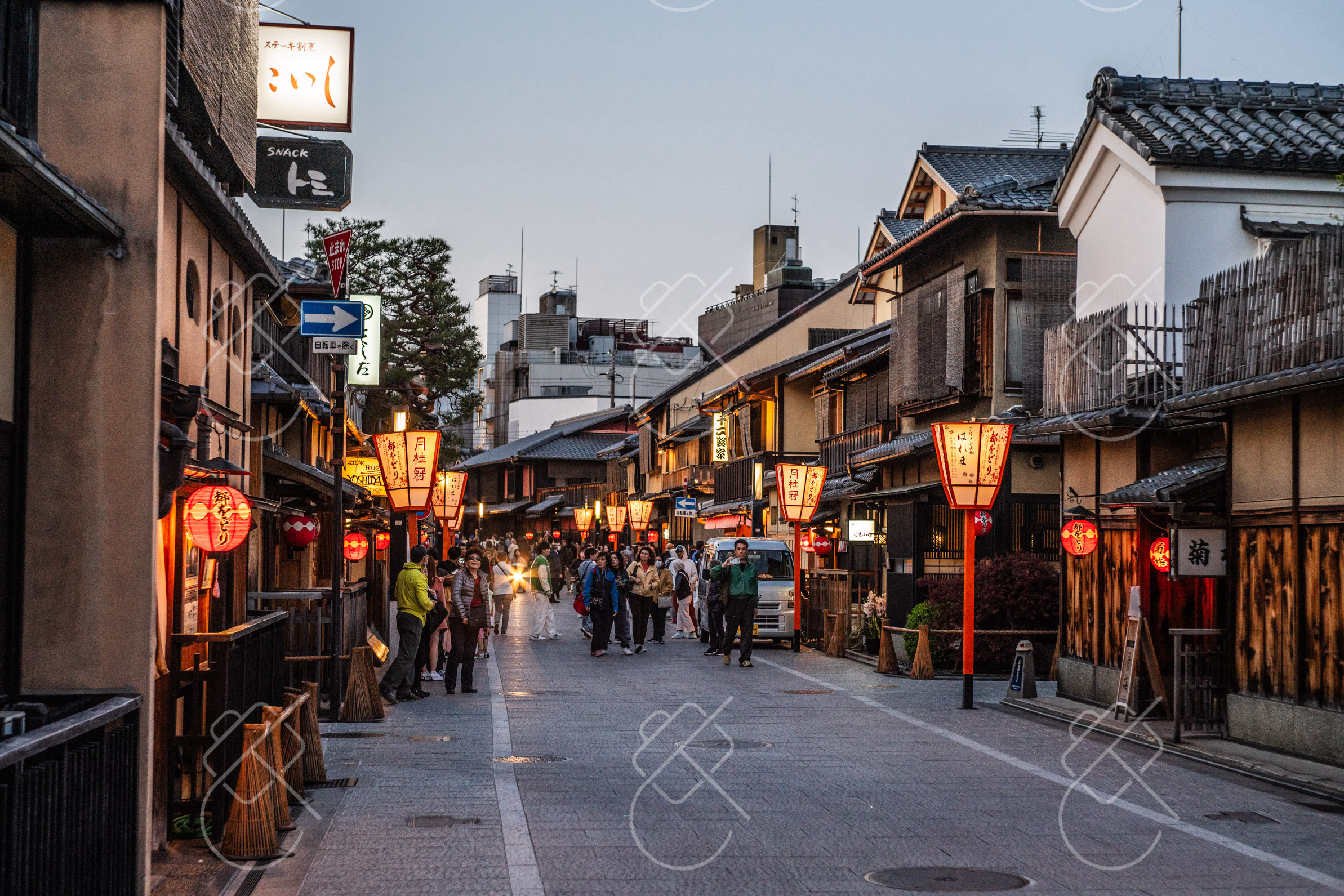
Central Kyoto is where the city stops being a museum and starts being a place people live — the geiko districts of Gion, the narrow lantern-lit alley of Pontocho, the covered stalls of Nishiki Market, and the wide gravel banks of the Kamo River.
Gion is best at dusk, when the machiya facades along Hanami-koji glow and the streets fill with the sound of wooden geta. Blue hour — the half hour after sunset — is the moment Pontocho and the Kamo River are at their most cinematic.
By day, graze your way through Nishiki Market, a five-block arcade of pickles, tofu, skewers, and knives that locals have shopped for four hundred years.
Blue hour. The thirty minutes after sunset light Gion and Pontocho from within — earlier is too bright, later goes flat.
Downtown around Karasuma or Kawaramachi puts you within a short walk of dinner, the river, and the train lines out to Arashiyama and Fushimi.
Street bites in Nishiki Market by day; kaiseki or obanzai — Kyoto's refined home cooking — for dinner.
Gion's private side lanes are off-limits and photographing geiko without consent now carries fines — stick to the public streets and be quick and quiet.
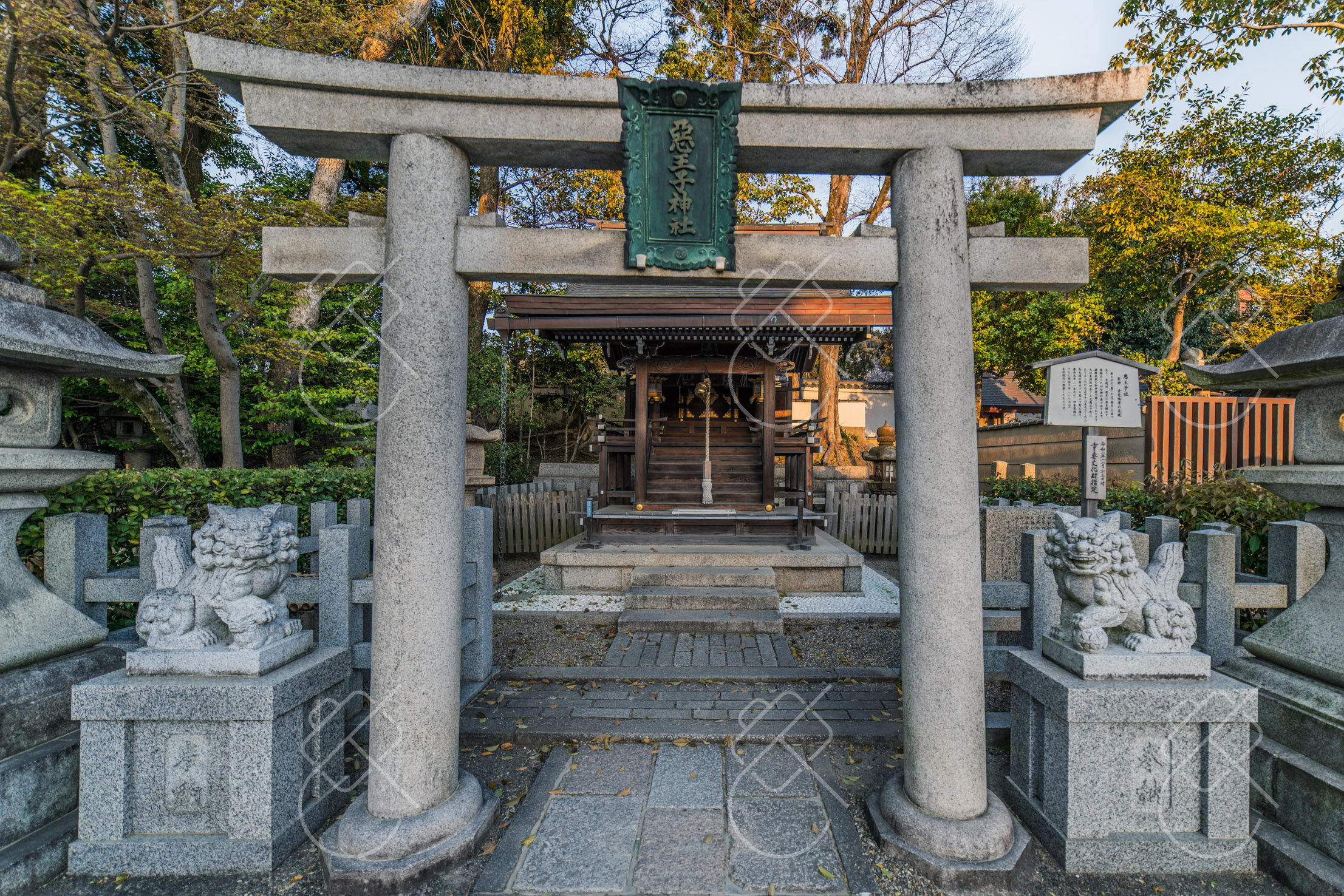
South of the centre, ten thousand vermilion torii gates climb a wooded mountain above the Fushimi Inari shrine. It is the single most photographed place in Kyoto — and, with the right timing, one where you can still find silence.
The shrine never closes, which is its secret. Come at dawn or after dark and the lower tunnels — the dense Senbon Torii — are yours. Better still, keep climbing: most visitors turn back at the first viewpoint, and twenty minutes up the crowds simply vanish.
In autumn, pair it with nearby Tofuku-ji, whose maple-filled valley and bridge make one of the finest fall scenes in the country.
Dawn or after dark — the shrine is open 24 hours, and those are the only windows when the gate tunnels are empty enough to shoot cleanly.
Grilled quail and inari-zushi — sweet tofu-wrapped sushi — from the stalls clustered near the shrine's main gate.
The dense, most photogenic gates are all within the first 30 minutes of climbing; the full mountain loop takes 2–3 hours if you want the views as well.
Twenty minutes up the mountain the crowds fall away and the torii close in around you.
A loose, walkable route — bend it to your pace and the light.
Start before the city does. Kiyomizu-dera opens around 6am, and the hour that follows hands you the wooden stage, the pagoda, and the hillside lanes in soft light and near-silence. Climb up through Sannenzaka and Ninenzaka while the shopfronts are still shuttered and the stone is still cool.
Work north through Kodai-ji and Maruyama Park toward Yasaka Shrine, then drop into Gion for a late lunch. Spend the afternoon slowly — Higashiyama rewards wandering far more than a checklist — and end the day on the Kamo River as the light goes.
Where to shoot: Kiyomizu-dera stage at 6–7am · Yasaka Pagoda down Yasaka-dori · Sannenzaka's stepped lane · Maruyama Park's weeping cherry
Tip: Buy a rechargeable ICOCA card at the station — Kyoto runs on buses and short hops, and fumbling for coins wastes the daylight you got up early for.
Take the early train out to Arashiyama and go straight to the Bamboo Grove — by eight it fills and the spell breaks. Behind it, Tenryu-ji's pond garden borrows the mountains as its backdrop; give it time before the gates get busy.
Cross the Togetsukyo Bridge, ride the little Randen tram, and, if the legs allow, climb to the Iwatayama monkey park for a view back over the whole basin. Return to the centre for dinner along Pontocho as the lanterns come on.
Where to shoot: Bamboo Grove before 8am · Tenryu-ji's borrowed-scenery garden · Togetsukyo Bridge · Pontocho alley at blue hour
Tip: Arashiyama is 30–40 minutes from central Kyoto — treat it as its own half-day rather than cramming a temple marathon around it.
Save the last day for Fushimi Inari, shrine of ten thousand gates. It never closes, so beat the crowds at dawn or save it for after dark when the lanterns light the lower tunnels. Either way, climb past the first viewpoint — twenty minutes up, the crowds thin and the torii close in around you.
In autumn, pair it with nearby Tofuku-ji and its maple valley. Otherwise loop back through Nishiki Market to graze your way toward a final Kyoto dinner.
Where to shoot: Senbon Torii tunnels at dawn · The quiet upper trail · Tofuku-ji's maple valley (autumn) · Nishiki Market stalls
Tip: Short on time? The dense, most photogenic gate tunnels are all in the first half-hour of climbing — you don't need the full loop to get the shot.
With extra days, Kansai opens up fast: Nara and its bowing deer are 45 minutes away, Osaka's food scene an easy evening out, and Himeji — Japan's finest castle — about an hour by train. Closer still, the mossy temples of Ohara and the Fushimi sake district make gentle half-day escapes from the city's busiest lanes.
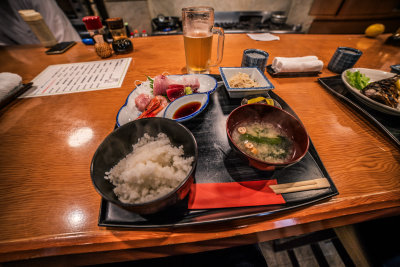
Obanzai is Kyoto's home-style cooking — small, seasonal, vegetable-forward dishes served together as a set. It's the everyday counterpoint to the city's famous high-end kaiseki.
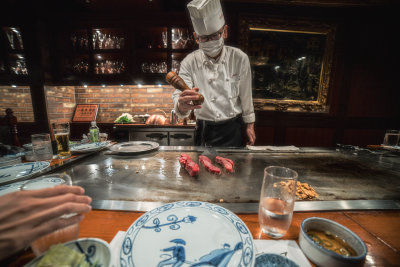
Kyoto does refined tabletop cooking as well as it does temples — seasonal vegetables, tofu, and meat seared griddle-hot in front of you, a short walk from the Gion lanterns.
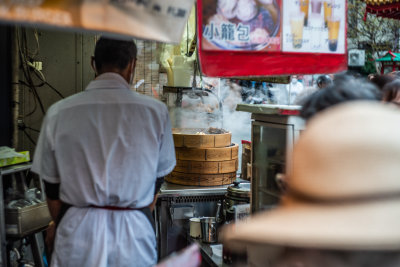
The five-block Nishiki arcade is Kyoto's kitchen — pick your way past stalls of steamed buns, dumplings, pickles, and skewers that locals have shopped for four centuries.
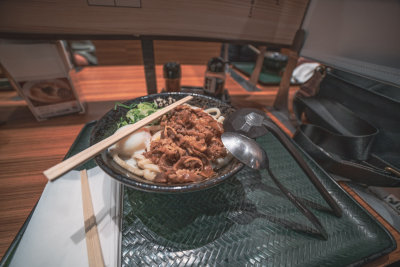
A steaming bowl of thick wheat noodles is the reliable, warming lunch between temples — never far away, and never a mistake on a cold Kyoto morning.
Explore regional routes with verified local fleets, zero hidden charges, and transparent insurance on Localrent.
Find the best deals on Kyoto accommodation with Booking.com.
Transit cards, local customs, visa rules, and practical travel guides for this region.
See every destination from the 526-day journey:
Browse all destinationsCurious about the gear behind these photos? See the gear list.