Home
About us
Destinations & Country Guides
Travel Guides
Recipes
Featured
Photos As Art
Abstract Prints
Locations
Travel Gear
Travel Resources
Favorites
Photo Framer
Explore Photos
Contact Trip planning
By Clever Tourists · Published · Last updated
Spain is easy for first-timers, but five things catch people out: the new EES fingerprint check at the border, the amount of personal data hotels now have to collect, rising tourist taxes in Barcelona and the Basque Country, meal times that run two to three hours later than at home, and summer heat in the south that shuts down the afternoon. We travelled Spain for about 60 days from 27 June to 26 August 2022, from Madrid along the north coast to Barcelona, Valencia and Andalusia. The rules and fees below come from official and current sources, with the year each applies to.
1. The border now takes your fingerprints (EES), but ETIAS has not started. Spain is in the Schengen Area, so visa-free visitors such as Americans can stay up to 90 days in any 180. Since 10 April 2026 the EU's Entry/Exit System is fully running at all Schengen external borders: on your first entry you give four fingerprints and a photo, and passport stamps are gone. ETIAS, the planned €20 (≈ $22) online authorisation, is not in operation and the EU's official site gives no start date, so there is nothing to apply for. Our ETIAS and EES explainer and Spain visa guide have the details.
2. Hotels will ask for more personal data than you expect. Since December 2024, Royal Decree 933/2021 has required hotels, holiday rentals and car-hire firms to record extra guest details, such as home address, phone number and payment method, and report them to the Interior Ministry's SES.HOSPEDAJES system. Hospitality groups have criticised the rule, but the request is legitimate. Give the details at check-in or through the property's own booking channel.
3. Book the Alhambra before you book Granada. Entry to the Alhambra's Nasrid Palaces is by timed ticket and sells out weeks ahead in spring and summer. Buy only from the official Patronato de la Alhambra site or an authorised seller, then plan your Granada nights around the slot. We spent 4 days in Granada in August 2022; our Andalusia rail itinerary shows how it fits with Córdoba and Seville.
4. Cards work almost everywhere; always pay in euros. Contactless is normal in bars, shops and on city transport. When a card machine offers to charge you in dollars or pounds, choose euros: the conversion the machine offers (dynamic currency conversion) is set by the merchant's bank and is usually worse than your own card's rate. Carry a little cash for small bars and markets. More in cash or card abroad.
5. Tipping is small and optional. Spaniards often leave nothing at a tapas bar and round up or leave a few euros after a sit-down meal. Nobody expects 15 to 20%. See tipping in Spain.
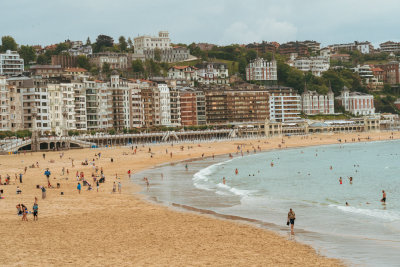
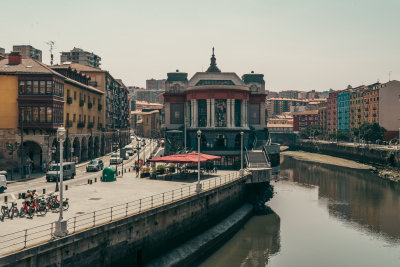
6. Tourist taxes are rising. In Barcelona the combined Catalan and city tax has been €7 to €12 (≈ $7.8–13.4) per person per night since 1 April 2026, depending on the type of accommodation, for up to 7 nights (Barcelona tourist tax). The Basque Country adds its own nightly tax from 1 January 2027, covering San Sebastián and Bilbao (Basque tourist tax). It is paid at the hotel, on top of the room rate.
7. Budget by region, not by country. Our daily budget by country puts Spain at about $55 to $80 a day on a budget and $120 to $210 mid-range. Barcelona, San Sebastián and Seville in summer cost the most; Oviedo, Logroño and other inland and northern cities run noticeably cheaper. The menú del día at lunch is the best food value in the country.
8. High-speed trains beat flying on most domestic routes. Renfe's AVE now competes with Ouigo and Iryo on the busiest lines, such as Madrid to Barcelona and Madrid to Andalusia, which keeps fares down if you book ahead. Prices rise sharply in the last days before travel. Our two-week Spain itinerary and Seville to Granada guide cover the routes.
9. Buses fill the gaps. Where the rail line is slow or missing, as between Seville and Granada or along parts of the north coast, long-distance buses (ALSA is the biggest operator) are often faster and cheaper than the train. Buy online in summer, when popular departures sell out.
10. Pickpockets work the obvious places. Barcelona's Ramblas and metro and Madrid's centre and metro are the classic spots. Keep phones off café tables and bags zipped and in front of you on crowded trains. Violent crime against tourists is uncommon.
11. Meals run late. Lunch is the main meal, usually between about 14:00 and 16:00, and dinner rarely starts before 21:00. Kitchens often close in the late afternoon, which is when tourists end up in the worst restaurants on the main square. Eat lunch like a local and use tapas to bridge the gap. Start with our Spanish food guide and what to eat in Madrid.
12. The south is very hot in summer. AEMET's climate normals put the average high in the warmest month at about 36 °C in Seville and 37 °C in Córdoba, against about 32 °C in Madrid and the low to mid 20s °C on the north coast. AEMET recorded July 2022 as Spain's hottest month since at least 1961. Sightsee in the morning, rest after lunch and go out again in the evening. We were in Seville from 16 to 21 August 2022. For the best months by region, see best time to visit Spain.
13. Shops close in the afternoon and on Sundays, depending on the region. Many smaller shops close for a few hours after lunch, and Sunday opening depends on regional rules: Madrid is more open than most of the country. Plan around national and regional holidays too, especially Three Kings Day on 6 January and Semana Santa, when processions take over city centres.
14. Spain has four official languages. Castilian Spanish is spoken everywhere, but Catalan, Basque and Galician are co-official in their regions, so street signs in Barcelona, Bilbao or San Sebastián may not match your map app's spelling. A few words of Spanish go a long way outside the big cities.
15. Dress for churches, not just the beach. Cathedrals and working churches expect covered shoulders and no swimwear, and some limit tourist visits during Mass. Many coastal towns also frown on swimwear away from the beach. Our Spain packing list covers what to bring.
16. Plugs are Type C and F at 230 V. North American travellers need a plug adapter, and anything not rated for 100 to 240 V also needs a converter. Phone and laptop chargers almost always handle both. Tap water is safe to drink across Spain, though some coastal cities' water tastes of minerals or chlorine.
17. Get data before you land and save 112. An eSIM bought in advance is the simplest option; see Spain eSIM for tourists. The EU-wide emergency number 112 works across Spain for police, ambulance and fire, with English-speaking operators.
No. ETIAS is not in operation and the EU has published no start date. What has changed is EES: since 10 April 2026 non-EU visitors give fingerprints and a photo at the Schengen border instead of getting a passport stamp.
Since December 2024, Royal Decree 933/2021 requires hotels, holiday rentals and car-hire firms to collect extra guest details and report them to Spain's Interior Ministry. The request is legitimate.
Rarely before 21:00. Lunch is the main meal, usually between about 14:00 and 16:00, and many kitchens close in the late afternoon.
Types C and F at 230 V. North American visitors need an adapter, and a converter only for devices not rated for 100 to 240 V.
Get our new Spain guides and practical tips by email: where to stay, what to eat, what things cost and the rules that catch travelers out.
Free. No spam, only new guides and tips.
Search verified local fleets with low security deposits and exact model delivery on Localrent.
Get the best rates and deals on Spain hotels through Booking.com.