
Home
About us
Destinations
Travel Guides
Recipes
Featured
Photos As Art
Abstract Prints
Locations
Travel Gear
Travel Resources
Favorites
Photo Framer
Explore Photos
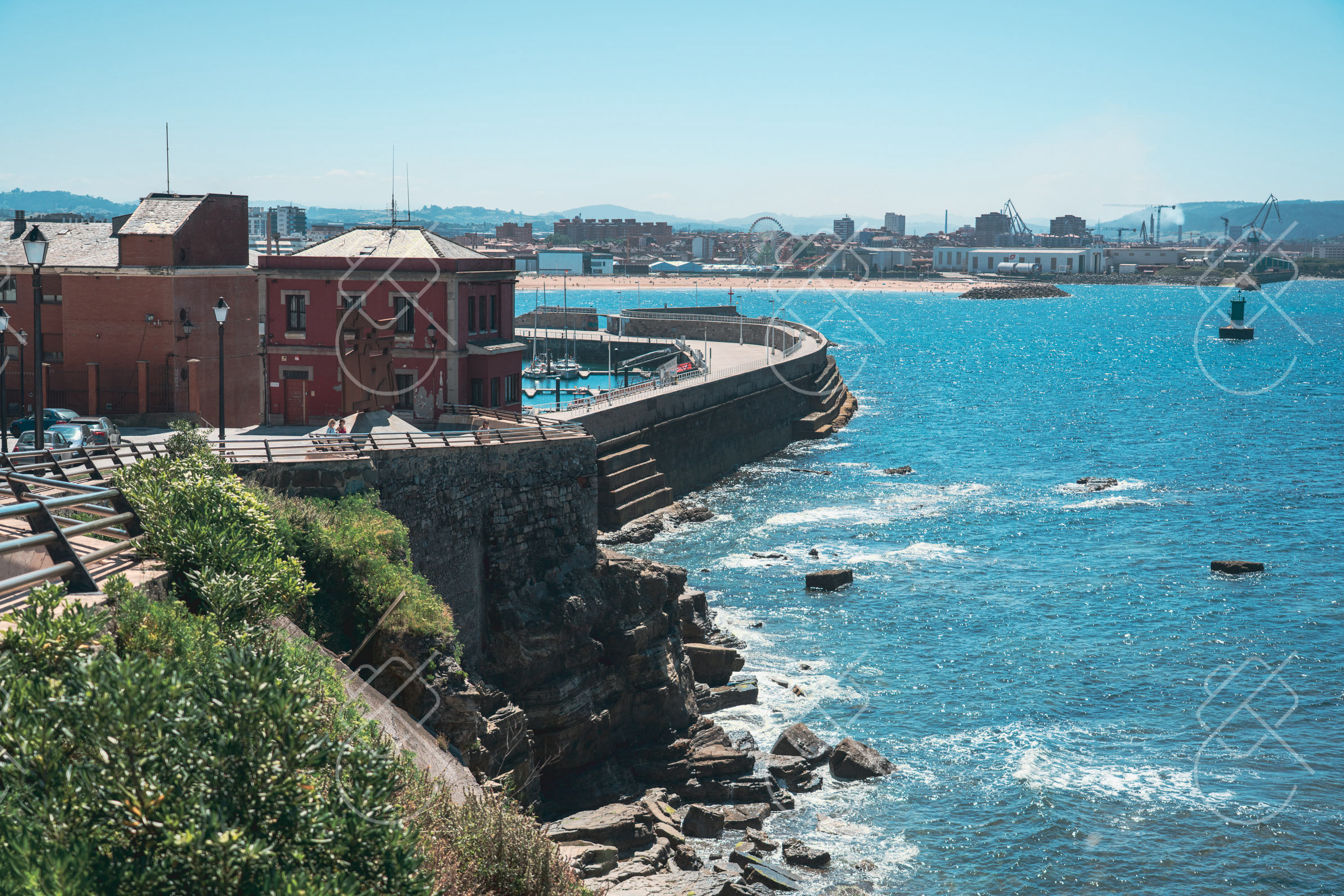
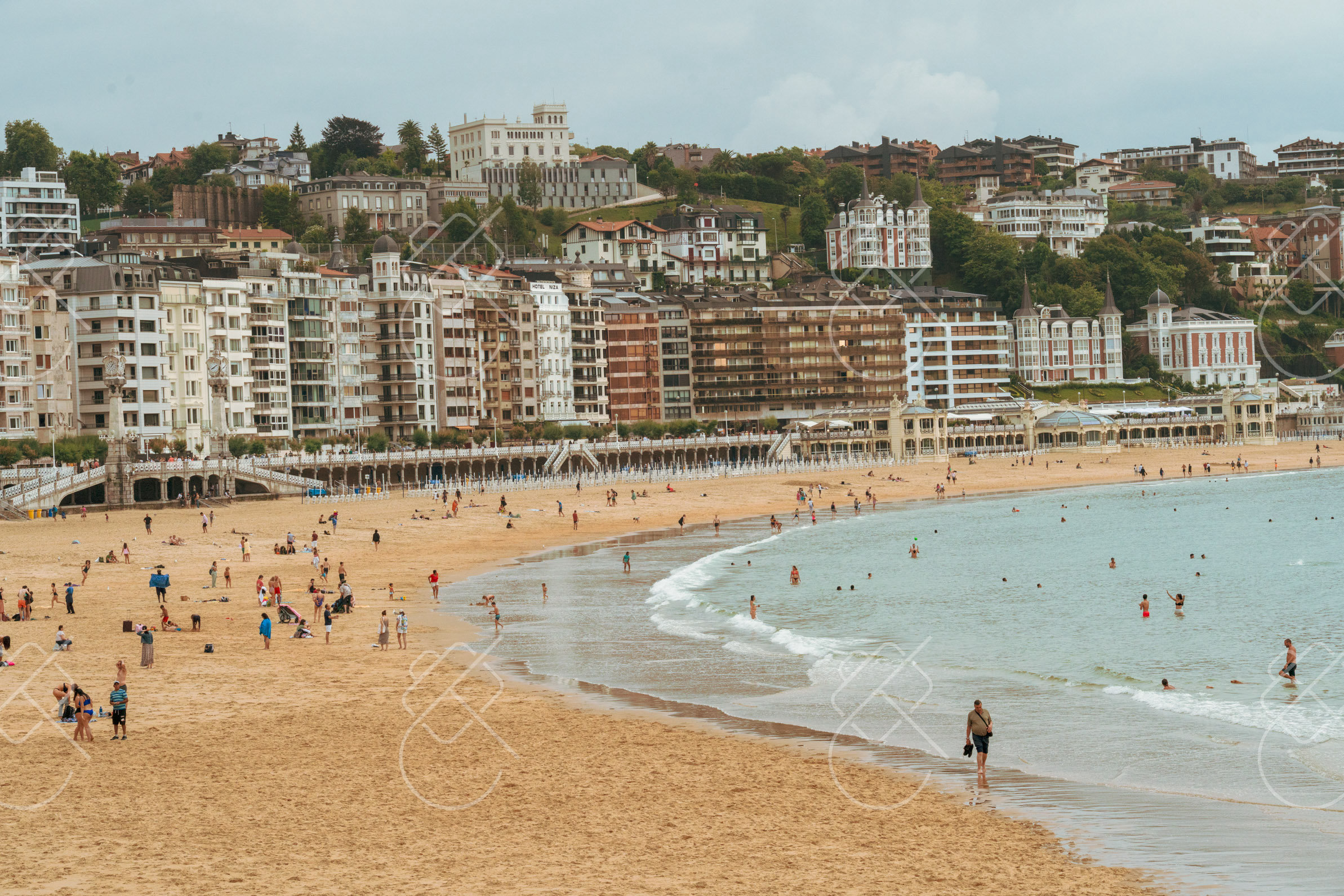
ContactGijón is Asturias' biggest city and its most beach-facing one, a working port that wraps a nearly 1.5-kilometer crescent of sand into its own downtown. Behind the beach, the old fishing quarter of Cimadevilla climbs a headland toward the open Cantabrian Sea, ending at a hilltop park where a monumental concrete sculpture frames nothing but water and sky.
Published July 7, 2026
Tap any photo to open it full-screen and order a print.
Gijón pairs a full-size city beach with a fishing-village old quarter, Roman ruins under glass at the water's edge, and some of northern Spain's most serious cider culture.
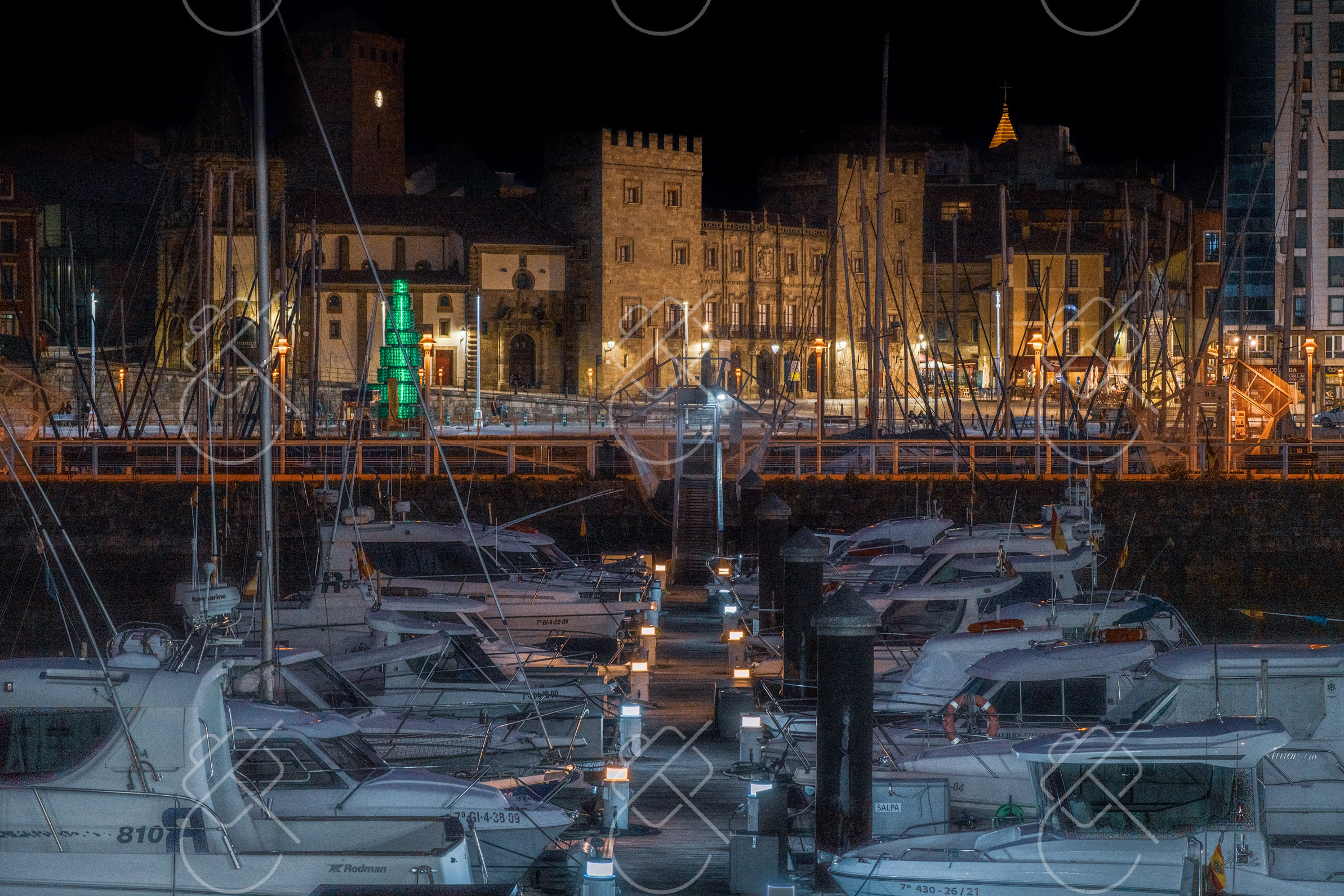
San Lorenzo Beach is the reason Gijón feels more like a resort than an industrial port, even though it's both: the sand runs almost the full length of downtown, backed by a seafront promenade of Belle Époque townhouses and apartment blocks rather than hotels. At its eastern end, the Termas Romanas de Campo Valdés — a set of 1st-century Roman bathhouse ruins, excavated in 1903 and now preserved beneath a glass pavilion — sit just steps from the sand, a reminder that Gijón (Roman Gigia) has been a port for close to two thousand years. From there, the fishing quarter of Cimadevilla climbs the headland in narrow, colorful lanes lined with sidrerías, its Iglesia de San Pedro rebuilt in neo-Gothic stone after the original medieval church was destroyed in the Spanish Civil War.
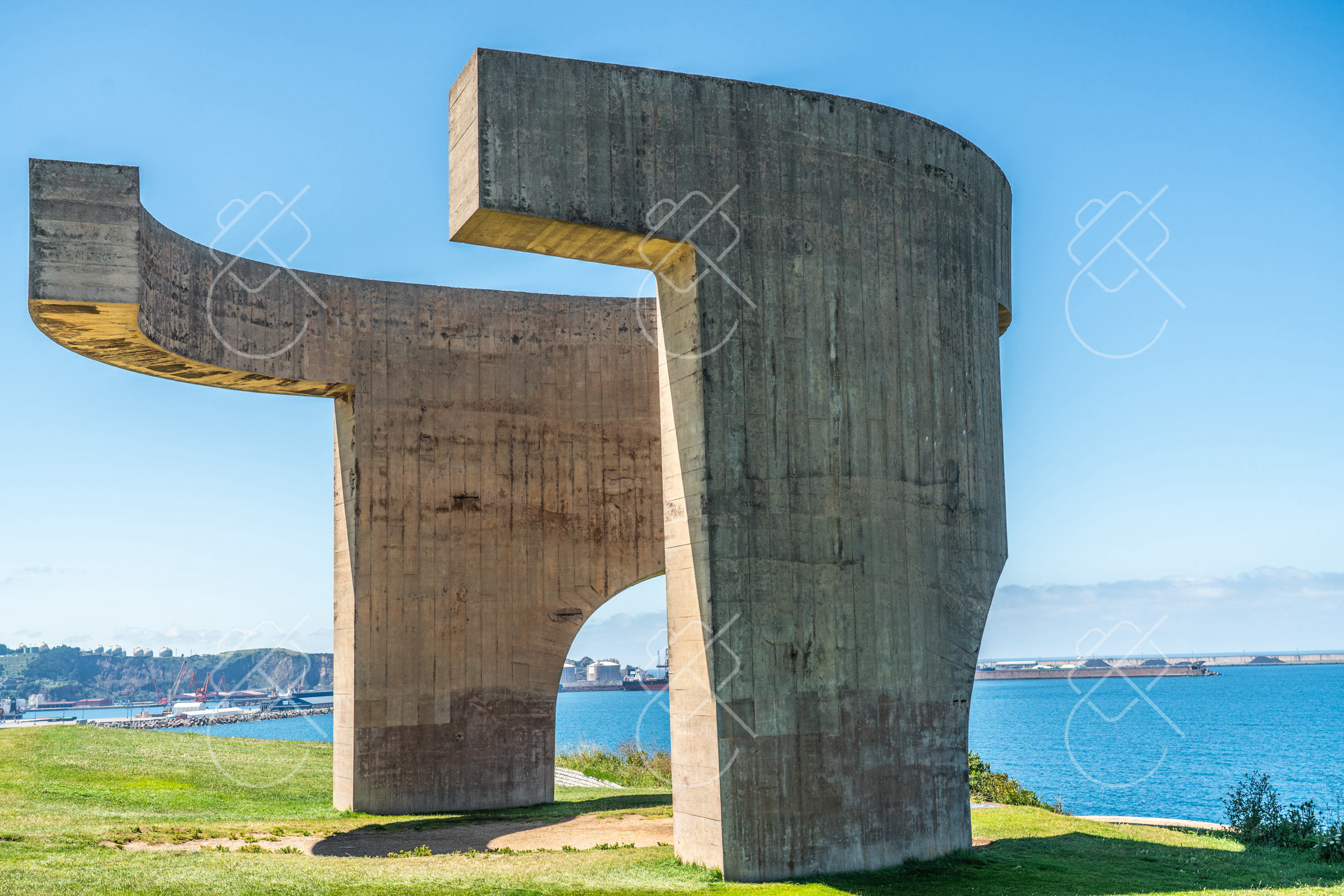
Chillida's Elogio del Horizonte, its hollow concrete form framing the Cantabrian Sea
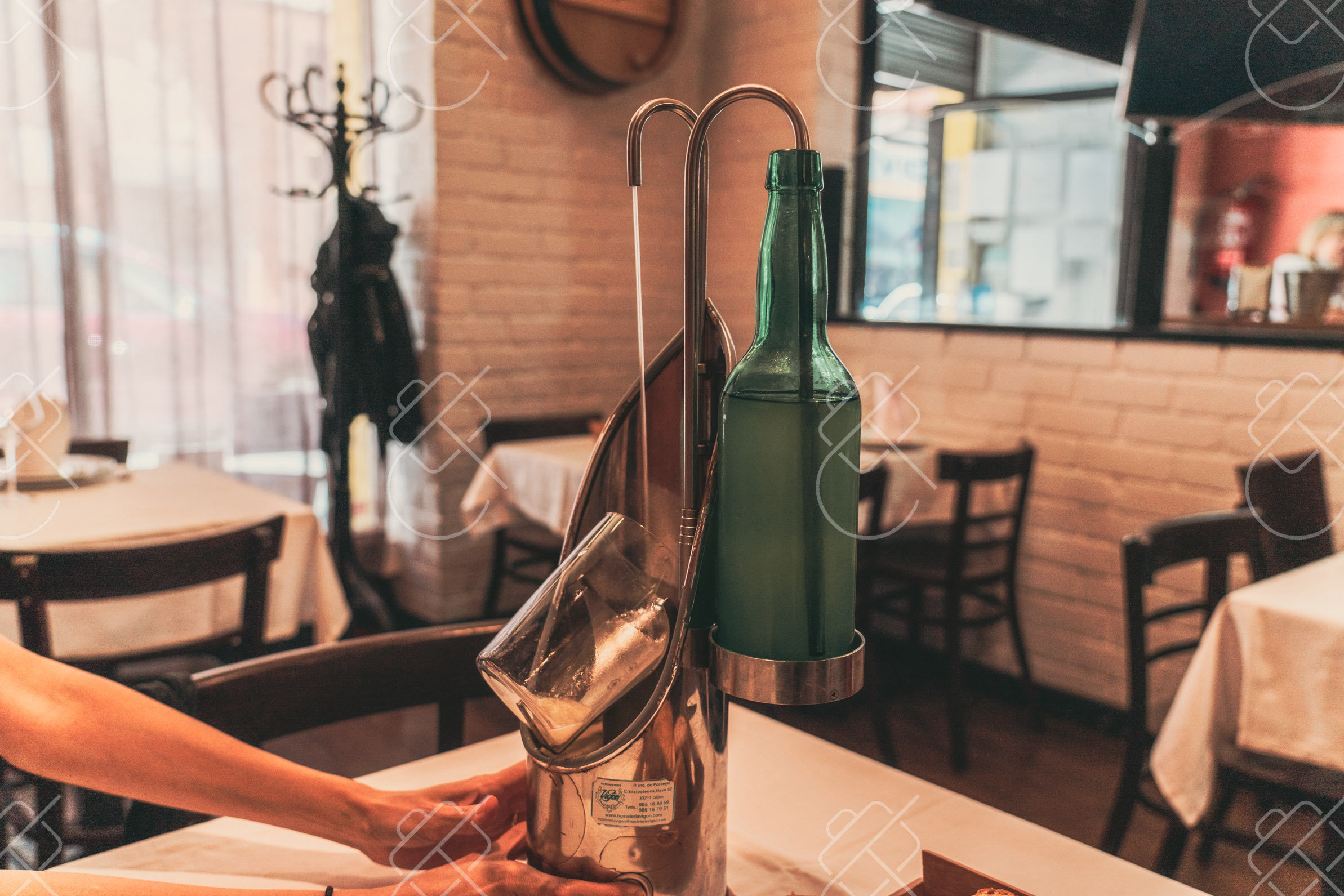
Cimadevilla's headland ends at Cerro de Santa Catalina, a hilltop park with nothing between it and the Cantabrian Sea except Eduardo Chillida's Elogio del Horizonte — a roughly 10-meter concrete sculpture installed in 1990, its hollow, curved form angled so that sea wind passing through its gaps is said to produce a low humming sound. The view from the same hill takes in the working port and the whole curve of San Lorenzo Beach at once, best at sunset when the light turns the sand copper. Back down in Cimadevilla afterward, order sidra natural at a sidrería and watch it get poured escanciado-style, held above the server's head and aimed into a glass at hip height to aerate the cider before it's drunk in one go.
June, when the Cantabrian coast is warm enough for the beach but before the August crowds and peak cider-festival season fill Cimadevilla.
Base yourself in Cimadevilla or along the San Lorenzo Beach promenade, within walking distance of the Roman baths, the cider houses, and the climb up to Cerro de Santa Catalina.
Order fabada asturiana (a rich white bean stew with chorizo and morcilla) or cachopo (two breaded veal cutlets stuffed with ham and cheese) -- both Asturian staples, not just Gijón specialties.
Order sidra by the bottle, not the glass -- it's meant to be poured a splash at a time (a culin) and drunk immediately before it goes flat, not sipped slowly like wine.
Get the best deals on your Gijón stay with Booking.com.
We're not the type to travel without coverage — World Nomads was our travel insurance for all 526 days, Gijón, Spain included.
Transit cards, local customs, visa rules, and practical travel guides for this region.
See every destination from the 526-day journey:
Browse all destinationsCurious about the gear behind these photos? See the gear list.