Spain is worth the trip for the food alone. From whole legs of jamón ibérico to slow-braised callos a la madrileña, here are the dishes to seek out across Spain.
Tap any photo to open it full-screen and order a print.
01 / 09
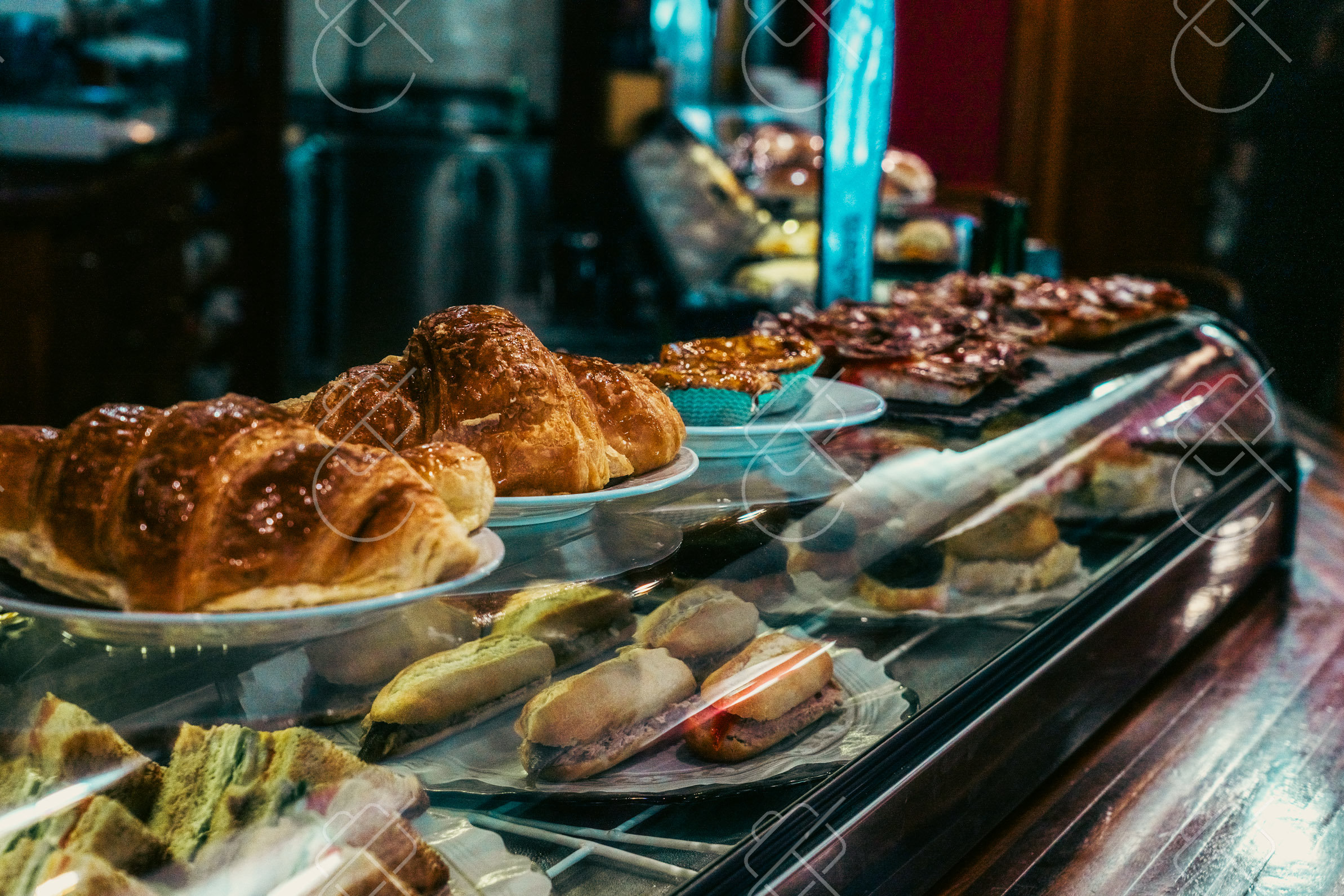
Pintxos bar counter spread
Counters piled high with toothpick-skewered bites are the heartbeat of any Spanish tavern at aperitivo hour. Diners point, share and move from bar to bar, turning dinner into a social crawl through the neighborhood.
Pintxos — from 'pincho,' to pierce, for the toothpick that once held them together — are the Basque answer to tapas. The ritual is to graze from bar to bar, eating one or two with a small glass of txakoli or cider, then paying on the honor system by counting your toothpicks.
02 / 09
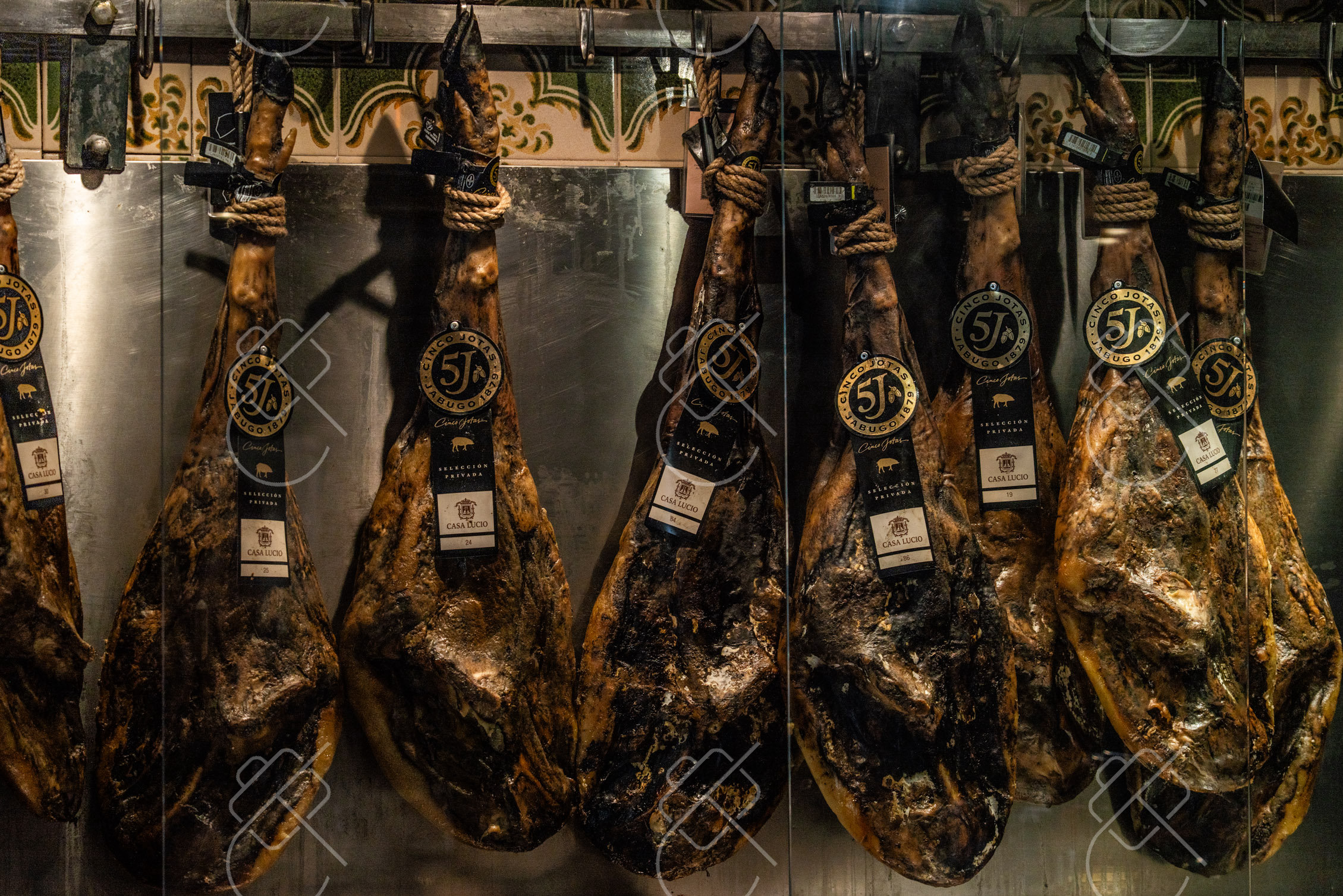
Jamón ibérico, leg by leg
Whole cured hind legs hang in a row above a tiled counter, each tagged with its cure number — the centerpiece of any serious Spanish restaurant or specialty shop.
Jamón ibérico, from the black Iberian pig, is cured for anywhere from 18 months to several years before it's sliced paper-thin and served on its own. The best comes from pigs that spent their final months roaming oak forests on an acorn diet (jamón ibérico de bellota), which shows up as a nutty, almost sweet marbled fat. In Madrid, a rack of legs on display, like this one, is as much a statement piece as it is inventory.
03 / 09
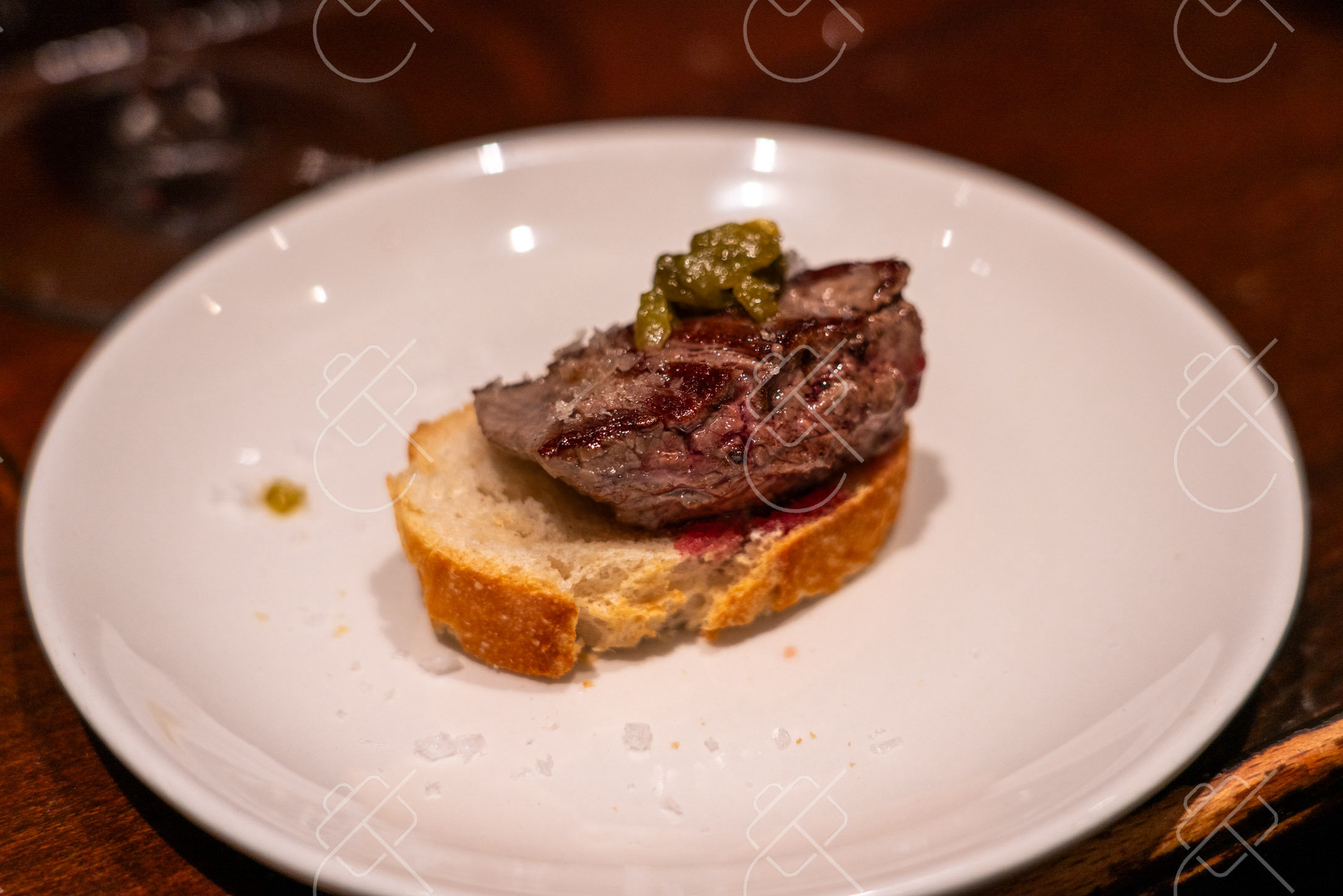
Beef cheek pintxo
A slow-braised beef-cheek pintxo, the meat falling apart over crusty bread — one of the richer stars of the Basque pintxo counter.
Slow-braised beef cheek (carrillera), often cooked in red wine until it falls apart, is a star of the Basque pintxo counter. Pintxo culture was born in San Sebastián's old town, a city that holds more Michelin stars per capita than almost anywhere on earth.
04 / 09
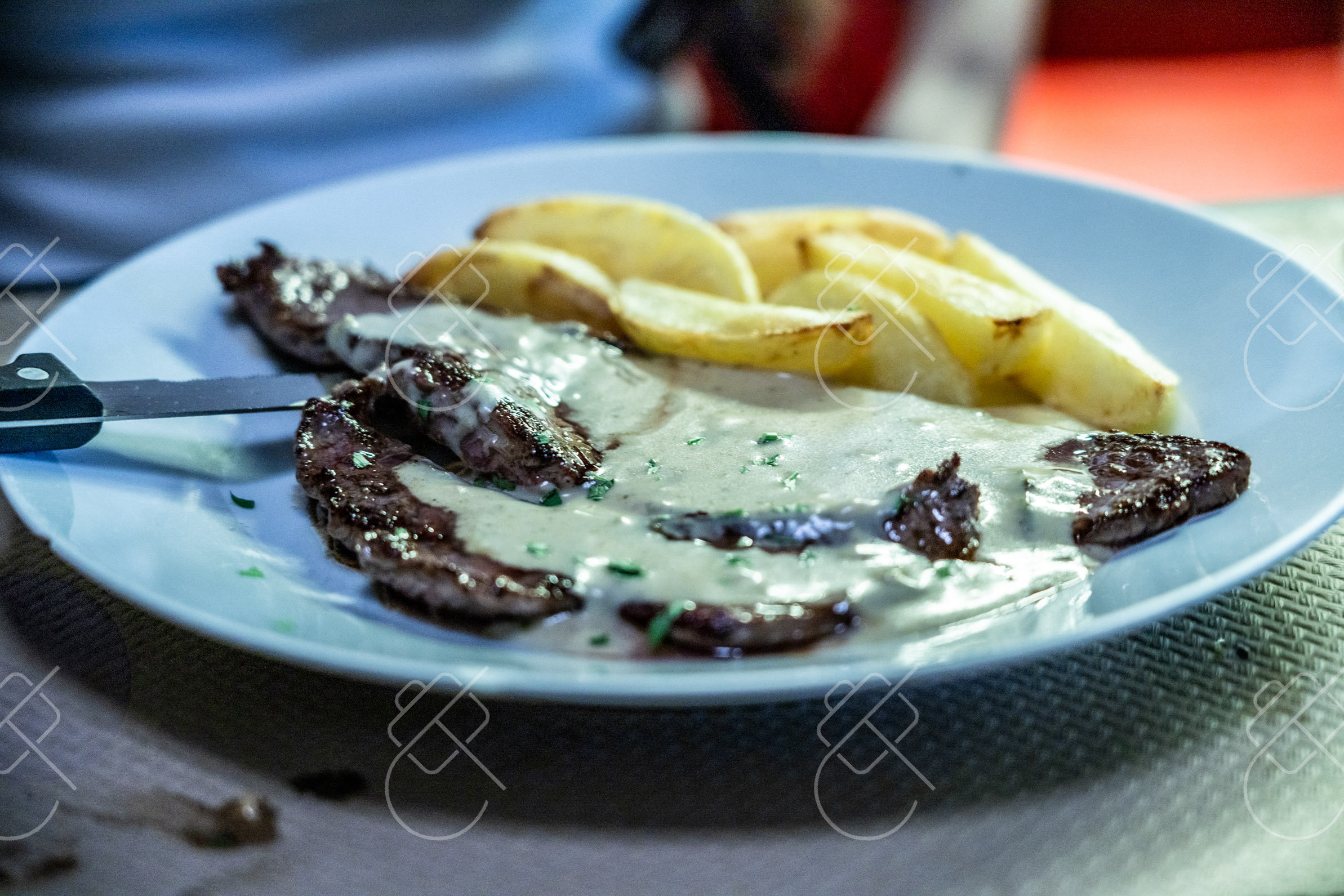
Thin steak in cream sauce
A thinly sliced steak napped in a rich, savory cream sauce — hearty, comforting plated cooking from northern Spain.
Northern Spain — Asturias, Cantabria, the Basque Country — is cattle country, and beef here is treated simply: good meat, a rich pan sauce, little fuss. Spaniards traditionally take their main meal at midday, lingering long over it.
05 / 09
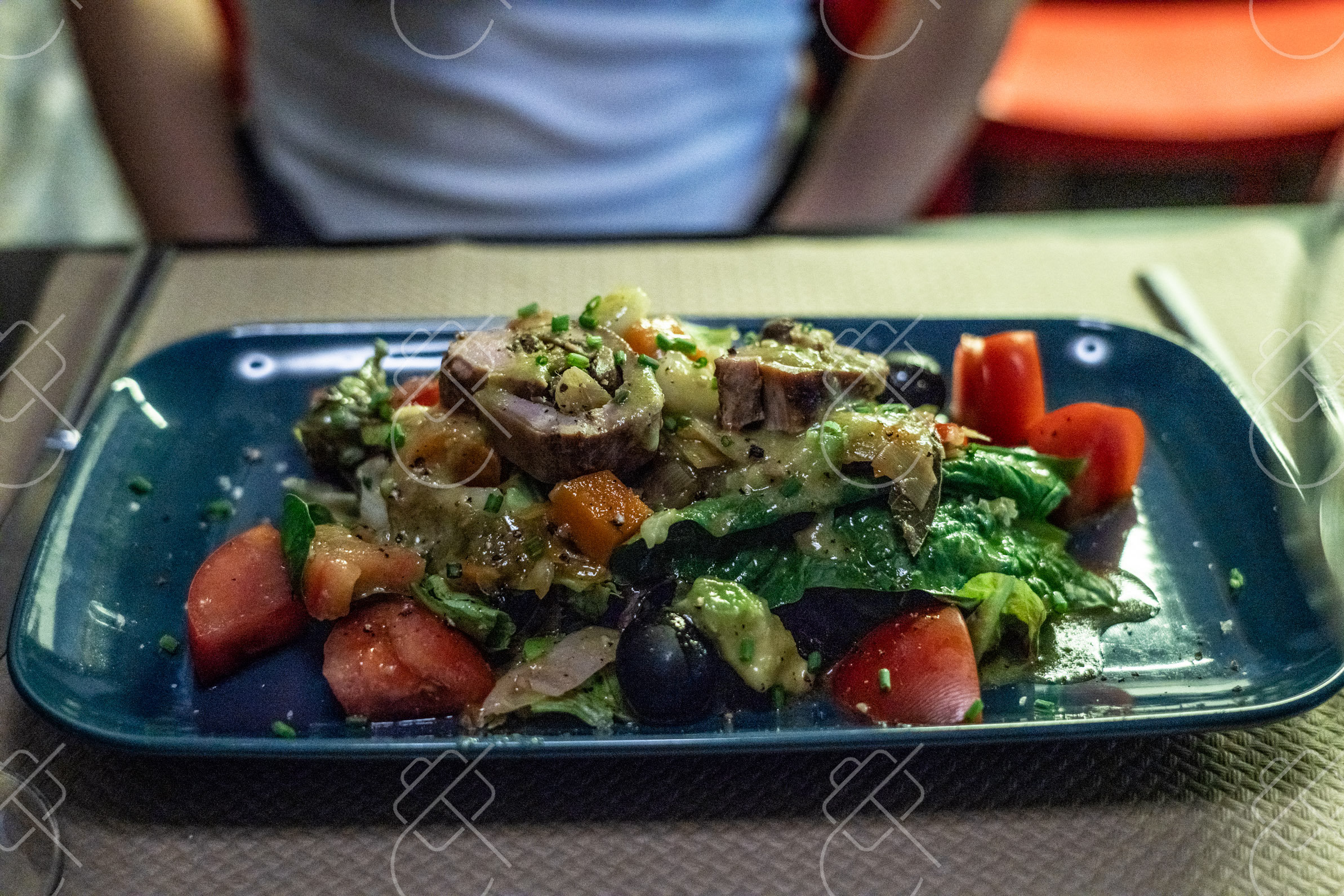
Fresh tuna salad
Fresh tuna served over a crisp salad — a light, produce-forward plate that shows the Basque coast's love of impeccable seafood, built around the day's catch.
The Basque and Cantabrian coasts live by the sea, and bonito del norte (white tuna) landed in summer is the prize. Dressed simply over salad, it reflects Spain's love of letting impeccable seafood speak for itself — the same ethos behind marmitako, the tuna fisherman's stew.
06 / 09
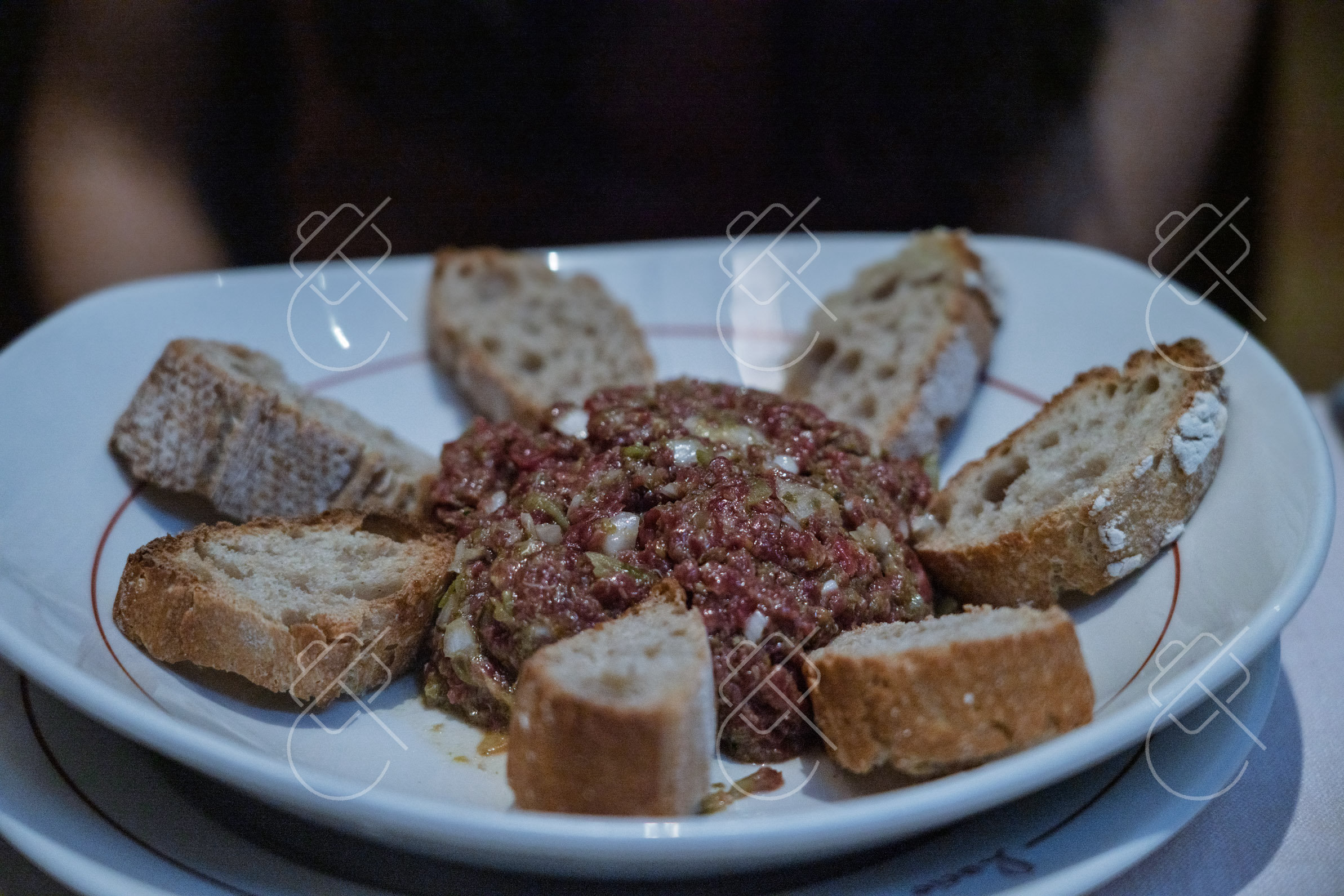
Beef tartare
Hand-chopped raw beef, seasoned and plated as steak tartare — a refined starter found on Spain's better tables. Silky and clean-tasting, often served with bread or a yolk on top.
Steak tartare is a fixture of Spain's contemporary tables and gastrobars — hand-chopped raw beef, seasoned and often crowned with a yolk. It shows how Spanish, and especially Basque, kitchens blend deep tradition with French and modern fine-dining influence.
07 / 09
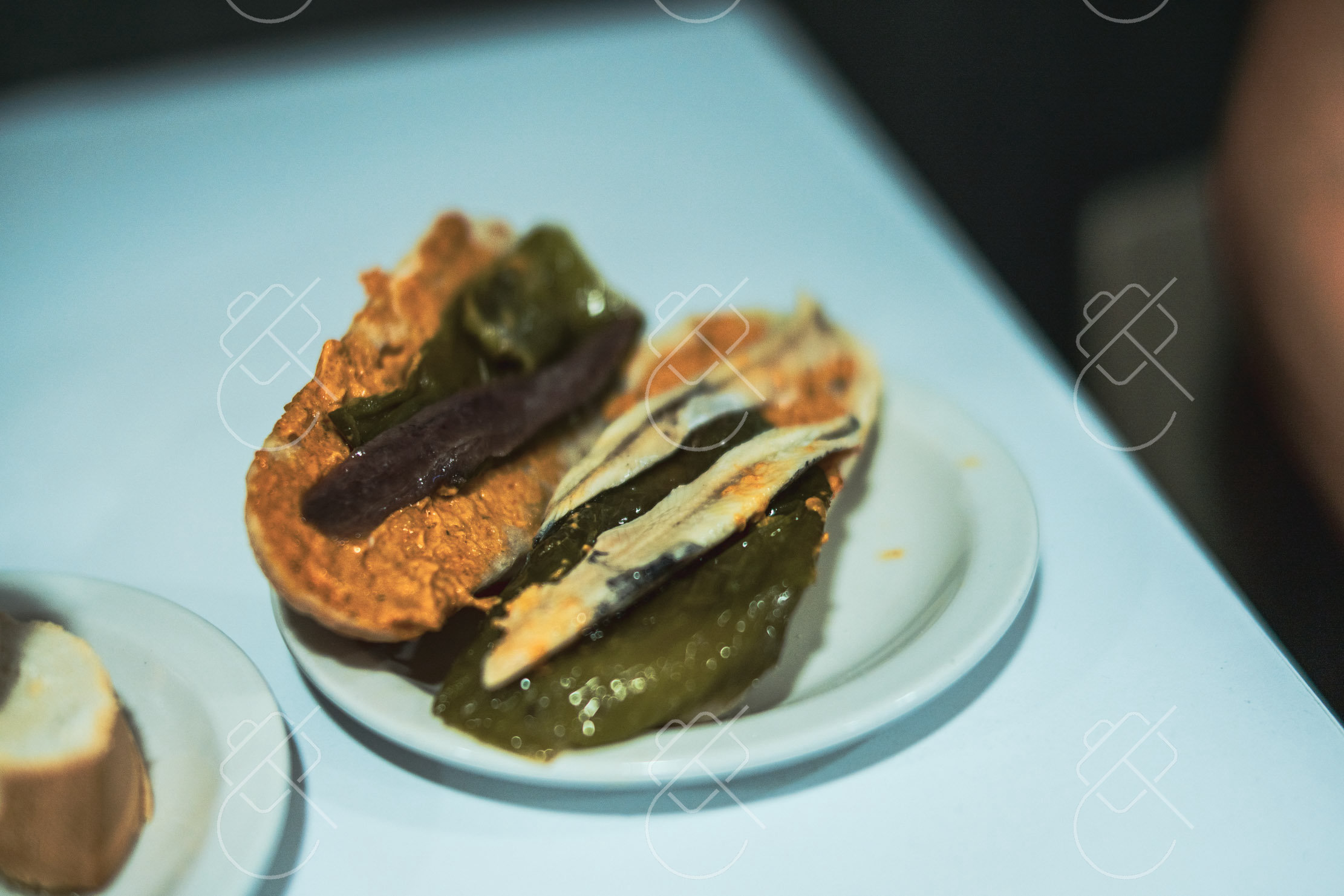
Pintxos: anchovy and piquillo pepper on bread
Two open-faced pintxos on toasted bread, one topped with a roasted piquillo pepper and cured sausage, the other with a silvery anchovy fillet draped over pepper.
Piquillo peppers — sweet, roasted, and skinned by hand — are a staple of Basque and Navarran cooking, equally at home stuffed, sliced into pintxos, or served alongside seafood. Paired here with boquerones or anchovy, it's a classic combination found on pintxo bar counters across northern Spain, meant to be eaten in one or two bites with a glass of txakoli.
08 / 09
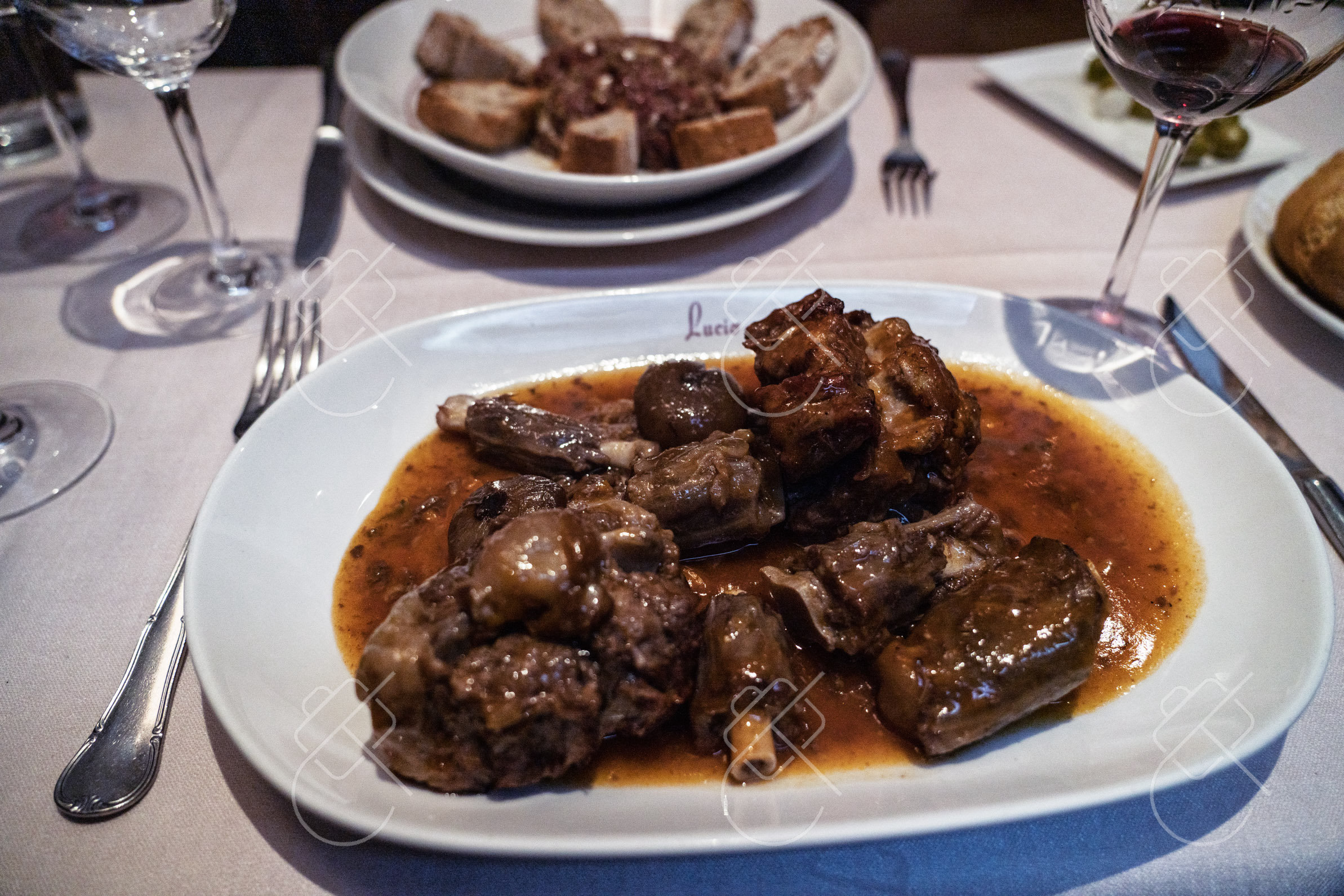
Slow-braised beef shank
Tender chunks of beef shank braised low and slow in a deep, glossy sauce until falling off the bone — classic, unfussy Spanish home-style cooking, served here with crusty bread and olives on the side.
Morcillo, or beef shank, is a cut built for slow cooking — full of connective tissue that melts down over hours into a rich, gelatinous sauce. Braised with wine, garlic, and a slow reduction, it is the kind of dish found on the handwritten specials board at old-guard Spanish restaurants rather than the printed menu, meant to be shared and mopped up with bread.
09 / 09
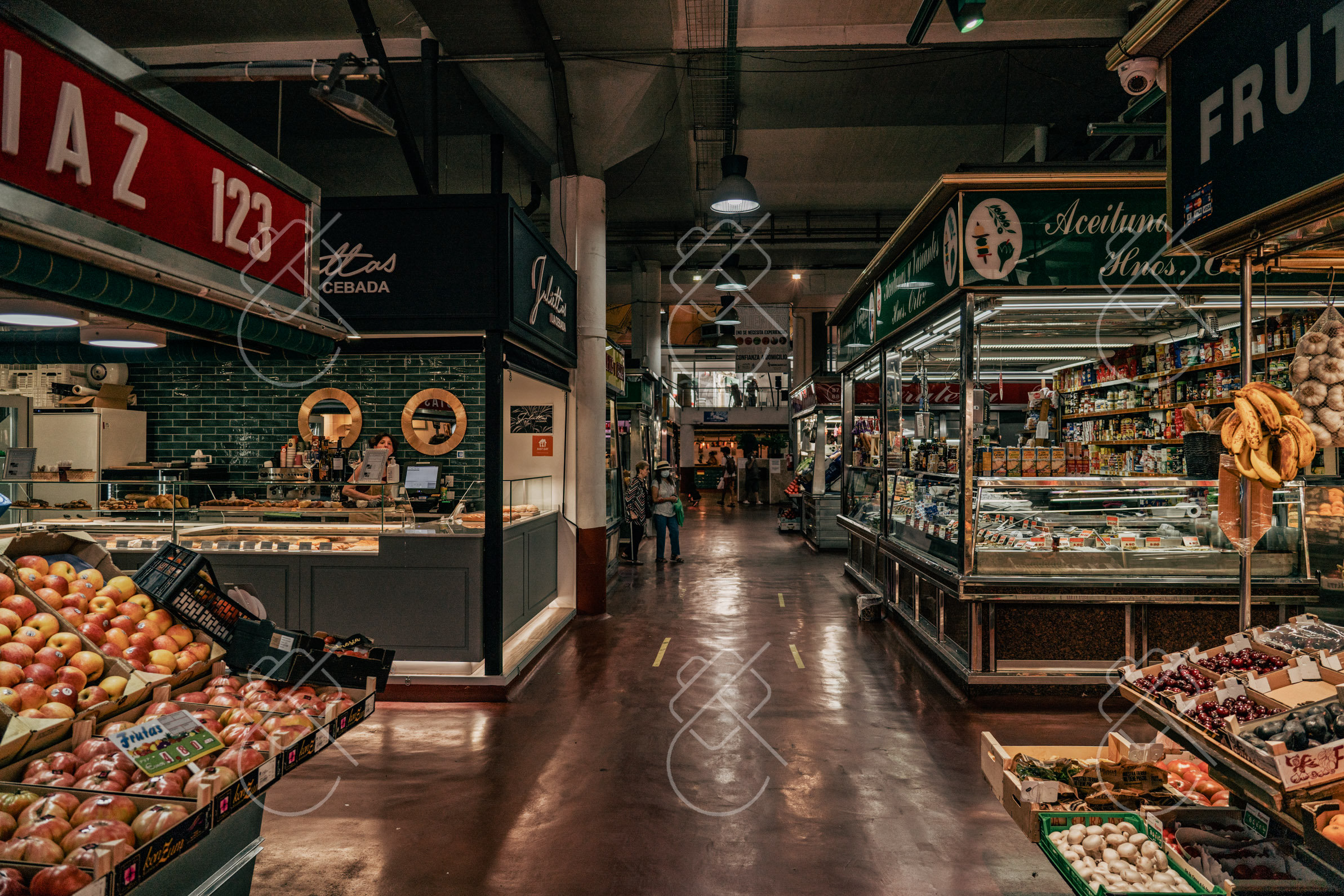
Madrid covered food market
Stalls piled with fruit, olives, and cured goods line a covered market hall — the everyday counterpart to Madrid's restaurant scene, where locals shop the way they have for generations.
Madrid's historic covered markets — iron-and-glass halls built in the 19th and early 20th centuries — mix old-school greengrocers and butchers with newer tapas counters and juice stalls. They're as much a social hub as a place to shop, and a good barometer of what's actually in season.