Home
About us
Destinations & Country Guides
Travel Guides
Recipes
Featured
Photos As Art
Abstract Prints
Locations
Travel Gear
Travel Resources
Favorites
Photo Framer
Explore Photos
Contact Seasonal travel
By Clever Tourists · Published
Semana Santa 2027 runs from Palm Sunday, 21 March, to Easter Sunday, 28 March, and the peak night is the Madrugá in Seville, from the early hours of Holy Thursday night into Good Friday (25 to 26 March). Easter falls early in 2027, so Holy Week lands in late March, when Andalusia is mild rather than hot, and it overlaps the last days of Las Fallas in Valencia. The trade-off is simple: Seville and Málaga hotels for Holy Week are among the most expensive and fastest-selling of the Spanish year, and the old towns become one slow-moving crowd. We spent 5 days in Seville in August 2022, between Córdoba and Cádiz, which is the opposite season; this page is about planning the week itself.
• Palm Sunday (Domingo de Ramos): 21 March 2027. Processions start in every Andalusian city; in Seville the children's favourite, La Borriquita, goes out in the morning.
• Holy Monday to Holy Wednesday: 22 to 24 March. Normal working days, so this is the easiest stretch to see big processions with fewer visitors.
• Holy Thursday (Jueves Santo): 25 March. A public holiday in most of Spain, but not in Catalonia or the Valencia region, according to the 2027 state calendar published in the BOE.
• Madrugá: the night of 25 into 26 March.
• Good Friday (Viernes Santo): 26 March, a national holiday.
• Easter Sunday: 28 March. Easter Monday (29 March) is a holiday only in some regions, not in Andalusia.
Brotherhood (hermandad) timetables and routes for 2027 are published by Seville's Consejo General de Hermandades y Cofradías and Málaga's Agrupación de Cofradías in the weeks before Holy Week. Until then, any page quoting exact 2027 departure times is guessing. Use the patterns below to plan, then check the official programme in early March.
Seville has around 60 brotherhoods, and each one walks from its own church to the cathedral and back, a journey that can take 12 hours or more. Every brotherhood must pass the Carrera Oficial, the official route that runs from Plaza de la Campana down Calle Sierpes, across Plaza de San Francisco and along Avenida de la Constitución to the cathedral. The seats and boxes along it are mostly held by season holders year after year, so as a visitor you will watch from the streets outside it, which is free and often better.
The Madrugá is the night most people come for. From around midnight on Holy Thursday, the most venerated images in the city go out: Jesús del Gran Poder, La Macarena, the Esperanza de Triana, and others, and the streets stay full until mid-morning on Good Friday. If you only have one night, this is it, but it is also the most crowded, and moving between neighbourhoods can take an hour for a walk that normally takes ten minutes.
Practical plan: pick one or two brotherhoods per day, look up their route, and wait at a narrow street near their church rather than the centre. The salida (when the paso leaves the church door) and the entrada (when it returns, often late at night) are the most emotional moments. Triana, across the river, is the best area to see the Esperanza de Triana cross the bridge. Carry water and snacks, wear shoes you can stand in for hours, and expect bars to be packed but open.
Málaga's Semana Santa looks different. The tronos (floats) are huge, some carried by more than 200 bearers, and the processions are louder, with bands and applause rather than Seville's silence. The official route runs through Calle Larios and Plaza de la Constitución, where the Agrupación de Cofradías puts up stands with paid seats.
The famous moment is on Holy Thursday morning: a Spanish Legion unit arrives by ship at the port, marches through the city and, around midday, carries the Cristo de la Buena Muerte (Cristo de Mena) in the traslado, singing their anthem. The procession of the Congregación de Mena itself goes out in the evening. In 2026 the ship docked at 10:00 at the port; for 2027, check the Congregación de Mena's announcements, as times shift slightly each year.
Málaga is also the easier base: it has a major international airport about 15 minutes from the centre by the C1 train, more flight options than Seville, and the high-speed train to Seville takes about two hours, so you can split the week between the two cities.
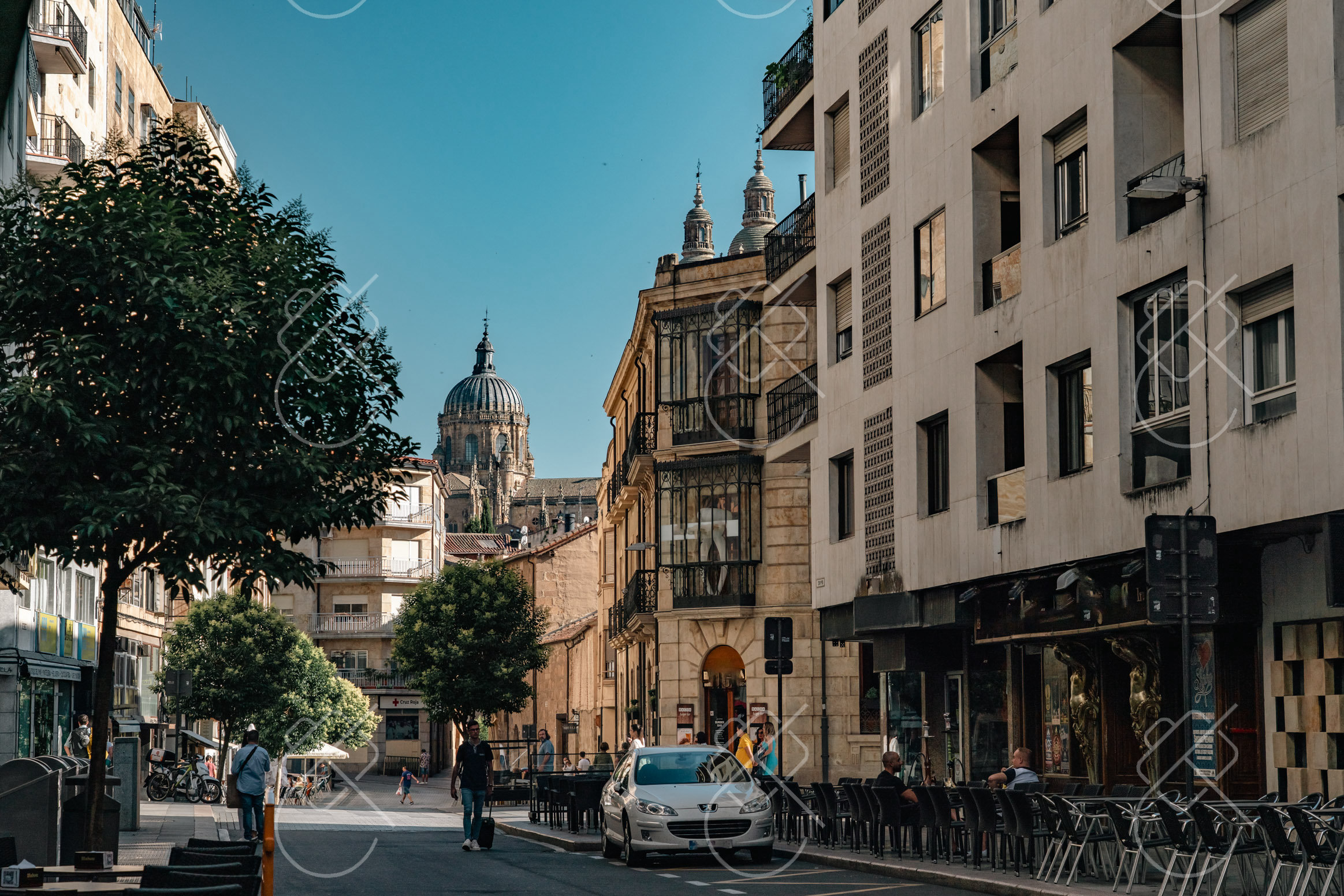
Holy Week is celebrated everywhere in Spain, and the style varies a lot. Granada has processions climbing into the Albaicín, with the Alhambra as backdrop. Córdoba routes its processions through the Mezquita-Cathedral. In Castile, Valladolid, Zamora and Salamanca are austere and silent, with famous carved sculptures. Our Andalusia itinerary links Granada, Córdoba and Seville by train if you want to see more than one city in the week.
If you are combining this with Valencia: Las Fallas ends with the Cremà on the night of 19 March 2027, two days before Palm Sunday. See our Las Fallas 2027 guide. For a wider Easter trip, our Easter in Rome 2027 page covers the Vatican side.
Semana Santa is one of the peak weeks of the Spanish year: Spaniards travel at the same time, and hotels in central Seville and Málaga often run minimum stays and sell out months ahead. For late-March 2027, aim to book by January at the latest. Staying outside the historic centre, in Triana or Nervión in Seville, or near Málaga's María Zambrano station, saves money and gets you out of the processions' path at night.
On Holy Thursday and Good Friday, banks and many shops close, and some monuments run reduced hours or close for services; the cathedrals in particular restrict tourist visits during Holy Week. Restaurants and bars mostly stay open and are full, so reserve dinner or eat early by Spanish standards. Trains and buses between Andalusian cities fill up for the Wednesday-to-Sunday stretch: buy tickets as soon as Renfe opens sales.
Weather in late March is usually mild in Andalusia, with highs around the low 20s °C (low 70s °F) in Seville, but rain is possible, and if rain is forecast, brotherhoods can decide not to go out at all, which is a real disappointment for locals. Our best time to visit Spain guide has month-by-month detail.
These are religious acts, not parades. Do not cross through a procession line, step aside for the nazarenos (the hooded penitents), and keep quiet when a paso passes in Seville, especially during the silent brotherhoods. No flash photography close to the images. Children watching with candles collect wax balls from the nazarenos: that is a tradition, not a nuisance. Sitting on the kerb is normal; bringing a folding stool to a narrow street is not.
Palm Sunday is 21 March 2027 and Easter Sunday is 28 March 2027. Holy Thursday is 25 March and Good Friday is 26 March.
The night of Holy Thursday into Good Friday, from around midnight on 25 March into the morning of 26 March 2027.
Seville is the more solemn and famous, with the Madrugá. Málaga has bigger floats, the Legion's Holy Thursday arrival and an easier airport; the two are about two hours apart by high-speed train.
No. Watching from the streets is free. Only the seats on the official routes are paid, and in Seville most of them are held by season holders.
In most regions yes, but not in Catalonia or the Valencia region. Good Friday, 26 March, is a national holiday.
Get our new Spain guides and practical tips by email: where to stay, what to eat, what things cost and the rules that catch travelers out.
Free. No spam, only new guides and tips.
Search verified local fleets with low security deposits and exact model delivery on Localrent.
Get the best deals on Spain hotels on Booking.com before prices climb.