Home
About us
Destinations & Country Guides
Travel Guides
Recipes
Featured
Photos As Art
Abstract Prints
Locations
Travel Gear
Travel Resources
Favorites
Photo Framer
Explore Photos
Contact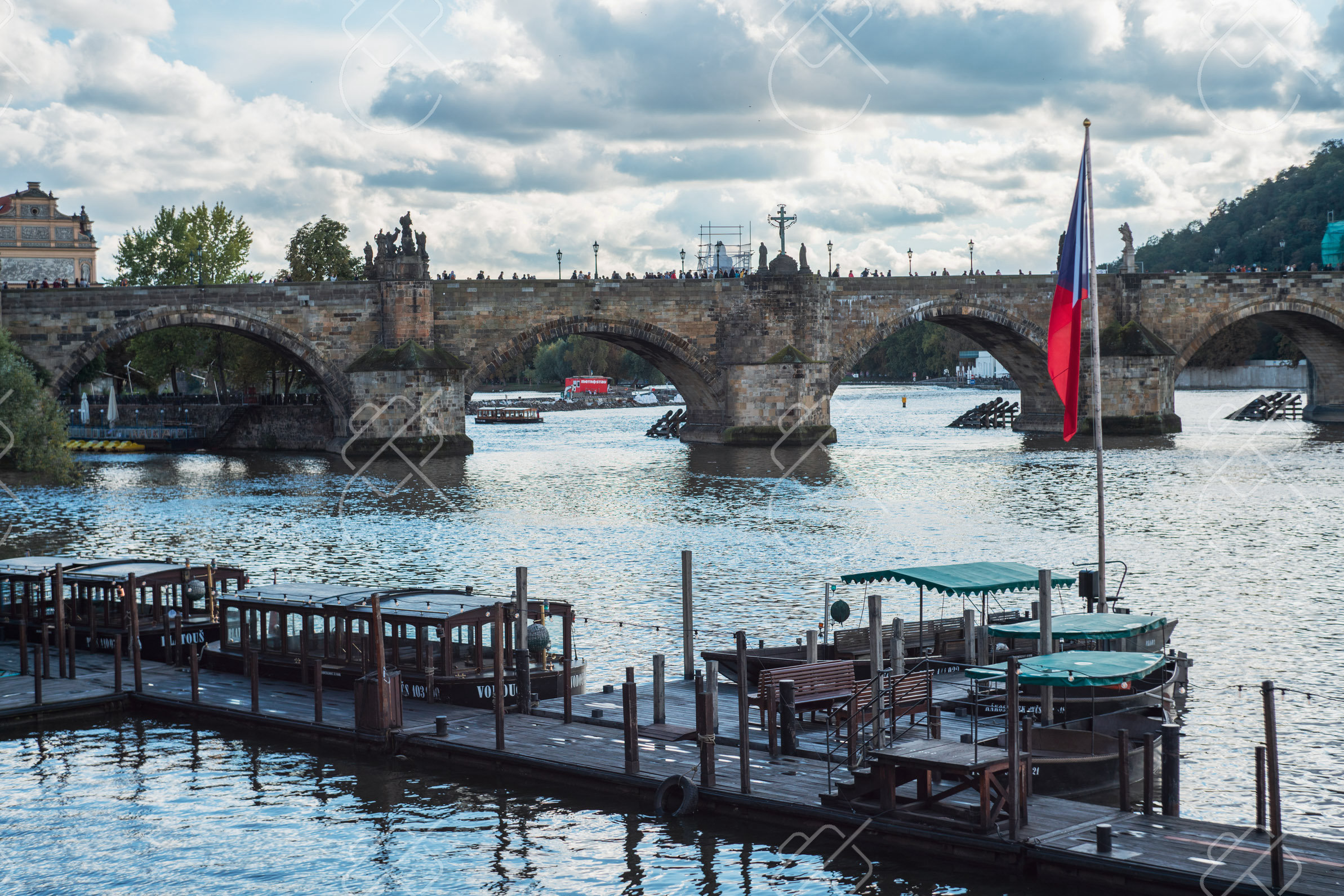 Trip planning
By Clever Tourists · Published · Last updated
The Czech Republic uses the koruna, not the euro, and most money mistakes in Prague come from that: bad exchange offices, euro prices at poor rates and card machines that offer to charge you in dollars. Get those right and the country is still one of the better-value trips in central Europe, especially outside Prague. We spent 17 days in the Czech Republic from 19 September to 6 October 2022: 5 in Prague, then Hřensko in Bohemian Switzerland, Karlovy Vary, Mariánské Lázně, Pilsen, Kutná Hora and Brno. Fares, fees and rules below come from official and current sources, with the year each applies to.
1. Fingerprints at the border, no ETIAS yet. The Czech Republic is in the Schengen Area, so visa-free visitors can stay up to 90 days in any 180 across the whole area. Since 10 April 2026 the EU's Entry/Exit System registers your fingerprints and photo on first entry and replaces passport stamps. ETIAS, the €20 (≈ $22) online authorisation, is not in operation and has no published start date. See our ETIAS and EES explainer and Czech visa guide.
2. The airport bus is the cheap way into Prague. Public transport tickets cover the trolleybus from Václav Havel Airport to the metro, and the Airport Express runs to the main station. Our Prague airport guide compares them with taxis.
3. Pay in koruna (CZK). Some tourist restaurants and shops quote or accept euros, usually at a poor rate. Pay in crowns, and when a card machine or ATM offers to charge you in your home currency, decline and choose CZK. Use bank ATMs rather than standalone machines in the tourist centre. More in cash or card abroad.
4. Exchange offices: get a receipt. Boards advertising 0% commission often hide a poor rate. Czech law gives you the right to cancel an exchange free of charge within three hours, for amounts up to the equivalent of €1,000 (≈ $1,115), according to the Czech National Bank, and the receipt's timestamp is your proof. If the office refuses, you can complain to the Czech National Bank.
5. Tip about 10%, by saying the total. Round up and tell the server what you want to pay before they take your cash or card. Tipping is voluntary, so check for a service charge already added to tourist bills. See tipping in Prague.
6. Prague is the expensive part. Our daily budget by country puts the Czech Republic at about $45 to $75 a day on a budget and $100 to $145 mid-range. Prague accommodation is the main cost; Pilsen, Brno and Kutná Hora are cheaper bases. See also the cheapest places in Europe for 2027.
7. Prague fares went up in 2026, and the app is cheaper. PID's tariff from 1 January 2026: CZK 39 for 30 minutes, CZK 50 for 90 minutes, CZK 150 for 24 hours and CZK 350 for 72 hours on paper, or CZK 36, 46, 140 and 340 in the PID Lítačka app. Paper tickets must be validated when you board or enter the metro, and plain-clothes inspectors check them.
8. Trains and buses link everything. České dráhy, RegioJet and Leo Express run trains between the main cities, with frequent buses to spa towns and smaller places. Our day-trip guides cover Kutná Hora and Karlovy Vary, and Prague to Budapest compares train and bus for the onward leg.
9. Drivers need an e-vignette and zero alcohol. Motorways require an electronic vignette from the official eDálnice site: CZK 230 for a day, CZK 300 for 10 days or CZK 480 for 30 days in 2026. The legal blood-alcohol limit for drivers is zero. See our Czech vignette guide.
10. Pubs have their own system. Sharing a table is normal: ask if a seat is free before sitting. The server often keeps a tally on a slip at your table and brings another beer when your glass is nearly empty, so put a beer mat on top when you have had enough. Start with our Czech food guide and what to eat in Prague.
11. Organised night pub crawls are banned in Prague. City councillors approved a ban on organised pub crawls between 22:00 and 6:00 in October 2024, Radio Prague reported, citing noise and disturbance in the centre. Expect night-time noise to be policed in residential streets.
12. Greet people when you walk in. Say dobrý den (good day) entering a small shop, café or lift, and na shledanou when leaving. English is widely spoken in Prague but less in smaller towns. Take shoes off when entering a Czech home.
13. Big shops close on certain holidays by law. Shops over 200 m² must close on 1 January, Easter Monday, 8 May, 28 September, 28 October, 25 and 26 December, and from noon on 24 December. Small shops, pharmacies, petrol stations and shops at airports and stations can open. See what's open on Christmas Day abroad.
14. Go in May, early June or September, or for the markets. Those months bring highs of about 18 to 24 °C and thinner crowds on Charles Bridge; late November to Christmas brings the markets, and Prague's main markets run to 6 January 2027. We were there in late September and early October 2022. See best time to visit Prague and the Prague Christmas markets guide.
15. Leave Prague for at least part of the trip. Brno, Pilsen, Kutná Hora, Karlovy Vary and the sandstone country around Hřensko are cheaper and calmer than the capital. Our Prague and Bohemia guide, 3 days in Prague and where to stay in Prague help with the split.
16. Plugs, water, data and emergencies. Sockets are Types C and E at 230 V; a standard two-pin European adapter fits, and North American travellers need one. Tap water is safe to drink. An eSIM bought before you fly is simplest; see eSIM or local SIM. 112 is the general emergency number; 155 is ambulance and 158 police.
No. The currency is the Czech koruna (CZK). Some tourist places accept euros at poor rates, so pay in koruna and decline offers to charge your card in your home currency.
Yes. According to the Czech National Bank, you can cancel an exchange free of charge within three hours, for amounts up to the equivalent of €1,000 (≈ $1,115). Keep the receipt as proof of the time.
From 1 January 2026, CZK 39 for 30 minutes, CZK 50 for 90 minutes and CZK 150 for 24 hours on paper, or CZK 36, 46 and 140 in the PID Lítačka app.
Shops over 200 m² must close on 1 January, Easter Monday, 8 May, 28 September, 28 October and 25 to 26 December, and from noon on 24 December. Small shops, pharmacies and station and airport shops can open.
Get our new Czech Republic guides and practical tips by email: where to stay, what to eat, what things cost and the rules that catch travelers out.
Free. No spam, only new guides and tips.
Search verified local fleets with low security deposits and exact model delivery on Localrent.
Get the best deals on hotels in Czech Republic with Booking.com.