Home
About us
Destinations & Country Guides
Travel Guides
Recipes
Featured
Photos As Art
Abstract Prints
Locations
Travel Gear
Travel Resources
Favorites
Photo Framer
Explore Photos
Contact Transit & logistics
By Clever Tourists · Published
Take the direct daytime train: it is the best option for most people. České dráhy's railjets and EuroCity trains run about every two hours and take about 6 hours 50 minutes, with advance fares from roughly €21 to €30 (≈ $23–33) in 2026. RegioJet runs a cheaper private train from about €19.90 (≈ $22) via Vienna, and FlixBus takes about 7 to 7.5 hours for a similar price when booked early. The Metropol night train saves a hotel night: about 10.5 hours, couchettes from about €48 (≈ $53). Flying rarely saves time once you count the airports. We spent 5 days in Prague in September 2022 and 5 days in Budapest in October 2022, with Czech towns and Brno in between, so this guide also covers breaking the trip.
Last checked 27 October 2026. Fares are approximate; dollar figures convert at our committed exchange-rate snapshot.
| Option | Time | One-way price |
|---|---|---|
| Train Direct railjet / EuroCity České dráhy | 6h 51m | 21–30 EUR (≈ $23–33) |
| Train RegioJet via Vienna RegioJet | — | 19.9 EUR (≈ $22) |
| Train EuroNight Metropol night train | 10h 30m | 48–175 EUR (≈ $53–195) |
| Bus FlixBus | 7h–7h 30m | 30–45 EUR (≈ $33–50) |
| Flight | 1h 15m | — |
Planning more legs? Use the route finder.
Czech Railways (ČD) lists Praha to Budapešť at 6 hours 51 minutes with no change, with railjet, ComfortJet and EuroCity trains leaving Prague, Pardubice and Brno every two hours. The trains are run jointly by Czech, Slovak and Hungarian railways and go via Brno and Bratislava, then along the Danube into Hungary. From December 2025, ČD began replacing most of the older EuroCity sets with railjets.
Price: ČD's own page quotes early-booking Včasná jízdenka Evropa fares of about 744 CZK (≈ $34) (about €30 (≈ $33)) for Prague to Budapest. The Man in Seat 61's 2026 fare table shows advance fares from €21 (≈ $23) in second class and €37 (≈ $41) in first, rising to about €70 (≈ $78) and €106 (≈ $118) for a fully flexible ticket bought on the day. Cheap fares are quota-limited, so the earlier you buy, the better.
Where to book: the ČD website or app opens about 6 months ahead and sells the cheapest fares; Hungarian Railways (MÁV) opens about 3 months ahead; aggregators such as Omio also sell them. Trainline-type resellers do not always see the lowest fares. ÖBB's site sells the route too.
Seat reservations are optional on these trains, but worth about €3 (≈ $3.3) in summer and on Friday and Sunday afternoons, when carriages fill up between Brno and Bratislava.
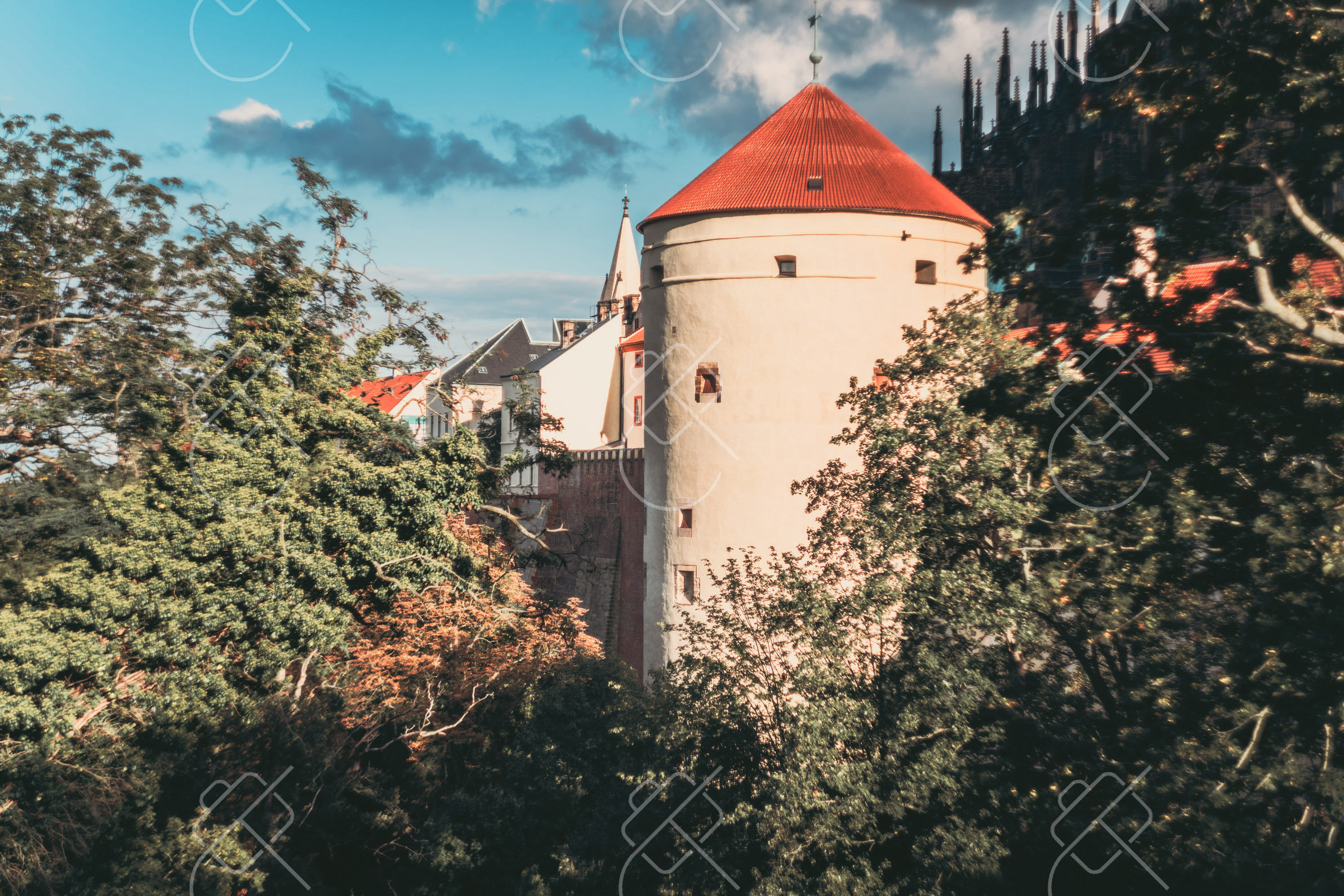
In Prague most trains leave from Praha hlavní nádraží (main station), a 10-minute walk from Wenceslas Square and on metro line C. ČD notes that selected trains stop only at Praha-Holešovice, north of the centre on metro line C, so read the departure station on your ticket.
In Budapest, The Man in Seat 61's 2026 timetables show the daytime trains and RegioJet arriving at Budapest-Déli on the Buda side and the night train at Budapest-Nyugati in Pest. Both are on the metro (Déli is the end of M2, Nyugati is on M3). Your ticket names the station: trust it rather than an old blog. For choosing a neighbourhood, see where to stay in Budapest.
Private operator RegioJet runs its own yellow trains from Prague to Budapest by a different route, via Břeclav, Vienna and Győr, so it takes slightly longer than the ČD trains. Fares start at about €19.90 (≈ $22) in Standard, €23.40 (≈ $26) in Relax and €27.40 (≈ $31) in Business, with a reserved seat included in every ticket.
RegioJet tickets can be changed or refunded up to 15 minutes before departure, which is more flexible than ČD's cheapest fares. Book on RegioJet's own site or app. Because the route passes through Austria, it crosses two internal Schengen borders; Austria has kept temporary checks on its borders with Czechia and Hungary in 2026, so carry your passport even though there is normally no stop.
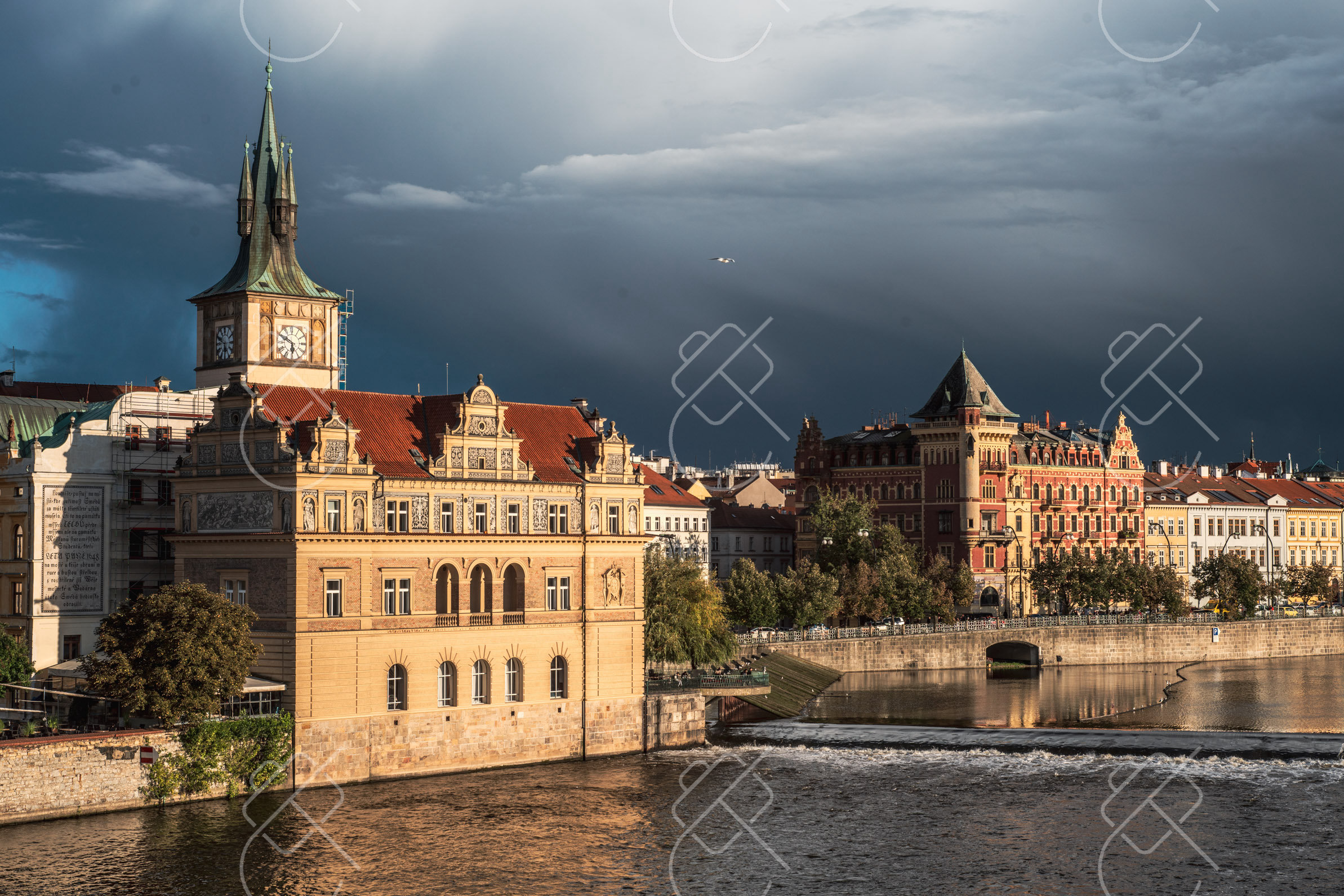
The EuroNight Metropol runs every night in both directions. Seat61's 2026 timetable shows it leaving Prague at 21:58 and reaching Budapest-Nyugati at 08:29; northbound it leaves Nyugati at 19:30 and reaches Prague at 08:23.
Fares run from about €48 (≈ $53) in a 6-berth couchette up to about €175 (≈ $195) for a single sleeper compartment, with breakfast included in the sleeper; a reservation is required and is included in the ticket. It also calls at Pardubice and Brno.
It makes sense if you would otherwise lose a full daytime on the train and pay for a hotel. If you sleep badly on trains, the daytime railjet is the better use of a day: the run along the Danube bend after Bratislava is the scenic part, and you miss it at night.
Buses take roughly 7 to 7.5 hours, so they are not faster than the train. Rome2rio lists FlixBus from Prague Florenc bus station to Budapest roughly every 3 hours, with a scheduled time of about 7 hours 15 minutes, and Budapest guides report realistic fares of about €30 to €45 (≈ $33–50), with deals from around €20 (≈ $22).
Florenc is on metro lines B and C. In Budapest, coaches use Népliget bus station (metro M3) or stop at Kelenföld (metro M4). The train is usually the same price or cheaper booked early and is more comfortable, so take the bus only if it is clearly cheaper on your date or the trains are sold out.
A direct flight takes about 1 hour 15 minutes, but add the trip to Václav Havel Airport and from Budapest Ferenc Liszt Airport, security and boarding, and you are door to door in about the same time as the train. Our Prague airport guide and Budapest airport guide cover the transfers.
Driving is about 530 km via Brno and Bratislava on motorways that need a vignette in each of Czechia, Slovakia and Hungary. See our Czech e-vignette guide and Hungary e-matrica guide, and check that your rental allows cross-border trips.
Breaking it up: the same train line stops in Brno (Brno to Budapest is about 4 hours 10 minutes) and Bratislava. On our route we went from Prague through Bohemia (Karlovy Vary, Plzeň, Kutná Hora) to Brno for 2 nights before Budapest. If you want a day out of Prague first, see Kutná Hora and Karlovy Vary.
Czechia, Slovakia, Austria and Hungary are all in Schengen, so there is no routine passport control on the direct train and the EU's Entry/Exit System does not apply on this trip: it only registers non-EU travellers at the external Schengen border, such as your arrival airport. Internal spot checks are possible, so keep your passport on you. More on the new rules in our ETIAS and EES explainer.
Bring a few euros or a card for the dining car: Hungary uses the forint and Czechia the koruna, and neither is guaranteed at the trolley. Before you go, compare the two cities in Prague vs Budapest and plan time with our 3 days in Budapest and 3 days in Prague guides.
Yes. Railjet and EuroCity trains run about every two hours and take about 6 hours 50 minutes with no change, via Brno and Bratislava. RegioJet also runs direct trains via Vienna.
Advance fares start at roughly €21 to €30 (≈ $23–33) in second class on ČD trains and about €19.90 (≈ $22) on RegioJet in 2026. A fully flexible ticket on the day is about €70 (≈ $78).
The train. It is slightly faster (about 6 hours 50 minutes against 7 to 7.5 hours by FlixBus), similar in price when booked early, and more comfortable.
Yes, the EuroNight Metropol leaves Prague at 21:58 and reaches Budapest-Nyugati at 08:29 on the 2026 timetable, with couchettes from about €48 (≈ $53).
Get our new Hungary guides and practical tips by email: where to stay, what to eat, what things cost and the rules that catch travelers out.
Free. No spam, only new guides and tips.
Search verified local fleets with low security deposits and exact model delivery on Localrent.
See the best deals on Hungary hotels right now on Booking.com.