Home
About us
Destinations & Country Guides
Travel Guides
Recipes
Featured
Photos As Art
Abstract Prints
Locations
Travel Gear
Travel Resources
Favorites
Photo Framer
Explore Photos
Contact Destinations & Itineraries
By Clever Tourists · Published
Pick Prague for a compact, walkable medieval core and easy day trips into Bohemia; pick Budapest for thermal baths, a bigger river city, lower prices and later nightlife. If you have a week, do both: they are about 7 hours apart by direct train. Prague is the prettier old town and the more crowded one. Budapest feels larger and less polished, with more to do after dark and the baths as something Prague simply does not have. We spent 5 days in Prague in September 2022, then 12 more days around Bohemia and Brno, and went on to Budapest for 5 days in October 2022 before Eger and Tokaj.
• First trip to Central Europe, 3 or 4 days: Prague. The Old Town, Charles Bridge, Malá Strana and the castle sit within one long walk, so a short stay covers the essentials. See 3 days in Prague.
• Couples and anyone who wants downtime: Budapest. A morning in the Széchenyi or Gellért baths, then the Danube at dusk, is a better rest day than anything in Prague. Compare the baths in Széchenyi vs Rudas vs Gellért.
• Tight budget: Budapest, by a modest margin. Both are cheap next to Vienna or Munich, but Prague's centre has caught up with western prices.
• Nightlife: Budapest. The ruin bars in the old Jewish quarter (District VII) are the draw, and they run later than Prague's pub scene.
• Day trips and small towns: Prague. Kutná Hora, Karlovy Vary, Český Krumlov and Bohemian Switzerland are all within reach. Budapest has the Danube Bend towns and Eger; see day trips from Budapest.
• Beer: Prague, and the Czech towns beyond it. Pilsen, where we spent 2 days, is the home of pilsner.
• A week or more: both, by train, with Brno or Vienna as an optional stop between them.
Budapest is slightly cheaper day to day, but the gap is smaller than older blogs suggest. Our daily travel budget by country puts the Czech Republic at about $45 to $75 a day on a budget and $100 to $145 mid-range, and Hungary at about $40 to $70 budget and $100 to $160 mid-range. Those are typical ranges from current travel-cost sources, not what we spent.
Where the money goes differs. In Prague, accommodation inside the Old Town and Malá Strana is the big cost; sleeping in Vinohrady or Žižkov and riding the tram in saves the most. In Budapest the baths are a real line item (a full day at Széchenyi costs more than most museums), and restaurants often add a service charge to the bill, explained in tipping in Budapest. Prague's equivalent is in tipping in Prague.
Neither city uses the euro. Prague uses the Czech koruna (CZK), Budapest the Hungarian forint (HUF). Cards work almost everywhere in both; avoid street exchange booths in Prague's centre.
Public transport is cheap in both. In Prague a 30-minute ticket is 36 CZK (≈ $1.6) in the PID Lítačka app or 39 CZK (≈ $1.8) on paper under the 2026 fare table. In Budapest a BKK single ticket costs 500 Ft; check the BudapestGO app for current pass prices, since sources disagree on the 24-hour card.
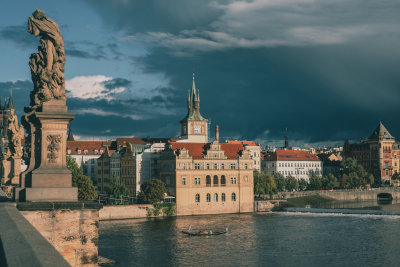
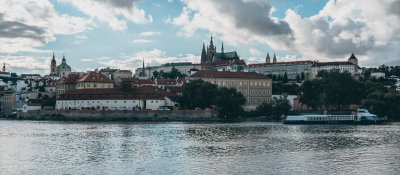
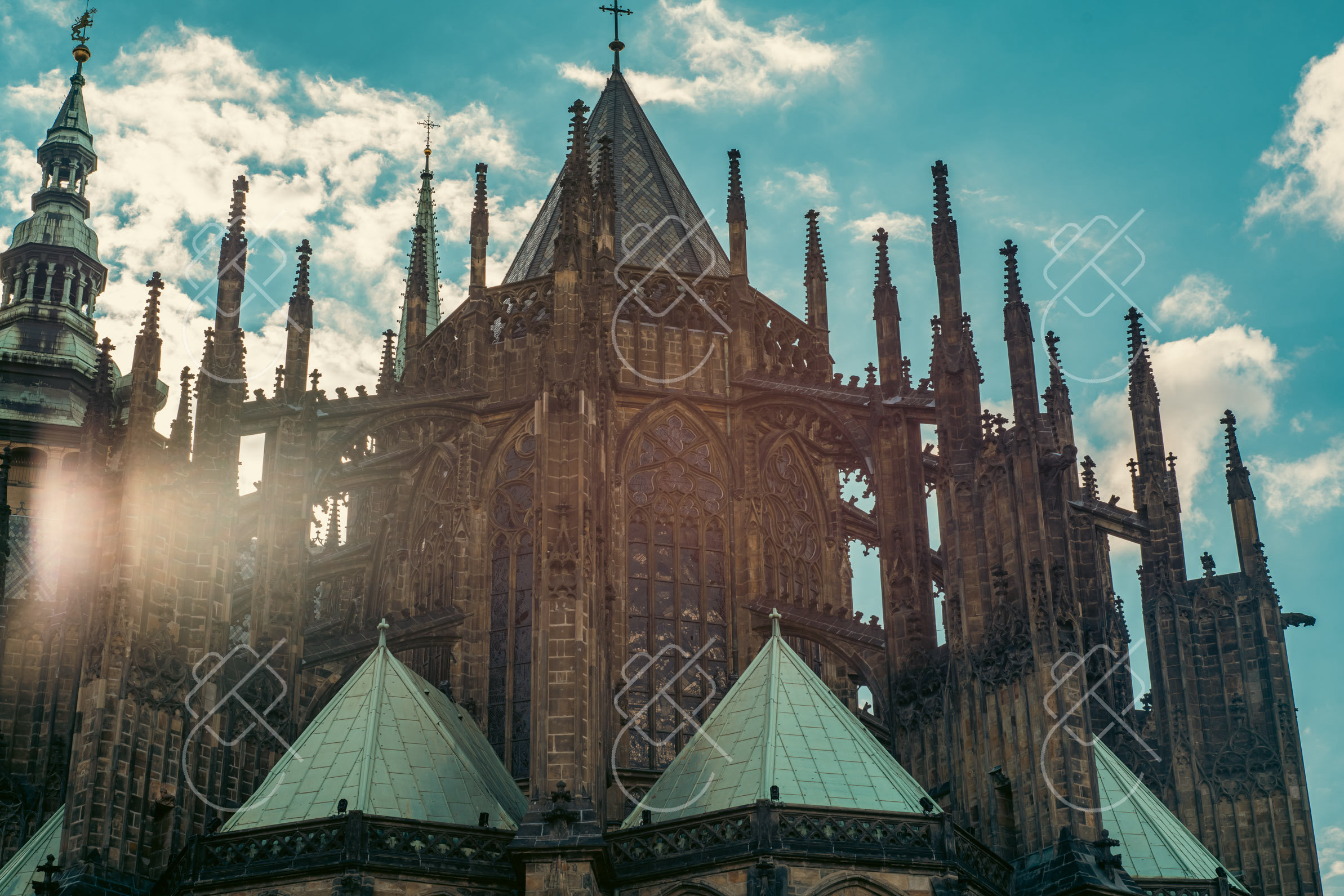
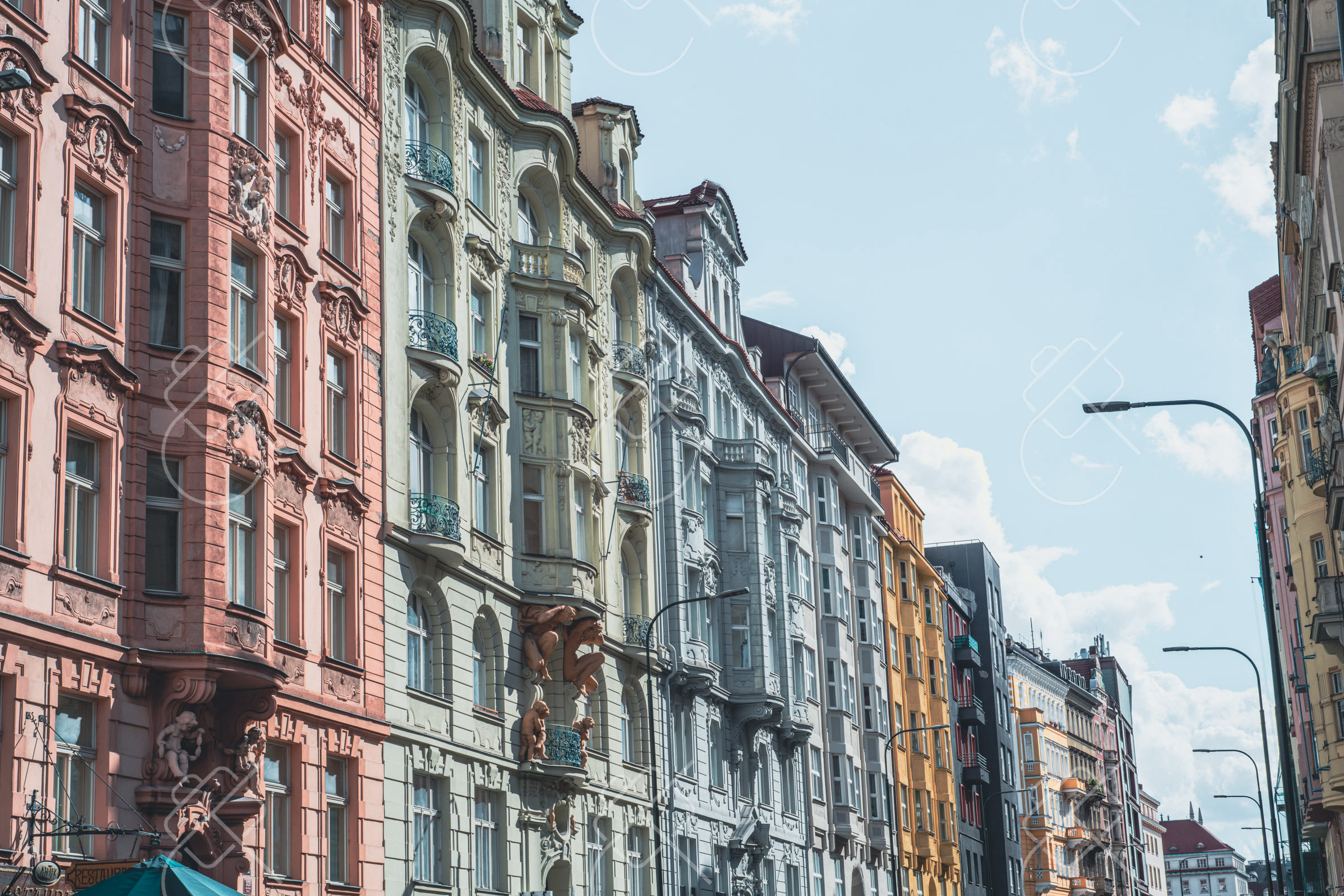
Prague is a city of set pieces close together: Old Town Square and the astronomical clock, Charles Bridge, the Malá Strana lanes, Prague Castle and St Vitus Cathedral above them, and the Jewish Quarter. Petřín and Letná give the views. The flip side is crowds: Charles Bridge and the castle are packed by mid-morning in summer, so go early. Our Prague and Bohemia guide covers the order to do them in.
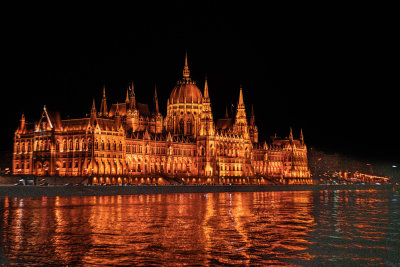
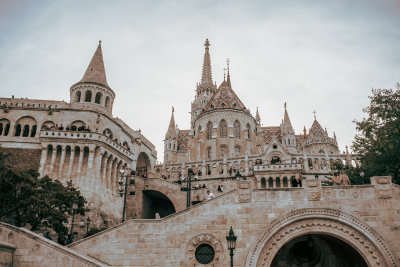
Budapest is spread across two sides of the Danube. Buda has Castle Hill, Fisherman's Bastion and Gellért Hill; Pest has the Parliament, St Stephen's Basilica, the Great Market Hall, Andrássy Avenue and Heroes' Square. The riverbanks, the Chain Bridge and the Parliament lit up at night are the city's best free sight. Add the baths and the ruin bars, and Budapest needs about as many days as Prague despite fewer headline monuments. See our Budapest guide and 3 days in Budapest.
If you only care about architecture and old streets, Prague wins. If you want a city to live in for a few days, with baths, a market hall and long walks along a big river, Budapest wins.
Czech food is heavy and beer-led: svíčková (beef in cream sauce with dumplings), roast pork with sauerkraut, goulash in a bread bowl, fried cheese, and trdelník mostly sold to tourists. Pub lunches outside the Old Town are where the value is. See what to eat in Prague and our Czech food guide.
Hungarian food has more paprika and more range: gulyás soup, pörkölt, chicken paprikás, lángos (fried dough with sour cream and cheese) and chimney cake (kürtőskalács). Hungary is also a wine country, and Eger and Tokaj, where we spent 3 days each after Budapest, are its best-known regions. See what to eat in Budapest and Hungarian food.
Beer drinkers lean Prague; wine drinkers lean Budapest.
Both have international airports with cheap public transport into town: Prague's trolleybus 59 and Airport Express, Budapest's 100E airport bus.
Between them, direct trains via Brno and Bratislava take roughly 6.5 to 7 hours. RegioJet and ÖBB run on the route; advance fares are often low, so check the operators' own sites for current prices. Flying is rarely faster once you add the airports.
Breaking the journey makes sense. We went Prague, Bohemia, Kutná Hora, then 2 days in Brno before Budapest; Bratislava or Vienna are the other common stops. Both cities are in Schengen, so there is no passport control between them, and visa-free visitors count the days together under the 90/180 rule. See do I need a visa for the Czech Republic and for Hungary.
The two cities share a climate: warm summers, cold grey winters, and the best walking weather in May, June and September. Prague's summer crowds are heavier; Budapest's summer heat in the open squares of Pest can be tiring, which is one more reason the baths matter there.
Winter is a draw in both for the Christmas markets: see Prague's Christmas markets and Budapest's. Budapest's outdoor baths stay open in winter, which makes January there more pleasant than January in Prague. For month by month detail, see the best time to visit Prague.
September and early October, when we were in both, is a good compromise: the summer crowds thin and the weather usually holds.
• 3 days: Prague only, or Budapest only. Don't split 3 days between them; the train eats a day.
• 5 to 6 days: 3 nights in Prague, 3 in Budapest, or 4 in one and 2 in the other.
• 7 to 10 days: Prague 3 to 4 nights, a day trip to Kutná Hora or Karlovy Vary, a night in Brno or Vienna, then Budapest 3 nights plus a day trip to Szentendre, Esztergom or Eger.
For neighbourhoods, see where to stay in Prague and where to stay in Budapest.
Prague for a short first trip: its Old Town, Charles Bridge and castle are compact and walkable. Budapest suits travellers who want thermal baths, nightlife and slightly lower prices.
Slightly. Typical budgets are about $40 to $70 a day in Hungary and $45 to $75 in the Czech Republic, with Prague's centre the most expensive area of the two.
Roughly 6.5 to 7 hours on a direct train via Brno and Bratislava. RegioJet and ÖBB run the route.
Yes. Spend 3 to 4 nights in Prague and 3 in Budapest, with an optional stop in Brno or Vienna between them. Both are in Schengen, so there is no border check.
No. Prague uses the Czech koruna and Budapest the Hungarian forint. Cards are widely accepted in both.
Get our new Czech Republic guides and practical tips by email: where to stay, what to eat, what things cost and the rules that catch travelers out.
Free. No spam, only new guides and tips.
Search verified local fleets with low security deposits and exact model delivery on Localrent.
Get the best deals on a stay in Czech Republic — compare on Booking.com.