
Home
About us
Destinations
Travel Guides
Recipes
Featured
Photos As Art
Abstract Prints
Locations
Travel Gear
Travel Resources
Favorites
Photo Framer
Explore Photos
ContactPrague came through the twentieth century almost untouched — no firestorm, no wholesale rebuilding — which is why its centre still reads as a continuous medieval and baroque city rather than a set of surviving fragments. The consequence is that everyone knows, and Charles Bridge at midday is a slow-moving queue. The city is still entirely worth it; you just have to get up early, and be willing to walk uphill.
Published August 16, 2026 · Last updated
Tap any photo to open it full-screen and order a print.
Prague's centre is small enough to walk end to end in under an hour, so three days is generous — which means you can afford to do things at the right time of day rather than the convenient one. Give the first day to the Old Town and Josefov, the second to Charles Bridge at sunrise and the castle, and the third to the hills and the districts most visitors skip. The single most valuable decision you'll make is getting up early: the square at eight and the bridge at six are different places from the same spots at noon, and both are free. Trams cover everything the walking doesn't, and a multi-day pass costs less than a couple of single fares a day.
Prague is a compact walking city, so the season mostly decides how much company you'll have and how much daylight you get to work with. The shoulder months are the clear winners; the extremes are for people who specifically want either the Christmas markets or an empty Charles Bridge.
Gardens open, the Vltava terraces come back to life, and the crowds are still manageable through April. May is close to perfect and priced accordingly — book a month or two ahead.
Long days, beer gardens in full use, and the highest visitor numbers of the year. The Old Town and the bridge are genuinely congested from mid-morning, so shift your sightseeing to before nine and after seven.
The quiet favourite. Warm days into early October, the parks on Petřín and Letná turning, and noticeably fewer people on the bridge. The low autumn sun down the river is the best light Prague gets all year.
Cold, often foggy, and cheapest outside the Christmas market weeks, when Old Town Square fills with stalls and prices jump again. January and February give you the emptiest streets you'll ever see here — bring serious layers.
Charles Bridge at dawn — 516 metres of statues, empty before seven and gridlocked by ten.
Prague Castle & St Vitus — The largest ancient castle complex in the world; cathedral begun 1344, finished 1929.
Old Town Square & the Astronomical Clock — Running since 1410 — go at eight in the morning, not on the hour.
The Old Jewish Cemetery — Twelve thousand headstones stacked on a plot that could never be widened.
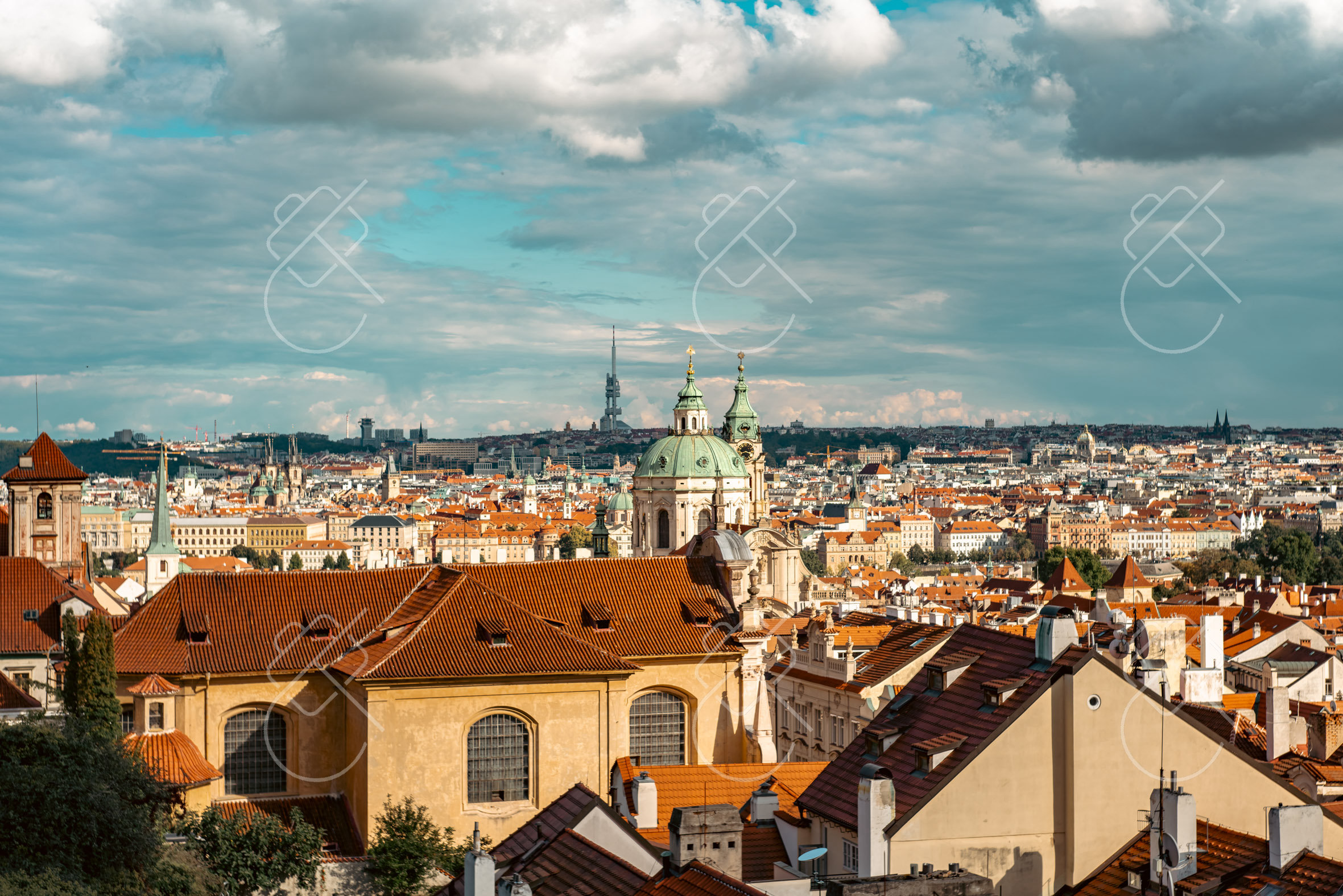
St Nicholas Church, Malá Strana — The finest baroque interior in the city, under the green dome.
A traditional beer hall — Half-litres of pilsner, refilled until you cover the glass.
Petřín lookout tower — 1891, 63.5 metres, and the widest view across the rooftops.
Kampa island — The quiet spit under the bridge with the best side-on view of it.
Vyšehrad — The second castle, a neo-gothic basilica and Dvořák's grave — with almost no crowd.
Old Town Hall tower — A lift to the rooftop view, and a shorter queue than the clock below.
A square ringed by gothic and baroque facades, a clock that has been running since 1410, and a warren of lanes behind it that most visitors never enter because the crowd never turns the corner.
The Astronomical Clock on the Old Town Hall was installed in 1410, which makes it the oldest such clock still operating anywhere. On the hour a procession of the twelve apostles passes the windows above the dials while a skeleton figure of Death turns an hourglass — the show lasts under a minute and draws a crowd out of all proportion to it. The dials themselves are the genuinely remarkable part: the upper one tracks the sun and moon through the zodiac and gives the time in three separate systems at once, including Old Bohemian hours counted from sunset.
The square around it is bounded by the twin eighty-metre spires of the Týn Church and the baroque bulk of St Nicholas, and it fills solid from mid-morning. Walk one street off it in any direction and the crowd thins immediately — the lanes between the square and the river are narrow, quiet and much closer to what the city looked like before the tour groups. Climb the Old Town Hall tower for the view down onto the square's rooftops; there is a lift, and the queue for it is shorter than the queue below for the clock.
Before nine in the morning. The square is genuinely empty at eight and unrecognisable by eleven, and the low light across the facades is better anyway.
Staying in the Old Town puts you inside the early-morning window when the square belongs to residents and hotel guests, which is most of the argument for the premium.
Skip the sausage stands on the square, which charge tourist rates by weight; walk five minutes into the side streets for a proper sit-down lunch at half the price.
The hourly clock show is a minute long and underwhelming — watch it once from the back of the crowd, then spend your attention on the dials themselves, which are the actual achievement.
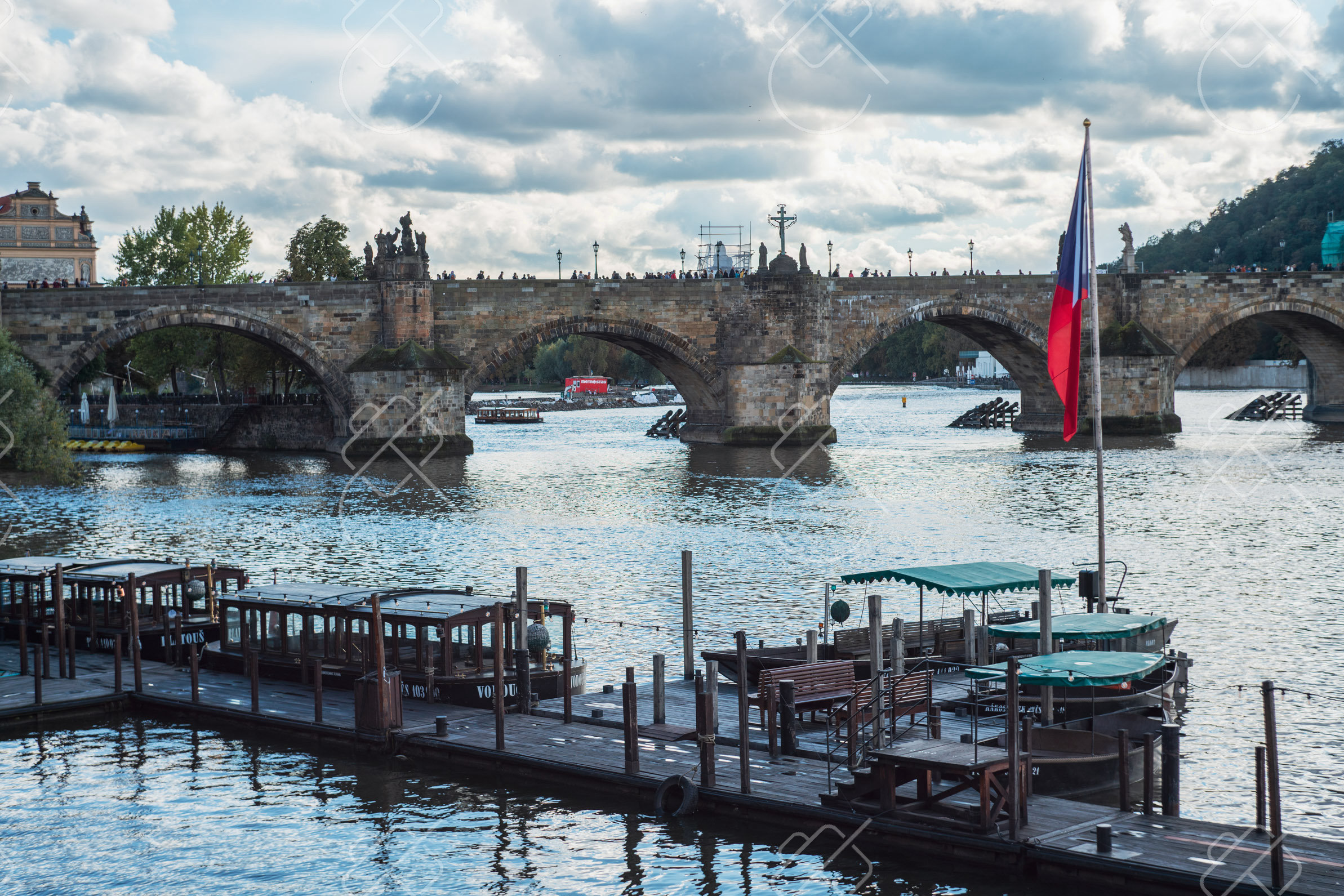
Five hundred metres of medieval stone lined with thirty baroque statues, connecting the two halves of the city. It is the most crowded place in Prague between ten and six, and one of the most atmospheric at dawn.
Charles IV laid the foundation stone in 1357 and the bridge took roughly half a century to finish: 516 metres long, sixteen arches, and a gothic tower at each end. The thirty statues along the parapets are mostly baroque additions from around 1700, and most of what you see today are replicas, though roughly a third are still the Baroque originals — the weathered ones were moved indoors to the National Museum's Lapidarium and to Vyšehrad to save them from the river air and the exhaust. The bronze relief beneath the statue of St John of Nepomuk has been rubbed to a shine by people touching it for luck.
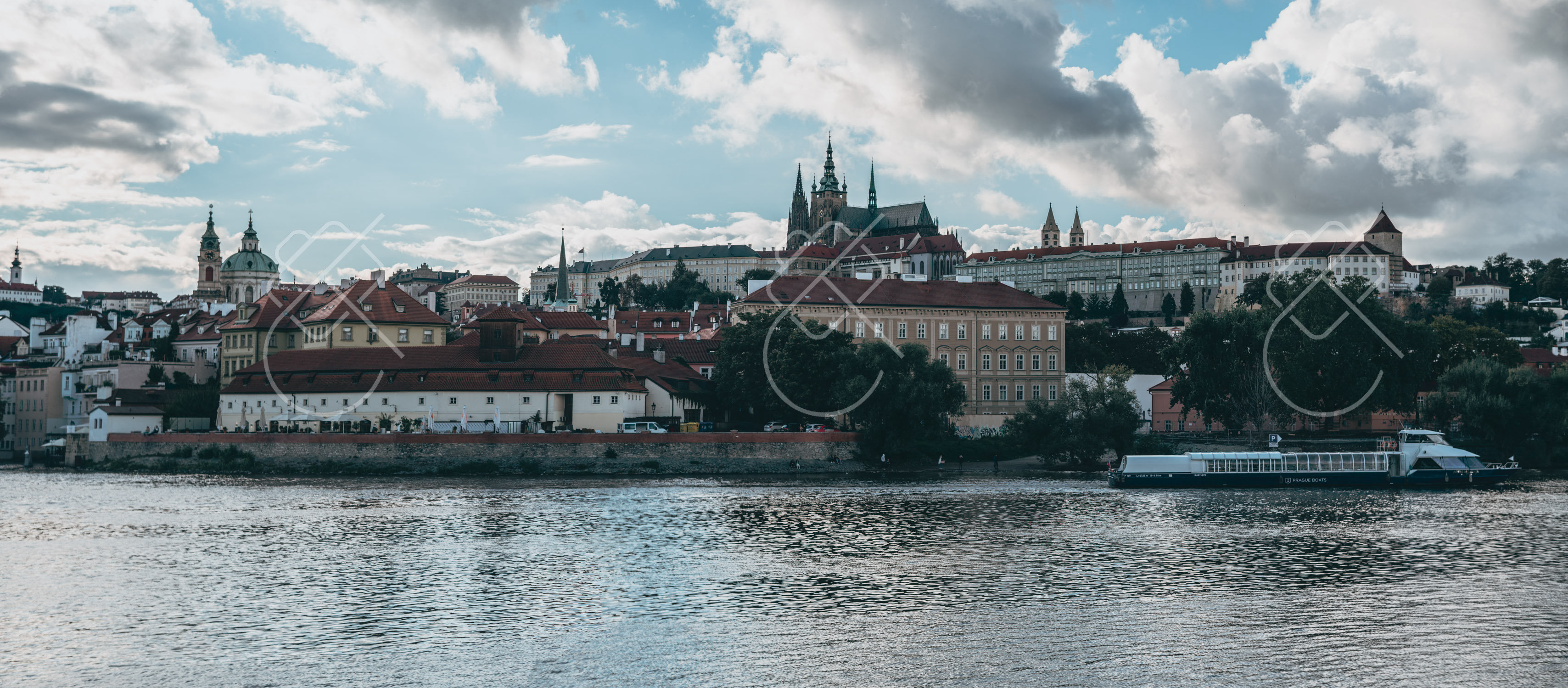
Timing is everything here. The bridge is open around the clock and carries no traffic, so come at six in the morning and you may have all five hundred metres of it to yourself, with mist coming off the Vltava and the castle catching the first light upstream. By ten it is a slow shuffle between portrait painters and buskers. For the view of the bridge rather than from it, walk the embankment on either bank or cross to Kampa island, which sits just downstream and stays surprisingly quiet.
Sunrise, or the hour after sunset. Those are the only two windows when the bridge is both lit well and walkable at your own pace.
Malá Strana, on the castle side of the bridge, means you cross it twice a day on foot — including at the hours when it's empty.
The riverside terraces on Kampa are a pleasant, overpriced beer stop; eat properly elsewhere and come here for the view.
For the classic view of the bridge in full, shoot from the embankment upstream near the Charles Bridge Museum or from Kampa — standing on the bridge itself gets you statues, not the bridge.
Charles Bridge at midday is a slow-moving queue.
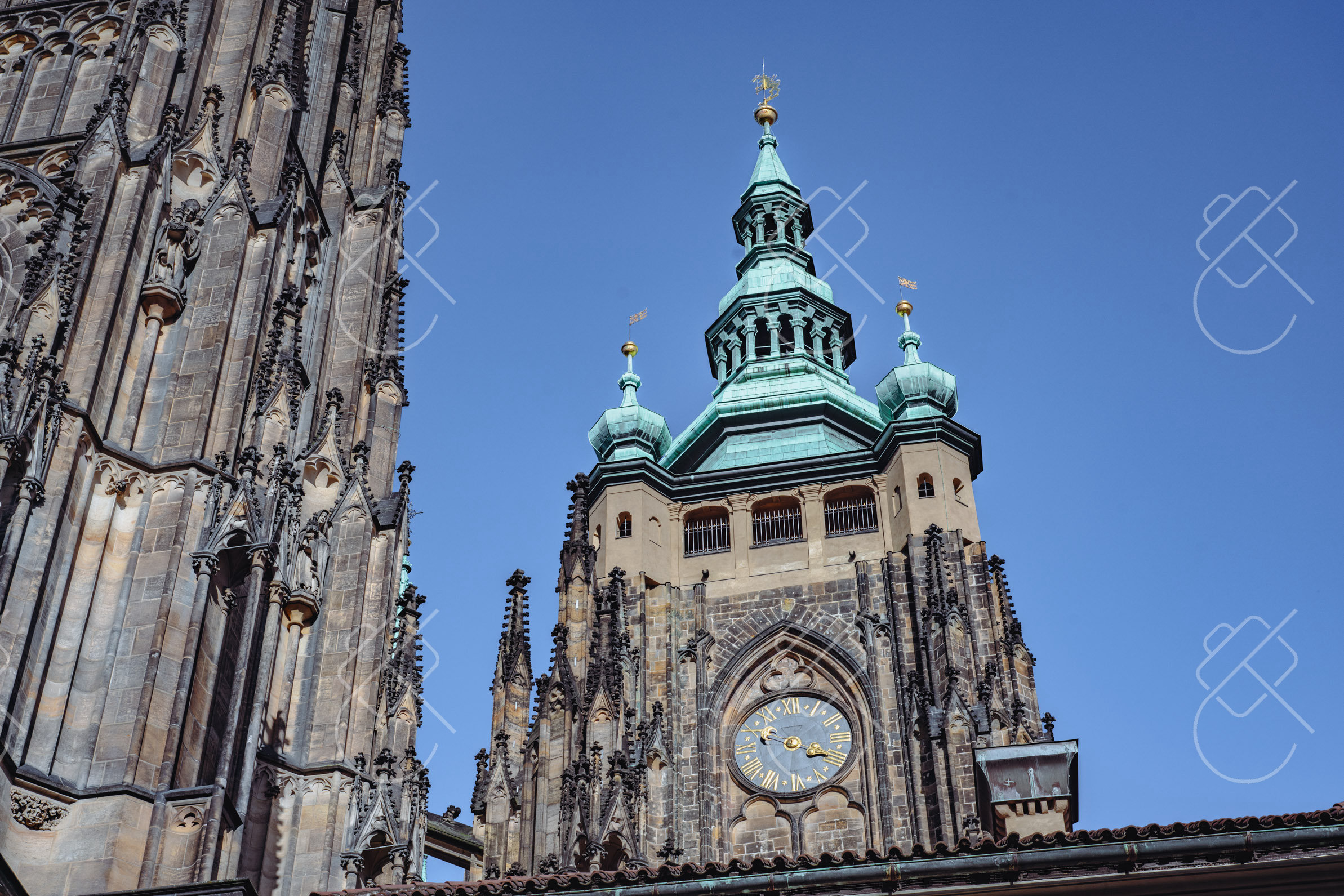
The steep baroque quarter under the castle hill, and above it the largest ancient castle complex in the world — a walled town in its own right, with a gothic cathedral at its centre.
Prague Castle is less a castle than a fortified district: roughly seventy thousand square metres of palaces, churches, gardens and lanes, holding the record as the largest ancient castle complex anywhere. St Vitus Cathedral at its heart was begun in 1344 and not actually completed until 1929, which is why its western facade is neo-gothic and its eastern end is the real thing — a six-hundred-year gap you can see in the stone. Inside, the Art Nouveau window by Alfons Mucha in the north nave is the piece most people photograph, and the one to look for if you only stop once.
Getting up there matters as much as arriving. The tram to Pohořelec drops you above the castle so you can walk down through it and out the far side, which beats grinding up the steps from the river. Below, Malá Strana is a knot of baroque palaces, embassy gardens and the green dome of St Nicholas Church — an interior widely rated the finest baroque space in the city. Petřín Hill rises behind it, with a 63.5-metre lookout tower built in 1891 that you can climb for the widest view over the rooftops.
First thing, or the last two hours of the afternoon. The castle courtyards are free to walk and open long hours, but the paid interiors keep shorter ones — check before planning a late visit.
Malá Strana is quieter and more atmospheric than the Old Town, and puts the castle and the bridge within a ten-minute walk.
Roast duck or pork with bread dumplings and red cabbage is the traditional plate here; look for a place a few streets off the castle approach.
Take the tram up to Pohořelec and walk down through the complex rather than climbing from the river. You'll see the same things, in better order, without the stairs.
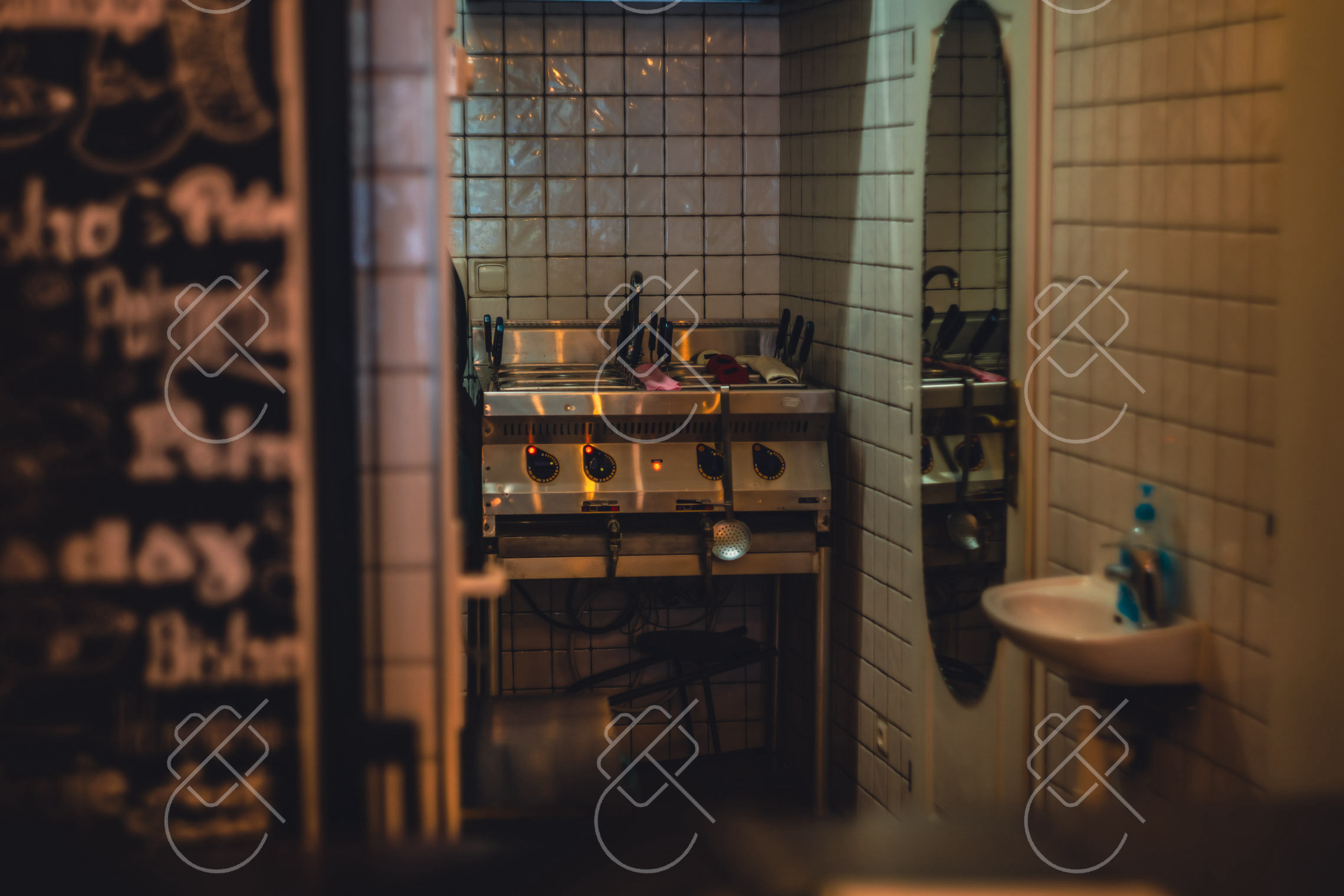
The old Jewish quarter, with the most affecting cemetery in central Europe, and the drinking culture of a country that gets through more beer per head than anywhere else on earth.
Josefov holds six synagogues and the Old Jewish Cemetery, which was in use from the fifteenth century until 1787 and confined to a plot the community was forbidden to expand — so burials were stacked, layer on layer, until roughly twelve thousand headstones stood crowded together over a far greater number of graves beneath. The Old-New Synagogue nearby, completed around 1270, is the oldest active synagogue in Europe. The sites are administered together by the Jewish Museum on a single ticket, and it is a sober couple of hours rather than a sightseeing stop.
The other Prague is in the beer halls. Czechs drink more beer per capita than any other nation, and the pilsner style itself was invented eighty kilometres away in Plzeň in 1842 — the first pale lager anywhere, and the template for most of the beer brewed in the world since. A proper hall serves it in half-litres with a thick head that is deliberate rather than sloppy, and refills arrive unasked until you put a beer mat on the glass. Order food with it: the traditional plates are heavy, cheap, and built for exactly this.
Josefov in the morning, when it is quietest. Note the Jewish Museum sites close on Saturdays and Jewish holidays, which catches a lot of visitors out.
Vinohrady, east of the centre, is where residents drink — a tram ride out, far cheaper, and the beer halls there are not performing for anyone.
Roast duck with bread dumplings, svíčková, or fried cheese; and trdelník on the street, which is sold as ancient Czech tradition and is nothing of the sort.
Put a beer mat on top of your glass when you're finished — otherwise a fresh half-litre will keep appearing, and it will all be on the tab at the end.
Come at six in the morning and you may have all five hundred metres of it to yourself.
A loose, walkable route — bend it to your pace and the light.
Be on Old Town Square by eight, before the tour groups. You get the Astronomical Clock's dials without a crowd in front of them, the Týn spires in low light, and the run of facades around the square more or less to yourself. Climb the Old Town Hall tower early for the rooftop view.
Spend the middle of the day in Josefov on a single Jewish Museum ticket — the Old Jewish Cemetery and the synagogues are a couple of sober hours and the most affecting thing in the city. Finish in a beer hall, ideally one a few tram stops out of the centre.
Where to shoot: Old Town Square at 8am, empty · The Astronomical Clock's dials up close · The rooftop view from the Old Town Hall tower · The headstones of the Old Jewish Cemetery
Tip: The Jewish Museum sites are closed on Saturdays and Jewish holidays. Check the calendar before you build a day around them, because there is no workaround.
Set an alarm and be on Charles Bridge for sunrise — six in the morning, mist on the Vltava, and five hundred metres of statues without another person on them. It is the single best hour Prague offers and it is entirely free.
Cross into Malá Strana for breakfast, then take the tram up to Pohořelec and walk down through Prague Castle rather than climbing to it. St Vitus, the courtyards and Golden Lane fill the afternoon; come down through the gardens into Malá Strana for dinner.
Where to shoot: Charles Bridge at sunrise from the deck · The bridge side-on from Kampa island · St Vitus Cathedral's nave and the Mucha window · The rooftops of Malá Strana from the castle steps
Tip: The castle courtyards are free to walk through; only the interiors need a ticket. If you're short on time or money, the grounds and the cathedral's exterior are most of the experience.
Take the funicular or walk up Petřín Hill for the 1891 lookout tower and the widest view over the city, then come down through the orchards on the eastern slope toward the river.
Give the afternoon to Vyšehrad, the second castle on the opposite side of town — a hilltop fort with a neo-gothic basilica, a cemetery holding Dvořák and Smetana, and almost none of the crowd. Finish in Vinohrady, where the bars are for residents rather than visitors.
Where to shoot: The view from Petřín lookout tower · Petřín's orchard slopes above the rooftops · Vyšehrad's ramparts over the Vltava · A Vinohrady beer hall interior
Tip: Buy a 24- or 72-hour transit pass rather than single tickets — trams are the fastest way across Prague and the passes cover the funicular up Petřín as well.
A fourth day gets you out of Prague entirely. Kutná Hora is an hour by train, for the ossuary at Sedlec and a cathedral built on silver money; Karlštejn Castle is closer still and reachable on a suburban train. With longer, head west to Plzeň to drink pilsner where it was invented in 1842, or north to the sandstone gorges of Bohemian Switzerland on the German border.
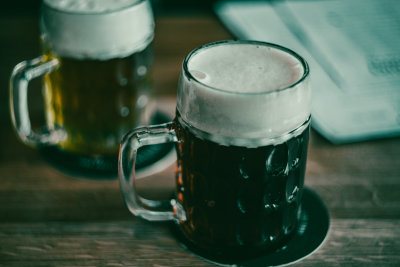
The Czechs drink more beer per head than any nation on earth, and the pale lager style was invented in Plzeň in 1842. A proper pour arrives with a thick, deliberate head — and keeps arriving until you put a mat over the glass.
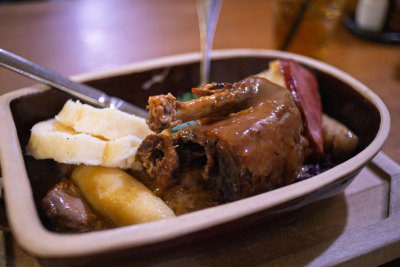
The traditional Czech plate: slow-roasted duck, sliced houskový knedlík to soak up the fat, and sweet-sour braised red cabbage. Heavy, cheap by western European standards, and built for a cold evening.
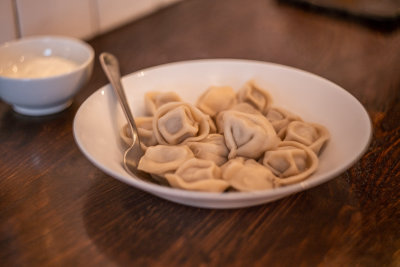
Dumplings turn up in every register of Czech cooking — as a side, as the main event, sweet or savoury. Filled and dressed with sour cream, they are the pub kitchen's answer to a cold walk back over the bridge.
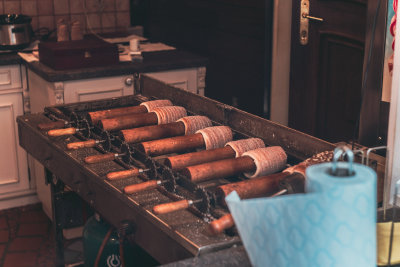
Sold on every corner of the Old Town as an ancient Czech pastry, which it isn't — the dough-wrapped chimney cake came from Hungarian and Transylvanian tradition and only appeared here to sell to visitors. Still good hot off the coals; just don't believe the sign.
Explore regional routes with verified local fleets, zero hidden charges, and transparent insurance on Localrent.
Compare stays in Prague and get the best deals on Hotels.com.
Transit cards, local customs, visa rules, and practical travel guides for this region.
See every destination from the 526-day journey:
Browse all destinationsCurious about the gear behind these photos? See the gear list.