By Clever Tourists · Published
Yes, Kyoto is safe to visit: violent and street crime against tourists is rare, Japan sits at Level 1 (Exercise Normal Precautions) with the US State Department, and the UK Foreign Office does not advise against travel to any part of the country. The risks that actually trip visitors up in Kyoto are local and practical: the photography and private-alley rules in Gion, crushes on the narrow paths at Fushimi Inari and Arashiyama, Japan's new on-the-spot fines for cyclists, heat in July and August, and the earthquake risk that applies across Japan. We spent 4 days in Kyoto in early April 2023, between Kanazawa and Nara, and this page covers what matters on the ground.
This page contains affiliate links. If you book or buy through them we may earn a commission, at no extra cost to you.
There is no separate advisory for Kyoto; it falls under Japan's. The US State Department lists Japan at Level 1, its lowest level; the rating was last reissued in 2025 without changes, according to the State Department's OSAC security service. The UK Foreign Office has no advice against travel to any region of Japan. Both change, so check them in the week you fly.
The documented nightlife problems in Japan (touts, drink spiking, bill fraud) are concentrated in a few Tokyo districts that the FCDO names, such as Kabukicho; see our Japan safety page for the national picture. Kyoto's issues are different, and most of them are about behaving well rather than being a victim.
Gion is where visitors most often get into trouble in Kyoto, through rules rather than crime. In October 2019 residents' groups put up signs in Gion's private alleys warning of a ¥10,000 (≈ $63) penalty for photographing there without permission, after years of complaints about tourists chasing geiko and maiko. Reports at the time noted the penalty was a residents' measure, not a legal fine.
From April 2024 the local residents' council added multilingual signs beside the private roads in Gion's southern district, warning of a ¥10,000 (≈ $63) penalty for entering them without permission. The main street, Hanamikoji-dori, is public and stays open to visitors.
• Stay on the public streets and read the signs at alley entrances.
• Never follow, block, touch or pose with a geiko or maiko on her way to work. Photographing from a distance on a public street is not banned, but it is the behaviour that caused the rules.
• Keep tripods and selfie sticks away from temples and narrow lanes; many sites ban them.
Our Kyoto photography rules and Gion etiquette guide covers which temple halls ban cameras. If you want old teahouse streets with less pressure, Kanazawa, our stop before Kyoto, has its own geisha districts; see the Kanazawa guide.
Crowding is the most likely physical risk in Kyoto. Fushimi Inari's lower torii tunnels, the Arashiyama bamboo path and the stepped lanes up to Kiyomizu-dera are narrow, and at peak hours you move at the crowd's pace on stone steps that are slippery after rain. Kyoto's official tourism site has warned of heavy crowding around Fushimi Inari and points visitors to its Kyoto Travel Congestion Forecast website, which predicts busy hours by area.
• Go early or late. Fushimi Inari's grounds never close, so sunrise is the easy win; see our Fushimi Inari guide.
• Wear proper shoes. The full Fushimi Inari circuit is a real hill walk of roughly 4 km on uneven steps.
• Keep bags closed in dense crowds and on packed buses. Theft is uncommon, but crowds are where it happens. The Kyoto city bus guide shows how to avoid the fullest routes.
We visited in early April 2023, in cherry blossom season, which with autumn leaves is the busiest time of year. Choosing a central base, such as those in where to stay in Kyoto, lets you reach the big sights before the tour buses.

Practical travel tips, straight to your inbox. Unsubscribe anytime.
Cycling is a good way to see Kyoto's flat centre, but from 1 April 2026 Japan's police can issue on-the-spot "blue ticket" fines to cyclists aged 16 and over for 113 kinds of violation, with fines from ¥3,000 to ¥12,000 (≈ $18.8–75). The rules apply to visitors the same as residents.
• Phone in hand while riding: ¥12,000 (≈ $75), the highest fine, and ticketed immediately.
• Running a red light: ¥6,000 (≈ $38).
• Riding while holding an umbrella: ¥5,000 (≈ $31), according to news reports of the fine schedule.
• Cycling after drinking is handled as a criminal offence, not a blue ticket.
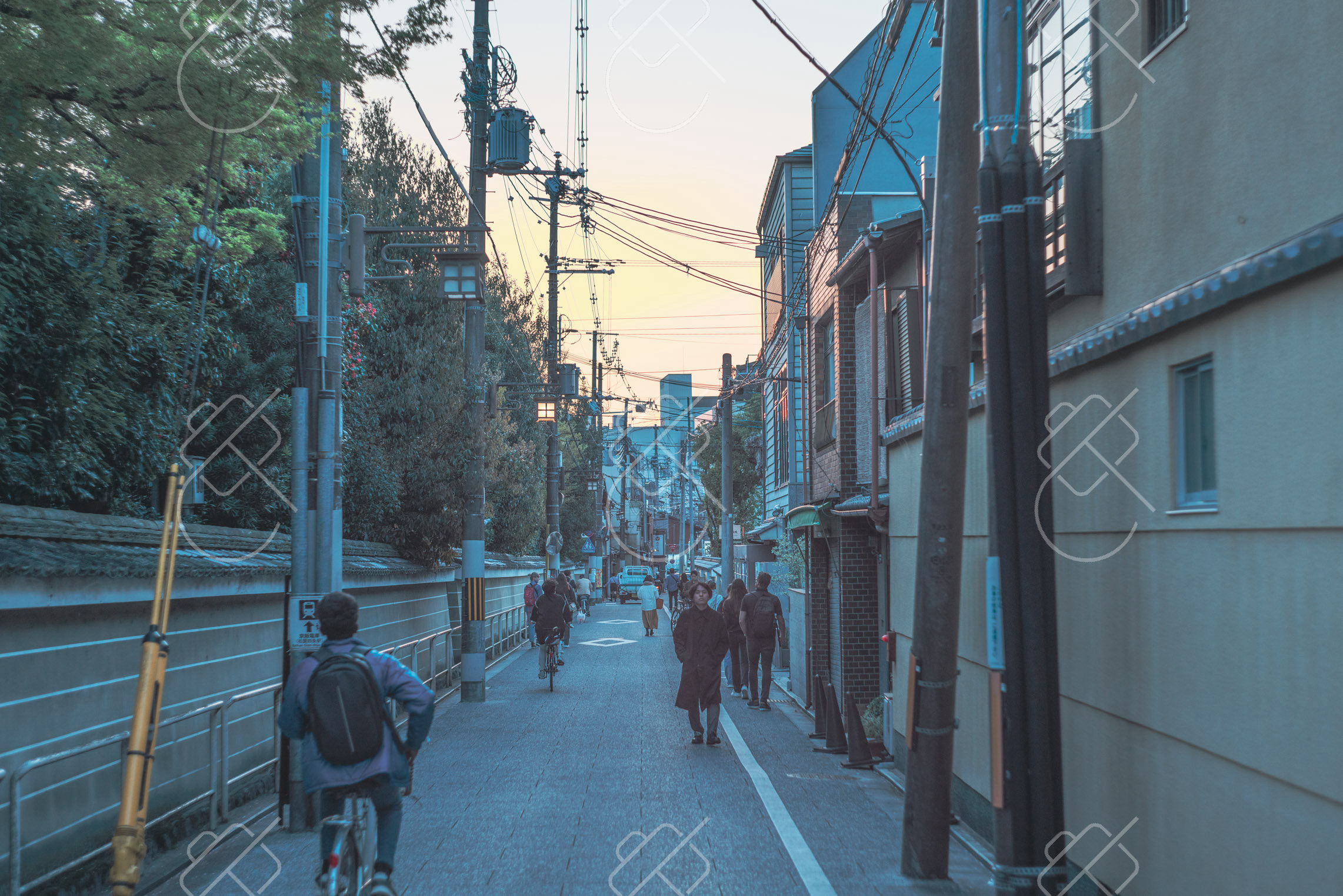
Ride on the road and keep left, and use the pavement only where signs allow it. Many of Kyoto's older lanes have no pavement at all, so walkers share them with taxis and delivery vans; walk in single file and step aside rather than stopping in the road for photos.
Kyoto sits in a basin, and July and August are hot and humid, with average daily highs around 33 °C in August on older Japan Meteorological Agency normals and hotter days common. Japan's Ministry of the Environment and the JMA issue heatstroke alerts when the heat index (WBGT) is forecast to reach 33, and since April 2024 a higher special heatstroke alert at 35. Kyoto's official tourism site publishes its own heatstroke advice for visitors.
On alert days, see temples early, spend midday indoors, drink more than you think you need and use the shade. Typhoon season runs from June to December, peaking from July to September; it can bring heavy rain and cancelled trains. Spring and autumn avoid both problems; we were there in April, and our how many days in Kyoto page helps you fit the main sights into a short stay.
Like all of Japan, Kyoto is in an earthquake zone, and the national advice applies: drop, take cover under something sturdy, hold on, then follow instructions from hotel staff and station announcements. Central Kyoto is well inland, so the tsunami warnings that dominate coastal advice matter less in the city than in coastal towns.
For disaster help in English, the Japan National Tourism Organization's Japan Visitor Hotline answers on 050-3816-2787, 24 hours a day, in English, Chinese and Korean. Keep your accommodation address saved in Japanese on your phone so you can show it to a taxi driver or police officer.
Scams aimed at tourists are uncommon in Kyoto. The sensible precaution is the same as anywhere in Japan: in the bar streets of Kiyamachi and Pontocho, check the menu, cover charge and seating fee before you sit down, and don't follow street touts. Walking back at night through Gion or along the Kamo River is generally safe.
Kyoto suits solo travellers, including women travelling alone; the national advice on crowded trains and drink spiking still applies. The law is the bigger trap than crime: Japan has zero tolerance for drugs, and some ordinary cold and allergy medicines are banned, so read our Japan medicine rules before packing. Carry your passport, since visitors must have it with them.
Dial 110 for police and 119 for fire or an ambulance. The Japan Visitor Hotline (050-3816-2787) can help with illness and disasters in English. Save your insurer's 24-hour number too; see travel insurance for international trips. For planning the rest of the trip, our 3 days in Kyoto guide has a day-by-day plan.
Yes. Street crime is rare, and walking through Gion or along the Kamo River at night is normal. In the Kiyamachi and Pontocho bar streets, check cover charges before you sit down and ignore street touts.
Signs in Gion's private alleys warn of a ¥10,000 (≈ $63) penalty for photographing without permission, and since April 2024 signs on private roads in the southern district warn of ¥10,000 (≈ $63) for entering them. Reports describe these as residents' penalties rather than legal fines. Hanamikoji-dori, the main street, is public.
Yes, if you follow the rules. Since 1 April 2026 police can fine cyclists aged 16 and over on the spot, from ¥3,000 to ¥12,000 (≈ $18.8–75); using a phone while riding is ¥12,000 (≈ $75) and running a red light ¥6,000 (≈ $38). Cycling after drinking is a criminal offence.
Average August highs are around 33 °C, with hotter days common. Japan issues heatstroke alerts when the heat index is forecast to reach 33 and special alerts at 35. Sightsee early and rest indoors at midday.
110 for police and 119 for fire or ambulance. The Japan Visitor Hotline, 050-3816-2787, offers 24-hour help in English, Chinese and Korean.
Practical travel tips, straight to your inbox. Unsubscribe anytime.
Find a place to stay in Kyoto on Booking.com.