Home
About us
Destinations
Travel Guides
Recipes
Featured
Photos As Art
Abstract Prints
Locations
Travel Gear
Travel Resources
Favorites
Photo Framer
Explore Photos
ContactDuring the Edo period, Kanazawa was the seat of the immensely wealthy Maeda clan, rulers of the Kaga Domain whose patronage of the arts rivaled Kyoto and Edo (Tokyo). Because it was spared devastation during World War II, Kanazawa preserves its feudal heritage with remarkable intactness: labyrinthine samurai quarters with mud walls, wooden geisha teahouses along the Asano River, and Kenroku-en, widely considered one of Japan's three most sublime landscape gardens.
Published October 2, 2026
Tap any photo to open it full-screen and order a print.
The castle city of the Hokuriku coast, where traditional gold leaf craftsmanship, Edo-era samurai alleys, and one of Japan's three celebrated landscape gardens meet the bounty of the Sea of Japan.
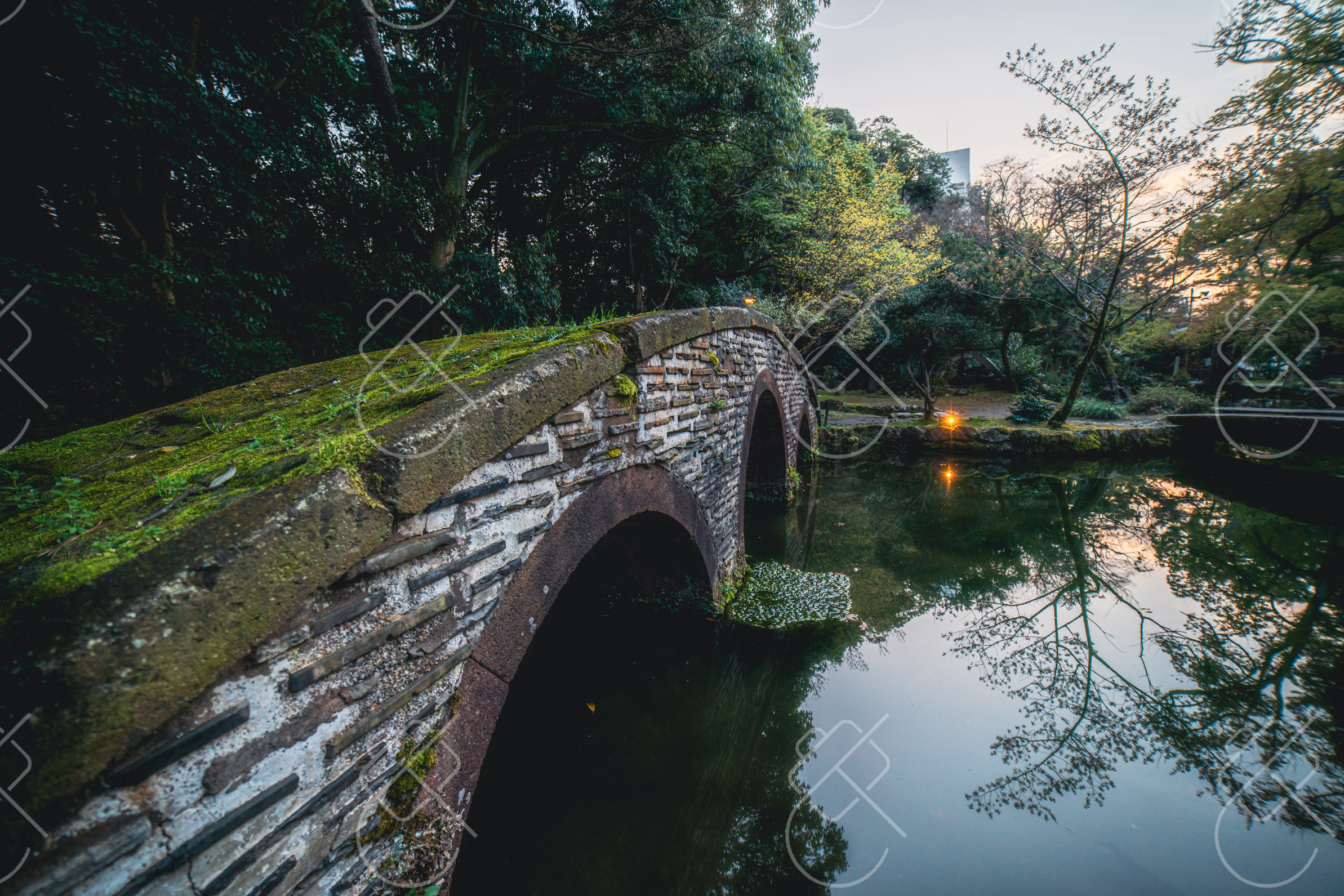
Kenroku-en, literally "Garden of Six Attributes," was cultivated over two centuries by successive Maeda lords. Covering nearly 25 acres adjacent to Kanazawa Castle, the garden was designed to balance the six contrasting aesthetic qualities of classical Chinese garden theory: spaciousness, seclusion, artifice, antiquity, water courses, and magnificent panoramas. In winter, hundreds of conical ropes (yukitsuri) are strung to protect the ancient Karasaki pine branches from heavy snow, creating an architectural geometry found nowhere else.
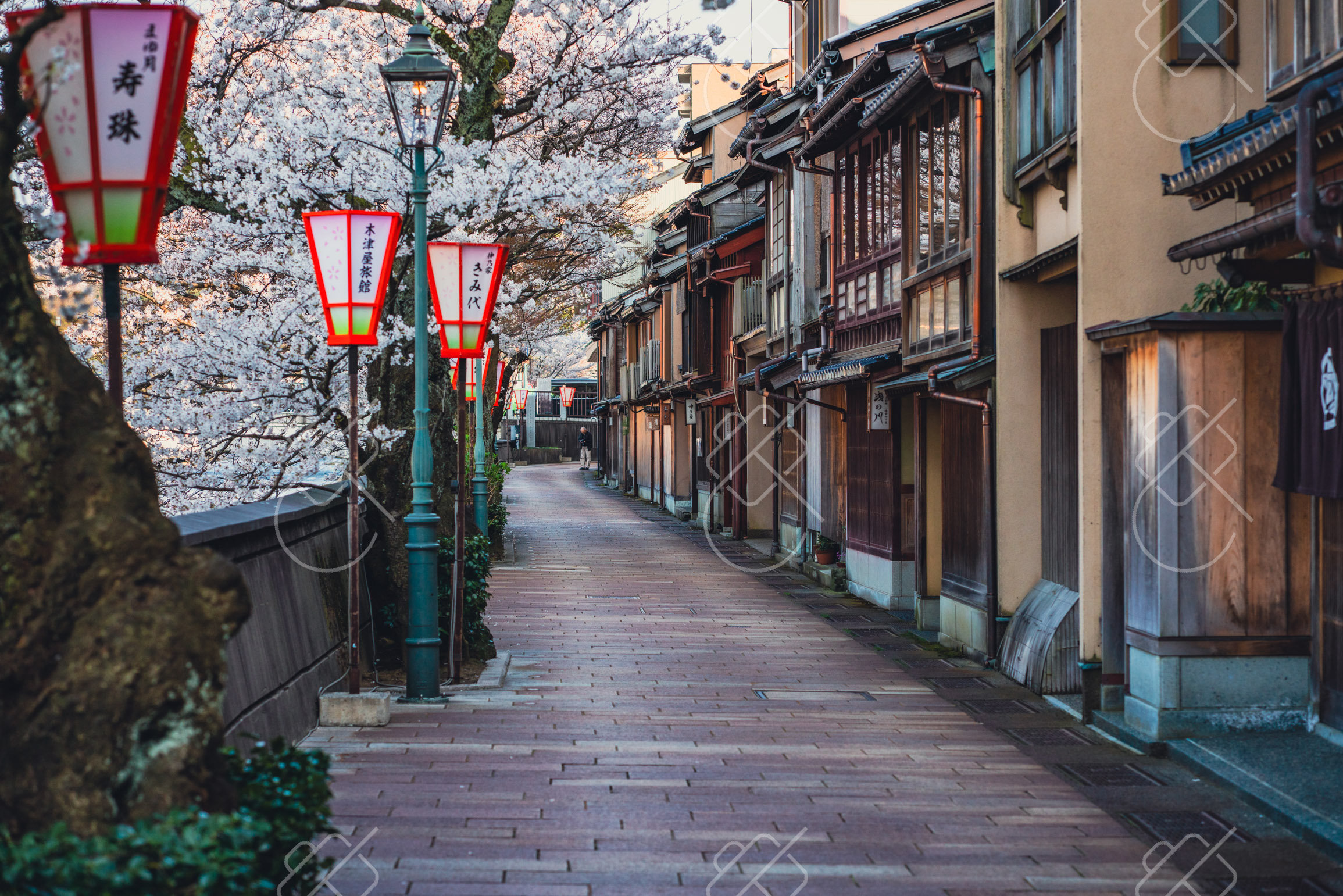
Across the Asano River lie the preserved entertainment quarters of Higashi Chaya and Kazuemachi. These districts retain their two-story wooden teahouses with dark timber lattice screens (kimusuko), where geisha still perform classical arts in the evenings. By day, many teahouses operate as traditional tea rooms serving matcha paired with wagashi sweets dusted with Kanazawa gold leaf (which produces over 99% of Japan's leaf gold).
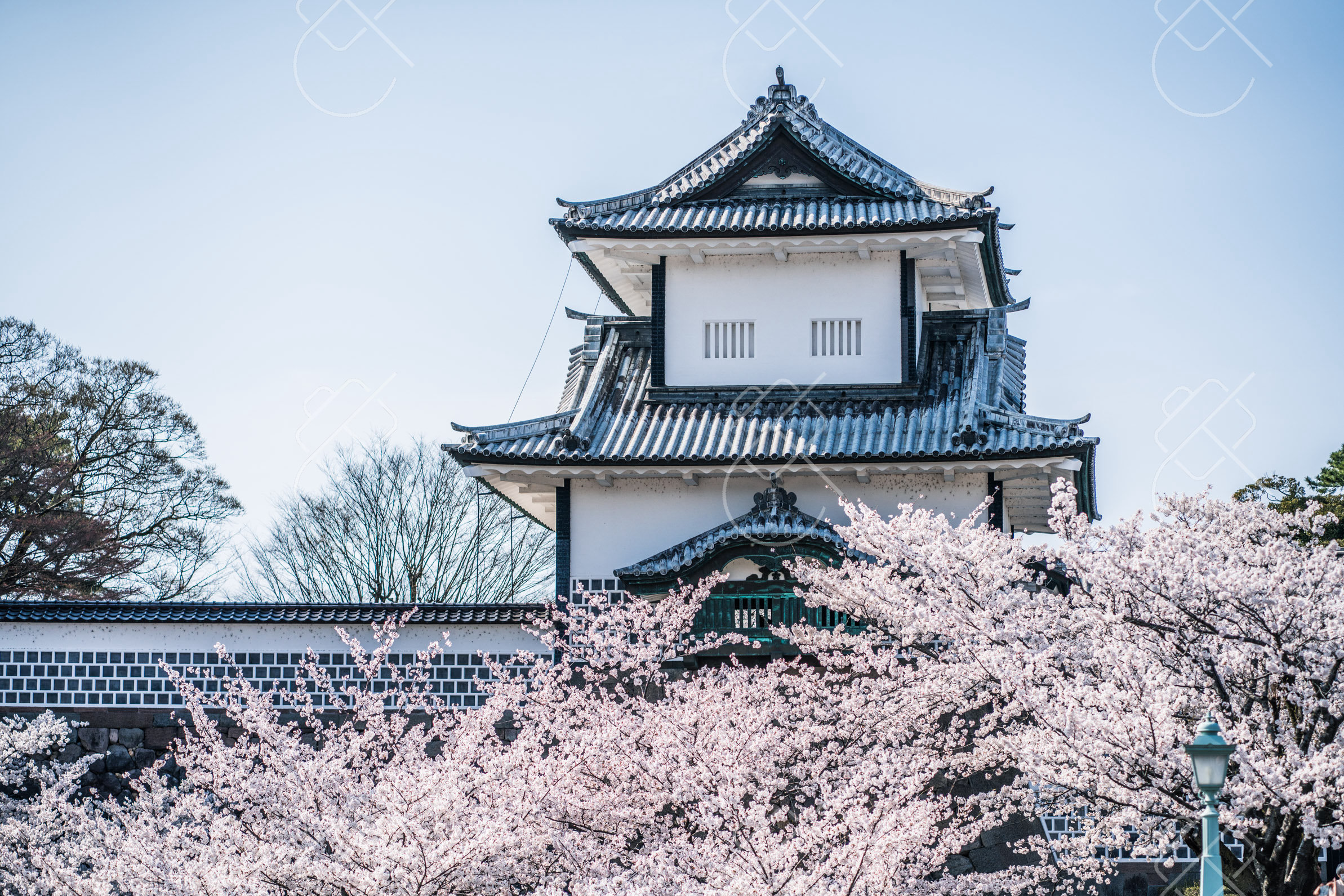
The Ishikawamon gate and white turret ramparts of Kanazawa Castle amidst cherry blossoms
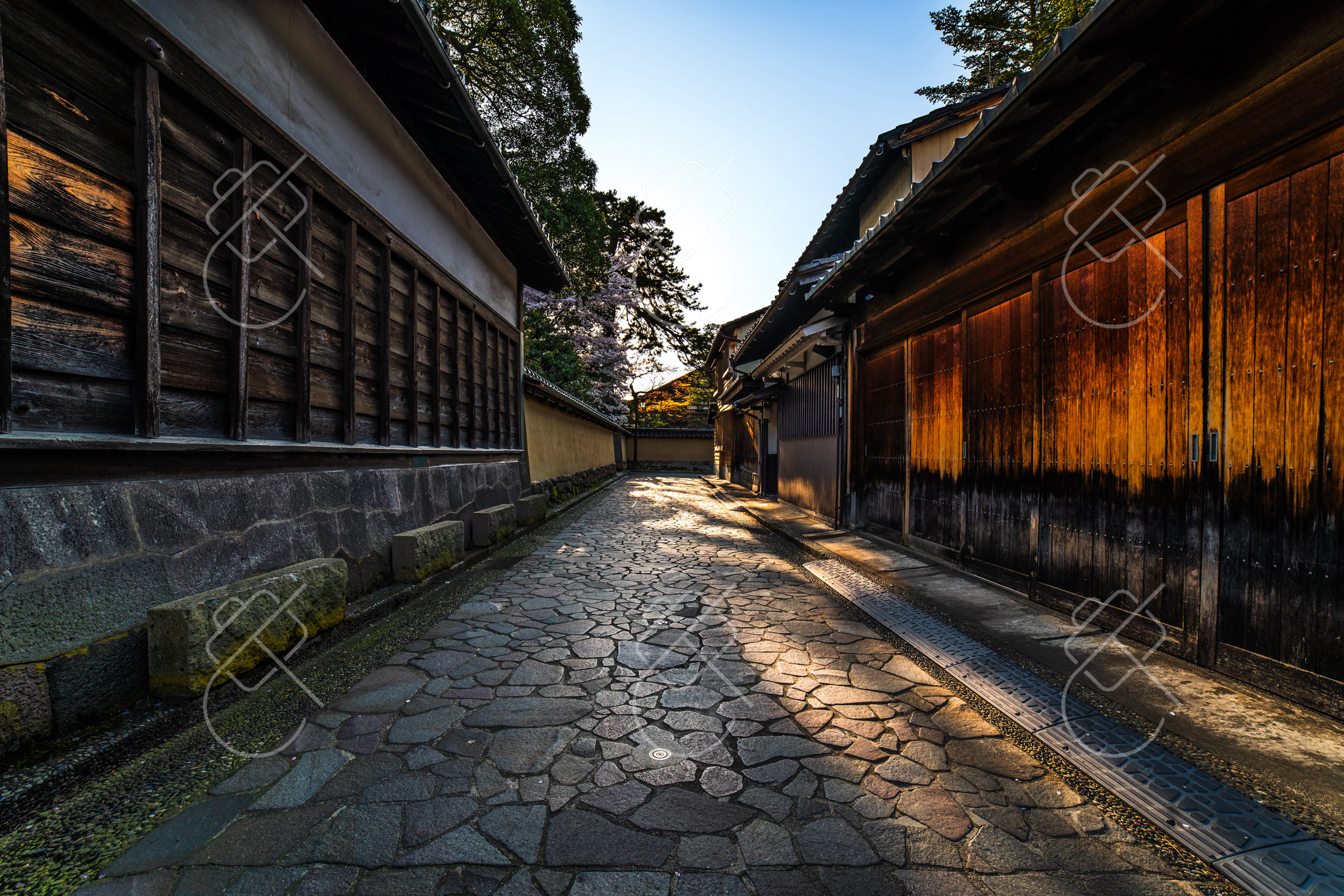
South of the castle park, the Nagamachi samurai district preserves the residences of middle- and high-ranking Maeda warriors. Winding cobblestone lanes are bordered by earthen mud walls (tsuchikabe), traditional tile roofs, and narrow water canals that once served as firebreaks and moats.
Early April for cherry blossoms in Kenroku-en, or November for autumn maples. Winter (December to February) brings magical snowscapes with yukitsuri ropes on the pines and peak crab season at Omicho Market.
Base near Kanazawa Station for Shinkansen transit convenience, or stay near the Korinbo / Katamachi districts for easy walking access to the castle, Kenroku-en, and evening dining.
Kaisendon (overflowing rice bowls with Sea of Japan snow crab, sweet shrimp, and sea urchin) at Omicho Market, and jibuni (a Kaga duck or chicken stew simmered in thick seasoned dashi).
Enter Kenroku-en during the early-morning free admission window before the main ticket gates open (typically 7:00 AM in season); you'll experience the garden in stillness before tour groups arrive.
Get the best deals on your Kanazawa flight before fares rise — Expedia.
Before setting out for Kanazawa, Japan, World Nomads was the travel insurance policy we picked to cover the unexpected.
Transit cards, local customs, visa rules, and practical travel guides for this region.
See every destination from the 526-day journey:
Browse all destinationsCurious about the gear behind these photos? See the gear list.