Home
About us
Destinations & Country Guides
Travel Guides
Recipes
Featured
Photos As Art
Abstract Prints
Locations
Travel Gear
Travel Resources
Favorites
Photo Framer
Explore Photos
Contact Road trips & driving
By Clever Tourists · Published
Yes, tourists can drive in Albania, and a car is the easiest way to link the mountains, the south and the Riviera, but carry an International Driving Permit, drive the main roads by day, and expect rougher surfaces and more erratic driving than in Croatia or Italy. We spent a month in Albania in September and October 2023, from Shkodër and Theth down through Tirana, Korçë, Përmet, Gjirokastër, Sarandë, Ksamil and Berat. That route is a good test of the country's roads: a motorway spine, mountain passes and a coast where the last 20 km can take an hour in August. This page covers the paperwork, the rules, the one big toll and the roads that need care.
UK drivers: the UK Foreign Office says you "may find it useful" to carry a 1968 International Driving Permit with your photocard licence, that the older 1949 IDP is no longer accepted, and that you cannot buy one once you are outside the UK. US drivers: carry an IDP from AAA (the only US issuer alongside AATA) with your state licence. Rental desks and roadside police both ask for it, and it costs far less than an argument at a checkpoint.
Carry your passport, licence, IDP, the rental contract and the vehicle registration in the car at all times. If you bring a car in from Montenegro, Greece or Kosovo you need a green card proof of insurance that covers Albania (the FCDO is explicit on this). Cross-border rules for rentals are covered in driving a rental car across Balkan borders.
Drivers who passed their test recently should check one change: Albanian media reported a June 2026 amendment to the road code that tightens alcohol and speed limits for licence holders of under two years. We could not confirm the final text on an official Albanian source, so if that applies to you, assume zero alcohol and ask the rental company.
The usual limits are 40 km/h in towns, 80 to 90 km/h on rural and main roads depending on the sign, and 110 km/h on motorways such as the Tirana to Durrës road and the A1. Signed limits change often, especially when a main road passes through a village, so follow the signs over any general rule.
Sources disagree on the exact blood-alcohol limit, and all of them put it close to zero. Treat it as no drinking at all if you are driving.
Police stops are routine on main roads, often at town entrances. Stop, keep documents ready, and expect a check of licence and papers. Speed cameras are common in and around Tirana. Phone use while driving is illegal.
Use dipped headlights in tunnels and poor light, and drive with extra care at dusk: the FCDO warns of unmarked roadworks, potholes and vehicles without lights, and most roads outside towns have no street lighting.
Albania has very few tolls. The one most visitors meet is the A1 Rruga e Kombit between Milot and Morinë (the road to Kosovo), with a single booth near Kalimash, east of the Kalimash tunnel. A passenger car pays about €5 (≈ $5.6) (around 700 to 750 lek), charged per vehicle. Cash in lek or euros is the safe option; card acceptance is reported but not confirmed everywhere.
There is also a smaller Thumanë to Kashar toll on the road from the north towards Tirana, reported at 250 lek for a car. There is no vignette to buy in Albania.
Fuel stations are frequent on the main roads and around towns, and most take cards, but carry lek for smaller stations in the mountains and for parking attendants. Our Albania cash and ATM guide covers the fee-free ATMs.
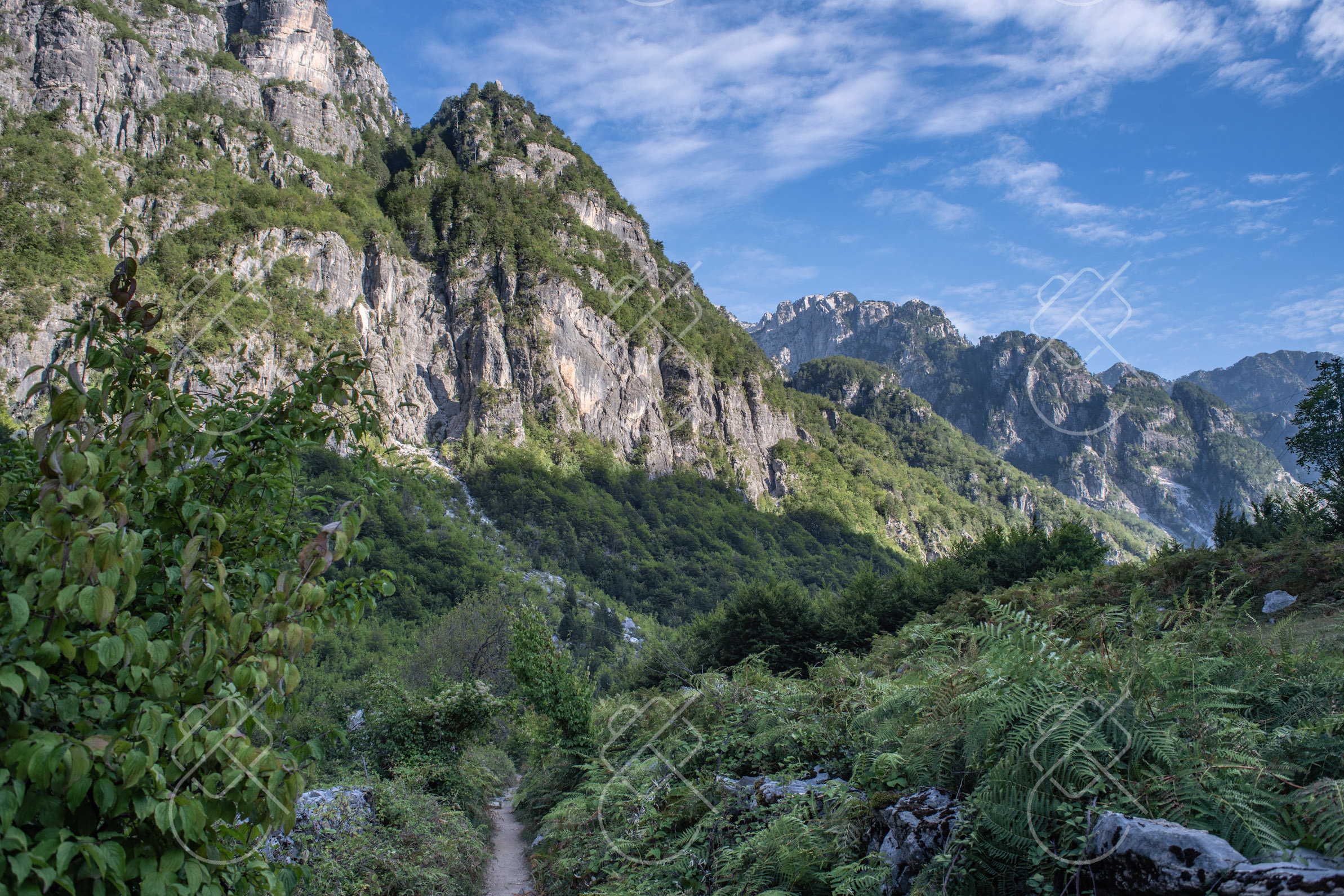
Tirana, Durrës and the A1/A2 corridor: dual carriageway, decent surface, heavy traffic near Tirana. Shkodër to Theth: the SH21 is now paved, but it is a long mountain climb with hairpins and no barriers in places. Read how to get to Theth before trying it, and allow about 2 to 2.5 hours. We spent 3 nights in Theth after 2 in Shkodër, which is the right pace for that drive.
Korçë, Përmet and Gjirokastër: the SH75 through the Vjosa valley is slow and winding, and Përmet is a sensible overnight between Korçë and Gjirokastër (our route did exactly that, one night in Përmet). Gjirokastër to Sarandë: the SH99 over the Muzinë pass is short in kilometres but steep. Sarandë to Ksamil and Butrint: a short road that jams in July and August; go early.
The Llogara Pass on the SH8 between Vlorë and Himarë climbs over 1,000 m with tight bends. Rural and minor roads can still be gravel; the FCDO notes a 4x4 is more practical there. A normal hire car is fine for every stop on our route.
The FCDO describes Albanian driving as "often aggressive and erratic" and says the country's road death rate is among the highest in Europe. In practice that means overtaking on blind bends, sudden stops for passengers, and cars entering roundabouts without yielding. Leave space, do not respond to provocation, and avoid driving after dark outside towns.
After any accident, even a minor scrape, stay at the scene until the police arrive. Leaving can lead to charges and a fine under Albanian law, and the rental company needs the police report for insurance. The police number is 129, ambulance 127.
In Tirana, parking is the hardest part: use paid garages or your hotel's spaces, and avoid the centre at rush hour. In Berat and Gjirokastër the old towns are steep and narrow; park below and walk up. Our 2-week Albania itinerary lays out how the drives fit together, and is Albania safe covers the wider safety picture.
Tirana airport has the widest choice of rental desks, and picking up there avoids driving into central Tirana on day one (see Tirana airport to the city if you only need a car later). Expect a card deposit, a minimum age set by the company, and often a minimum of one or two years holding a licence.
Ask for the cross-border Green Card at booking if you plan to cross into Montenegro, Kosovo, North Macedonia or Greece; not every company allows it. Photograph the car before you leave, check the spare tyre, and keep the agency's phone number saved, since mobile data is reliable on main roads (our Albania eSIM guide explains why EU roaming does not cover Albania).
If you do not want to drive, furgons and buses link every town on our route, more slowly. The Albania guide has the city-by-city picture.
Carry one. The UK FCDO recommends a 1968 IDP alongside a UK licence and says the 1949 version is no longer accepted. US drivers should get an IDP from AAA before travelling.
On main roads by day, yes, with care. The FCDO warns of aggressive driving, potholes, unmarked roadworks and unlit roads, so avoid night driving outside towns and leave plenty of space.
Only a few. The A1 Rruga e Kombit between Milot and Morinë costs about €5 (≈ $5.6) for a car, and the Thumanë to Kashar toll is about 250 lek. There is no vignette.
Usually 40 km/h in towns, 80 to 90 km/h on rural and main roads, and 110 km/h on motorways. Always follow the posted signs.
Stay at the scene until the police arrive, even for a minor accident, and call 129. Leaving can lead to charges and a fine, and the rental company needs the police report.
Get our new Albania guides and practical tips by email: where to stay, what to eat, what things cost and the rules that catch travelers out.
Free. No spam, only new guides and tips.
Search verified local fleets with low security deposits and exact model delivery on Localrent.
Compare stays in Albania and get the best deals on Booking.com.