Home
About us
Destinations & Country Guides
Travel Guides
Recipes
Featured
Photos As Art
Abstract Prints
Locations
Travel Gear
Travel Resources
Favorites
Photo Framer
Explore Photos
Contact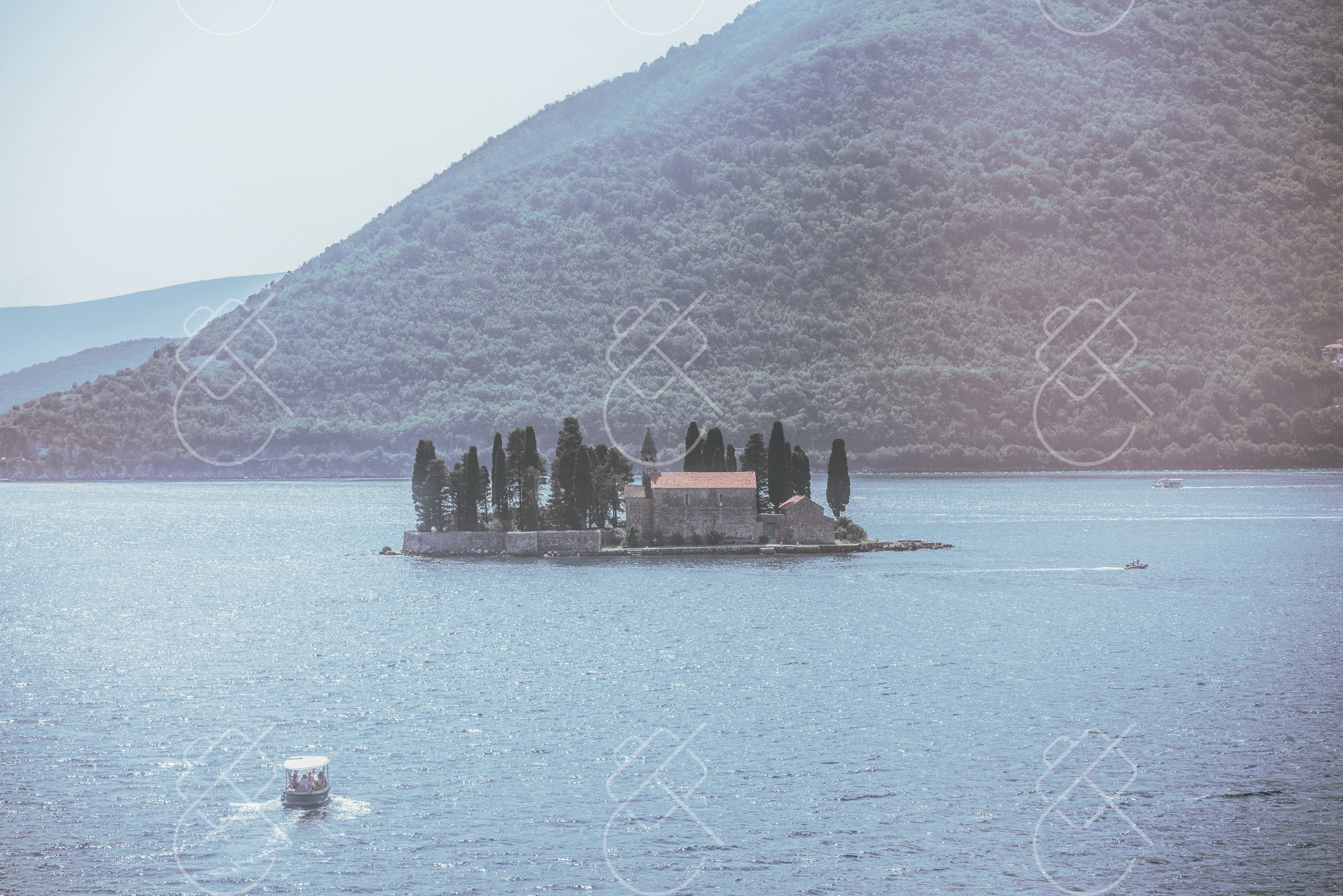 Attractions & day trips
By Clever Tourists · Published
Perast and Our Lady of the Rocks, the Lovćen serpentine with Njeguši and Cetinje, and Budva are the three best day trips from Kotor. Perast is about half an hour away along the bay and needs only a morning; the climb up the 25 hairpins to Lovćen is the most dramatic drive in Montenegro; Budva adds a walled old town and beaches. We spent 3 days in Kotor in August 2023, arriving from Dubrovnik and going on into the mountains at Stavna, and later stayed in Cetinje and Petrovac further down the coast. Dubrovnik is possible as a day trip but the border makes it a gamble in summer.
Ranked by what you get for the time spent getting there:
• Perast and Our Lady of the Rocks: about 30 to 35 minutes by local bus or car. Half a day.
• Lovćen, Njeguši and Cetinje: about 1 hour 10 minutes to Cetinje by bus, longer via the serpentine. A full day, best by car.
• Budva old town: about 30 to 50 minutes by bus. Half a day to a full beach day.
• Sveti Stefan: a few kilometres past Budva. Combine it with Budva.
• Ostrog Monastery: about 1 hour 45 minutes by car. A long day; better from Nikšić.
• Dubrovnik: about 2 to 2.5 hours by bus without border queues. Better as an overnight.
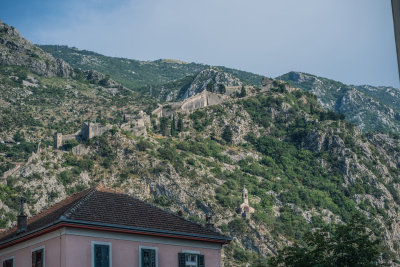
Kotor's own Old Town and the fortress climb deserve a day before you start on any of these. Our Kotor fortress guide has the ticket and timing, and how many days in Kotor explains how to fit day trips around it.
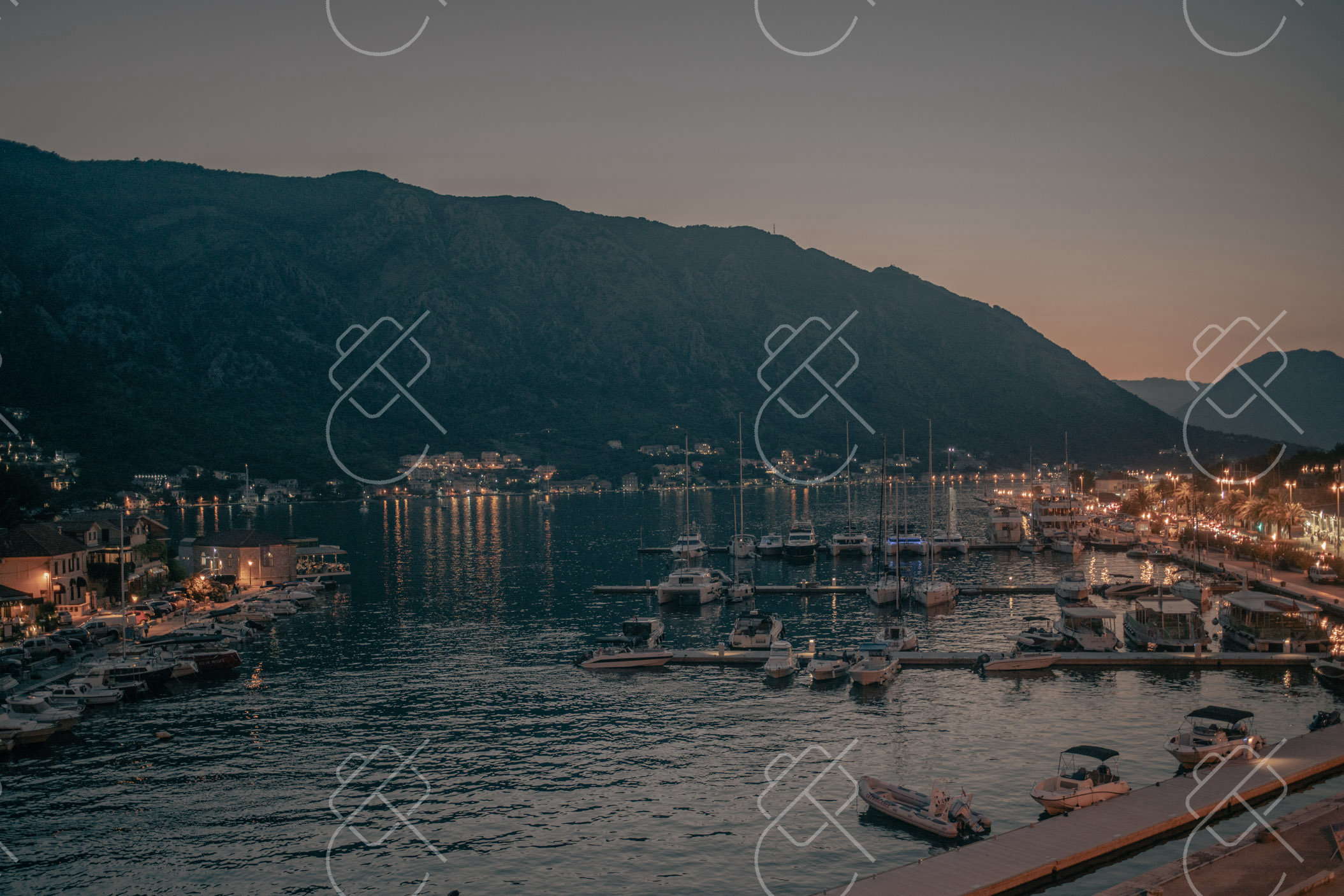
What it is: a small Venetian-era village of stone palazzi and bell towers along the inner bay, with two islets offshore. Our Lady of the Rocks is the man-made one, crowned by a Baroque church and reached by a short boat ride from the Perast quay. Our Kotor guide covers it alongside the Old Town.
Getting there: about 30 to 35 minutes on the local Blue Line bus along the bay road, roughly hourly and less often on Sundays. The bus stops on the main road above Perast, so you walk down to the waterfront. By car it is about 15 km, but parking in the village is tight in summer.
How long: 2 to 3 hours covers the waterfront, the boat to the islet and the church. Who it suits: everyone, and it is the one day trip that works without a car. Tip: the boatmen set their own fares and the church charges its own small entry, so agree the price on the quay before you step in.
What it is: the old Austro-Hungarian road that climbs from the bay through 25 numbered hairpins, then Njeguši village for smoked ham and cheese, the Njegoš Mausoleum on the summit of Mount Lovćen, and Cetinje, Montenegro's old royal capital in the valley behind. It is the view of the Bay of Kotor that appears on every postcard.
Getting there: by car, or on a tour. Buses go to Cetinje in about 1 hour 10 minutes to 1 hour 40 minutes, a few times a day, but they do not cover the serpentine and Lovćen. Our serpentine driving guide covers passing tour buses on the bends, and driving in Montenegro covers the rest.
How long: a full day. Who it suits: drivers and anyone who wants the big view. Tip: the mausoleum is reached by 461 steps through a tunnel and the summit is far cooler than the coast, so carry a layer even in August. Lovćen National Park charges a small entry fee and the mausoleum charges separately.
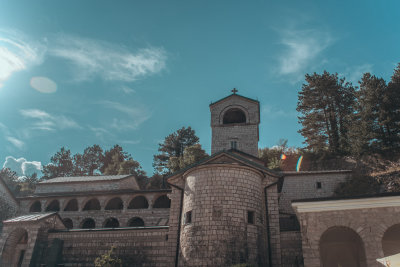
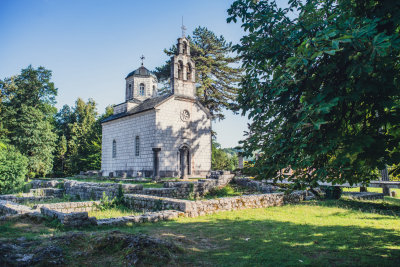
We came back to Cetinje later on our route and spent a night there; our Cetinje guide covers the monastery, the former embassies and King Nikola's palace if you want more than a stop.
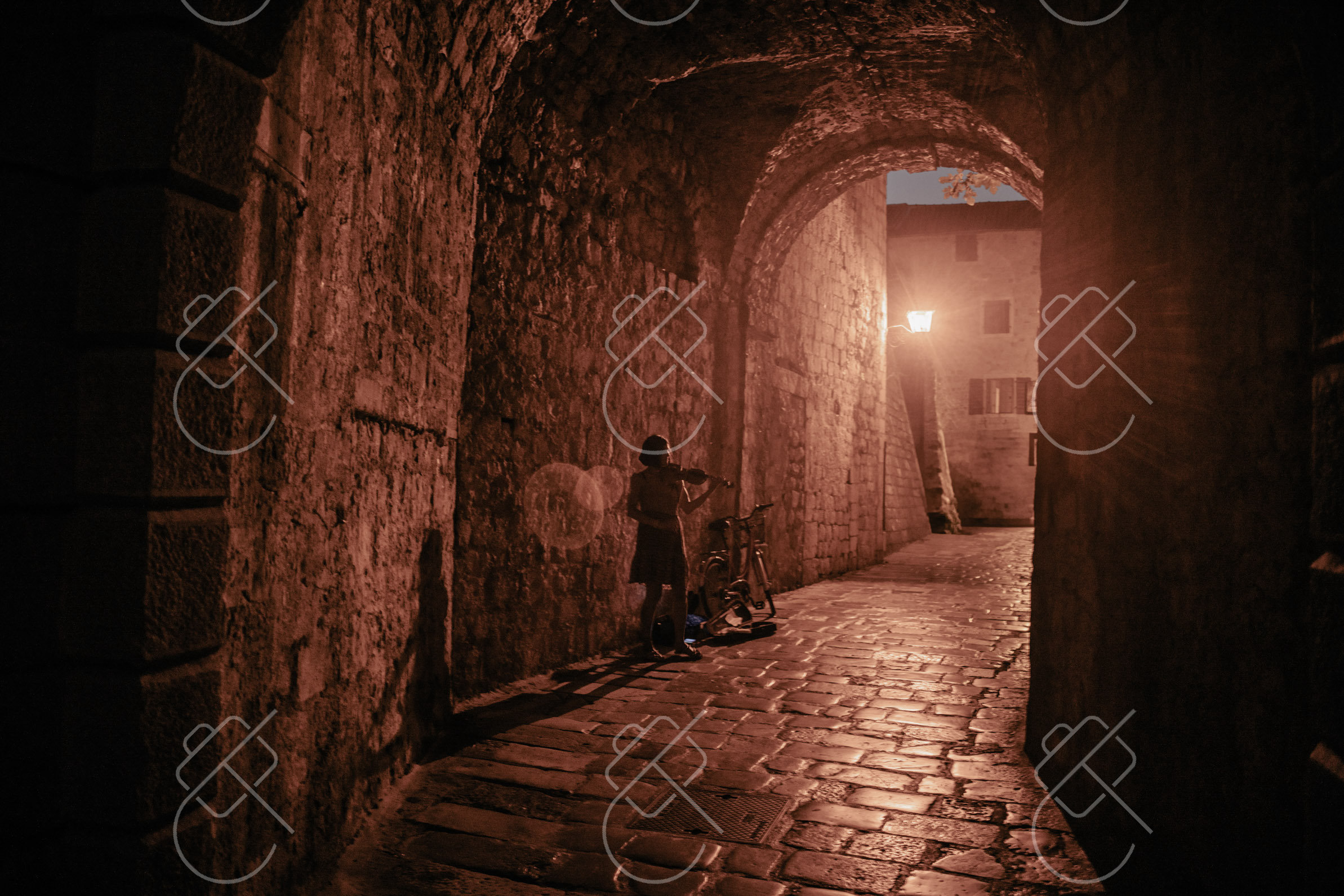
What it is: Budva is Montenegro's main resort, with a compact walled old town on a headland and a long run of beaches either side. Sveti Stefan is the fortified islet-village joined to the shore by a sandbar, a few kilometres further south and one of the most photographed views on the coast.
Getting there: buses between Kotor and Budva take about 30 to 50 minutes and run through the day from Kotor bus station. Sveti Stefan is a short local bus or taxi ride beyond Budva.
How long: half a day for Budva's old town and the viewpoint above Sveti Stefan; a full day with swimming. Who it suits: beach days and families. Tip: Sveti Stefan itself is a private Aman resort that opens seasonally and restricts access for non-guests, so the free view is from the beach and the road above.
On our route, Sveti Stefan was a day trip from Cetinje rather than from Kotor, before 2 nights in Petrovac, the quieter resort a little further down the coast.
What it is: a white Orthodox monastery built into a vertical cliff above the Bjelopavlići plain, Montenegro's most important pilgrimage site.
Getting there: about 1 hour 45 minutes and 88 km by car from Kotor. Without a car it takes most of a day by bus and train, so most visitors from the coast join a tour.
How long: a full day from Kotor, with 3 to 4 hours of driving. Who it suits: people who want one inland sight and are not going further into the mountains. Tip: if your route continues north, do it from Nikšić instead, which is much closer; we spent 2 nights in Nikšić and our Ostrog day trip guide works from there. Dress for a working monastery: shoulders and knees covered.
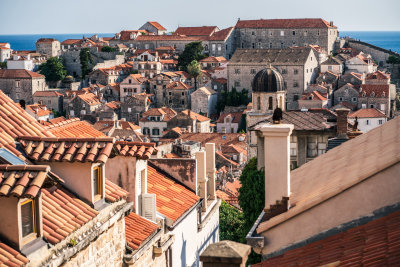
What it is: Croatia's walled city, about 90 km up the coast. We came to Kotor directly from 3 days in Dubrovnik, which is the better way to see both.
Getting there: buses take about 2 to 2.5 hours, with a few departures a day. The catch is the Debeli Brijeg crossing: Croatia is in Schengen and Montenegro is not, so there are full passport checks, and summer afternoon queues can add 2 to 3 hours each way. Details are in our Kotor to Dubrovnik guide.
How long: a full, long day, with as little as a few hours inside the walls on a bad border day. Who it suits: people who cannot fit a night in Croatia. Tip: outside July and August the crossing is far more predictable. If you go, take the earliest bus and buy your city walls ticket in advance. Our day trips from Dubrovnik article covers the trip from the other side.
Car or bus: Perast, Budva and Cetinje town all work by bus. Lovćen, Njeguši, Ostrog and anything inland are far easier by car, and rental is easiest from Tivat airport. Crossing into Croatia or Albania needs written permission from the rental company; see driving across Balkan borders.
Cruise days: Kotor's Old Town and the bay road fill up when ships are in, and the bus to Perast fills with them. On those days, go inland to Lovćen or leave early for Perast.
Heat: we were in Kotor in late August. In high summer, do the fortress at dawn and the outdoor day trips early, and use the afternoon for the drive or the beach.
Money: Montenegro uses the euro. Some restaurants add a cover charge; see our kuver guide. If you are continuing through the region, our Balkans road trip itinerary shows how Kotor fits between Croatia and Albania.
Perast and Our Lady of the Rocks for an easy half day, about 30 to 35 minutes by local bus. For a full day with a car, the Lovćen serpentine, Njeguši and Cetinje.
The local Blue Line bus takes about 30 to 35 minutes along the bay and runs roughly hourly, less often on Sundays. It stops on the main road above the village.
Yes, but the bus takes about 2 to 2.5 hours each way before the Debeli Brijeg border, where summer queues can add 2 to 3 hours. Staying a night in Dubrovnik is the better choice.
Not for Perast, Budva or Cetinje town, which all have buses. For the Lovćen serpentine, Njeguši, the mausoleum and Ostrog, a car or a tour is far easier.
Yes, combined with Budva. The islet is a private Aman resort with restricted access for non-guests, so most people see it from the beach and the road above.
Get our new Montenegro guides and practical tips by email: where to stay, what to eat, what things cost and the rules that catch travelers out.
Free. No spam, only new guides and tips.
Search verified local fleets with low security deposits and exact model delivery on Localrent.
Best deals on Montenegro hotels this week — check Hotels.com.