Home
About us
Destinations & Country Guides
Travel Guides
Recipes
Featured
Photos As Art
Abstract Prints
Locations
Travel Gear
Travel Resources
Favorites
Photo Framer
Explore Photos
Contact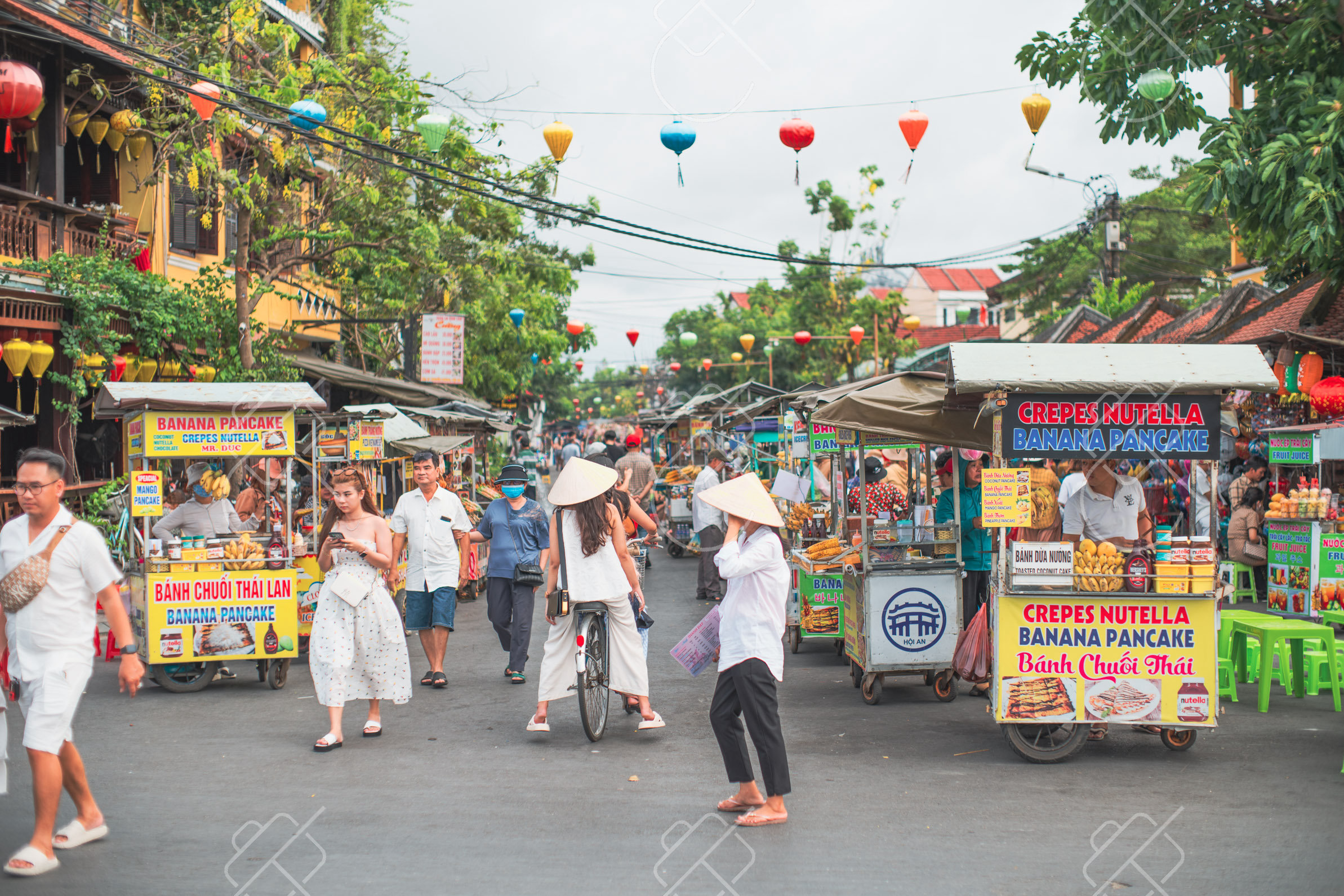 Culture & etiquette
By Clever Tourists · Published · Last updated
Vietnam needs a different wardrobe for each region in the same month: a jacket for Hanoi in December and January, rain gear for Hue and Hoi An from September to December, and the lightest clothes you own for Saigon all year. Hanoi averages 20°C by day and 14°C at night in January but 35°C in June; Ho Chi Minh City stays between about 32 and 35°C by day every month; and Hue gets most of its rain from September to December, with October averaging over 770 mm. There is no dress code on the street, but pagodas, Hue's imperial tombs and the Ho Chi Minh Mausoleum expect covered shoulders and knees. We travelled Vietnam from Hanoi to the Mekong Delta between 20 April and 19 May 2023, at the hot, mostly dry end of spring.
Average daily highs and lows for the three regions: Hanoi for the north, Hue for the centre (Hoi An and Da Nang are similar) and Ho Chi Minh City for the south. Hanoi figures are WMO 1991–2020 normals; Hue and Ho Chi Minh City figures are long-term averages from the Vietnam Institute for Building Science and Technology. Vietnam is long enough that one month can be cold in the north, flooded in the centre and dry in the south.
Two places break the pattern. Da Lat, at about 1,500 m in the Central Highlands, is cool all year and needs a jacket in the evenings. Sapa and the far north are properly cold in winter. For the start of the year region by region, see Vietnam in January.
| Month | Hanoi | Hue | Saigon | What to wear |
|---|---|---|---|---|
| January | 20 / 14°C | 24 / 18°C | 32 / 23°C | Hanoi: jacket and sweater. Centre: layers and a rain jacket. South: summer clothes. |
| February | 22 / 16°C | 25 / 18°C | 33 / 23°C | As January. Tet falls in early February in 2027. |
| March | 26 / 21°C | 28 / 20°C | 34 / 25°C | Hanoi: long sleeves for damp, grey days. Centre and south: summer clothes. |
| April | 29 / 22°C | 31 / 23°C | 35 / 26°C | Light clothes everywhere, with sun protection. |
| May | 33 / 25°C | 34 / 25°C | 35 / 26°C | The lightest clothes you own. The first heavy rains in the north and south. |
| June | 35 / 27°C | 35 / 25°C | 34 / 26°C | Breathable clothes and rain gear in Hanoi and Saigon. The centre is hot and dry. |
| July | 34 / 27°C | 35 / 25°C | 33 / 25°C | As June. |
| August | 33 / 26°C | 34 / 25°C | 33 / 25°C | As June, with storms possible in the north and centre. |
| September | 32 / 25°C | 32 / 24°C | 33 / 25°C | Summer clothes and a rain jacket. The central rains begin. |
| October | 30 / 23°C | 29 / 23°C | 32 / 25°C | Centre: rain jacket and quick-dry shoes. Hanoi: pleasant, light layers. |
| November | 27 / 20°C | 27 / 21°C | 32 / 25°C | Hanoi: a light jacket for evenings. Centre: full rain gear in flood season. |
| December | 21 / 14°C | 24 / 19°C | 32 / 24°C | Hanoi: warm jacket. Centre: rain gear. South: summer clothes in the dry season. |
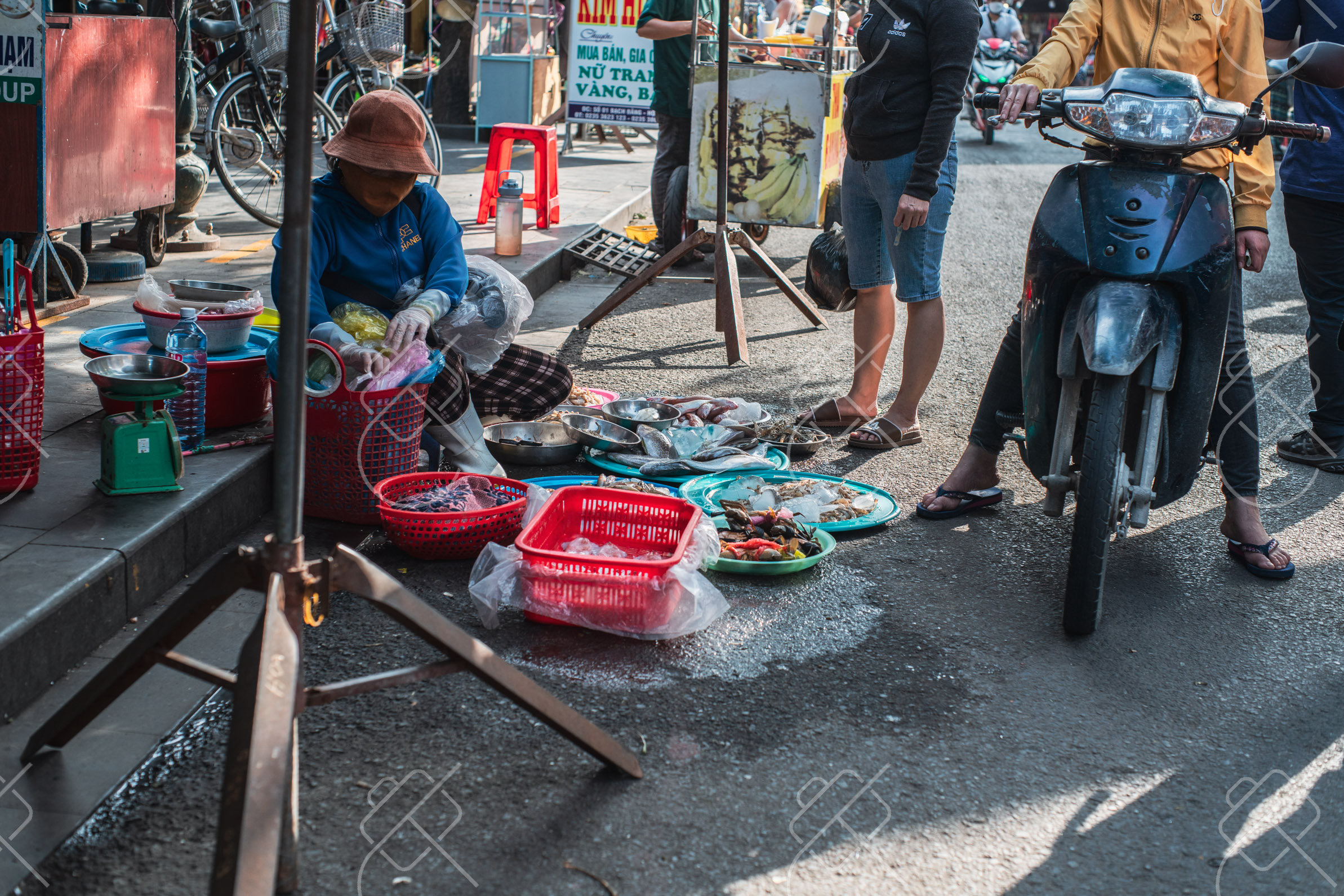
There are no rules for either on the street, and shorts, T-shirts and sundresses are normal in every tourist area. Many Vietnamese cover up from the sun rather than for modesty, with long sleeves, hats and face masks on motorbikes; copying that on a long day outdoors is sensible. Swimwear belongs on the beach in Nha Trang or Hoi An, not in town.
Dressing a notch more covered helps in two places: at religious and state sites (below), and in rural areas and small towns, where shoulders covered and shorts to the knee draw less attention. See what is considered rude in Vietnam for the behaviour that matters more than clothing.
If you want clothes that fit the climate, Hoi An's tailors make linen shirts, dresses and suits in a day or two; our Hoi An tailor guide covers prices and timing.
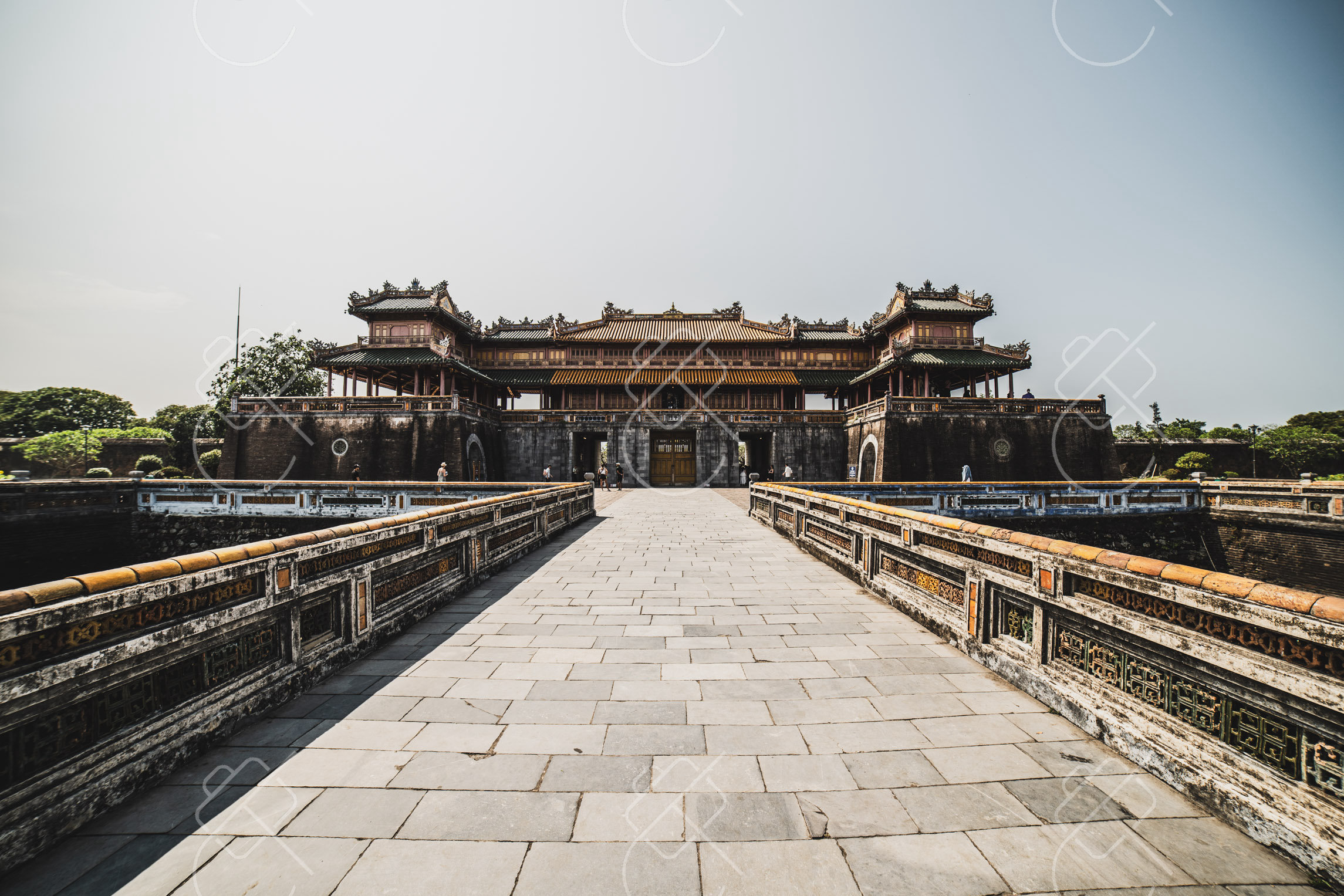
Pagodas and temples: shoulders and knees covered, shoes off before inner halls. Enforcement is relaxed at most sites compared with Thailand, but dress for it anyway. Hue's imperial tombs have a stricter written code: trousers or skirts covering the knee, tops covering the shoulders and navel, nothing see-through, and hats off inside shrine buildings. Both are covered in our Vietnam and Bali temple dress code guide.
The Ho Chi Minh Mausoleum in Hanoi is the strictest site in the country: no shorts, short skirts, sleeveless tops or hats, and no photos inside. It closes for maintenance for part of each year, usually in the autumn, so check before you plan around it.
• Lightweight, breathable clothes for the heat, and at least one long-sleeved shirt for sun and temples.
• Trousers or a skirt to the knee and a light scarf, kept in your day bag for pagodas and Hue.
• A light rain jacket and sandals that can get wet; downpours flood streets fast.
• One warm layer for Hanoi from December to February, Da Lat, mountain trips and cold air-conditioning on sleeper trains and buses.
• A hat: or buy a nón lá conical hat on arrival.
• Room in your bag if you plan to have clothes made in Hoi An.
We travelled north to south from 20 April to 19 May 2023: Hanoi, Ninh Binh, Hue (27 to 29 April), Hoi An, Da Lat, Nha Trang, Ho Chi Minh City and Can Tho in the Mekong Delta. The route is in our four-week Vietnam itinerary. That is the hot, mostly dry stretch before the summer rains, and our photos from the streets of Hoi An at the end of April show the typical visitor outfit: shorts, light shirts and sundresses, with conical hats for shade.
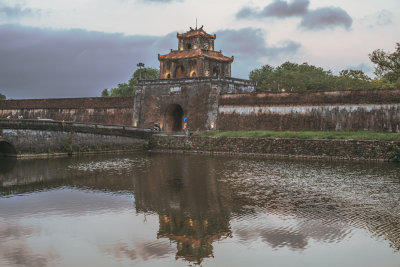
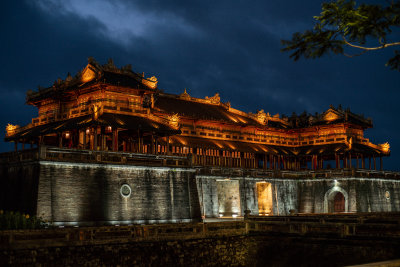
Hue's Imperial City and tombs are where covered knees and shoulders matter, so it is worth dressing for them on the days you visit. Da Lat (5 to 10 May) is the stop on that route where a warm layer is worth packing, since highland evenings are cool even when the coast is hot.
Yes, on the street and in every tourist area. Cover your knees and shoulders for pagodas, Hue's imperial tombs and the Ho Chi Minh Mausoleum.
A warm jacket and a sweater. Hanoi averages 21°C by day and 14°C at night in December, and it often feels colder in damp weather.
Light, quick-drying clothes, a rain jacket and sandals that can get wet. In Hue and Hoi An the heaviest rain is from September to December; in Hanoi and Saigon it is roughly May to October.
No shorts, short skirts, sleeveless tops or hats, and no photos inside. It is the strictest dress code in Vietnam, and the mausoleum closes for maintenance for part of each year.
Covered shoulders and knees, with shoes off before inner halls. Enforcement is relaxed at most pagodas, but Hue's imperial tombs have a stricter written code.
Get our new Vietnam guides and practical tips by email: where to stay, what to eat, what things cost and the rules that catch travelers out.
Free. No spam, only new guides and tips.
Search verified local fleets with low security deposits and exact model delivery on Localrent.
Get the best rates and deals on Vietnam hotels through Booking.com.