
Home
About us
Destinations
Travel Guides
Recipes
Featured
Photos As Art
Abstract Prints
Locations
Travel Gear
Travel Resources
Favorites
Photo Framer
Explore Photos
ContactHanoi comes at you all at once. Motorbikes braid through lanes barely wide enough for a cart, incense drifts out of doorway shrines, and a plastic stool and a bowl of something steaming is never more than a few steps away. Vietnam's thousand-year-old capital is loud, layered, and endlessly photogenic — a city best understood not from a list of sights but from a slow, watchful walk. Three days is enough to learn its rhythm: crowded mornings, drowsy afternoons, and a lake that ties the whole thing together.
Published July 3, 2026 · Last updated
Tap any photo to open it full-screen and order a print.
Three days lets Hanoi unfold at its own pace. The Old Quarter and Hoan Kiem Lake fill the first day, the Ba Dinh monuments and French Quarter the second, and West Lake and the slower edges of the city the third. Distances are short but the traffic is relentless — walk where you can, take it slowly, and budget an afternoon rest through the midday heat. The best of Hanoi happens on the street, so leave room to simply sit and watch.
Hanoi has a real four-season year, unusual for Vietnam, and locals will tell you without hesitation that autumn is the one to aim for. Summers are hot and wet; winters are cool and can turn surprisingly grey.
Cool, dry, and golden — the season Hanoians write songs about. Clear light, comfortable streets, and the odd wave of milk-flower scent through the Old Quarter. Comfortably the best time to visit.
Cool and sometimes damp, with a soft grey light that suits the colonial architecture and the lake. Bring a layer; it can dip cooler than visitors expect.
Warming up, with drizzle and low cloud (the local nồm humidity) that can hang for days. Green and atmospheric between the wet spells.
Hot, humid, and prone to heavy afternoon downpours. Start early, retreat for the midday heat, and shoot again once the light softens toward evening.
The Old Quarter — The chaotic, sensory maze of the '36 streets' — the richest street photography in the country.
Hoan Kiem Lake & Ngoc Son Temple — The city's green heart, crossed by the red Huc Bridge and ringed by dawn tai chi.
Temple of Literature — Vietnam's first university — serene walled courtyards and aligned gateways.
Train Street — A working railway threading between houses (access comes and goes with safety crackdowns).
Tran Quoc Pagoda — A thousand-year-old red tower on a West Lake spit, glorious at sunset.
Ho Chi Minh Mausoleum — The solemn plaza and monuments of the Ba Dinh district.
French Quarter & Opera House — Ochre colonial villas and grand boulevards south of the lake.
Dong Xuan Market — The Old Quarter's big covered market, busiest in the early morning.
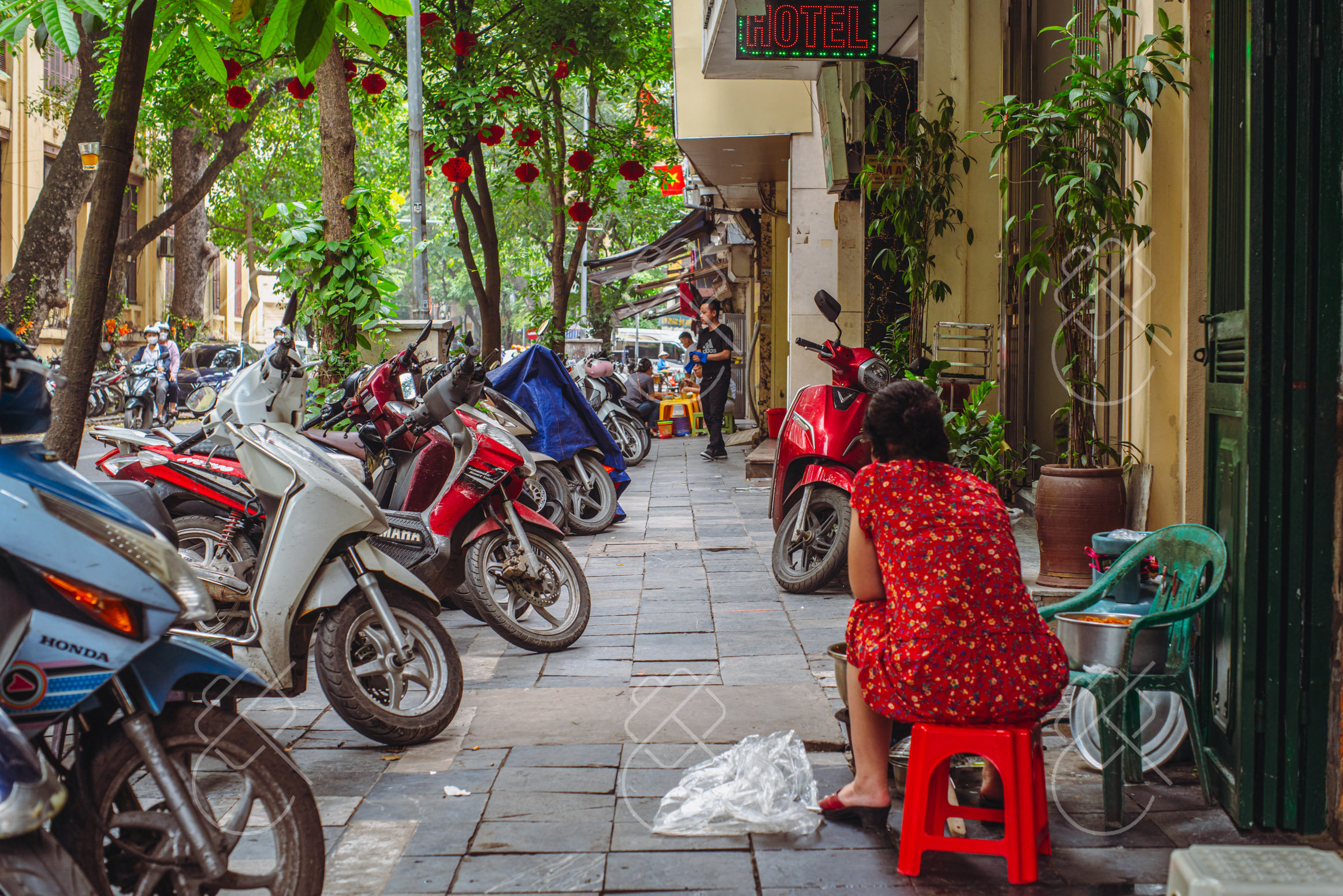
The tangle of the Old Quarter — the '36 streets', each once named for the trade it sold — is the beating heart of Hanoi. It's chaotic, sensory, and the single richest patch of street photography in the country.
Walk it early, when vendors set up and the light slips down between the narrow shophouses, or in the evening when the beer corner of Ta Hien fills up. Every doorway is a small scene: a barber, a shrine, a woman fanning a charcoal grill.
Don't over-plan. Pick a direction, let the lanes pull you along, and keep the camera ready for the motorbike that appears stacked impossibly high with flowers or fruit.
Early morning for the market bustle and clean light, or after dark when the beer corner and food stalls come alive.
Stay in or on the edge of the Old Quarter so you can step straight into the lanes at dawn and roll home late from Ta Hien.
This is pho and bún chả territory; wash it down with a bạc xỉu or the city's famous egg coffee.
Shoot from a low plastic stool at a pho or coffee stall — sit long enough and the whole street theatre plays out in front of you at eye level.
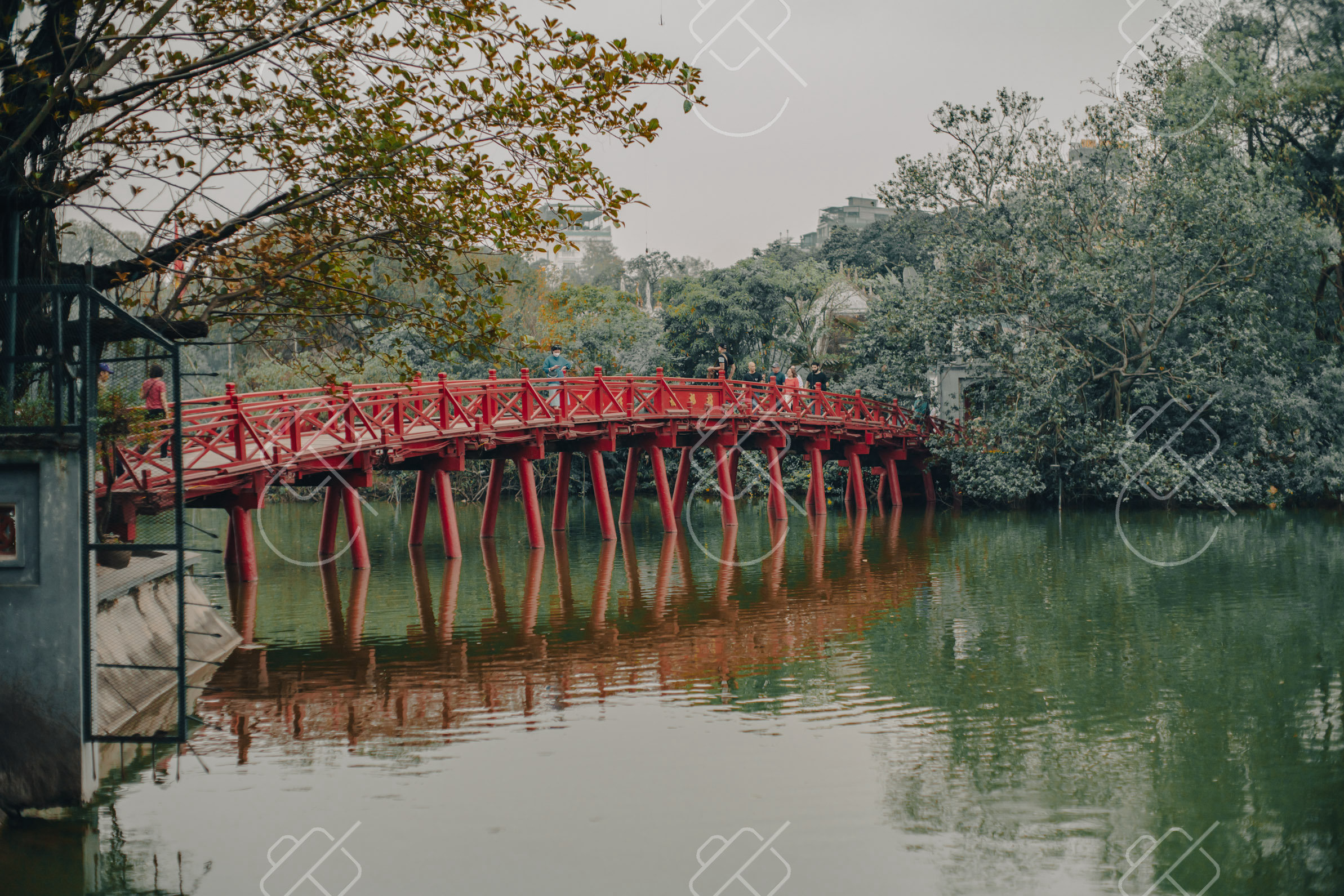
Just south of the Old Quarter, Hoan Kiem Lake is Hanoi's green lung — a ring of willows and morning tai chi around the water, with the red Huc Bridge leading to Ngoc Son Temple on its islet. Beyond it, the French Quarter's boulevards and ochre villas are a different city entirely.
Come to the lake at first light for the calm — joggers, badminton, and old men playing chess — then follow the wide colonial streets south past the Opera House and the grand old façades of French Hanoi.
On weekend evenings the roads around the lake close to traffic and fill with families, buskers, and games — a completely different, softer Hanoi.
Dawn for mist and stillness on the water; weekend evenings for the car-free crowds and street life.
Sit at a lakeside café for a Vietnamese drip coffee, or find bánh cuốn — silky steamed rice rolls — at a morning stall nearby.
The Huc Bridge is busiest mid-morning — shoot it at sunrise for an empty span, or after dark when it's lit a deep glowing red.
A plastic stool and a bowl of something steaming is never more than a few steps away.
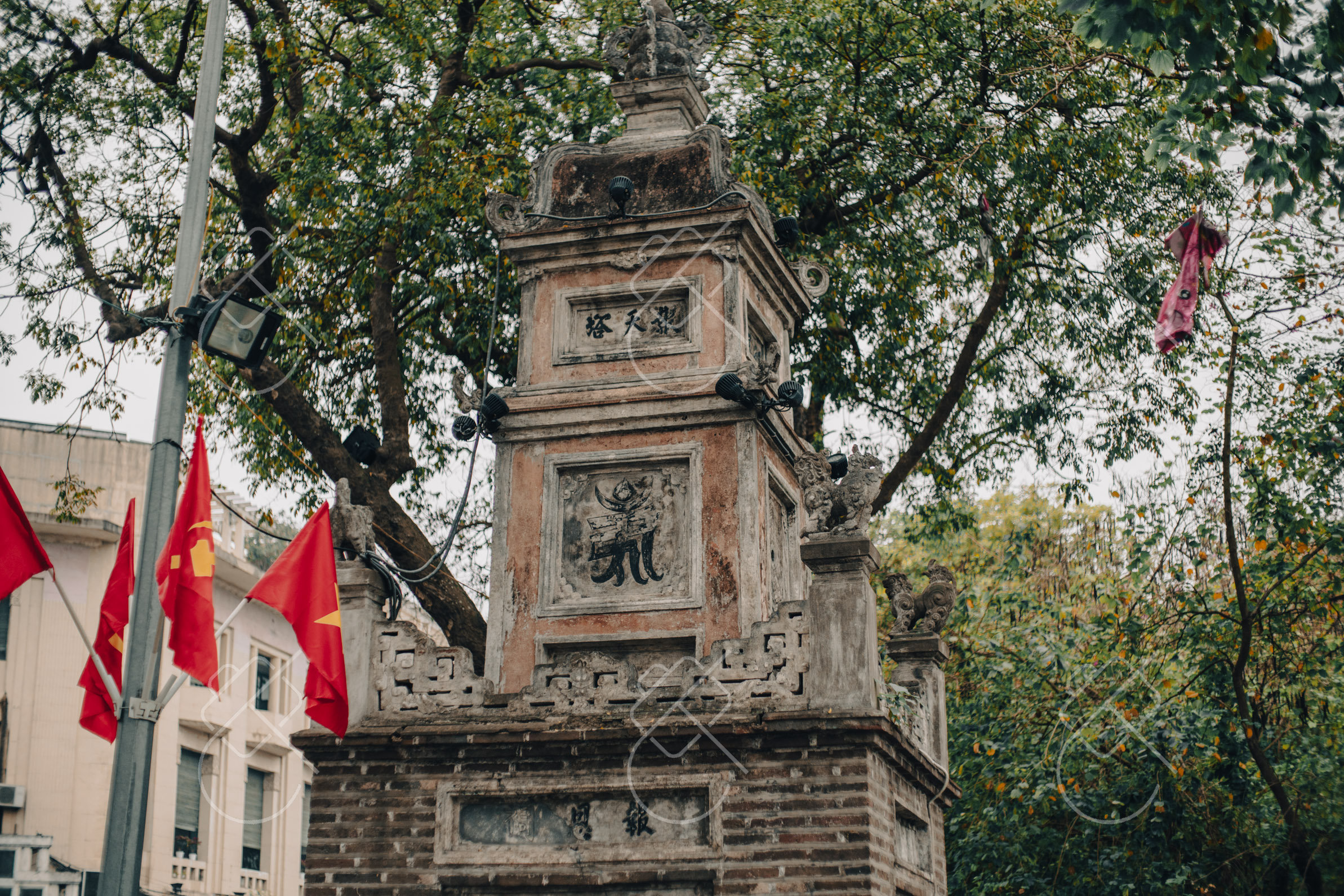
West of the centre, the Ba Dinh district holds the solemn set pieces of the modern nation — Ho Chi Minh's Mausoleum, the Presidential Palace, the One Pillar Pagoda — and, a little south, the serene courtyards of the Temple of Literature, Vietnam's first university.
The mausoleum area is formal and tightly managed (dress modestly, keep moving), but the Temple of Literature is the real photographer's draw: a sequence of walled courtyards, gateways, and a lotus pond, at their best in early light.
It's a district for geometry and calm — a deliberate counterpoint to the Old Quarter's clamour.
Early morning — the Temple of Literature opens at 8am and the low sun rakes beautifully through its successive gates before the crowds.
Look for bún chả — grilled pork with cold noodles and herbs — a Hanoi lunchtime institution best eaten around midday.
Frame the temple's gates one through the next; the aligned doorways make a natural set of receding arches for a layered composition.
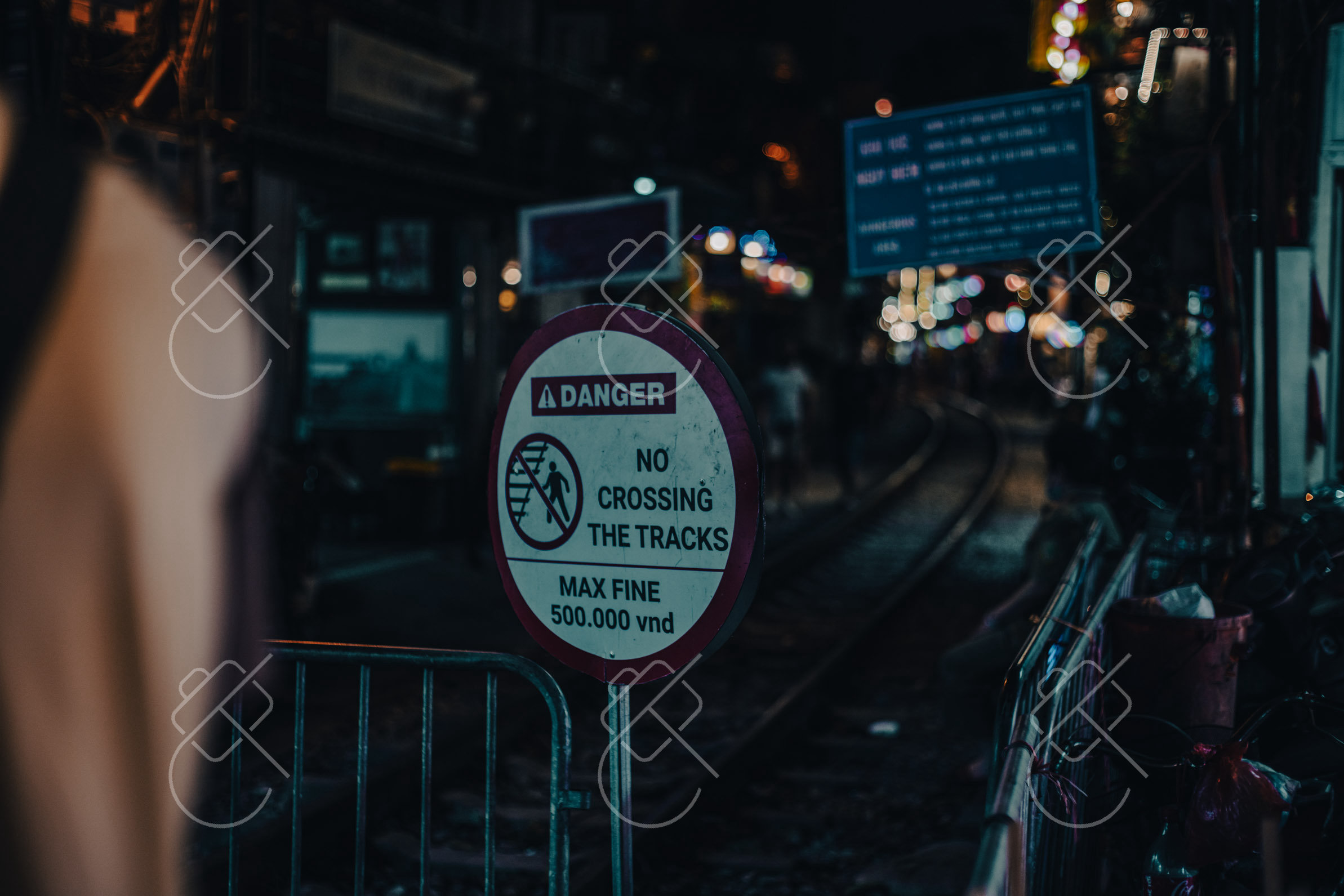
For a slower, more local Hanoi, head to West Lake (Tay Ho), the city's largest, ringed by cafés, flower gardens, and the thousand-year-old Tran Quoc Pagoda. Back toward the centre, the infamous Train Street threads a working railway between two rows of houses.
Tran Quoc Pagoda's red tower on its lakeside spit is one of Hanoi's loveliest sunset subjects. West Lake is where the city comes to unwind — quieter, greener, and good for an unhurried afternoon.
Train Street is a genuine spectacle when a train squeezes through inches from the café tables, though access is often restricted for safety — check locally and never crowd the tracks.
Late afternoon into sunset around Tran Quoc Pagoda and West Lake; train times (when the street is accessible) dictate everything at Train Street.
West Lake is famous for bún ốc (snail noodle soup) and, on the water, shrimp cakes fried to order.
Train Street's opening comes and goes with safety crackdowns — ask your café or hotel that morning rather than relying on old blog posts.
Hanoi is best understood not from a list of sights but from a slow, watchful walk.
A loose, walkable route — bend it to your pace and the light.
Spend the morning simply walking the Old Quarter — the trade streets, the markets, the doorway kitchens — with no fixed route. Break for pho and a Vietnamese coffee whenever the mood takes you.
In the afternoon drift south to Hoan Kiem Lake, cross the red Huc Bridge to Ngoc Son Temple, and stay for sunset on the water. If it's a weekend, the lakeside goes car-free after dark and turns into one long street party.
Where to shoot: Old Quarter lanes at dawn · Ta Hien beer corner in the evening · The Huc Bridge and Ngoc Son Temple · Sunset over Hoan Kiem Lake
Tip: Crossing the street here is a skill: walk slowly and predictably and let the motorbikes flow around you — don't stop or bolt.
Start early at the Temple of Literature, when its courtyards are calm and the light is soft, then take in the Ba Dinh monuments — the Mausoleum, Presidential Palace, and One Pillar Pagoda — in a single loop.
Come back east through the French Quarter in the afternoon: the Opera House, the ochre villas, and a coffee on a colonial-era terrace to watch the city go by.
Where to shoot: Temple of Literature's aligned gates · Ho Chi Minh Mausoleum plaza · French Quarter villas and the Opera House · Street life from a colonial café terrace
Tip: The mausoleum complex closes early afternoon and enforces a modest dress code — do it in the morning and leave the bags behind.
The last day belongs to the slower, western side of the city: Tran Quoc Pagoda on West Lake, the flower gardens, and the lakeside cafés. Time the pagoda for late-afternoon light.
If Train Street is open, catch a train squeezing through the houses (from a safe distance). With an extra day, Hanoi is also the launch pad for Ninh Binh or Halong Bay — both easy overnight add-ons.
Where to shoot: Tran Quoc Pagoda at sunset · West Lake cafés · Train Street (if accessible) · Lotus and flower gardens
Tip: Book Ninh Binh or Halong as a separate overnight rather than a rushed day trip — the pre-dawn starts and long drives eat a whole day otherwise.
Hanoi is the launch pad for northern Vietnam's greatest hits. Ninh Binh — the 'Halong Bay on land' of limestone karst and river caves — is a doable long day but better overnight, and a Halong or Lan Ha Bay cruise is the classic two-day add-on. Further out, the rice terraces of Sapa and Ha Giang reward anyone with three or four extra days and a taste for mountain roads.
Gossamer-thin steamed rice rolls filled with pork and wood-ear mushroom, showered with fried shallots and dipped in nước chấm — a classic Hanoi breakfast eaten hot off the steamer.
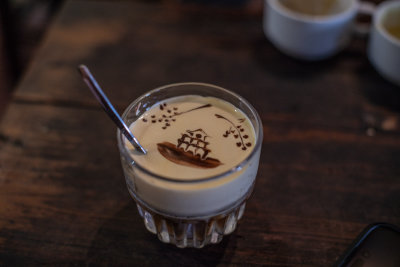
A Hanoi invention: robust Vietnamese coffee under a whipped, custard-like cloud of egg yolk and condensed milk. It tastes like liquid tiramisu and it's best in an old-town café hidden up a staircase.
Explore regional routes with verified local fleets, zero hidden charges, and transparent insurance on Localrent.
Get the best deals on Hanoi hotels on Booking.com before prices climb.
Transit cards, local customs, visa rules, and practical travel guides for this region.
See every destination from the 526-day journey:
Browse all destinationsCurious about the gear behind these photos? See the gear list.