
Home
About us
Destinations
Travel Guides
Recipes
Featured
Photos As Art
Abstract Prints
Locations
Travel Gear
Travel Resources
Favorites
Photo Framer
Explore Photos
ContactNorthern and north-central Vietnam string together a dense capital, dramatic karst landscapes and a former imperial capital, all within reach of one another by road and rail. The region is defined by limestone scenery, river valleys, French-colonial and traditional architecture, and the imperial heritage of the Nguyen dynasty. A humid, often hazy climate softens the light, and the green of rice paddies returns again and again as you travel.
Published October 23, 2025
Tap any photo to open it full-screen and order a print.

The capital of Vietnam, Hanoi is a city of more than a thousand years of history, recognizable for its dense Old Quarter, tree-lined lakes and a blend of traditional Vietnamese and French-colonial architecture.
The heart of the city is the Old Quarter, a tight grid of narrow streets historically organized by trade, still crowded with shophouses, markets and a constant flow of motorbikes. Nearby, Hoan Kiem Lake forms a green civic center, with the small Ngoc Son Temple reached by a red bridge.
Hanoi also preserves major monuments and colonial-era buildings, including the Temple of Literature, a Confucian academy founded in 1070, and the French-built Opera House and grand boulevards. The mix of frenetic street life and quieter historic sites gives the city a strong sense of layered time.
October to April offers cooler, drier weather ideal for exploring the Old Quarter; avoid the hot, humid summer rains, and note that winter can turn surprisingly chilly and damp.
The Old Quarter and the area around Hoan Kiem Lake place visitors at the center of the action, a short walk from the main sights.
Pho noodle soup, bun cha grilled pork, banh mi sandwiches, and Hanoi's distinctive egg coffee.
Traffic builds fast in the Old Quarter, so the soft early morning, before it does, is when vendors are still setting up and the streets are calm enough to actually take in.
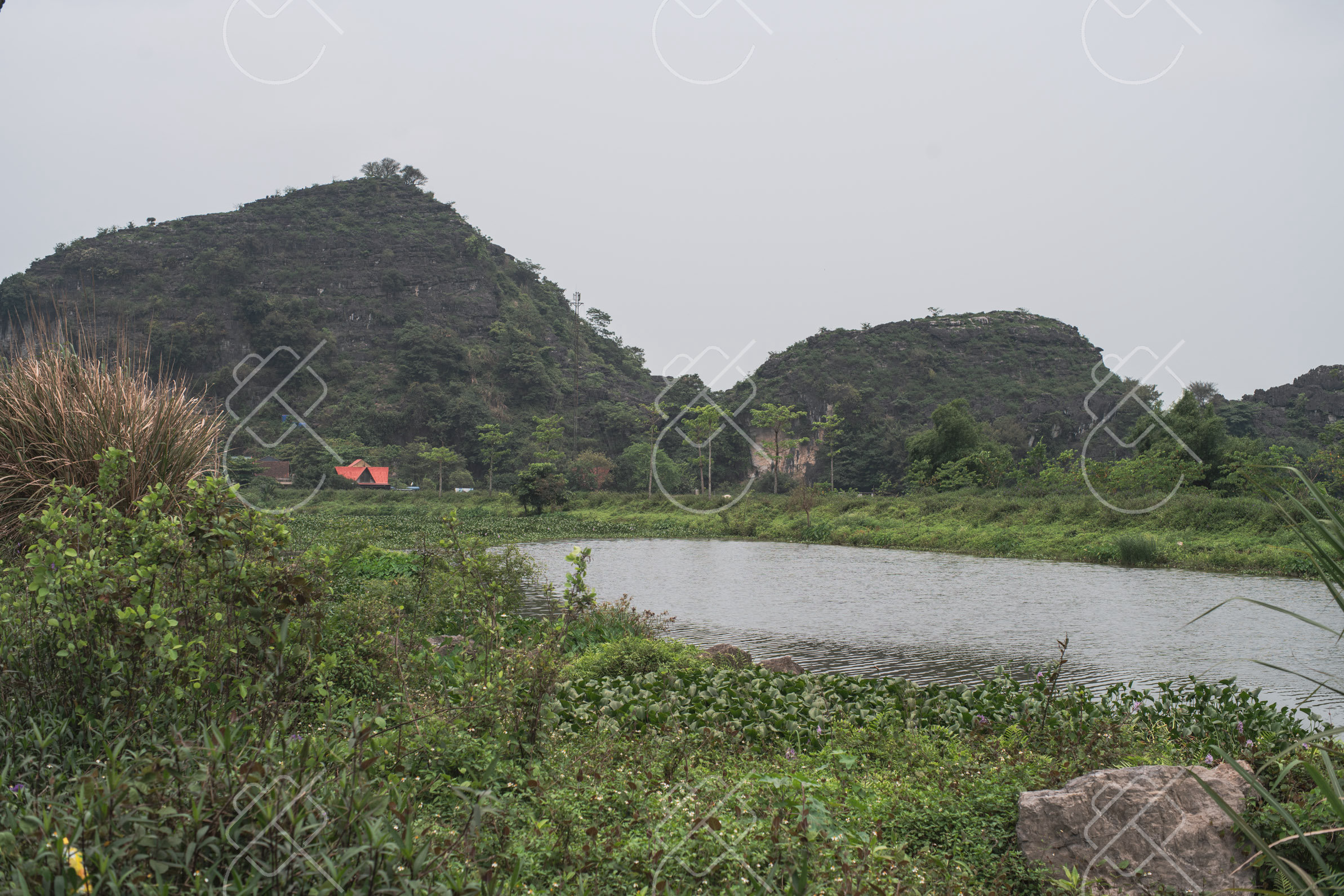
South of Hanoi, Ninh Binh is known for dramatic limestone karst landscapes rising from rice paddies and rivers, often described as a dry-land counterpart to Halong Bay. The area takes in a UNESCO World Heritage landscape and Vietnam's ancient capital.
The region's signature scenery lies at Tam Coc and Trang An, where rivers wind among towering limestone peaks and through cave tunnels, traditionally explored by small rowing boats. The Trang An Landscape Complex is a UNESCO World Heritage Site recognized for both its natural and cultural value.
Ninh Binh was also the site of Hoa Lu, the capital of Vietnam in the 10th and 11th centuries, where ancient temples remain. A climb such as the one at Hang Mua opens out onto wide panoramas over the karst peaks and the winding river below.
Visit from late May to early July to see the rice paddies turn golden, or October to April for cooler, drier weather on the boat trips through Tam Coc; avoid peak summer downpours.
Guesthouses and homestays among the karsts near Tam Coc and Trang An offer scenic, quiet bases close to the boat landings.
Local specialties including goat meat, crispy rice known as com chay, and freshwater dishes from the rivers.
Climb the steep stairway at Hang Mua on a clear morning for the region's defining view, looking down on the river as it curves through the karsts.
A humid, often hazy climate softens the light, and the green of rice paddies returns again and again as you travel.

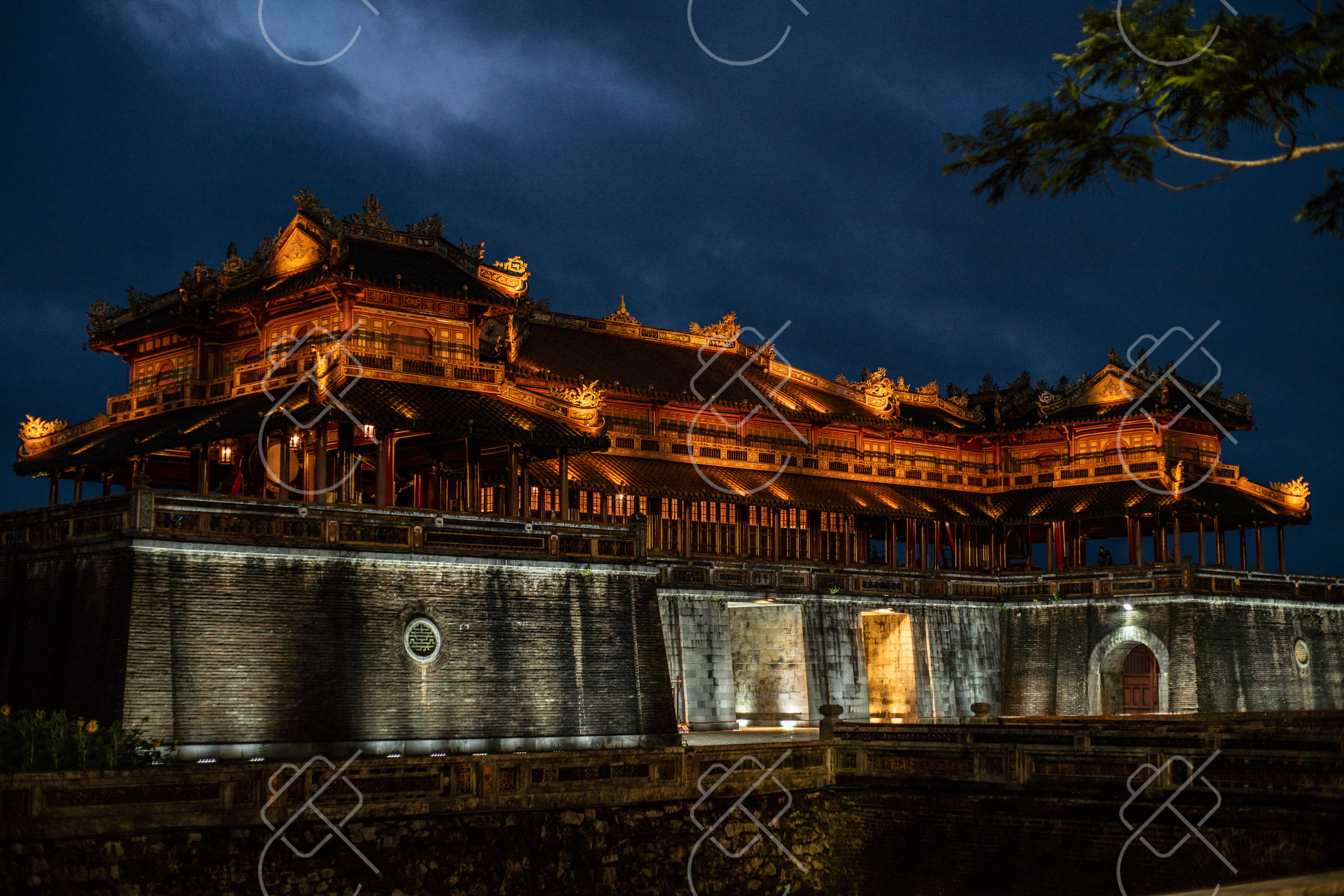
On the banks of the Perfume River in central Vietnam, Hue was the imperial capital of the Nguyen dynasty from 1802 to 1945. Its complex of monuments is a UNESCO World Heritage Site.
The centerpiece is the Imperial City, a vast walled citadel enclosing palaces, gates, courtyards and the Forbidden Purple City, once reserved for the emperor. Though damaged in twentieth-century conflict, much of the moated complex survives and has been progressively restored.
Along the Perfume River outside the city stand the elaborate royal tombs of the Nguyen emperors, each set in landscaped grounds, as well as the riverside Thien Mu Pagoda with its seven-tiered tower. Together the citadel, tombs and river make Hue the great storehouse of imperial Vietnam.
The driest, mildest weather for the imperial citadel and tombs falls between February and April; the rainy season runs heavy from September through December, so the autumn floods are worth planning around.
Hotels along the Perfume River and near the citadel offer convenient access to the imperial monuments and riverside boat trips.
Hue's refined imperial cuisine, the spicy beef noodle soup bun bo Hue, and an array of small steamed rice-flour dishes.
Explore the Imperial City's gates and courtyards in the early morning, when crowds are thin and the weathered stone and faded color stand out clearly.
Explore regional routes with verified local fleets, zero hidden charges, and transparent insurance on Localrent.
Get the best deals on Northern Vietnam hotels on Booking.com before prices climb.
Transit cards, local customs, visa rules, and practical travel guides for this region.
See every destination from the 526-day journey:
Browse all destinationsCurious about the gear behind these photos? See the gear list.