Home
About us
Destinations & Country Guides
Travel Guides
Recipes
Featured
Photos As Art
Abstract Prints
Locations
Travel Gear
Travel Resources
Favorites
Photo Framer
Explore Photos
Contact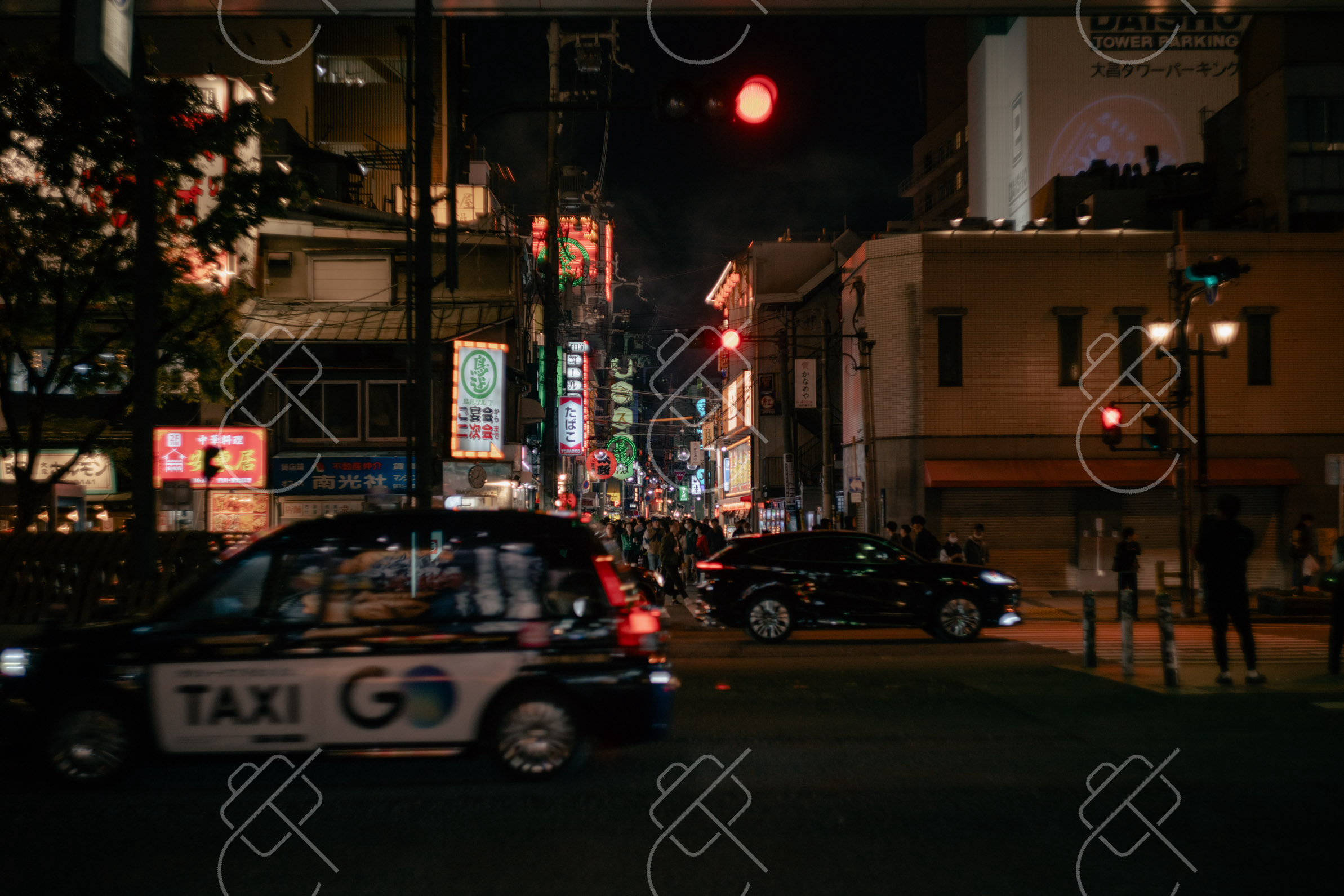 Transit & logistics
By Clever Tourists · Published · Last updated
Japanese taxis are safe, metered, spotless and never need a tip. Flag one with a red 空車 (vacant) sign, or book through the GO app, which has an English mode and takes foreign cards. They are not cheap: Tokyo raised fares about 10% on 20 April 2026, and a 20% surcharge applies from 10pm to 5am. A taxi still beats the train for three or four people with luggage, for short hops across Kyoto, and after the last train. Here is what rides cost, which app to install and the rules visitors trip over.
Free toolWork out the exact tip on any bill →Pick the country, enter the bill and get the tip in local currency — including the places where service is already on the bill.In central Tokyo the meter starts at ¥500 (≈ $3.2), which now covers about the first kilometre, then rises in ¥100 (≈ $0.63) steps. The 20 April 2026 revision kept those headline numbers and shortened the distance per step, a rise of about 10%. Other cities set their own fares, so the starting price varies slightly by region.
Expect ¥1,500 to ¥2,500 (≈ $9.5–15.8) for a typical 3 to 5 km ride across town in daytime traffic. Add 20% between 10pm and 5am, and expressway tolls if the driver takes one (ask for 下道, shitamichi, surface roads, if you'd rather not). Booking through an app can add a pick-up fee.
| Charge | What to expect |
|---|---|
| Tokyo flag fall | ¥500 (≈ $3.2) for about the first km (since 20 April 2026) |
| Late night | +20%, 10pm to 5am |
| Expressway tolls | Paid by the passenger, on top of the meter |
| Haneda flat rate via GO | From ¥8,800 to Tokyo's 23 wards, plus ¥400 (≈ $2.5) fee and tolls |
| Narita flat rate via GO | From ¥28,400 (≈ $180), plus ¥400 (≈ $2.5) fee and tolls |
| Tip | None. Drivers return exact change |
GO is Japan's largest taxi app and the one to set up first. It has an English interface, accepts international credit cards and Apple Pay, gives you a confirmation number to match against the car, and charges the fare automatically so you can just get out. It also books the airport flat rates above.
The catch is registration. GO normally sends an SMS code, which a data-only travel eSIM cannot receive. Register at home while your own number still works, or use GO's alternative route of email verification plus a passport and selfie check. Do it before you need a car at 1am.
Uber and DiDi both work in Japan as booking apps for licensed taxis, not private drivers, and are useful backups in Tokyo, Osaka and Kyoto. Coverage is patchier outside big cities, where GO or the hotel front desk is the better bet.
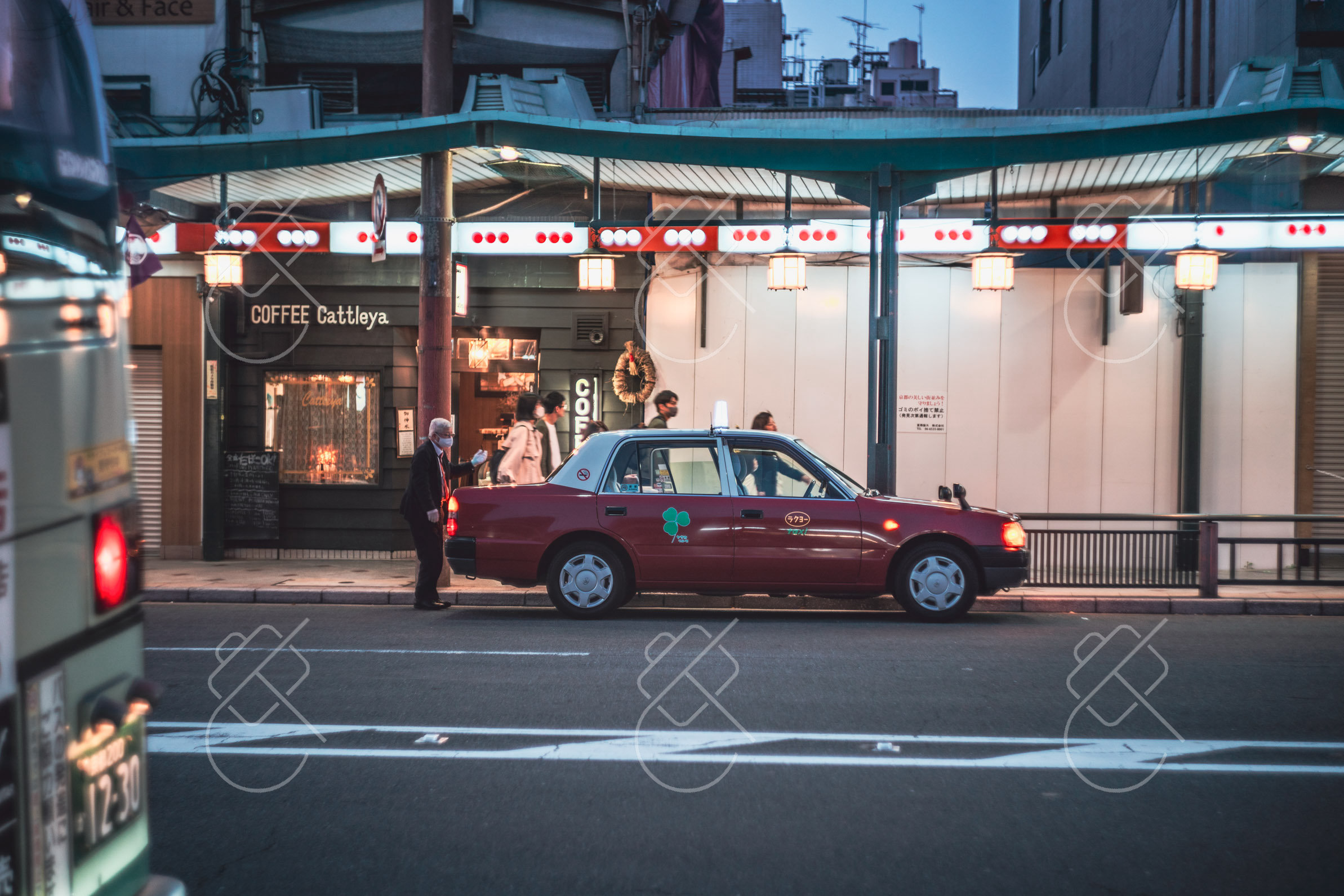
• Don't touch the door. The rear left door opens and closes automatically, worked by the driver. Wait for it, and step back as it swings.
• Fasten your seatbelt. Back-seat belts are required by law.
• Show the address, don't say it. Have the destination's Japanese name or phone number on your map app; drivers can enter a phone number into the navigation. Big hotel names and stations are usually enough.
• Pay how you like, mostly. Most city taxis now take credit cards and IC cards like Suica, and app-booked rides charge your card. Still carry some cash for small rural operators.
• No tipping. Rounding up confuses rather than pleases; see our tipping guide for Japan.
• Luggage. Standard sedans fit two large cases at most. For more, book a larger taxi in GO or send bags ahead with luggage forwarding.
Groups of three or four. Split four ways, a short cross-town taxi costs only a few hundred yen more per person than four subway fares, and it goes door to door with the bags.
Kyoto. Temples are spread out, and the city buses are slow and crowded at peak times (see our Kyoto bus fare guide). A short taxi between Higashiyama sights often costs less than the time you'd lose.
After the last train. Most city lines stop around midnight. A late-night taxi with the 20% surcharge is the realistic option; walk a block or two from the station rank if the queue is long, and use GO to call one.
Airports. For Haneda, the GO flat rate makes the price predictable. For Narita, the train is far cheaper unless you are a group with heavy bags; our Haneda vs Narita guide compares the options.
No. Fares are metered, drivers return exact change, and tipping is not expected.
Yes, but it books licensed taxis rather than private cars. GO is the larger taxi app, has English and takes foreign cards; Uber and DiDi are useful backups in Tokyo, Osaka and Kyoto.
The meter starts at ¥500 (≈ $3.2) for about the first kilometre after the 20 April 2026 revision, rising in ¥100 (≈ $0.63) steps, with 20% added from 10pm to 5am. A 3 to 5 km ride is typically ¥1,500 to ¥2,500 (≈ $9.5–15.8).
Usually yes, but the SMS code will not reach a data-only eSIM. Register at home while your own number works, or use GO's email plus passport verification route.
Most city taxis take credit cards and IC cards such as Suica, and app bookings charge your card automatically. Carry some cash for small rural operators.
Get our new Japan guides and practical tips by email: where to stay, what to eat, what things cost and the rules that catch travelers out.
Free. No spam, only new guides and tips.
Get the best deals on Japan hotels on Booking.com before prices climb.