Home
About us
Destinations & Country Guides
Travel Guides
Recipes
Featured
Photos As Art
Abstract Prints
Locations
Travel Gear
Travel Resources
Favorites
Photo Framer
Explore Photos
Contact Transit & logistics
By Clever Tourists · Published
For most people the Odakyu Romancecar from Shinjuku is the best way to Hakone: one seat, no change, about 75 to 105 minutes to Hakone-Yumoto for ¥2,470 (≈ $15.6) (about US$16) in 2026. The fastest option is the Tokaido Shinkansen from Tokyo or Shinagawa to Odawara (about 30 minutes on a Hikari) plus a 15-minute local train up to Yumoto, but at roughly ¥3,370 (≈ $21) unreserved just for the Shinkansen leg it only makes sense if you hold a JR Pass or are staying near Tokyo Station. The cheapest is the plain Odakyu line with a change at Odawara, and the Odakyu highway bus from Busta Shinjuku is the one to pick if you want to start at Lake Ashi rather than Yumoto. We spent 2 days in Hakone in March 2023, between 4 days in Tokyo and 2 in Matsumoto.
Last checked 27 October 2026. Fares are approximate; dollar figures convert at our committed exchange-rate snapshot.
| Option | Time | One-way price |
|---|---|---|
| Train Odakyu Romancecar from Shinjuku Odakyu | 1h 15m–1h 47m | 2,470 JPY (≈ $15.6) |
| Train Shinkansen to Odawara plus Hakone Tozan line | 45 min–50 min | 3,370–4,270 JPY (≈ $21–27) |
| Train Odakyu rapid express via Odawara Odakyu | 2h | — |
| Bus Odakyu highway bus from Busta Shinjuku Odakyu | 2h 25m | 2,560 JPY (≈ $16.2) |
Planning more legs? Use the route finder.
The Romancecar is Odakyu's limited express, and the Hakone services run from Shinjuku Station (Odakyu side, west exit area) straight to Hakone-Yumoto, the gateway at the bottom of the Hakone loop. On the timetable in force since March 2026, journeys take about 84 to 107 minutes on weekdays and 75 to 102 minutes at weekends, depending on stops.
The official fare is ¥2,470 (≈ $15.6) one way: a ¥1,270 (≈ $8.0) base fare plus a ¥1,200 (≈ $7.6) limited express fee (¥50 (≈ $0.32) less if you buy the e-ticket online). Every seat is reserved, so buy on Odakyu's own site or app, or at the Odakyu ticket counters and machines in Shinjuku. On spring and autumn weekends, and around cherry blossom season, the morning trains sell out a few days ahead; on weekdays a same-day ticket is usually fine.
The GSE (70000 series) trains have the raised driver's cab and front observation seats in cars 1 and 7; those seats go first, often as soon as booking opens. For a Fuji glimpse on the way, sit on the right-hand side heading south, although the mountain is only visible on clear winter and spring mornings and the line spends long stretches in suburbs.
If you have the Hakone Freepass, it covers the base fare from Shinjuku but not the Romancecar fee, so you still pay the ¥1,200 (≈ $7.6) supplement. Our Hakone Freepass guide does the break-even maths.
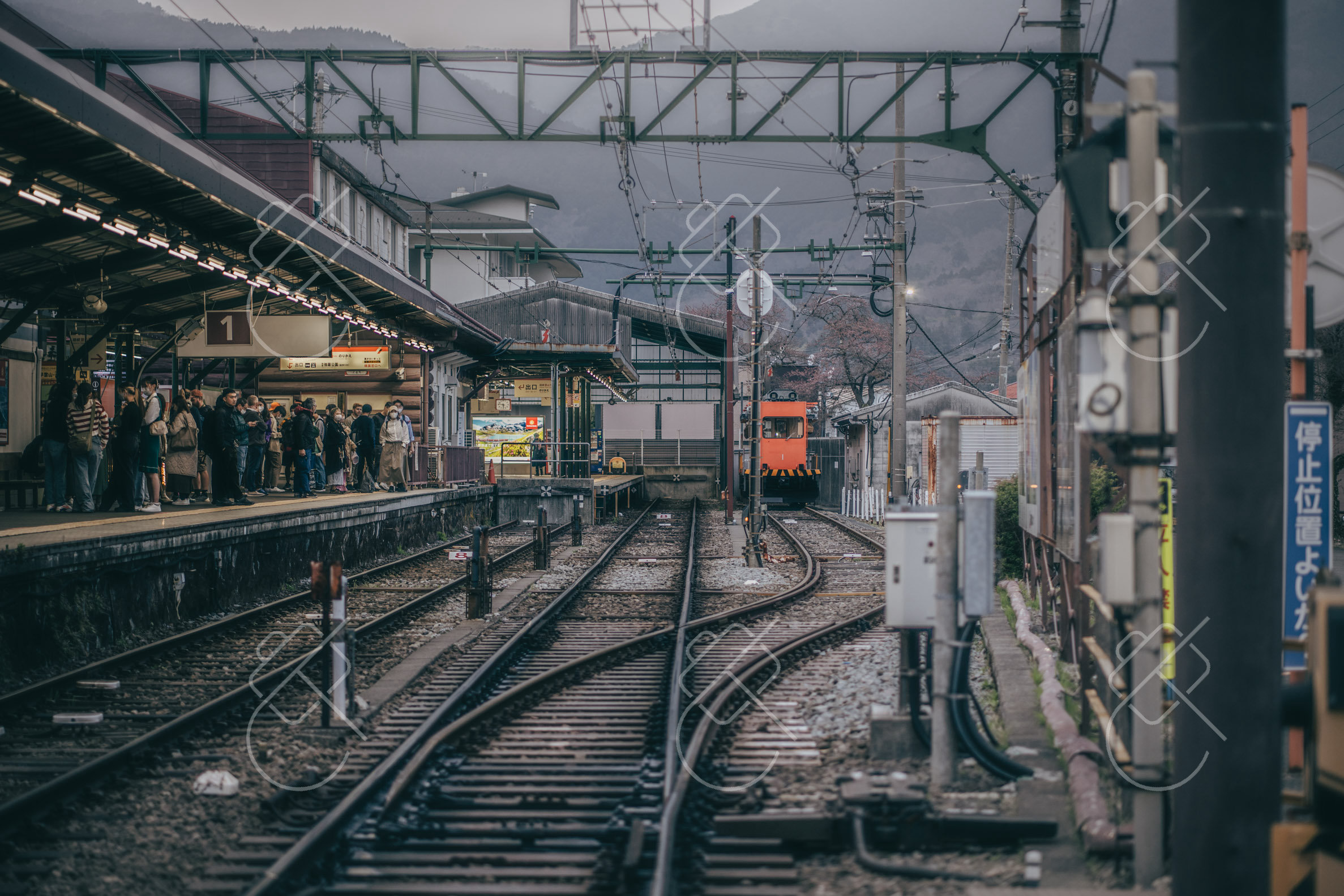
Odawara is on the Tokaido Shinkansen. Hikari and Kodama trains stop there (the Nozomi does not), and the fastest Hikari takes about 27 minutes from Tokyo Station. Ekitan lists the Tokyo to Odawara fare at roughly ¥3,370 (≈ $21) unreserved and ¥4,270 (≈ $27) reserved in 2026. From Shinagawa it is a few minutes shorter.
At Odawara, change to the Hakone Tozan line to Hakone-Yumoto, about 15 minutes. The JR Pass covers the Shinkansen to Odawara but not the Hakone Tozan line, which is a private railway, so pay that leg with a Suica or buy a Hakone Freepass from Odawara (cheaper than the Shinjuku version).
This route wins when you are staying around Tokyo Station, Ginza or Shinagawa, or when you are continuing west to Kyoto, because you rejoin the Shinkansen at Odawara afterwards. Without a JR Pass, it costs more than the Romancecar and saves little time once you count the change. Our JR Pass cost table shows whether a pass pays off for your route, and Shinkansen tickets explained covers seat reservations.
The same Odakyu tracks carry rapid express and express trains from Shinjuku to Odawara with no supplement. Pay the base fare with Suica or Pasmo, then change at Odawara to the Hakone Tozan line for Yumoto. Expect roughly 2 hours door to door, and a standing start in the morning rush.
This is the route the Hakone Freepass is built around, since the pass covers the whole base fare from Shinjuku. With big suitcases it is the least pleasant choice: commuter trains have no luggage racks worth the name. Our Suica and Pasmo guide explains paying by IC card.
Odakyu's highway buses leave from Busta Shinjuku, the expressway bus terminal above Shinjuku Station's south side, and run via Gotemba to Sengokuhara and Togendai on Lake Ashi. A May 2026 timetable summary lists about 7 to 8 departures a day, roughly 2 hours 25 minutes and ¥2,560 to Togendai; check the operator before you go, as fares were raised recently and traffic on the Tomei expressway can add an hour on weekends.
The bus is the right choice if your ryokan is in Sengokuhara or on the lake, because it drops you at the top of the loop and you avoid the Tozan train and ropeway with luggage. The Hakone Freepass covers this bus on designated routes. See where to stay in Hakone for which area suits you.
Hakone's internal transport, the switchback Tozan railway, the cable car, the ropeway and the Lake Ashi boats, is crowded and badly suited to suitcases. Two easy fixes: forward your big bags with a takkyubin service from your Tokyo hotel (see our luggage forwarding guide), or use the luggage delivery desk at Hakone-Yumoto station, which sends bags on to many Hakone hotels the same day.
Leave Tokyo by about 9 am if you want to ride the loop on arrival day; the ropeway and boats stop in late afternoon. If you only have one day, our Mount Fuji day trip guide compares a Hakone day with a Kawaguchiko day, but one night is far better: see how many days in Hakone.
We were in Tokyo from 18 to 22 March 2023, then in Hakone from 22 to 24 March, then went on to Matsumoto in the Japanese Alps. That order works well: Hakone fits neatly between Tokyo and the Alps or Kyoto, because Odawara is on the Shinkansen line west.
For the rest of the trip, see our Tokyo guide, the 10-day Tokyo, Alps, Kyoto and Osaka itinerary and Tokyo to Kyoto by Shinkansen or night bus.
About 75 to 105 minutes on the Romancecar from Shinjuku to Hakone-Yumoto, or about 45 to 50 minutes via the Shinkansen to Odawara plus the Hakone Tozan line. The highway bus to Lake Ashi takes roughly 2 hours 25 minutes.
¥2,470 (≈ $15.6) one way from Shinjuku to Hakone-Yumoto in 2026: a ¥1,270 (≈ $8.0) base fare plus a ¥1,200 (≈ $7.6) limited express fee, ¥50 (≈ $0.32) less as an e-ticket.
No. The Romancecar and the Hakone Tozan line are private railways. A JR Pass covers only the Shinkansen to Odawara.
It covers the base fare from Shinjuku, but you still pay the ¥1,200 (≈ $7.6) limited express fee for the Romancecar.
Get our new Japan guides and practical tips by email: where to stay, what to eat, what things cost and the rules that catch travelers out.
Free. No spam, only new guides and tips.
Get the best deals on a stay in Japan — compare on Booking.com.