By Clever Tourists · Published · Last updated
The best things to do in Hakone are the Hakone loop (mountain train, cable car, ropeway over the Owakudani volcanic valley and a sightseeing ship across Lake Ashi), the Hakone Open-Air Museum, and Hakone Shrine with its torii standing in the lake. The museum costs ¥2,000 (≈ $12.5) for adults at the gate or ¥1,800 (≈ $11.3) online and is open 9am to 5pm every day of the year. The shrine grounds are free. The lake crossing from Togendai costs ¥1,700 (≈ $10.7) one way. Two things change plans this winter: the ropeway is closed between Owakudani and Sounzan from 7 to 24 December 2026, and between Togendai and Owakudani from 12 January to 26 February 2027, with replacement buses. We spent two days in Hakone in March 2023; prices and dates here are from the operators' sites, checked in November 2026.
This page contains affiliate links. If you book or buy through them we may earn a commission, at no extra cost to you.
 Free toolConvert to your own currency at live rates →Live mid-market rates for all 17 currencies we used, so you can see what a price actually costs.
Most of Hakone's sights sit along one loop of mountain transport, so the order you ride it in is the plan. The table follows the usual counter-clockwise direction from Hakone-Yumoto.
| Stop | What it is | Cost | Notes |
|---|---|---|---|
| Hakone-Yumoto | Gateway onsen town, Romancecar terminus | Free | Leave big bags here or at your hotel |
| Hakone Tozan Train | Switchback mountain railway to Gora | Freepass or IC card | Stops at Chokoku-no-Mori for the museum |
| Hakone Open-Air Museum | Sculpture park and Picasso Pavilion | ¥2,000 (≈ $12.5) adult (¥1,800 (≈ $11.3) online) | 9:00-17:00 daily, last entry 16:30 |
| Cable car | Gora to Sounzan | Freepass or IC card | Short, steep funicular |
| Hakone Ropeway | Sounzan, Owakudani, Ubako, Togendai | From ¥2,000 (≈ $12.5) one way | Closed sections Dec 2026 and Jan-Feb 2027 |
| Lake Ashi cruise | Togendai to Hakone-machi or Moto-Hakone | ¥1,700 (≈ $10.7) one way, ¥3,000 (≈ $18.8) return | 25 to 40 minutes |
| Hakone Shrine | Lakeside shrine, Peace Torii in the water | Free | Office 8:15-17:00; go early for the torii |
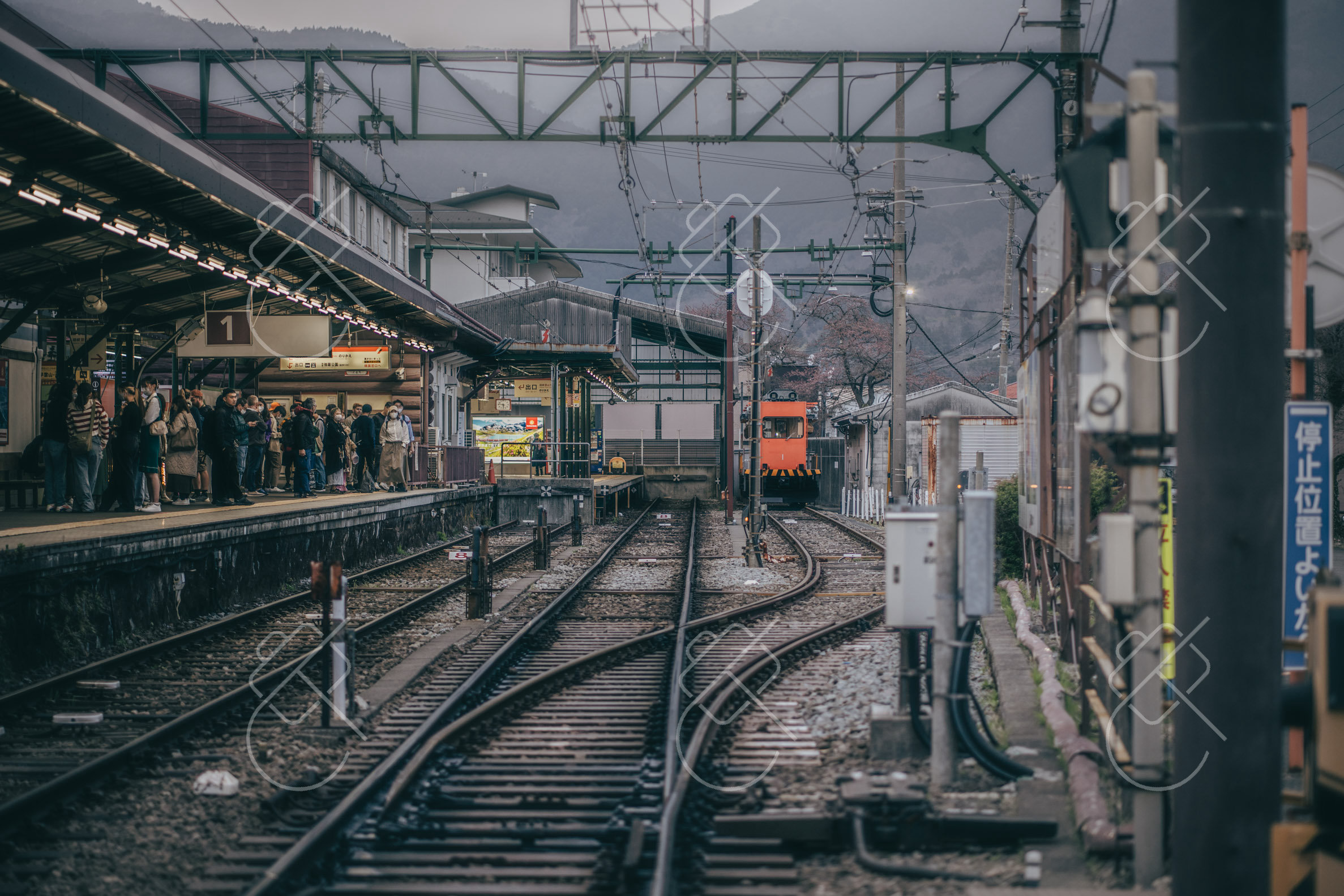
1. Tokyo to Hakone-Yumoto. The Odakyu Romancecar from Shinjuku runs straight to Hakone-Yumoto in about 80 minutes; Shinkansen travelers change at Odawara. Our Tokyo to Hakone guide compares the options.
2. Hakone Tozan Train to Gora. The mountain railway climbs out of the valley through a series of switchbacks, where the train reverses direction to gain height. Get off at Chokoku-no-Mori for the Open-Air Museum, or ride on one stop to Gora.
3. Cable car from Gora to Sounzan. A short funicular up the hillside to the ropeway station.
4. Hakone Ropeway from Sounzan to Togendai. Three sections, each about 10 minutes: Sounzan to Owakudani, where you change gondolas, then on via Ubako to Togendai on the lake. The gondolas pass right over the steaming vents of Owakudani, and on clear days Mount Fuji appears on the Togendai side. Hours are 9am to 5pm from February to November and 9am to 4:15pm in December and January.
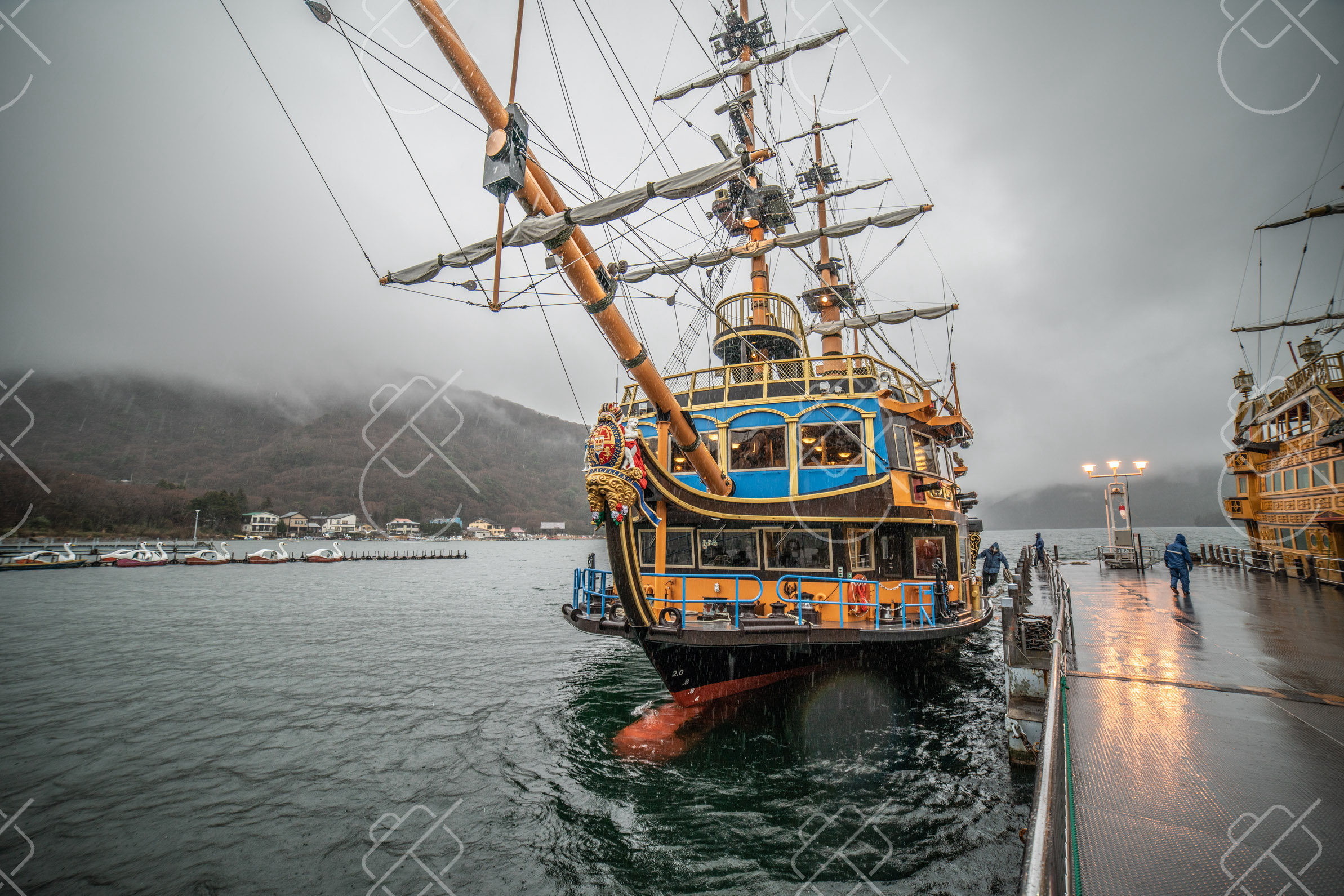
5. Sightseeing cruise across Lake Ashi. The pirate-ship-style boats link Togendai with Hakone-machi and Moto-Hakone in 25 to 40 minutes. From 1 October 2025 the adult fare from Togendai to either port is ¥1,700 (≈ $10.7) one way; Hakone-machi to Moto-Hakone is ¥600 (≈ $3.8), and a round trip is ¥3,000 (≈ $18.8). The special cabin costs ¥800 (≈ $5.0) extra on the Togendai legs.
6. Hakone Shrine, then the bus back. Get off at Moto-Hakone for the shrine, then take a bus back down to Hakone-Yumoto or Odawara.
The Hakone Freepass covers every leg of this loop plus most buses, and our Hakone Freepass guide does the break-even math against single tickets. You can ride the loop in either direction; starting from the lake end avoids the morning crowds heading up from Yumoto.
Odakyu Hakone has scheduled two maintenance closures on the Hakone Ropeway this winter:
• Owakudani to Sounzan: 7 to 24 December 2026.
• Togendai to Ubako to Owakudani: 12 January to 26 February 2027.
Replacement buses run about every 15 minutes, roughly 10 minutes from Sounzan to Owakudani and 15 from Togendai to Owakudani, and Freepass holders can ride them. They get crowded and can be caught in traffic, so the operator advises reaching Owakudani on the section that is still running and returning the same way.
Outside those dates, the ropeway also stops in strong wind (30 m/s or more), storms, and when volcanic gas readings at Owakudani rise. The operator and the national tourism board both advise that people with asthma, bronchial or heart conditions should not go up to Owakudani, and that pregnant women, infants and small children should avoid it. Check the live status on Hakone Navi on the morning you ride; if Owakudani is closed, use the buses between Yumoto and the lake instead.

Practical travel tips, straight to your inbox. Unsubscribe anytime.
The Hakone Open-Air Museum (Chokoku-no-Mori Bijutsukan) is mostly outdoors, with indoor galleries to retreat to in a shower. About 120 sculptures by modern and contemporary artists stand across roughly 70,000 square meters of lawn and hillside with the mountains around them.
Inside, the Picasso Pavilion holds a permanent display of Picasso's work. The Symphonic Sculpture is a tower lined entirely with stained glass by the French artist Gabriel Loire. Children's play sculptures include the Woods of Net, a giant knitted-net play structure; it is closed from 30 November to 4 December 2026 and in bad weather. There is also a free footbath with spring water and a view over the forest.
Admission is ¥2,000 (≈ $12.5) for adults at the gate, ¥1,800 (≈ $11.3) online; high school and university students pay ¥1,600 (≈ $10.0) (¥1,400 (≈ $8.8) online), elementary and middle school students ¥800 (≈ $5.0) (¥600 (≈ $3.8) online), and preschool children are free. It is open 9am to 5pm, 365 days a year, with last admission 30 minutes before closing. Lockers at the entrance are free.
It is a 2-minute walk from Chokoku-no-Mori Station on the Hakone Tozan Train. Allow two to three hours.
Hakone Shrine stands in the cedar forest on the shore of Lake Ashi at Moto-Hakone. The grounds are free to enter. The shrine office, where you can buy amulets and get a goshuin stamp, is open from 8:15am to 5pm, and the Treasure Hall from 9am to 4pm.
The approach climbs 90 stone steps from the fourth torii to the main hall, framed by old cedars. A side path without steps leads up through the forest if the stairs are hard going, and wheelchair users can reach the hall by elevator from the Treasure Hall. Kuzuryu Shrine, dedicated to the lake's nine-headed dragon, has a branch shrine in the same grounds.
The Peace Torii stands in the water at the lake's edge. It is the one everyone photographs, and visitors queue on the steps to be photographed under it. The line is shortest early in the morning, which is also when Mount Fuji is most often visible across the lake. Staying a night by the lake makes that easy; our where to stay in Hakone guide compares Lake Ashi with Yumoto and Gora.
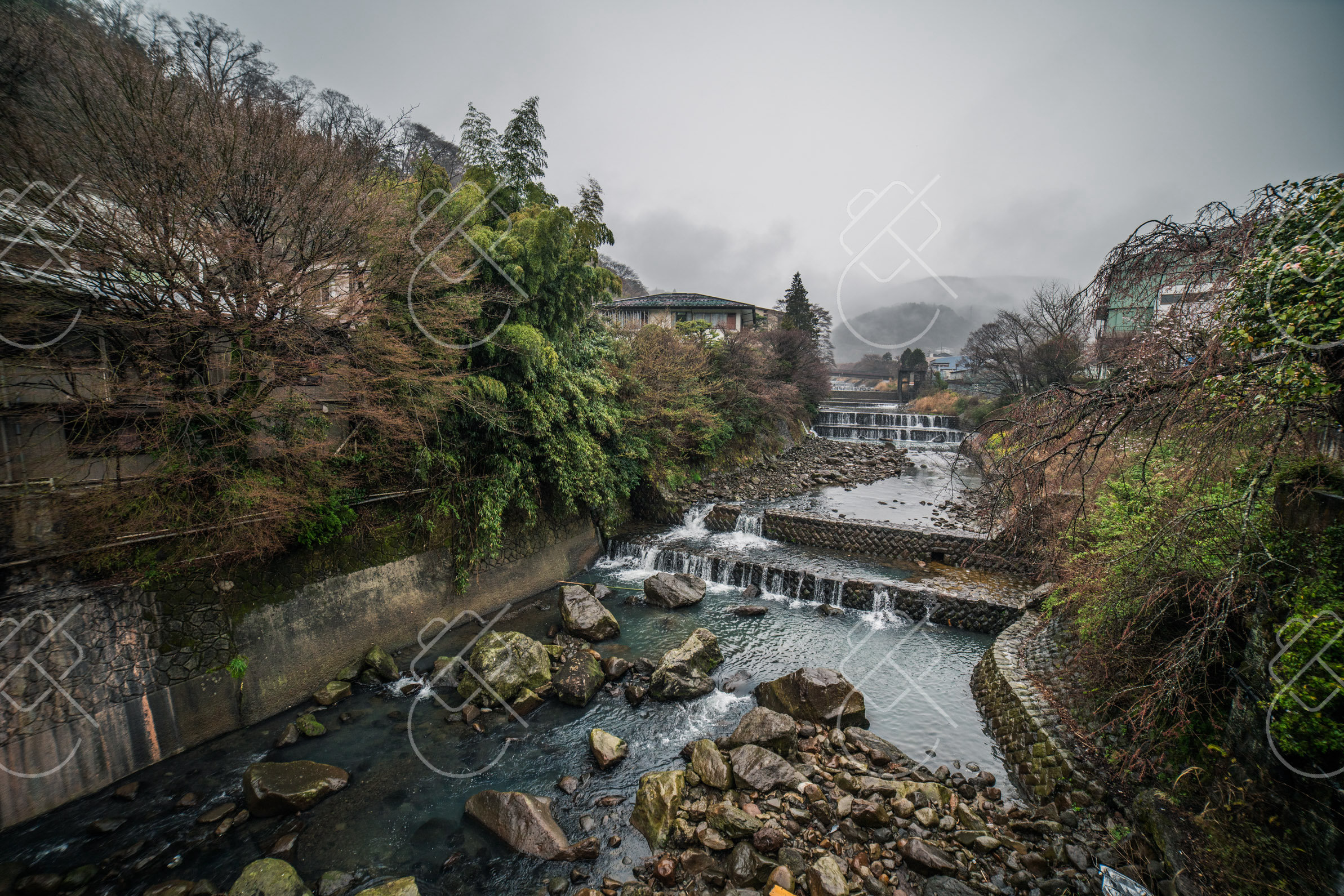
Lake Ashi (Ashinoko) is a caldera lake, with Moto-Hakone and Hakone-machi at its southern end and Togendai at the north. Even without the cruise, the lakeshore between Moto-Hakone and Hakone-machi is an easy walk.
The views of Mount Fuji from the lake are best on clear winter mornings and often hidden in summer haze, so treat Fuji as a bonus rather than the plan.
You can ride the loop as a day trip from Tokyo, but the museum, the shrine and the loop together are too much for one day without rushing. One night lets you ride half the loop and soak in an onsen in the evening; two nights covers everything at an easy pace. Our how many days in Hakone guide has the day-by-day plan, and our onsen etiquette guide explains the baths, including the rules on tattoos.
¥2,000 (≈ $12.5) for adults at the gate or ¥1,800 (≈ $11.3) online, ¥1,600 (≈ $10.0) (¥1,400 (≈ $8.8) online) for high school and university students and ¥800 (≈ $5.0) (¥600 (≈ $3.8) online) for elementary and middle school students. Preschool children are free.
Yes, the grounds and the lakeside Peace Torii are free. The Treasure Hall charges separately and opens 9am to 4pm.
It runs daily but has two scheduled closures: Owakudani to Sounzan from 7 to 24 December 2026 and Togendai to Owakudani from 12 January to 26 February 2027, with replacement buses. It also stops in strong wind and when volcanic gas levels rise.
Plan most of a day. The ropeway alone is three sections of about 10 minutes each, the lake crossing takes 25 to 40 minutes, and queues at the ropeway and boat piers add time at weekends.
¥1,700 (≈ $10.7) one way for adults from Togendai to Hakone-machi or Moto-Hakone, ¥3,000 (≈ $18.8) round trip, and ¥600 (≈ $3.8) between Hakone-machi and Moto-Hakone. The Hakone Freepass covers it.
Ride the Hakone loop over Owakudani and across Lake Ashi, spend a few hours at the Hakone Open-Air Museum, visit Hakone Shrine early in the morning, and stay a night at an onsen.
Practical travel tips, straight to your inbox. Unsubscribe anytime.
Entry rules change, and they depend on your nationality — always confirm the current requirements on the official government site before you book or apply. Only use official government (.gov) portals; ignore look-alike agency sites.
Plan your nights in Hakone: hotels on Hotels.com.