
Home
About us
Destinations
Travel Guides
Recipes
Featured
Photos As Art
Abstract Prints
Locations
Travel Gear
Travel Resources
Favorites
Photo Framer
Explore Photos
ContactTokyo is less a single city than a dozen cities that happen to share a train map. Twenty-three wards, no real centre, and a skyline that restarts every few stops — which is why first-time visitors try to see all of it and end up seeing mostly the inside of the Yamanote Line. Three days is plenty if you stop chasing the whole thing and take it one district at a time: the temple lanes of the old east, the palace moat in the middle, and the lantern-lit alleys of the west after dark.
Published August 14, 2026
Tap any photo to open it full-screen and order a print.
Three days works in Tokyo only if you cluster by district and accept that you are skipping most of the city. Give the first day to Asakusa and the old east, the second to Ueno's museums and the wooden lanes of Yanaka, and the third to the Imperial moat, Akihabara and Shinjuku after dark. The subway makes almost everything reachable in half an hour, but transfers add up fast, so build each day around one or two adjacent neighbourhoods rather than crossing the map for single sights. Watch the closing days — most museums shut on Mondays and the palace gardens on Mondays and Fridays — and save the neon districts for evening, when they actually look like themselves.
Tokyo has four genuinely distinct seasons and two of them are famous. Spring and autumn are the easy answers; winter is the underrated one, because the same cold front that makes you pack a coat is what makes Mount Fuji appear on the horizon from every observation deck in the city.
Sakura usually peaks in the last days of March and the first week of April, and Ueno Park's thousand-odd trees become a nightly picnic. Book lodging months out, and treat the forecast as a moving target — the bloom window is barely a week and shifts with the weather.
Hot, humid, and loud in the best way. June brings the rainy season, July and August bring matsuri and the Sumida River fireworks. Shoot early and duck into a department-store basement when the heat turns punishing around two.
The most comfortable stretch of the year. Typhoon season tails off through September, the air clears, and the ginkgo avenues around Meiji Jingū Gaien turn a hard yellow in the last week of November — later than most visitors expect.
Cold, dry, and startlingly clear. This is the season Fuji shows up on the horizon from the observation decks, the illuminations run through the shopping districts, and the crowds and prices are at their lowest. Sunset lands early, so plan the indoor half of the day for late afternoon.
Sensō-ji & Nakamise-dōri — Tokyo's oldest temple and its 250-metre approach — go before 8am or after dark.
Shinjuku after dark — Omoide Yokocho's yakitori counters and Golden Gai's two hundred tiny bars, best at blue hour.
Imperial Palace East Gardens — Free, original Edo Castle stonework and the empty keep foundation. Closed Mondays and Fridays.
Tokyo National Museum — Founded 1872, the deepest collection of Japanese art anywhere. Closed Mondays.
Yanaka — Low wooden streets that survived the quake and the war — the quietest hour in central Tokyo.
Tokyo Metropolitan Government Building — Free twin observatories at 202 metres, with Fuji on a clear winter day.
Ueno Park in blossom season — A thousand cherry trees and the city's most committed hanami — a one-week window.
Akihabara — Electric Town's multi-storey shops, and the older component alleys under the railway arches.
Jimbōchō book district — Over a hundred secondhand bookshops, all facing north to keep the sun off the stock.
Tokyo Tower — 333 metres of 1958 lattice steel — better photographed from the streets below than climbed.
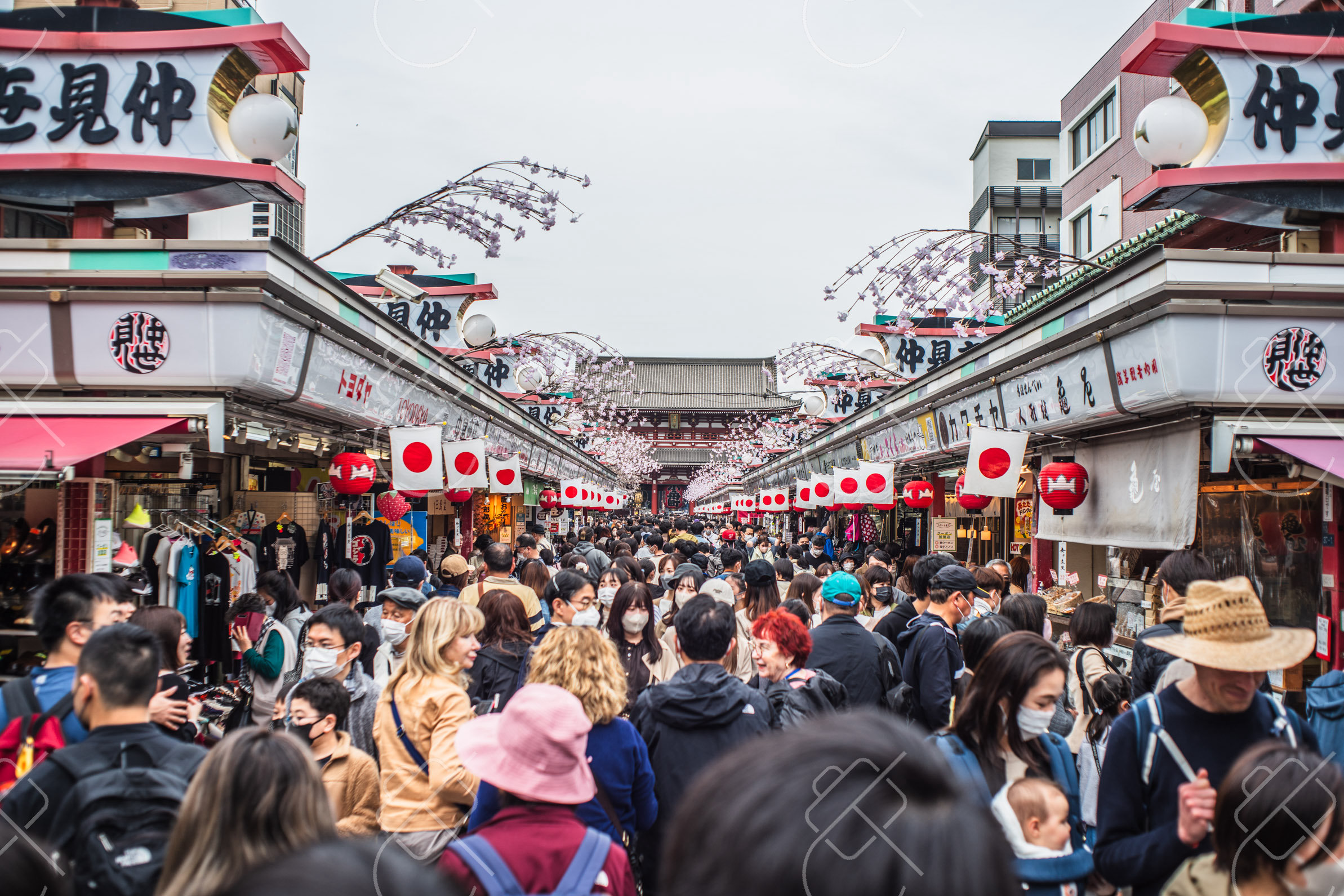
The old east of the city, built around a temple that predates Tokyo itself. Asakusa is the most concentrated dose of pre-war Japan the capital still offers, and by ten in the morning it is shoulder to shoulder — which is the whole argument for arriving at seven.
Sensō-ji was founded in 645, which makes it roughly a thousand years older than the city that grew up around it. You enter under the Kaminarimon and its enormous red lantern, then walk the 250 metres of Nakamise-dōri — a gauntlet of stalls selling rice crackers, folding fans, and ningyō-yaki cakes pressed in iron moulds — before the main hall opens up at the end. The temple itself was rebuilt after the 1945 firebombing, so what you are looking at is a faithful post-war reconstruction rather than an original, a distinction most guidebooks skip.
The trick to Asakusa is time of day. Nakamise-dōri's shutters come down in the evening and each one is painted, turning the whole arcade into a corridor of murals that almost nobody photographs because almost nobody is there. Walk five minutes east to the Sumida River afterwards and Tokyo Skytree stands 634 metres up on the far bank — the tallest tower in the world, and the cleanest sightline you'll get to it anywhere in the city.
Before 8am or after 7pm. The temple grounds never close, and both windows hand you the gate and the approach without the mid-morning crush.
Asakusa itself is the budget-friendly base — traditional ryokan and hostels, quiet at night, and two subway lines into the centre.
Ningyō-yaki, the little red-bean cakes pressed to order in iron moulds along Nakamise-dōri, and melonpan from the bakeries on the side streets.
Nakamise-dōri's shops shut around 5–6pm but the arcade stays open to walk — come back in the evening for the painted shutters and an empty street.
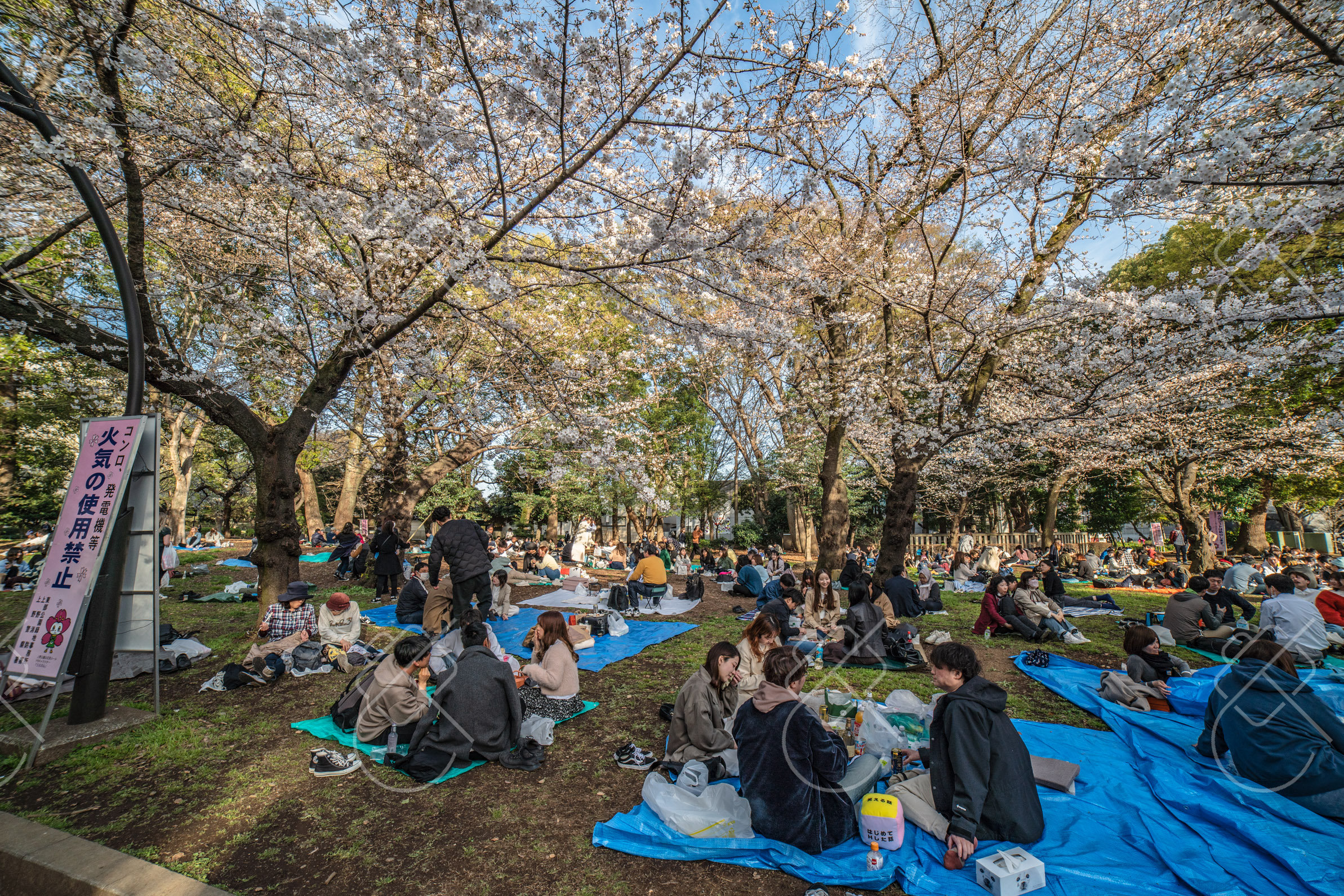
A park full of museums, a pond full of swan boats, and just north of them the low wooden streets of Yanaka — one of the few corners of Tokyo that survived both the 1923 earthquake and the war largely intact.
Ueno Park is where Tokyo keeps its museums. The Tokyo National Museum, founded in 1872 and the oldest in Japan, holds the deepest collection of Japanese art anywhere, and the park also carries the national museums of science and western art within a ten-minute walk of each other. In cherry blossom season the same lawns become the city's most famous hanami ground — around a thousand trees, blue tarps staked out from dawn, and a level of organised revelry that surprises first-time visitors. Shinobazu Pond at the park's southern end fills with lotus in summer and pedal-powered swan boats year round.
Walk fifteen minutes north and the register changes completely. Yanaka is what the rest of Tokyo looked like before the twentieth century happened to it — two-storey wooden houses, a shopping street of about sixty small shops called Yanaka Ginza, temple after temple, and a sprawling cemetery that becomes a cherry tunnel each spring. Nothing here is a headline sight. That is precisely the point: it is the one district where you can walk for an hour without being sold anything.
Late morning for the museums, then Yanaka in the last two hours of daylight — the low sun down Yanaka Ginza's west-facing slope is the shot people come back for.
Ueno puts you on the Yamanote Line and the Keisei line straight from Narita, with cheaper rooms than the west side of the city.
Menchi-katsu — a deep-fried minced-meat cutlet — eaten standing up on Yanaka Ginza, where two or three shops have been frying them for decades.
The Tokyo National Museum is enormous; if you only have ninety minutes, do the Honkan building alone and skip the rest without guilt.
First-time visitors try to see all of it and end up seeing mostly the inside of the Yamanote Line.
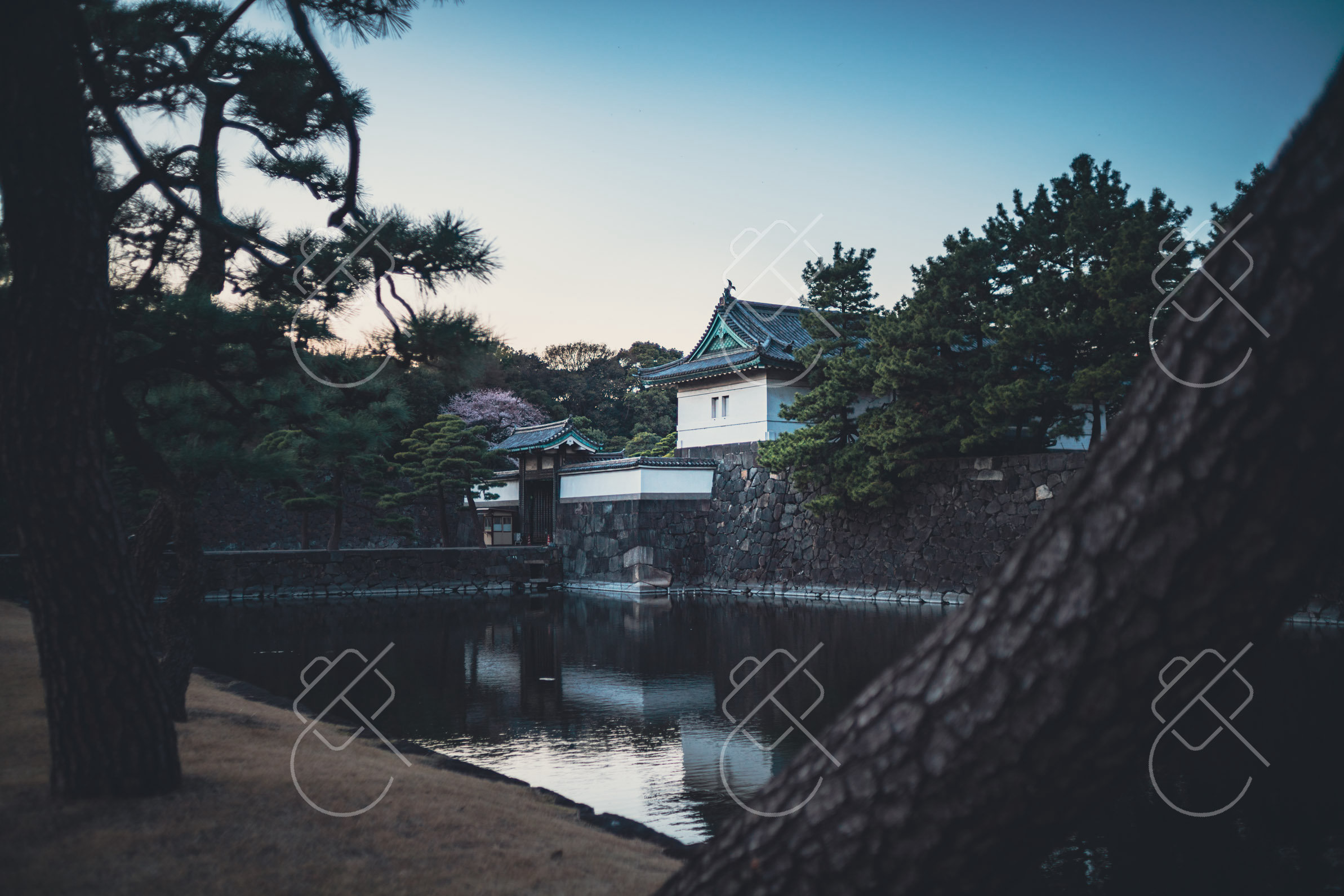
The geographic middle of Tokyo is a moat, a forest, and a palace you mostly can't enter — ringed by red-brick Meiji architecture and, a few streets north, the largest concentration of secondhand bookshops on earth.
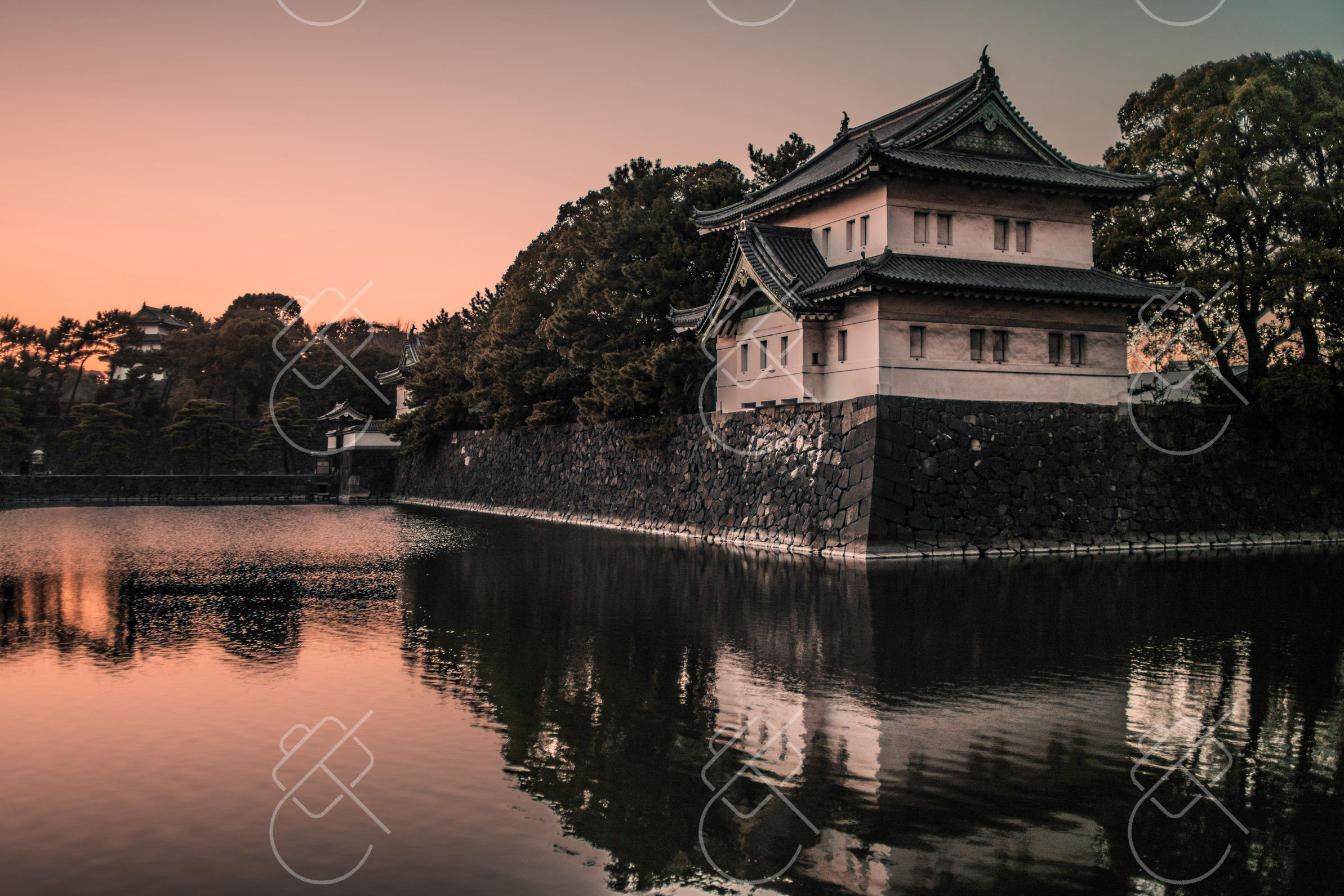
The Imperial Palace sits on the footprint of Edo Castle, and the stone walls and water you walk past are the originals — the moat is the single most legible piece of pre-modern Tokyo left above ground. The East Gardens are free and open most days, and the stone foundation of the castle keep still stands there, flat-topped and empty since the tower burned in 1657 and was never rebuilt. Nijūbashi, the double bridge at the main approach, is the postcard; the quieter northern moat around Kitanomaru is the better walk.
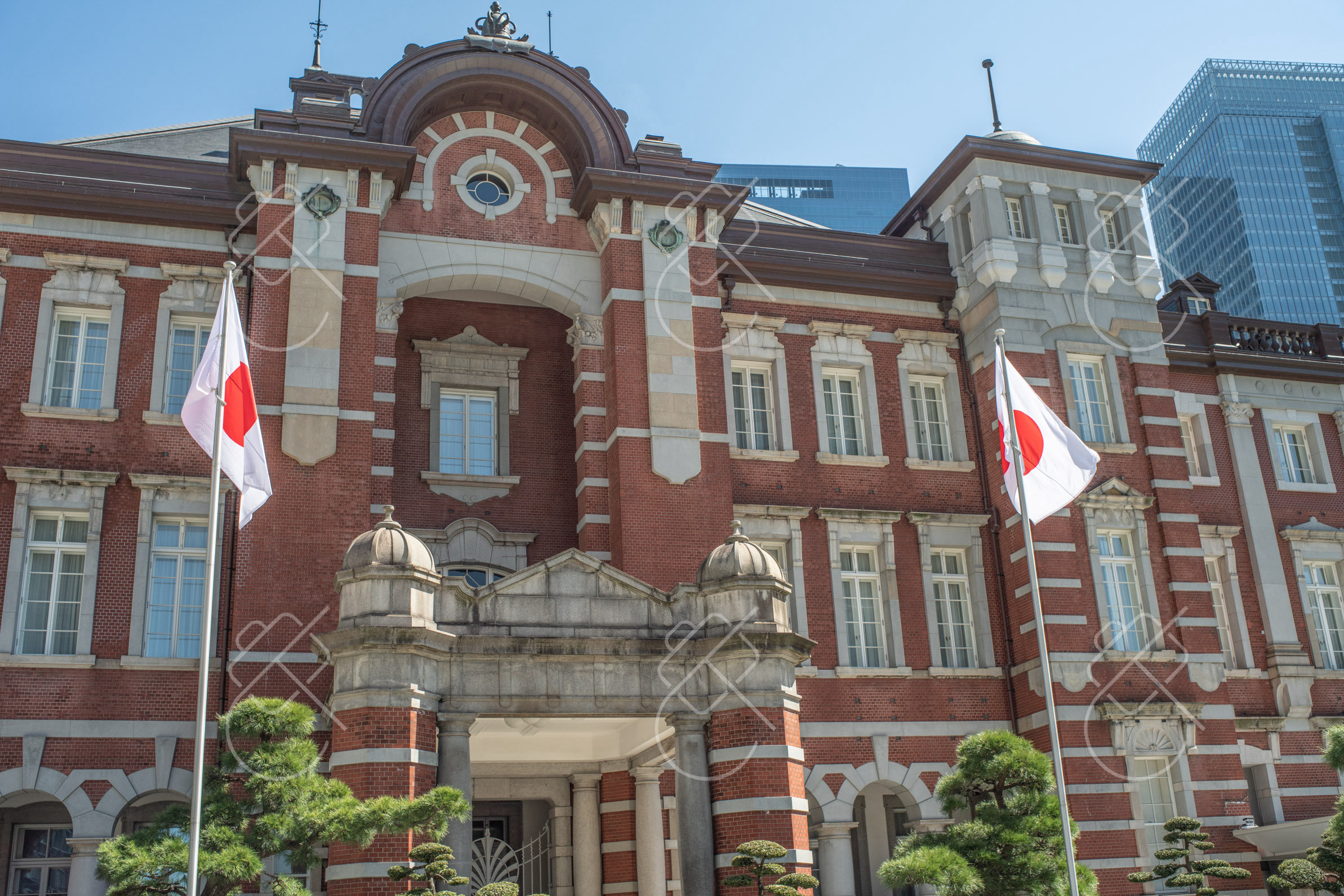
A short walk away, Tokyo Station's Marunouchi facade is a 1914 red-brick pile by Tatsuno Kingo, restored in 2012 to the three-storey form it lost to wartime bombing. North of it lies Jimbōchō, where well over a hundred secondhand bookshops cluster along Yasukuni-dōri — the shops mostly face north, a deliberate choice so that direct sun never falls on the stock. Even with no Japanese, the print, map and ukiyo-e dealers are worth an hour.
Morning for the gardens, when the moat is still and the light is across the stonework rather than on top of it. Note the East Gardens close on Mondays and Fridays.
Marunouchi and Ōtemachi are business-district expensive but put you inside walking distance of the moat and on every train line in the country.
Curry is the neighbourhood dish in Jimbōchō, with a dozen long-running shops competing over it, and the Tokyo Station basement is a serious bentō hall.
You cannot enter the palace grounds proper without joining a free guided tour, and those book out online well ahead — the East Gardens need no booking at all.
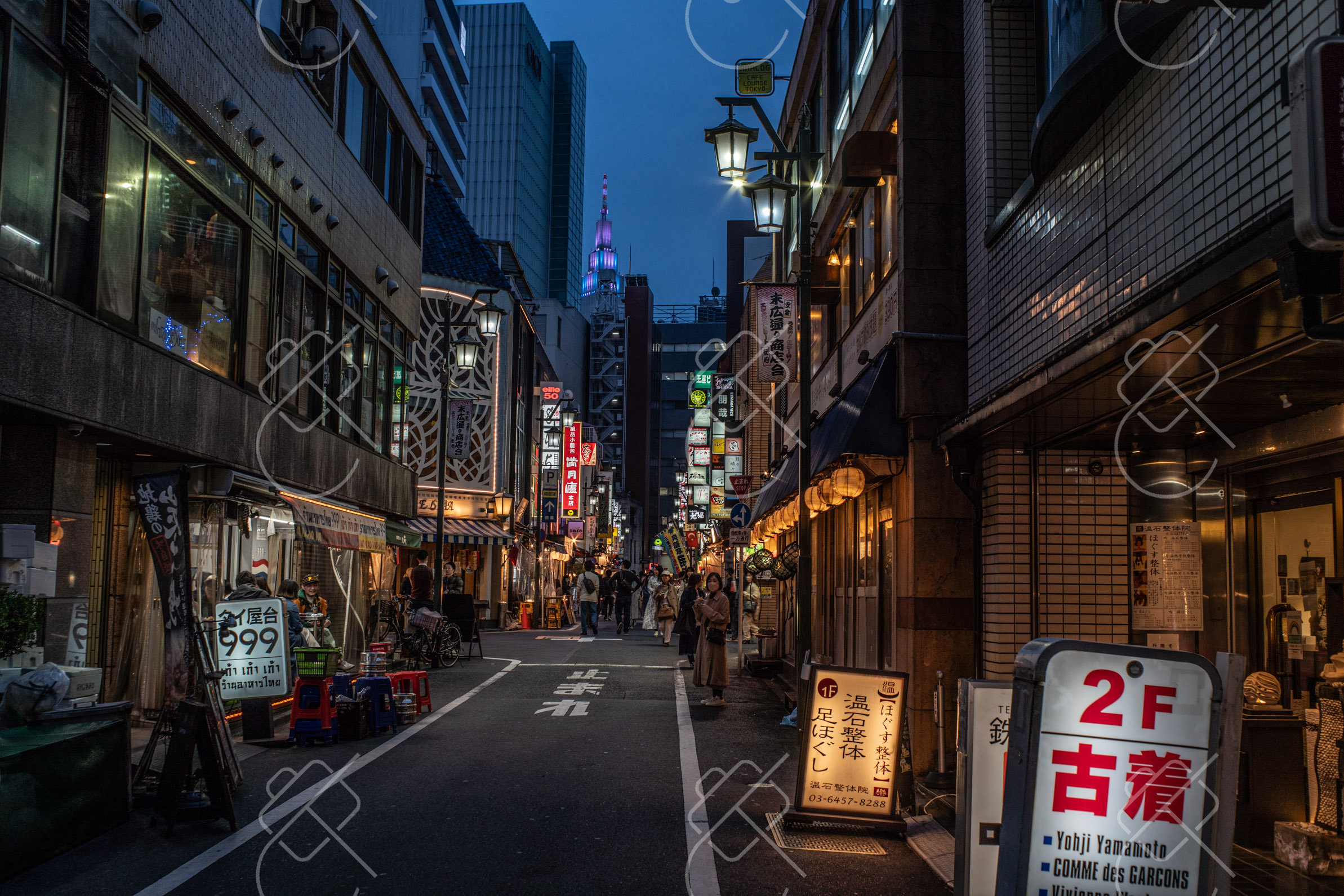
The Tokyo of the imagination — neon, six-storey screens, and alleys of six-seat bars — is mostly a night shift. Akihabara for the electric afternoon, Shinjuku for the evening, and a tower for the last of the light.
Akihabara earned its Electric Town name selling radio parts out of stalls under the railway arches after the war, and the multi-storey electronics and anime shops that replaced them still run on the same logic: floor after floor, each one a different category, priced to argue over. The component alleys under the tracks survive in pockets and are far more interesting than the big-box floors above them.
Shinjuku is the counterweight. Omoide Yokocho — Memory Lane, and rather less politely Piss Alley — is a surviving grid of postwar black-market lanes now packed with yakitori counters seating six or seven people apiece, smoke and all. Golden Gai, a few minutes east, is around two hundred tiny bars stacked along six alleys, many with a cover charge and a regular clientele; go in expecting a conversation, not a quick drink. For the overview, the Tokyo Metropolitan Government Building's twin observatories are 202 metres up and free, which is the best-value view in the city.
Blue hour, without question. The thirty minutes after sunset are when Shinjuku's signage balances against the sky; any earlier and the neon disappears, any later and the buildings go black.
Shinjuku is the most convenient base in Tokyo — the world's busiest station, every line you need, and food at any hour.
Yakitori and a beer standing at an Omoide Yokocho counter, or a bowl of ramen at one of the ticket-machine shops around Shinjuku station.
Many Golden Gai bars charge a seat fee of several hundred yen on top of drinks, and some are regulars-only — look for the ones with English signs in the window if it's your first visit.
Yanaka is what the rest of Tokyo looked like before the twentieth century happened to it.
A loose, walkable route — bend it to your pace and the light.
Start early in the old east. Sensō-ji's grounds never close, so arrive by seven or eight and you get the Kaminarimon, the length of Nakamise-dōri, and the main hall before the tour groups land. Work slowly — the side lanes west of the temple are full of craft shops and standing bars that the main approach hides completely.
Walk east to the Sumida River for the clearest view of Tokyo Skytree across the water, then take the subway to Ueno for the afternoon. Finish back in Asakusa after dark, when Nakamise-dōri's painted shutters are down and the street is empty.
Where to shoot: Kaminarimon and its lantern before 8am · Nakamise-dōri looking toward the main hall · Skytree from the Sumida embankment · Nakamise's painted shutters after closing
Tip: Buy a Suica or Pasmo card at the airport or any station machine — Tokyo is a subway city and fumbling with paper tickets at every transfer is a slow tax on your day.
Give the morning to Ueno Park. The Tokyo National Museum alone can eat three hours, so decide in advance whether you're doing one building properly or three at a jog. Shinobazu Pond and its swan boats make the natural break between galleries.
Walk north into Yanaka for the afternoon and let the plan go. This is the low-rise, pre-war Tokyo that the rest of the city lost — wooden houses, small temples, a cemetery that turns into a cherry tunnel in spring, and the sixty-odd shops of Yanaka Ginza. Time it so you're on that street for the last hour of sun.
Where to shoot: Shinobazu Pond's swan boats · Ueno Park's cherry avenues (late March–early April) · Yanaka Ginza looking west at golden hour · The wooden shopfronts of Yanaka's back lanes
Tip: Ueno's museums mostly close on Mondays. If your middle day lands on one, flip this day and the next — the palace gardens close Mondays too, so make it your Asakusa or Shinjuku day instead.
Start at the Imperial Palace East Gardens while the moat is still and the crowds are thin, then walk out past Nijūbashi and across to Tokyo Station's red-brick facade. If books are your thing, Jimbōchō is fifteen minutes north and worth the detour for the print and map dealers alone.
Spend the afternoon in Akihabara, then move west to Shinjuku for the evening. Get up the Metropolitan Government Building before sunset for the free view, come down for blue hour on the street, and eat standing at a counter in Omoide Yokocho.
Where to shoot: The palace moat and Edo Castle stonework in morning light · Tokyo Station's Marunouchi facade · Akihabara's signage from the pedestrian crossings · Omoide Yokocho's lanterns at blue hour
Tip: The Metropolitan Government Building observatories are free and rarely have a long queue — skip the paid towers unless you specifically want the Skytree height.
A fourth day opens up the west: Meiji Jingū's forest of roughly a hundred thousand donated trees, the Shibuya scramble crossing, and the ginkgo avenues of Meiji Jingū Gaien if you're there in late November. With a fifth, take the train an hour south to Kamakura for the Great Buddha and the coast, or an hour west into Hakone for the hot springs and, on a clear day, Fuji itself.
Tokyo's default late meal, usually ordered from a ticket machine by the door before you ever speak to anyone. The city's own style leans toward a clear soy-based shoyu broth, though every regional variety in Japan has an outpost here.
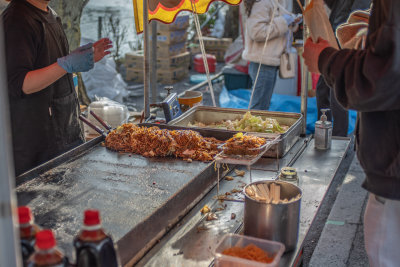
Fried noodles turned over on a flat-top griddle in enormous batches, served in a paper tray with pickled ginger. It is the smell of every matsuri and temple festival in the city, and Asakusa has them year round.
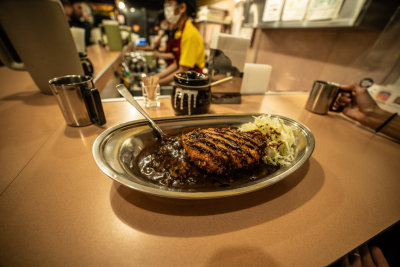
A panko-crusted pork cutlet under a ladle of thick, mild curry over rice. It is the cheap, filling lunch that keeps a long walking day going, and Jimbōchō in particular is full of shops that take it seriously.
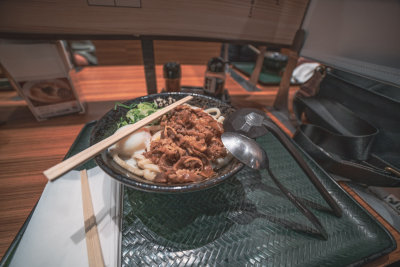
Thick wheat noodles in a light dashi broth, often eaten standing at a counter inside a station for a few hundred yen. The most reliable warm meal in Tokyo when the day has gone sideways and you need to eat in ten minutes.
Explore regional routes with verified local fleets, zero hidden charges, and transparent insurance on Localrent.
Find the best deals on Tokyo accommodation with Booking.com.
Transit cards, local customs, visa rules, and practical travel guides for this region.
See every destination from the 526-day journey:
Browse all destinationsCurious about the gear behind these photos? See the gear list.