Home
About us
Destinations & Country Guides
Travel Guides
Recipes
Featured
Photos As Art
Abstract Prints
Locations
Travel Gear
Travel Resources
Favorites
Photo Framer
Explore Photos
Contact Seasonal travel
By Clever Tourists · Published
For a trip that covers both the south and the tropical north, go in September to November or April to May. Sydney and Melbourne are mild, the Red Centre is not yet scorching, and Cairns is in or near its dry season. If you only visit the south, summer (December to February) is beach season; if you only visit the Great Barrier Reef and the Daintree, May to October is clearly best. The trade-off is that Australia is a continent: no month is perfect everywhere. We were in Australia from 21 January to 19 February 2023, from Melbourne along the Great Ocean Road to Adelaide, then Alice Springs, Townsville, Magnetic Island, Cairns, the Daintree and Sydney, which means we saw the south at its best and the north in the wet season.
• Best weather overall: September to November and March to May.
• Beaches in Sydney, Melbourne and Adelaide: December to March.
• Great Barrier Reef, Cairns and the Daintree: June to October, dry and outside stinger season.
• Uluru and the Red Centre: May to September, when days are warm, not hot.
• Cheapest: May to August in the south (outside the July school holidays) and November to April in the tropical north.
• Avoid: the far north from January to March for heavy rain and cyclone risk, and the Red Centre in December to February for heat.
Seasons are reversed from the northern hemisphere. Temperatures are typical daytime highs, approximate.
• December to February (summer): Sydney around 26°C (79°F), Melbourne around 25 to 26°C (77 to 79°F) with hot spells past 40°C, Alice Springs around 35 to 36°C (95 to 97°F), Cairns around 31°C (88°F) and very wet. The south's peak beach and festival season; school holidays from mid-December to late January.
• March to May (autumn): Sydney cools from about 25°C to 19°C (77 to 66°F). Settled weather in the south, the north's wet season tapering off by April and May. One of the best all-round windows.
• June to August (winter): Sydney around 17°C (63°F), Melbourne around 14°C (57°F) and grey, Cairns around 26°C (79°F) and dry, Alice Springs days near 20°C (68°F) with frosty nights. Peak season in the north and the Red Centre.
• September to November (spring): wildflowers in Western Australia, Sydney warming from about 20°C to 24°C (68 to 75°F), the north still dry until the build-up humidity arrives in November. The best single window for a trip that covers several regions.
The tropical north (Cairns, Port Douglas, the Daintree, Townsville, Darwin) has two seasons, not four. The wet season runs roughly November to April, with heavy monsoon rain concentrated in January to March and cyclone risk. Roads into the Daintree and Cape York can flood. The dry season, May to October, is sunny, less humid and the busiest time on the reef.
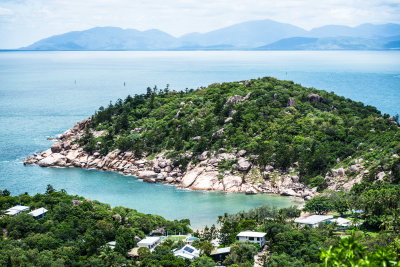
Stinger season is the detail many guides skip. Box jellyfish and Irukandji are present mainly from about November to May along the tropical Queensland coast, according to Surf Life Saving Queensland, with stinger nets on patrolled beaches and stinger suits on reef trips. You can still swim and snorkel then, but only inside nets or in a suit. We were on Magnetic Island and in Cairns in February, squarely inside that season.
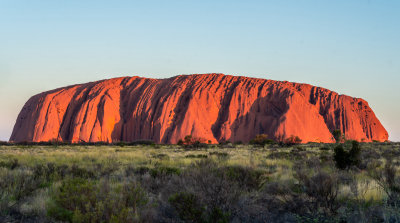
The Red Centre around Alice Springs and Uluru is desert: summer highs often pass 40°C, and some walks at Uluru-Kata Tjuta close in the afternoon heat. Winter days are pleasant but nights drop near or below freezing. We spent 4 days in Alice Springs in early February; for most visitors May to September is the better choice.
The south (Sydney, Melbourne, Adelaide, the Great Ocean Road, Tasmania) follows four seasons. Melbourne is famous for four seasons in one day; summer brings hot northerly days and bushfire danger. Tasmania is cool even in summer and best from December to March. Our Melbourne guide covers the city itself.

• Australia Day, 26 January 2027: national holiday, fireworks and crowds in every capital.
• Australian Open, 11 to 31 January 2027: Melbourne Park, with the women's final on 30 January and men's final on 31 January. Hotels in central Melbourne fill early; see our Melbourne in January and Australian Open guide.
• Easter 2027, 26 to 29 March: a four-day weekend with heavy domestic travel.
• Anzac Day, 25 April 2027: dawn services nationally.
• Vivid Sydney, from 28 May 2027: light festival across the harbour, running into June.
• Christmas and New Year: Sydney Harbour fireworks on 31 December draw huge crowds, and prices peak.
Domestic school holidays drive prices more than overseas visitors. The big one is the summer break from mid-December to late January, followed by shorter breaks around Easter, early July and late September to early October (dates differ slightly by state). Beach towns, the Great Ocean Road and Tasmania are busiest in summer.
The north runs on the opposite cycle: Cairns and Port Douglas are most expensive from June to October, and wet-season rates from January to March are much lower, which is the bargain if you accept rain and stingers. The best value overall is late April to early June and September to November, outside school holidays. Practical money notes: tipping is optional, see tipping in Australia, and most visitors need an ETA or eVisitor before arrival, see do I need a visa for Australia.
• The far north from January to March if your trip is mainly reef and rainforest. Rain is heavy, some tours and roads close, and swimming is limited to nets.
• The Red Centre from December to February unless you are fine with walks at dawn only.
• Melbourne in July if you want outdoor sightseeing: it is not cold by European standards but it is grey and short-days.
For a combined trip, the order we followed works: southern Australia in January, then New Zealand in February and March. If the reef matters most, flip it: New Zealand in March, then Queensland from May.
For a multi-region trip, October or April. The south is mild, the Red Centre is not too hot, and the tropical north is close to or in its dry season.
May to August in the south outside the July school holidays, and January to March in the tropical north, when wet-season rates are lowest.
The tropical north's wet season runs roughly November to April, heaviest from January to March. The south has no single wet season.
Roughly November to May. Swim inside stinger nets on patrolled beaches and wear a stinger suit on reef trips.
Yes for the south: beaches, the Australian Open and long days. Not for the far north, which is in heavy wet season, or the Red Centre, which is very hot.
Get our new Australia guides and practical tips by email: where to stay, what to eat, what things cost and the rules that catch travelers out.
Free. No spam, only new guides and tips.
Get the best deals on your Australia flight before fares rise — Kiwi.com.