 Culture & etiquette
By Clever Tourists · Published
English is an official language of the Philippines and is widely spoken, so you can travel the whole country in English; Filipino (based on Tagalog) is a courtesy that people warmly appreciate, not a necessity. The one word worth learning first is po: added to a sentence, it shows respect to elders, strangers and staff. It has nothing to do with gender. Everyday speech mixes the two languages (Taglish), so a phrase that is half English is often exactly what locals say. There are no tones, but stress can change meaning, so follow the capitals in the respellings.
This page contains affiliate links. If you book or buy through them we may earn a commission, at no extra cost to you.
Magandang umaga literally means "beautiful morning", and the same pattern gives magandang hapon (afternoon) and magandang gabi (evening). Kumusta works as hello and how are you at once. A quick double raise of the eyebrows is also a silent hi.
Paalam is the dictionary goodbye, but it is formal and mostly heard in films and writing. People actually say "bye", or ingat (take care). Most people simply say "nice to meet you" in English.
| English | Filipino (Tagalog) | Say it like | When to use it |
|---|---|---|---|
| Hello / How are you? | Kumusta (po)? | koo-moos-TA po | All-purpose hello. Add po (and kayo) for elders, strangers, staff. Often spelled kamusta. |
| Good morning | Magandang umaga (po) | ma-gan-DANG oo-MA-ga po | Until about noon. Literally 'beautiful morning'. |
| Good afternoon | Magandang hapon (po) | ma-gan-DANG HA-pon po | Afternoon greeting; add po for anyone older or serving you. |
| Good evening | Magandang gabi (po) | ma-gan-DANG ga-BEE po | Evening greeting. |
| I'm fine | Mabuti (po) naman | ma-BOO-tee po na-MAN | Standard reply to Kumusta; Okay lang is the casual version. |
| Nice to meet you | Ikinagagalak kitang makilala | ee-kee-na-ga-GA-lak kee-TANG ma-kee-LA-la | Somewhat formal; most people just say 'nice to meet you' in English. |
| Take care (everyday goodbye) | Ingat (po)! | EE-ngat po | The usual parting words; reply Ikaw rin (you too). |
| Goodbye (formal) | Paalam | pa-A-lam | Formal, mostly heard in films and writing; people say 'bye' or Ingat. |
| Bye-bye (casual) | Babay / Bye | BA-bye | Casual, for friends and kids; avoid with bosses or elders. |
| See you (later) | Kitakits! | kee-ta-KITS | Slang, friends only. English 'see you' is just as common. |

Po and its yes form, opo, mark respect toward elders, superiors and strangers, including shop and restaurant staff.
There is no standalone word for please. Requests attach paki- to the verb, as in pakibagalan po (please slow down). In casual speech people just say "sorry po" or "excuse me po" in English; mawalang-galang na po is for formal moments.
| English | Filipino (Tagalog) | Say it like | When to use it |
|---|---|---|---|
| Please (request prefix) | Paki- + verb ... po (e.g. Pakibagalan po) | pa-KEE ... po | No standalone word for please; attach paki- to the verb, add po. |
| Thank you | Salamat (po) | sa-LA-mat po | Po makes it respectful; use it with elders, strangers, staff. |
| Thank you very much | Maraming salamat (po) | ma-RA-ming sa-LA-mat po | Warmer thanks, any situation. |
| You're welcome | Walang anuman | wa-LANG a-noo-MAN | Slightly formal; casual speakers say Wala 'yon. |
| Sorry | Pasensya na (po) | pa-SEN-sya na po | Everyday apology; English 'sorry (po)' is equally common. |
| Excuse me (to get past someone) | Makikiraan po | ma-kee-kee-ra-AN po | Passing in front of or squeezing past people. |
| Excuse me (to interrupt, formal) | Mawalang-galang na po | ma-wa-LANG GA-lang na po | Formal, to elders or officials; most people just say 'excuse me po'. |
| Yes | Oo / Opo | OH-oh / OH-po | Opo is the respectful yes for elders, staff, strangers. |
| No | Hindi (po) | hin-DEE po | Hindi po is the respectful no. |
| No, thank you | Hindi po, salamat | hin-DEE po, sa-LA-mat | Polite refusal to vendors, touts, offers of food. |
In turo-turo (point-point) canteens, you point at the trays and say ito po. To ask for the bill, the English word is normal, or draw a rectangle in the air with your thumbs and index fingers. Most Filipino food is mild, though Bicol-style dishes can be hot.
At a drinking session (tagay), one glass is often passed round and refilled by a pourer, the tanggero. Kumain ka na? (have you eaten?) is usually a greeting, not an invitation.
| English | Filipino (Tagalog) | Say it like | When to use it |
|---|---|---|---|
| A table for two, please | Mesa po para sa dalawa | MEH-sa po PA-ra sa da-la-WA | To the host; or just hold up two fingers. |
| The menu, please | Pahingi po ng menu / Menu po | pa-hee-NGEE po nang MEH-noo | Ask a waiter rather than just raising your hand. |
| This one, please | Ito po / Gusto ko nito | ee-TOH po / GOOS-to ko nee-TOH | Point at the tray in turo-turo (point-point) eateries. |
| Is this spicy? | Maanghang po ba ito? | ma-ang-HANG po ba ee-TOH | Worth asking: Bicol dishes can be fiery. |
| Not spicy, please | Hindi po maanghang / Pwede bang hindi maanghang? | hin-DEE po ma-ang-HANG | Most Filipino food is mild; ask when ordering Bicol-style dishes. |
| Delicious! | Masarap! | ma-sa-RAP | Compliment the cook; Ang sarap! means 'so tasty!'. |
| Cheers! | Tagay! (also Kampay!) | TA-guy / kam-PIE | Raising glasses at a drinking session; English 'cheers' also common. |
| The bill, please | Bill po / 'Yung bill po | BILL po / yoong BILL po | English word is normal; or draw a rectangle in the air. |
| I'm vegetarian | Vegetarian po ako | veh-jeh-TAIR-ee-an po a-KO | No Tagalog word; the English one is understood. |
| I don't eat meat | Hindi po ako kumakain ng karne | hin-DEE po a-KO koo-ma-KA-in nang KAR-neh | Clearer than 'vegetarian'; swap karne for isda (fish). |
| I'm allergic to peanuts / shrimp | Allergic po ako sa mani / Bawal po ako sa hipon | a-LER-jik po a-KO sa MA-nee / BA-wal po a-KO sa HEE-pon | Bawal (not allowed) also covers dietary restrictions. |

Practical travel tips, straight to your inbox. Unsubscribe anytime.
Haggling is expected at tiangge (bazaar stalls), palengke (wet markets), Divisoria in Manila, ukay-ukay (secondhand clothing) and street stalls. Malls such as SM and Robinsons are fixed-price. Keep it friendly, and buying several items helps.
Calling a vendor ate (AH-teh, older sister) or kuya (KOO-ya, older brother) is a polite, friendly way to address them. Markets and jeepneys run on cash; malls and hotels take cards.
| English | Filipino (Tagalog) | Say it like | When to use it |
|---|---|---|---|
| How much is this? | Magkano po ito? | mag-KA-no po ee-TOH | Works everywhere; Magkano? alone is fine at stalls. |
| That's expensive! | Ang mahal naman! | ang ma-HAL na-MAN | Friendly opener for haggling, said with a smile. |
| Can you lower the price? | Pwede po bang tumawad? / Wala na bang tawad? | PWEH-deh po bang too-MA-wad | Markets, tiangge, Divisoria, street stalls only; malls are fixed-price. |
| I'll take it | Sige po, kukunin ko na | SEE-geh po, koo-KOO-nin ko na | Closing the deal. |
| Do you accept card? | Tumatanggap po ba kayo ng card? | too-ma-tang-GAP po ba ka-YO nang KARD | Malls and hotels yes; markets and jeepneys are cash. |
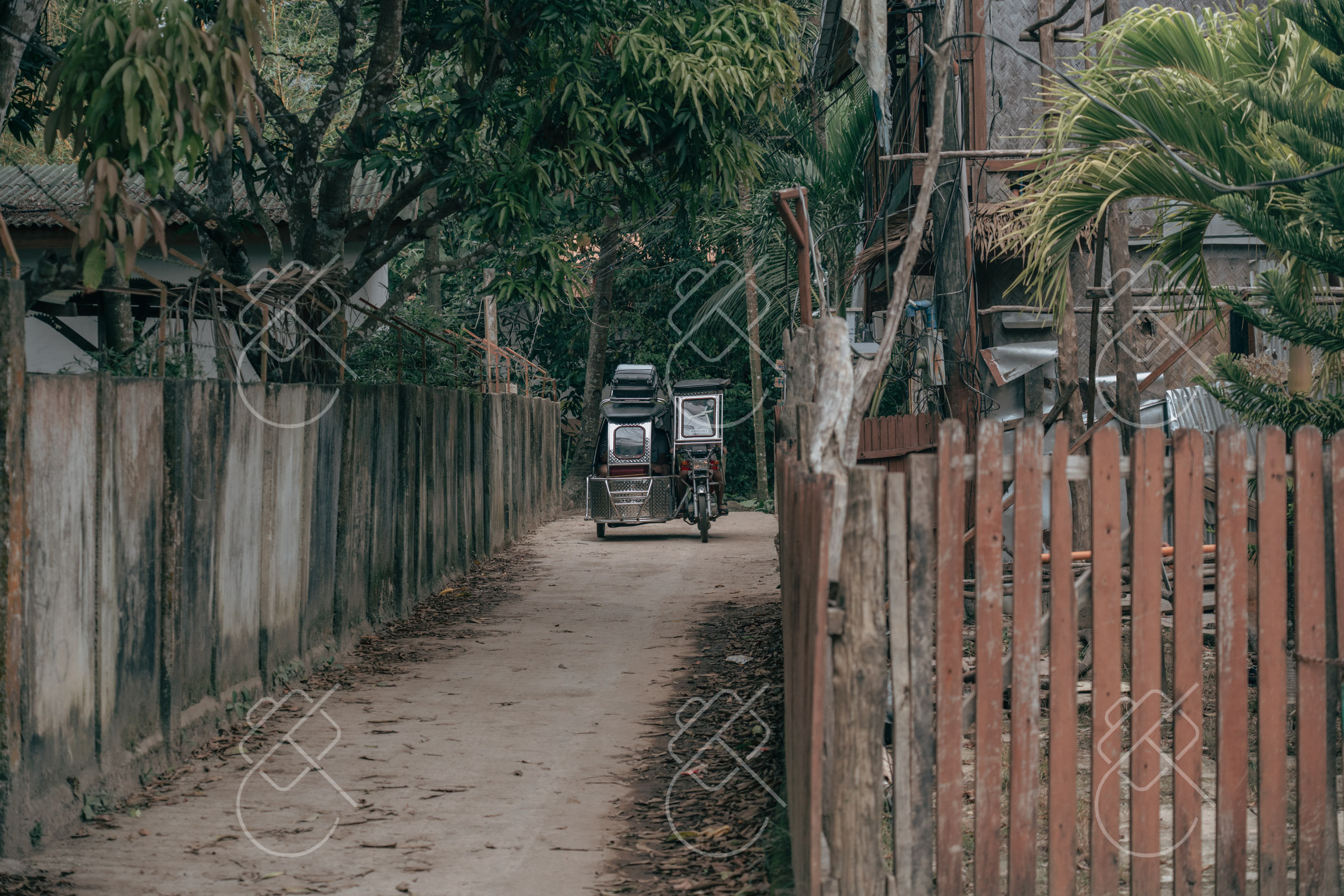
On a jeepney, pass your fare forward with pakiabot po ng bayad and call para po! when you want to get off; exact change helps. CR (comfort room) is the everyday word for toilet in both Tagalog and Philippine English. Expect directions to be given by pointing with the lips rather than a finger.
Outside the Tagalog-speaking regions, the local language changes: in Cebu, for example, most people speak Cebuano. English works everywhere, and Filipino is widely understood.
| English | Filipino (Tagalog) | Say it like | When to use it |
|---|---|---|---|
| Where is ...? | Saan po ang ...? | sa-AN po ang | Polite question to strangers; Nasaan po ang ...? also works. |
| Where is the toilet? | Saan po ang CR? | sa-AN po ang see-AR | CR = comfort room, the everyday word; banyo also understood. |
| Train station | istasyon ng tren | is-tas-YON nang TREN | In Manila people usually just name the line: MRT, LRT. |
| Airport | airport (formal: paliparan) | AIR-port / pa-lee-PA-ran | Say 'airport'; paliparan is the formal Tagalog word. |
| Left | kaliwa | ka-lee-WA | Sa kaliwa = on the left. |
| Right | kanan | KA-nan | Sa kanan = on the right. |
| Straight ahead | diretso (lang) | dee-RET-so lang | Diretso lang = just keep going straight. |
| Please take me to ... | Pakihatid po ako sa ... / Sa ... po | pa-kee-ha-TEED po a-KO sa | Taxi or tricycle; show the address too. |
| Stop here (jeepney, bus, tricycle) | Para po! | PA-ra po | Say it clearly; drivers will not stop unless asked. |
Tagalog numbers are used for counting things, but clock time uses Spanish-derived numbers (alas tres is 3 o'clock). Prices are commonly said in English, and markets and fares mix in Spanish forms such as bente (20) and singkwenta (50).
| English | Filipino (Tagalog) | Say it like | When to use it |
|---|---|---|---|
| 1 | isa | ee-SA | Before a noun it becomes isang (isang tiket). |
| 2 | dalawa | da-la-WA | Counting and prices |
| 3 | tatlo | tat-LO | Counting and prices |
| 4 | apat | A-pat | Counting and prices |
| 5 | lima | lee-MA | Counting and prices |
| 6 | anim | A-nim | Counting and prices |
| 7 | pito | pee-TO | Counting and prices |
| 8 | walo | wa-LO | Counting and prices |
| 9 | siyam | see-YAM | Counting and prices |
| 10 | sampu | sam-POO | Counting and prices |
| 100 | isang daan / sandaan | ee-SANG da-AN / san-da-AN | Both forms are correct. |
| 1,000 | isang libo / sanlibo | ee-SANG LEE-bo / san-LEE-bo | Prices are often said in English instead. |
911 is the national emergency number for police, fire and ambulance. Because English is an official language, English is the safest choice when it matters.
| English | Filipino (Tagalog) | Say it like | When to use it |
|---|---|---|---|
| Help! | Tulong! | TOO-long | Shout it; Tulungan ninyo ako! = help me! |
| Call the police! | Tumawag kayo ng pulis! | too-MA-wag ka-YO nang poo-LEES | Kayo addresses everyone around you. Emergency number: 911. |
| I need a doctor | Kailangan ko ng doktor | ka-ee-LA-ngan ko nang DOK-tor | Pakidala ako sa ospital = please take me to hospital. |
| I'm lost | Naliligaw ako / Naligaw ako | na-lee-lee-GAW a-KO | Naligaw = I got lost; Naliligaw yata ako = I think I'm lost. |
| I don't understand | Hindi ko maintindihan | hin-DEE ko ma-in-tin-DEE-han | Hindi ko naiintindihan is an equally common variant. |
| Do you speak English? | Marunong ka bang mag-Ingles? | ma-ROO-nong ka bang mag-ING-les | Casual form; most people you meet will speak English. |
| Please speak slowly | Pakibagalan po | pa-kee-ba-GA-lan po | Pwedeng pakibagalan? is the question form. |
Mano po. Filipinos greet elders by taking the back of the elder's hand and touching it to their forehead, a sign of respect and a request for a blessing. Visitors aren't expected to do it, but you will see it.
Point with your lips, not your finger. Pointing at people with an index finger can seem rude; Filipinos point with pursed lips or an open hand. "Psst" is a common way to get someone's attention but impolite in formal settings, and a palm-down "come here" wave can come across as rude from a foreigner.
Ate, kuya and po. Address older strangers as ate or kuya and add po. Hosts may insist you eat after you first decline: that is hospitality, not pressure. Schedules often run late ("Filipino time").
For more on what to expect, see things to know before visiting the Philippines.
Yes. The constitution makes English an official language alongside Filipino, and it is widely spoken, so you can travel the whole country in it. Tagalog phrases are a courtesy that people appreciate, not a necessity.
Po is a respect word added to sentences when talking to elders, superiors and strangers, including shop and restaurant staff. Opo is the respectful yes. It has nothing to do with gender: everyone uses it.
Salamat (sa-LA-mat), or salamat po to be respectful. Maraming salamat po means thank you very much. The reply is walang anuman, or casually wala 'yon.
It means stop, please: what you call out on a jeepney, bus or tricycle to get the driver to pull over. Drivers won't stop unless someone asks.
CR stands for comfort room, the everyday word for a toilet in both Tagalog and Philippine English. Saan po ang CR? means where is the toilet?
Practical travel tips, straight to your inbox. Unsubscribe anytime.
Get the best deals on hotels in the Philippines with Trip.com.