Home
About us
Destinations & Country Guides
Travel Guides
Recipes
Featured
Photos As Art
Abstract Prints
Locations
Travel Gear
Travel Resources
Favorites
Photo Framer
Explore Photos
Contact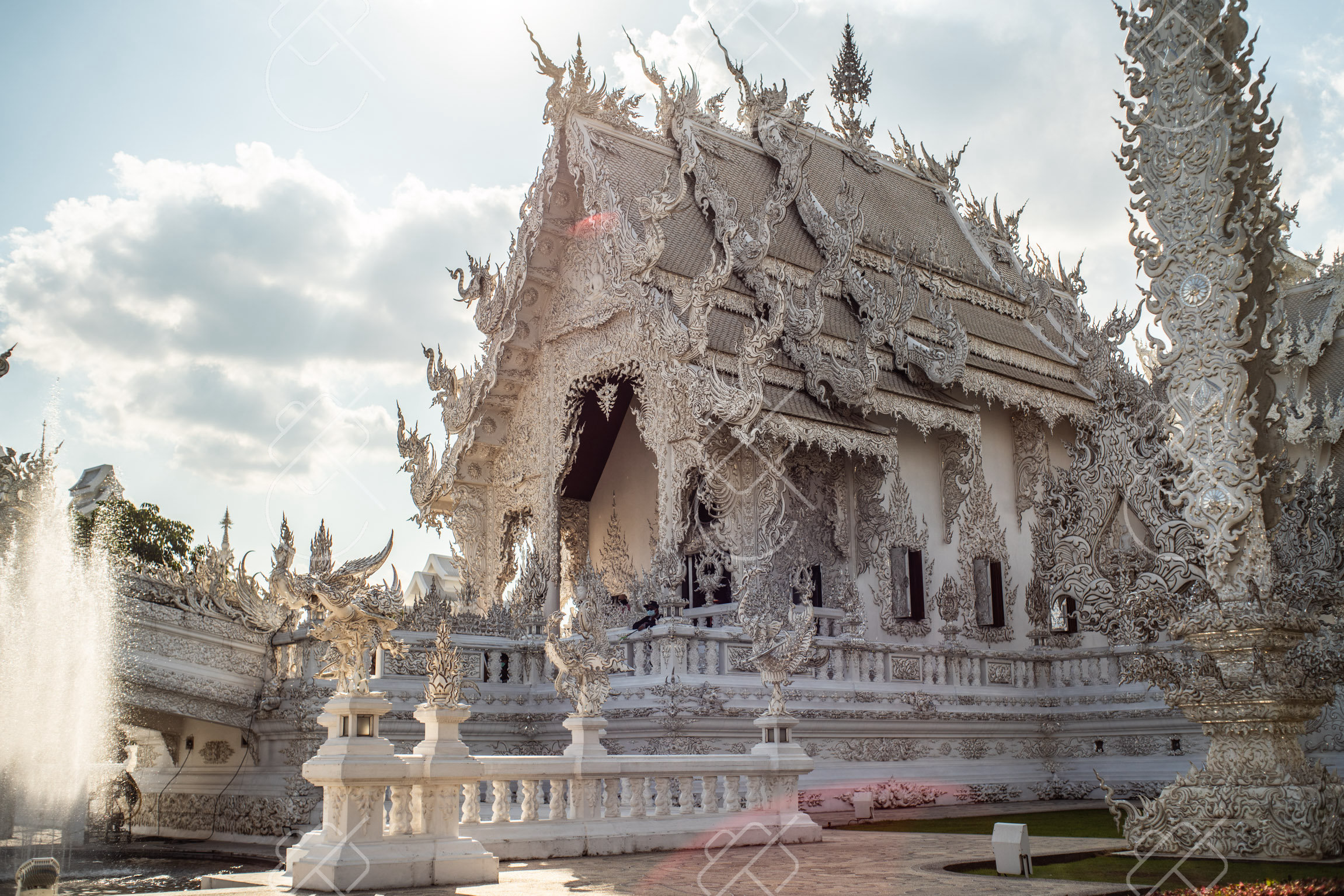 Destinations & Itineraries
By Clever Tourists · Published
Two days, three if you want the hill country. One day covers the three art temples, the White Temple, the Black House and the Blue Temple, plus the clock tower and night bazaar after dark. The second goes north to the Golden Triangle and the Mae Sai border. A third day adds the hills around Doi Mae Salong or Doi Tung, or Chiang Rai's Saturday walking street. We spent 7 days in Chiang Rai, from 28 December 2022 to 4 January 2023, which put New Year there, between six days in Chiang Mai and three in Mae Hong Son. Seven is far more than the sights need. The one length we would not recommend is zero nights: the day trip from Chiang Mai.
• Day trip from Chiang Mai: possible with a driver or tour and an early start, but at about 3 to 3.5 hours each way you rush the temples and miss the town after dark.
• 1 night: the three temples in a day, the clock tower light show and the night bazaar in the evening.
• 2 days: the right amount for most people, as in our Chiang Rai guide: temples on day one, the Golden Triangle and Mae Sai on day two.
• 3 days: add Doi Mae Salong or Doi Tung in the hills, Wat Huay Pla Kang at sunset, and the Saturday Walking Street if your dates allow.
• 4 to 7 days: what we had. Only worth it as a slow base over a holiday, or if you are walking and riding in the hill country around the town.
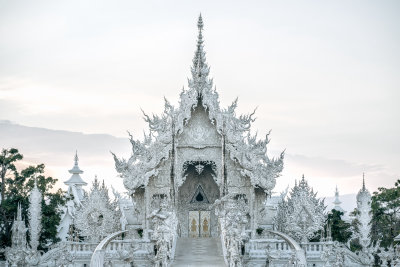
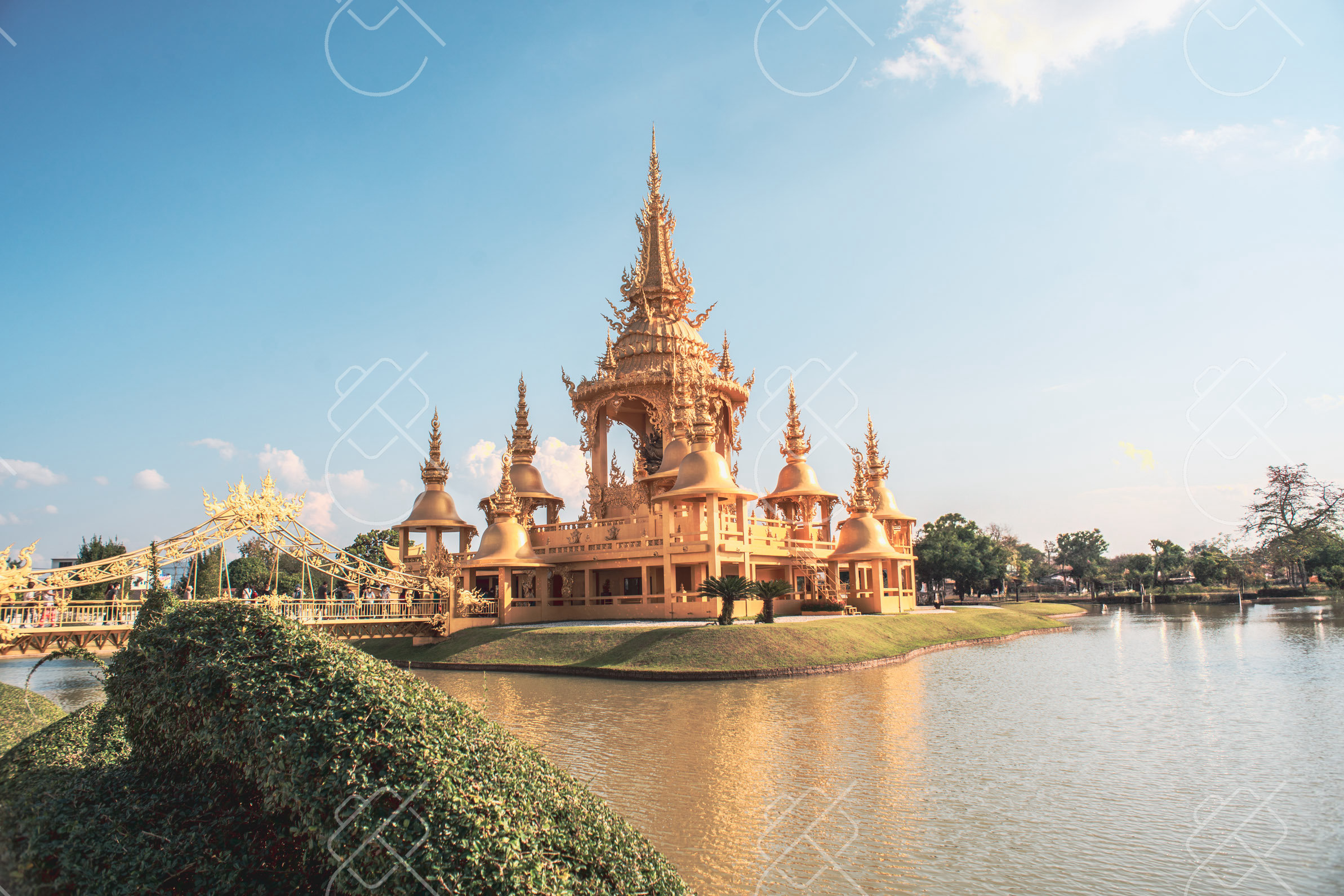
Day 1, the art temples. Be at Wat Rong Khun, the White Temple, about 13 km south of town, for its 8am opening, before tour vans from Chiang Mai arrive around 10am. Foreigners have paid 200 baht since January 2026, and photos are banned inside the ubosot. Give it 60 to 90 minutes. Lunch and khao soi in town, then 13 km north to Baan Dam, the Black House, artist Thawan Duchanee's compound of about 40 dark buildings (around 80 baht, roughly 9am to 5pm). Finish at Wat Rong Suea Ten, the Blue Temple, which is free and open until around 8pm. After dark, watch the light show on the gilded clock tower and eat at the Night Bazaar food court.
Day 2, the Golden Triangle and Mae Sai. Head about 70 km north to Sop Ruak, where the Mekong and Ruak rivers mark the meeting point of Thailand, Laos and Myanmar; the Hall of Opium museum explains the region's history, and longtails run short trips on the Mekong. Stop at the border market in Mae Sai on the way back. Check current rules before planning to cross into Tachileik, since they change often. A hired car is the easy way to link the sites; green local buses from Bus Terminal 1 reach Mae Sai cheaply but do not connect well to Sop Ruak.
Day 3, the hills. Doi Mae Salong, a hilltop town of tea plantations settled by former Chinese Nationalist soldiers, or Doi Tung and its royal gardens. Both are mountain drives, so hire a car and driver. Back in town, Wat Huay Pla Kang, with its nine-tiered pagoda and giant white Guanyin statue just northwest of the center, is best at sunset. On a Saturday, the Saturday Walking Street on Thanalai Road is better for food than the Night Bazaar.
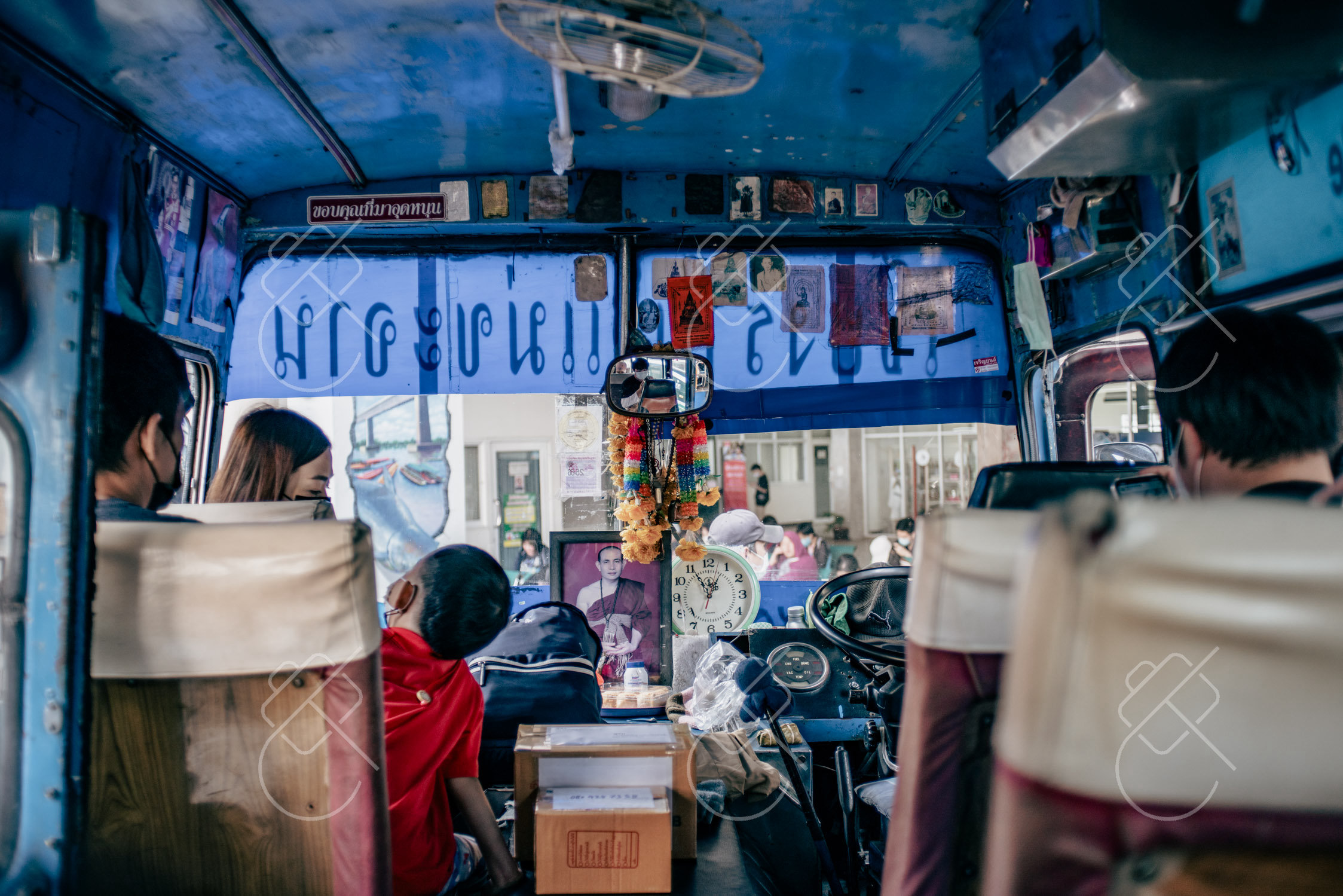
From Chiang Mai, the Green Bus takes about 3 to 3.5 hours. On our route, Chiang Rai came after Chiang Mai (6 days) and before Mae Hong Son (3 days). There is no quick way between those two: most connections go back via Chiang Mai, then take the winding mountain road through Pai. That is why Chiang Rai and Mae Hong Son rarely fit in the same short trip.
In Thailand in 2 weeks, Chiang Rai is a long day out from Chiang Mai, with a suggestion to swap one Chiang Mai night for a night here. In our 6-week Thailand itinerary it is the longest stop in the north. For the Chiang Mai half of the plan, see how many days in Chiang Mai.
Stay in the compact center between the clock tower and the Night Bazaar, close to Bus Terminal 1. Use Grab or a hired driver for the temples, which sit south and north of town; our Grab vs Bolt guide covers the apps.
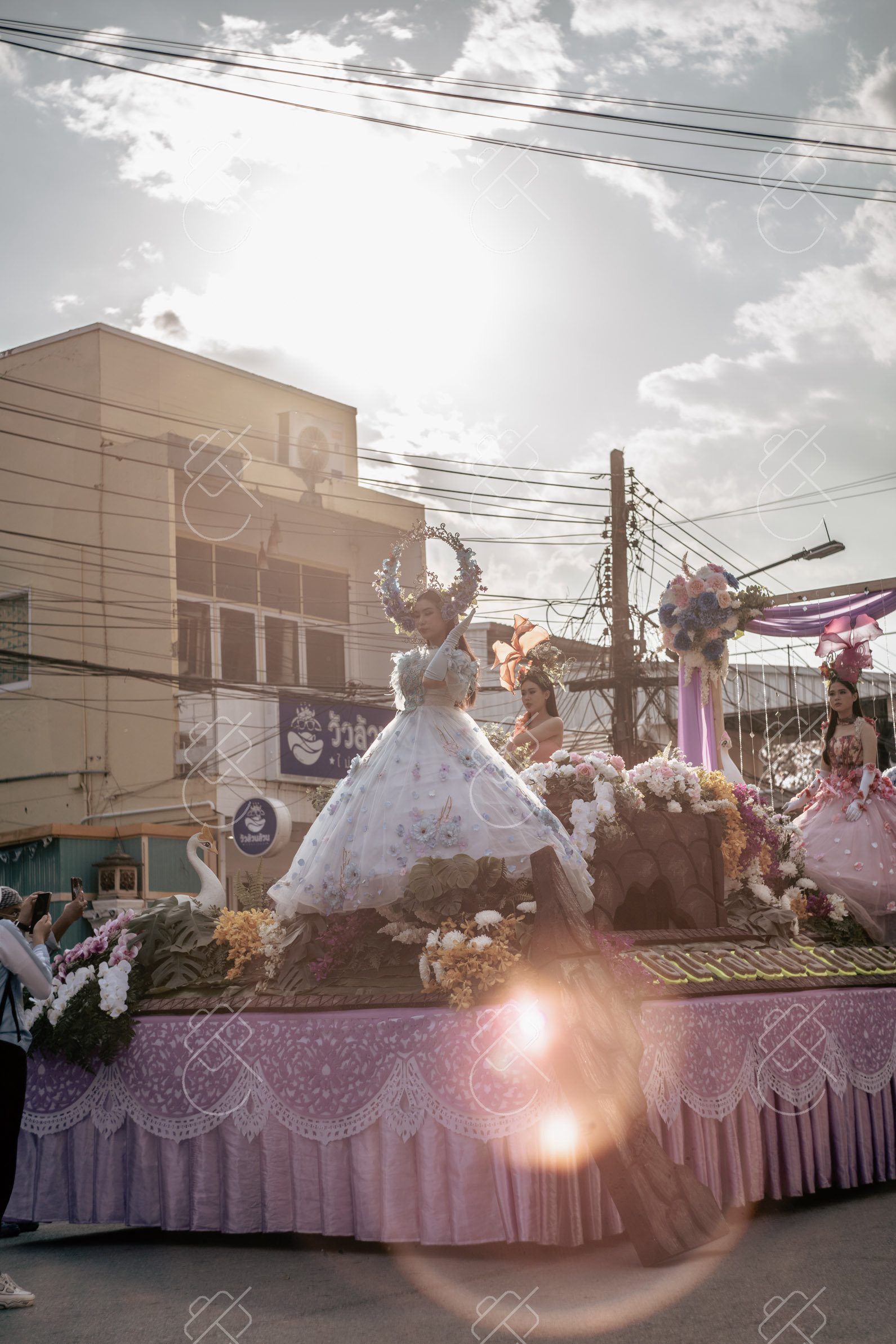
• November to January: dry, sunny and cool, with highs in the high 20s°C and mornings near 10 to 13°C. Our New Year stay fell here. It is peak season, and the clock tower area hosts a countdown party on 31 December, so book early.
• February to April: hot and smoky. Field burning across the region often pushes PM2.5 to unhealthy levels, peaking in March; see our burning season guide, which applies to Chiang Rai too.
• May to October: the rainy season, green and cheaper, wettest in August and September, with occasional flooding along the Kok River.
• Arriving at the White Temple at 11am. You meet every tour van from Chiang Mai. Go at 8am.
• Doing the temples in the wrong order. White Temple first, Black House second, Blue Temple last, when it stays open into the evening and its blues glow under the lights.
• Skipping the dress code. Shoulders and knees covered at all three; see the Thailand temple dress code.
• Assuming you can cross at Mae Sai. Day-crossing rules for foreigners change; check before you plan around it.
• Visiting in March without checking the air. Look at an air-quality app before you book.
Carry small notes for tickets and drivers, and see tipping in Thailand for guides and drivers.
Yes. One day covers the White Temple, the Black House and the Blue Temple plus the clock tower and night bazaar; the second covers the Golden Triangle and Mae Sai.
It is possible, but at about 3 to 3.5 hours each way you rush the temples and miss the town after dark. Stay at least one night.
Around 8am. Foreigners have paid 200 baht since January 2026. Arrive at opening, before tour vans from Chiang Mai around 10am.
About 70 km north, at Sop Ruak. A hired car is the easiest way to combine it with Mae Sai.
Yes, but book early. We spent New Year there; it is peak season, and the clock tower area hosts a countdown party on 31 December.
Get our new Thailand guides and practical tips by email: where to stay, what to eat, what things cost and the rules that catch travelers out.
Free. No spam, only new guides and tips.
Search verified local fleets with low security deposits and exact model delivery on Localrent.
Get the best deals on hotels in Thailand with Booking.com.