 Culture & etiquette
By Clever Tourists · Published
The one thing that makes Vietnamese sound natural is the pronoun: locals don't say a neutral "hello", they say chào plus a word chosen by your age and gender, such as chào anh to a man or chào chị to a woman. Vietnamese uses the Latin alphabet with accent marks, and it has six tones in the northern standard, so the same syllable can mean different things. Don't let that stop you: short phrases with a smile and a pointed finger work, and showing written words on your phone gets around most tone mix-ups. The respellings below follow Hanoi pronunciation, with the southern difference noted where it matters.
This page contains affiliate links. If you book or buy through them we may earn a commission, at no extra cost to you.
Xin chào is the phrasebook hello. It is correct and polite, but it sounds a little stiff. What people actually say is chào plus a pronoun: anh for a man around your age or a bit older, chị for a woman, em for someone clearly younger, and cô, chú, bác, ông or bà for people of your parents' or grandparents' generation. If in doubt, anh and chị are flattering safe choices.
The same chào plus pronoun works as goodbye. Tạm biệt is the dictionary goodbye and sounds formal, and chào buổi sáng (good morning) is mostly a translation of the English phrase rather than something locals say.
| English | Vietnamese | Say it like | When to use it |
|---|---|---|---|
| Hello (everyday) | Chào anh / Chào chị / Chào em | chow AHN / chow CHEE / chow EM | Chào + pronoun: anh (man), chị (woman), em (younger person) |
| Hello (textbook) | Xin chào | sin CHOW | Polite and safe, but sounds a bit stiff or formal |
| Hello to an older person | Chào cô / Chào chú / Chào bác / Chào ông / Chào bà | chow GOH / chow CHOO / chow BAHK / chow OHM / chow BAH | Cô/chú: parents' age; bác: older; ông/bà: grandparents' age |
| Good morning | Chào buổi sáng | chow boo-ee SAHNG | Textbook; locals usually just say chào + pronoun |
| How are you? | Anh / Chị khỏe không? | ahn / chee KWEH khom | Swap in the right pronoun; bạn (friend) works for peers |
| I'm fine, thank you | Tôi khỏe, cảm ơn | toy KWEH, gahm UHN | Standard reply; keep it short |
| Nice to meet you | Rất vui được gặp anh / chị | zuht VOO-ee duh-uhk gap AHN / CHEE | Polite; bạn instead of anh/chị with peers |
| Goodbye | Chào anh / Chào chị (nhé) | chow AHN / chow CHEE (nyeh) | Everyday goodbye is the same chào + pronoun |
| Goodbye (formal) | Tạm biệt | tahm bee-ET | Formal or textbook; rarely said in real conversation |
| See you again | Hẹn gặp lại | hen gap LIE | Friendly, works in most settings |
Dạ is a polite yes and a sign of respect, used everywhere and especially in the south; northerners also say vâng. Put dạ in front of almost anything (dạ không, dạ có) and it sounds softer.
There is no handy word for "excuse me" when you want a waiter. People call out the pronoun plus ơi: em ơi for young staff, anh ơi or chị ơi for older ones. It is normal, not rude. Làm ơn means please, but requests usually start with cho tôi (give me) instead.
| English | Vietnamese | Say it like | When to use it |
|---|---|---|---|
| Please | Làm ơn | lahm UHN | Often left out; requests usually start with cho tôi (give me) |
| Thank you | Cảm ơn anh / chị | gahm uhn AHN / CHEE | Add the pronoun to sound warmer; south often says cám ơn |
| Thank you very much | Cảm ơn nhiều / Cảm ơn rất nhiều | gahm uhn NYEW / gahm uhn zuht NYEW | Warm, fine anywhere |
| You're welcome | Không có gì | khom gaw ZEE | Literally 'it's nothing'; south: khom gaw YEE |
| Sorry | Xin lỗi | sin LOY | For a real mistake; also a polite 'excuse me' |
| Excuse me (getting attention) | Anh ơi / Chị ơi / Em ơi | ahn UH-ee / chee UH-ee / em UH-ee | How locals call staff or strangers; em ơi for young staff |
| Yes (polite) | Dạ / Vâng | zah (yah in the south) / vuhng | Dạ is used everywhere, vâng is northern; both show respect |
| Yes (I have / there is) | Có | GAW | Answer to 'do you have...?' questions; dạ có is more polite |
| No | Không | khom | Dạ không is softer and more polite |
| No, thank you | Không, cảm ơn | khom, gahm UHN | Handy for vendors and touts; smile and keep walking |
At casual places, hold up two fingers and say hai người (two people). Point at the dish and say cho tôi cái này. When you want to pay, catch someone's eye and call em ơi, tính tiền: that is the everyday way to ask for the bill, while thanh toán is the formal word.
Toasts are a group count: một, hai, ba, dzô! (one, two, three, drink) and everyone drinks together. Trăm phần trăm, "100 percent", means finish the glass. Central Vietnam, around Huế, cooks hotter than the north, so không cay (not spicy) is useful there. Chay means vegetarian food.
| English | Vietnamese | Say it like | When to use it |
|---|---|---|---|
| A table for two, please | Cho tôi một bàn cho hai người | chaw toy moht BAHN chaw hai NGOO-ee | At casual places just say hai người and hold up two fingers |
| Can I see the menu? | Cho tôi xem thực đơn | chaw toy sem TUHK duhn | Many places just say menu (cho tôi xem menu) |
| This one, please | Cho tôi cái này | chaw toy kai NIGH | Point at the dish or picture |
| Not spicy | Không cay | khom KAI | Useful in Central Vietnam (Huế) where food runs hot |
| A little spicy | Ít cay | eet KAI | Some heat, less than usual |
| Delicious! | Ngon quá! | ngawn KWAH | Say it to the cook; ngon lắm also works |
| Cheers! | Một, hai, ba, dzô! | moht, hai, bah, ZOH (YOH in the south) | Group count of 'one, two, three, drink'; everyone drinks on dzô |
| Bottoms up | Trăm phần trăm | chahm fuhn CHAHM | Means '100 percent': finish your glass |
| The bill, please | Em ơi, tính tiền! | em UH-ee, ting TEE-en | Tính tiền is everyday; thanh toán (tahn TWAHN) is more formal |
| I'm vegetarian | Tôi ăn chay | toy ahn CHAI | Say it before ordering; chay means vegetarian food |
| I'm allergic to ... | Tôi bị dị ứng ... | toy bee zee UHNG | Add the food; show it written down to be safe |
Practical travel tips, straight to your inbox. Unsubscribe anytime.
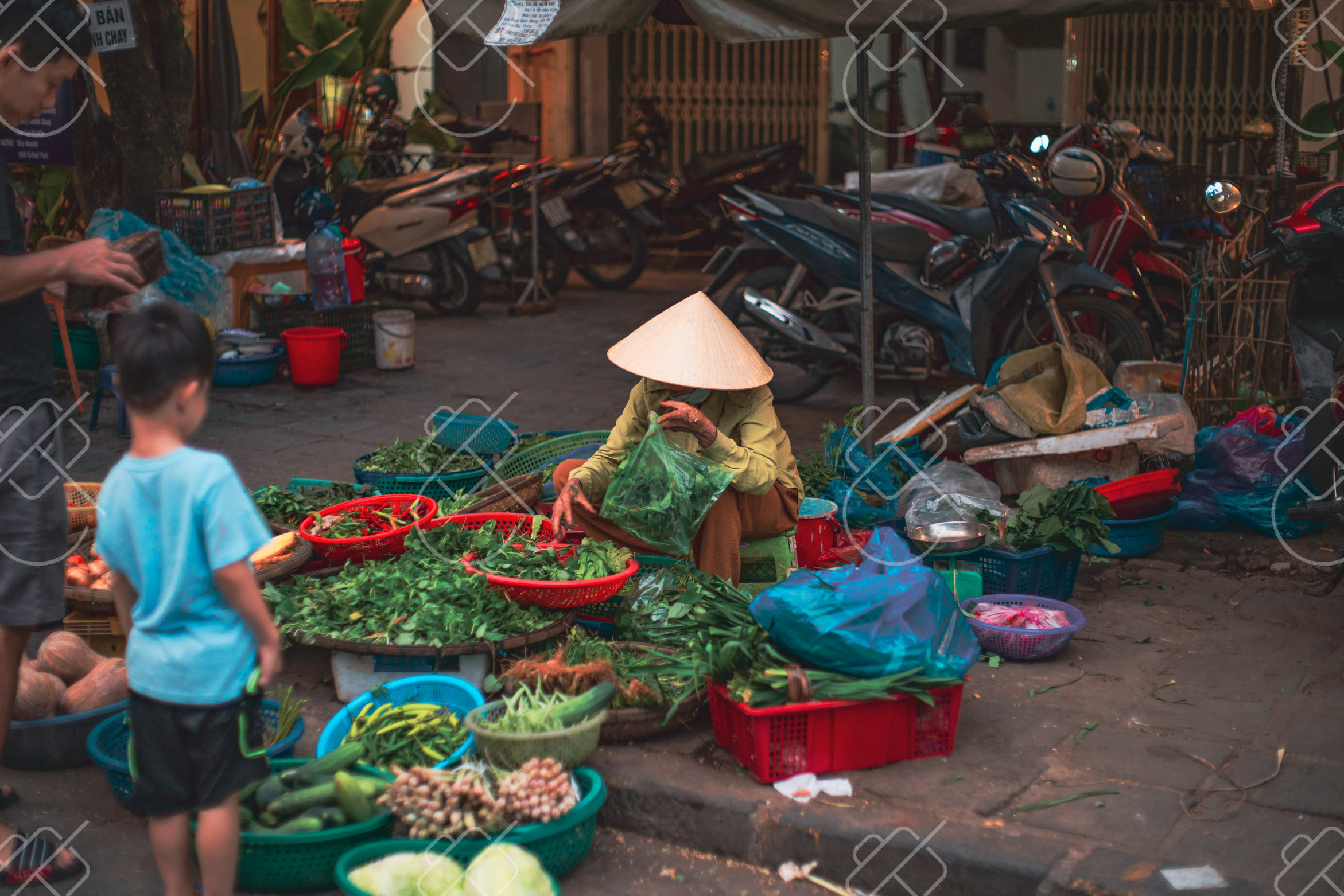
Bargaining is normal at traditional markets, souvenir and clothing stalls without price tags, and with unmetered transport. It is not done in restaurants, supermarkets, fixed-price shops or for official tickets. Keep it friendly, smile, and walk away politely if the price doesn't work.
Too expensive is đắt quá in the north and mắc quá in the south. Prices run into thousands of đồng, so mentally drop three zeros. Cash is what markets and street food stalls want; hotels, malls and chains usually take cards.
| English | Vietnamese | Say it like | When to use it |
|---|---|---|---|
| How much is this? | Cái này bao nhiêu tiền? | kai nigh bow nyew TEE-en | Point at the item; bao nhiêu? alone also works |
| Too expensive! | Đắt quá! | daht KWAH | North; the south says mắc quá (mahk KWAH). Say it smiling |
| Can you lower the price? | Bớt được không? | buht duh-uhk KHOM | Markets and stalls only; bớt chút đi = 'a bit less, please' |
| Can you give me a discount? | Giảm giá được không? | zahm zah duh-uhk KHOM | More formal than bớt; markets, unmetered taxis |
| I'll take this one | Tôi lấy cái này | toy LAY kai nigh | Closes the deal; được, tôi lấy = 'OK, I'll take it' |
| Can I pay by card? | Tôi thanh toán bằng thẻ được không? | toy tahn twahn bahng TEH duh-uhk khom | Hotels, malls, chains: usually yes; street stalls: cash |
| Cash | Tiền mặt | tee-en MAHT | Needed at markets, street food and small shops |
Pronunciation changes most between north and south: in Hanoi, d, gi and r sound like "z"; in Saigon, d and gi sound like "y" and v often does too. That is why rẽ trái (turn left) sounds like "zeh chai" in Hanoi. For taxis and Grab bikes, showing the address on your phone avoids most tone mix-ups.
| English | Vietnamese | Say it like | When to use it |
|---|---|---|---|
| Where is ...? | ... ở đâu? | ... uh DOH | Put the place first: sân bay ở đâu? |
| Where is the toilet? | Nhà vệ sinh ở đâu? | nyah vay SING uh doh | Phòng vệ sinh also used; signs say WC |
| Train station | Ga tàu / Nhà ga | gah TOW / nyah GAH | Ga tàu hỏa is the full 'railway station' |
| Airport | Sân bay | suhn BAI | Same everywhere |
| Turn left | Rẽ trái | zeh CHAI | Hanoi r sounds like z, tr like ch |
| Turn right | Rẽ phải | zeh FAI | Phải also means 'correct', context makes it clear |
| Go straight | Đi thẳng | dee TAHNG | Use with taxi and motorbike drivers |
| Please take me to this address | Cho tôi đến địa chỉ này | chaw toy den DEE-uh chee nigh | Show the address on your phone at the same time |
| Stop here | Dừng ở đây | zuhng uh DAY (yuhng in the south) | For taxis and Grab bikes; dừng lại ở đây also common |
Thousand is nghìn in the north and ngàn in the centre and south, and both are understood everywhere. Prices are said in thousands of đồng, and trăm on its own is everyday slang for 100,000 đồng. Tones matter even here: năm (five) and nấm (mushroom) differ only in tone.
| English | Vietnamese | Say it like | When to use it |
|---|---|---|---|
| 1 | Một | moht | Low, heavy tone |
| 2 | Hai | hai | Level tone |
| 3 | Ba | bah | Level tone |
| 4 | Bốn | bohn | Rising tone |
| 5 | Năm | nahm | Level tone; also means 'year' |
| 6 | Sáu | sow | Rising tone |
| 7 | Bảy | bay | Dipping tone |
| 8 | Tám | tahm | Rising tone |
| 9 | Chín | chin | Rising tone |
| 10 | Mười | MUH-ee | Falling tone |
| 100 | Một trăm | moht CHAHM | Trăm alone is slang for 100,000 đồng |
| 1,000 | Một nghìn / Một ngàn | moht NGIN / moht NGAHN | Nghìn in the north, ngàn in the centre and south |
The emergency numbers are 113 for police, 114 for fire and rescue and 115 for an ambulance. Operators generally speak Vietnamese only, so ask your hotel or a local to call if you can. Locals call the police công an; cảnh sát is also understood.
| English | Vietnamese | Say it like | When to use it |
|---|---|---|---|
| Help! | Cứu tôi với! | KUH-oo toy VUH-ee | Real emergency; giúp tôi với (zoop toy vuh-ee) is 'help me' in general |
| Call the police! | Hãy gọi cảnh sát giúp tôi! | hai goy kahn SAHT zoop toy | Locals usually say công an (gohng AHN) for police |
| I need a doctor | Tôi cần bác sĩ | toy kuhn bahk SEE | Bệnh viện (beng vee-en) = hospital |
| I'm lost | Tôi bị lạc | toy bee LAHK | Show a map or hotel card |
| I don't understand | Tôi không hiểu | toy khom HEE-yoo | Polite; add dạ at the start to soften |
| Do you speak English? | Anh / Chị có nói tiếng Anh không? | ahn / chee gaw noy tee-eng AHN khom | Bạn có... works with younger people |
| Please speak slowly | Xin anh / chị nói chậm hơn | sin ahn / chee noy CHUHM huhn | Literally 'please speak slower' |
Pick a pronoun, not "you". Vietnamese has no neutral word for you; people choose kinship terms by relative age and gender, and someone may ask your age early on to get it right. It is not nosy, it is grammar.
Use both hands. Give and receive money, gifts and business cards with both hands, or the right hand supported by the left. Greet older people first.
Don't touch heads, and don't make a scene. Never touch anyone's head, including a child's. Raised voices and public arguments cause loss of face for everyone involved and rarely get a better result, including when bargaining.
Handshakes are softer than in the West, and a slight nod with your greeting is polite. See what is considered rude in Vietnam for the customs that matter more than vocabulary.
Chào plus a pronoun: chào anh (chow AHN) to a man, chào chị (chow CHEE) to a woman, chào em to someone younger. Xin chào is correct but sounds stiff, and the same chào plus pronoun also works as goodbye.
Cảm ơn (gahm UHN), ideally with a pronoun: cảm ơn anh or cảm ơn chị. Cảm ơn nhiều means thank you very much. In the centre and south you will often hear it said as cám ơn.
Call em ơi, tính tiền! (em UH-ee, ting TEE-en). Em ơi gets a young server's attention and tính tiền is the everyday word for the bill; thanh toán is the formal version.
Yes at traditional markets, souvenir and clothing stalls without price tags, and with unmetered transport. Not in restaurants, supermarkets, fixed-price shops or for official tickets. Bớt được không? asks whether they can lower the price.
Dạ is a polite yes and a respect particle. Saying it before an answer (dạ không, dạ có) makes it softer and more polite; it is used everywhere and especially in the south.
Practical travel tips, straight to your inbox. Unsubscribe anytime.
Find a place to stay in Vietnam on Booking.com.