 Culture & etiquette
By Clever Tourists · Published
The most important thing in Thai isn't a word, it's the ending: men finish polite sentences with khrap (the "krub" you hear) and women with kha, and adding it to almost anything you say to a stranger makes it polite. Thai has its own script and five tones, so the respellings below are approximations; a smile and a pointed finger cover a lot. English is spoken at hotel desks and in tourist businesses, but overall proficiency is low: Thailand ranked 116th of 123 countries in the 2025 EF English Proficiency Index. We spent six weeks in Thailand over December 2022 and January 2023, from Bangkok up to Chiang Rai and down to Khao Sok and Ao Nang, and sawatdi, khop khun and mai phet were the words we used every day.
This page contains affiliate links. If you book or buy through them we may earn a commission, at no extra cost to you.
Sawatdi covers hello and goodbye at any time of day. Time-specific greetings such as arun sawat (good morning) exist, but they are formal and rarely spoken. To someone older or senior, a sawatdi usually comes with a wai (palms together, slight bow); friends mostly just wave.
La kon is said only by the person leaving and sounds final, so the everyday goodbye is another sawatdi or jer kan mai (see you).
| English | Thai | Say it like | When to use it |
|---|---|---|---|
| Hello / Goodbye | สวัสดี + ครับ/ค่ะ (sawatdi khrap / sawatdi kha) | sa-wat-DEE krup / sa-wat-DEE kaa | Hello and goodbye, any time of day. Men khrap, women kha. |
| Good morning | อรุณสวัสดิ์ (arun sawat) | a-run sa-WAT | Formal or written; in speech, sawatdi works all day. |
| How are you? | สบายดีไหม + ครับ/คะ (sabai di mai) | sa-bai dee MAI krup / KA | Friendly check-in. Women use high-tone kha (คะ) on questions. |
| I'm fine | สบายดี + ครับ/ค่ะ (sabai di) | sa-bai DEE krup / kaa | Standard reply; add khrap or kha. |
| Nice to meet you | ยินดีที่ได้รู้จัก + ครับ/ค่ะ (yin di thi dai ru jak) | yin-dee tee dai roo-JAK | Polite, for first meetings. |
| See you (later) | เจอกันใหม่ (jer kan mai) | jer gan MAI | Casual goodbye among friends and people you'll see again. |
| Goodbye (when you are leaving) | ลาก่อน (la kon) | laa GORN | Said only by the person leaving; sawatdi is the everyday goodbye. |

Add khrap (men) or kha (women) to the end of almost every sentence with strangers. The ending follows the speaker's gender, not the listener's. Women use a falling-tone ค่ะ on statements and a high-tone คะ on questions. In casual speech men often shorten khrap to khap.
Thais rarely say a separate word for please. Instead they ask with kho ... noi (could I have ... a little), and karuna is the formal please of signs and announcements. To call staff, people say nong to someone younger or phi to someone older rather than "excuse me". Mai pen rai (never mind, no problem) is used constantly.
| English | Thai | Say it like | When to use it |
|---|---|---|---|
| Polite ending (men) | ครับ (khrap) | KRUP (casually KUP) | Men add it to almost every sentence with strangers. |
| Polite ending (women) | ค่ะ / คะ (kha / khá) | KAA (falling) / KA (high, on questions) | Women: ค่ะ on statements, คะ on questions. |
| Could I have ..., please? | ขอ ... หน่อย + ครับ/ค่ะ (kho ... noi) | KOR ... NOY | Everyday way to ask for things; how Thais really say please. |
| Please (formal) | กรุณา (karuna) | ga-roo-NAA | Formal, mostly on signs and announcements. |
| Thank you | ขอบคุณ + ครับ/ค่ะ (khop khun khrap / kha) | kop-KOON krup / kaa | Standard polite thanks for anyone. |
| Thank you very much | ขอบคุณมาก + ครับ/ค่ะ (khop khun mak) | kop-koon MAAK | Warmer thanks; mak means very. |
| You're welcome / No problem | ไม่เป็นไร (mai pen rai) | mai pen RAI | Also never mind, it's fine. Mai is falling tone. |
| Sorry / Excuse me | ขอโทษ + ครับ/ค่ะ (kho thot) | kor-TOHT krup / kaa | Apologising, squeezing past, or getting someone's attention. |
| Excuse me (calling a waiter or vendor) | น้อง / พี่ + ครับ/คะ (nong / phi) | NONG krup / PEE ka | Nong for someone younger, phi for someone older. |
| Yes (that's right) | ใช่ + ครับ/ค่ะ (chai) | CHAI krup / kaa | Confirms a fact. Khrap or kha alone also means yes. |
| No (that's not right) | ไม่ใช่ (mai chai) | mai CHAI | Corrects a fact, not for refusing offers. |
| No thanks (I don't want it) | ไม่เอา + ครับ/ค่ะ (mai ao) | mai AO krup / kaa | Direct refusal to touts; mai pen rai khrap/kha is softer. |
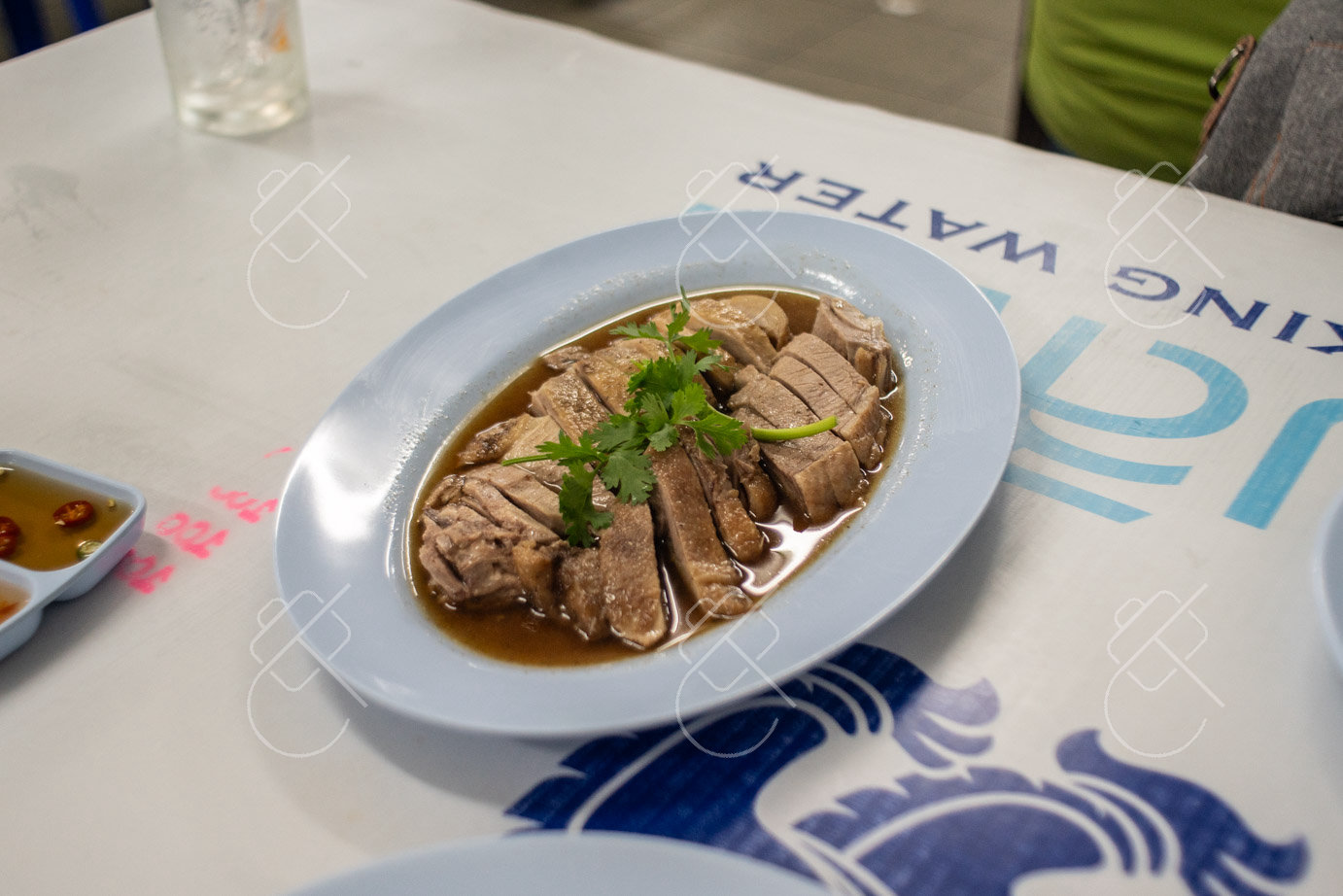
Most dishes can be ordered mai phet (not spicy) or phet nit noi (a little spicy), but a cook's idea of "a little" varies, so say mai phet if you have low heat tolerance. Chek bin is the standard way to ask for the bill.
Mangsawirat means vegetarian, no meat. Jay (เจ) is a stricter Chinese-Buddhist diet with no meat, eggs, dairy or pungent vegetables such as garlic and onion; jay restaurants hang yellow flags marked เจ. Fish sauce goes into most savoury dishes, so vegetarians should add mai sai nam pla.
| English | Thai | Say it like | When to use it |
|---|---|---|---|
| Two people (table for two) | สองคน + ครับ/ค่ะ (song khon) | song KON krup / kaa | Say the number of people; holding up fingers helps. |
| The menu, please | ขอเมนูหน่อย + ครับ/ค่ะ (kho menu noi) | kor meh-noo NOY | Polite request in any restaurant. |
| This one, please | เอาอันนี้ + ครับ/ค่ะ (ao an ni) | ao an NEE | Point at the menu photo or the dish. |
| Not spicy | ไม่เผ็ด (mai phet) | mai PET | Mai falling, phet low and short; say it clearly. |
| A little spicy | เผ็ดนิดหน่อย (phet nit noi) | pet nit NOY | Mild heat; cooks' idea of a little varies. |
| Delicious! / Very delicious! | อร่อย / อร่อยมาก (aroi / aroi mak) | a-ROY / a-roy MAAK | The compliment cooks and vendors love to hear. |
| Cheers! | ชนแก้ว (chon kaeo) | chon GAEW | Literally clink glasses. Chaiyo is for weddings, birthdays. |
| The bill, please | เช็กบิล + ครับ/ค่ะ (chek bin) | chek BIN krup / kaa | Most common. Also kep tang duai. Often spelled เช็คบิล. |
| I'm vegetarian (no meat) | ผม/ฉัน กินมังสวิรัติ (phom/chan kin mangsawirat) | pom / chan gin mang-sa-wi-RAT | Means no meat; phom = I (men), chan = I (women). |
| I eat jay (strict vegan-style) | ผม/ฉัน กินเจ (phom/chan kin jay) | pom / chan gin JAY | Stricter: no meat, eggs, dairy, garlic or onion. |
| No fish sauce | ไม่ใส่น้ำปลา (mai sai nam pla) | mai sai naam PLAA | Fish sauce goes into most savoury dishes; ask if strict. |
| I'm allergic to peanuts | ผม/ฉัน แพ้ถั่วลิสง (phom/chan phae thua lisong) | pom / chan PAE tua li-SONG | Swap in your allergen after phae (allergic to). |

Practical travel tips, straight to your inbox. Unsubscribe anytime.
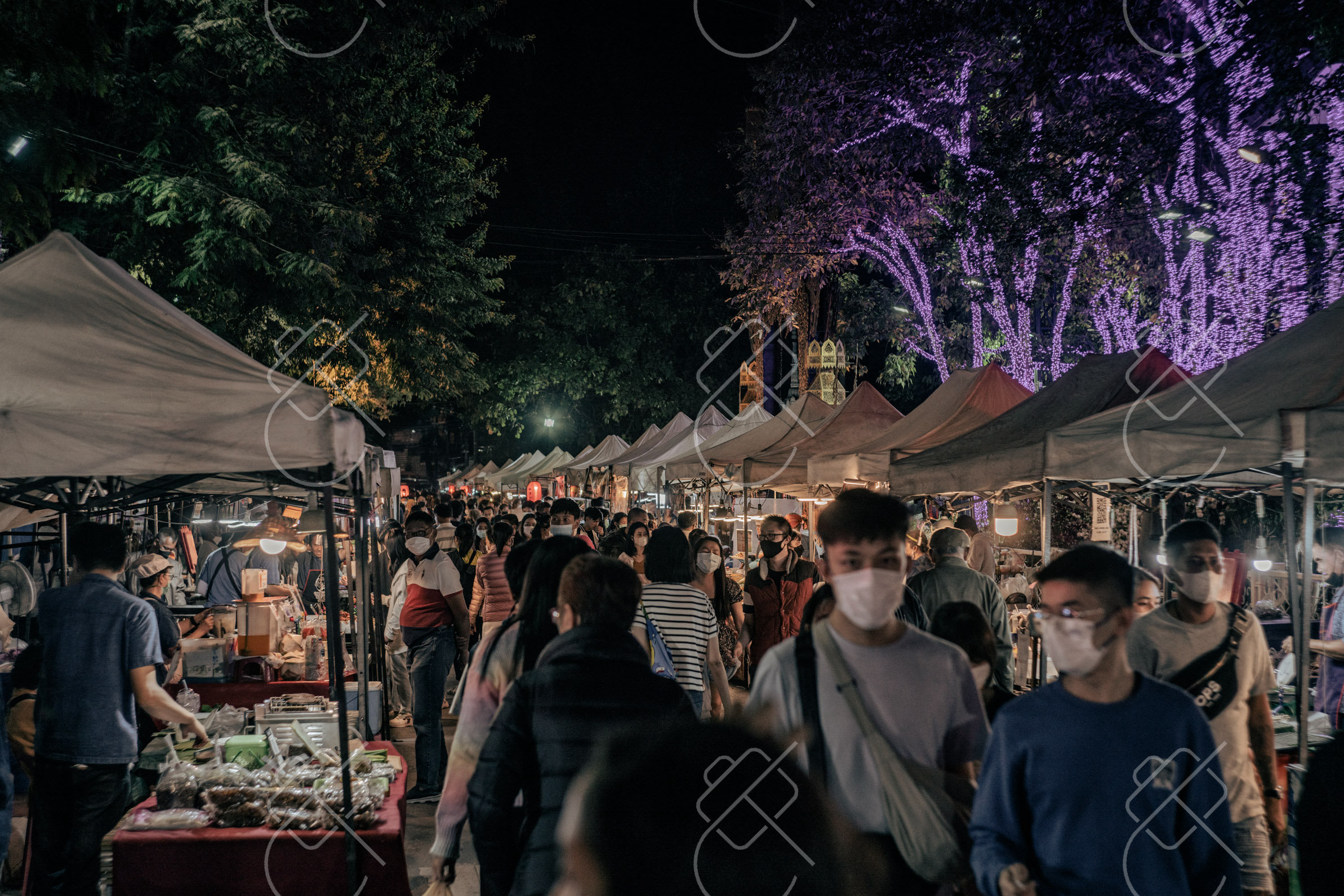
Bargaining is expected at markets, street stalls and small owner-run shops, and for some tuk-tuks and songthaews. It is not done in malls, brand stores, 7-Eleven and other convenience stores, restaurants, or with app and metered transport.
Check what neighbouring stalls charge first, keep it friendly, and only bargain if you intend to buy. Phaeng pai (too expensive) said with a smile opens a negotiation; it isn't an insult. Keep small notes for markets and street food.
| English | Thai | Say it like | When to use it |
|---|---|---|---|
| How much is this? | นี่เท่าไหร่ + ครับ/คะ (ni thao rai) | nee tao RAI krup / KA | Colloquial thao rai; written form is เท่าไร. |
| Too expensive | แพงไป (phaeng pai) | paeng PAI | Say it smiling; it opens bargaining, not an argument. |
| Can you lower the price? | ลดได้ไหม / ลดราคาได้ไหม + ครับ/คะ (lot dai mai / lot rakha dai mai) | lot dai MAI krup / KA | Markets and stalls only; not malls, 7-Eleven or restaurants. |
| OK, I'll take it | ตกลง เอา + ครับ/ค่ะ (tok long, ao) | tok LONG, AO krup / kaa | Closes the deal; tok long means agreed, OK. |
| Cash | เงินสด (ngoen sot) | ngern SOT | Keep small notes for markets and street food. |
| Do you take credit cards? | รับบัตรเครดิตไหม + ครับ/คะ (rap bat khredit mai) | rap bat kreh-DIT MAI | Worth asking outside malls, hotels and tourist shops. |
Taxi and tuk-tuk drivers often can't read English, so keep the address written in Thai on your phone, point at it and say pai thi ni (go here). In Thai the place comes first and yu thi nai (where is) after it: hong nam yu thi nai means "where is the toilet?"
| English | Thai | Say it like | When to use it |
|---|---|---|---|
| Where is ...? | ... อยู่ที่ไหน + ครับ/คะ (... yu thi nai) | ... yoo tee NAI | Put the place first, then yu thi nai. |
| Where is the toilet? | ห้องน้ำอยู่ที่ไหน + ครับ/คะ (hong nam yu thi nai) | hong NAAM yoo tee NAI | Hong nam means bathroom or toilet. |
| Train station | สถานีรถไฟ (sathani rot fai) | sa-taa-nee rot FAI | Use with yu thi nai, or tell a driver. |
| Airport | สนามบิน (sanam bin) | sa-naam BIN | Everyday word for airport. |
| Turn left | เลี้ยวซ้าย (liao sai) | lee-ow SAI | Directions for taxi, tuk-tuk or motorbike taxi drivers. |
| Turn right | เลี้ยวขวา (liao khwa) | lee-ow KWAA | Khwa has a rising tone. |
| Straight ahead | ตรงไป (trong pai) | trong PAI | Keep going straight. |
| Please take me here (show the address) | ไปที่นี่ + ครับ/ค่ะ (pai thi ni) | pai tee NEE krup / kaa | Point at the address on your phone; pai = go. |
| Stop here | จอดที่นี่ + ครับ/ค่ะ (jot thi ni) | jot tee NEE krup / kaa | To taxi drivers; add chuai ... noi to soften. |
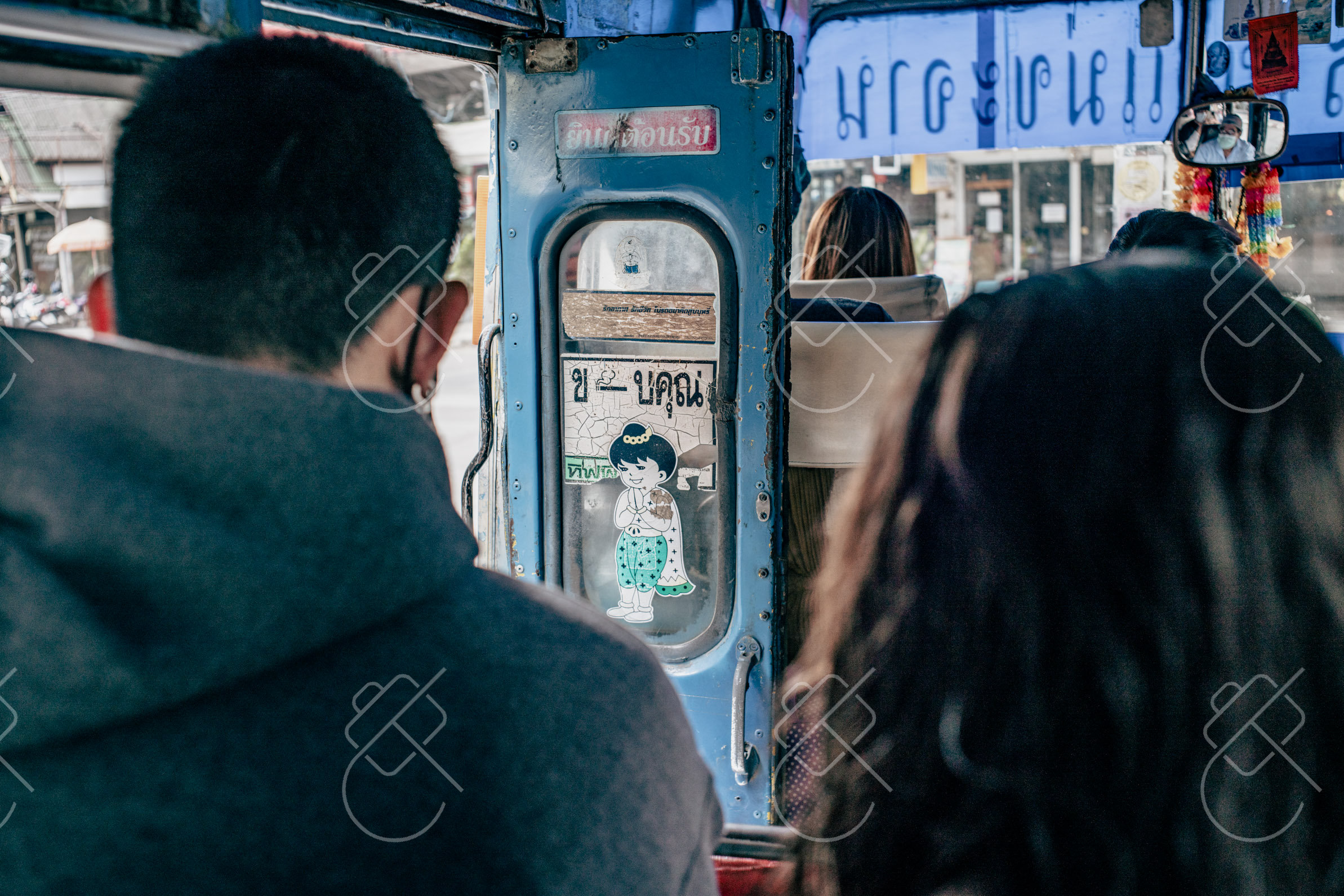
Thailand has its own digits (๑, ๒, ๓), but everyday prices use the same numerals as English. The main exception is places with two-tier pricing, where the price for Thai residents is sometimes written in Thai digits. In compound numbers, one becomes et, so 11 is sip et; 20 is yi sip, not song sip.
| English | Thai | Say it like | When to use it |
|---|---|---|---|
| 1 | หนึ่ง (nueng) | NEUNG | Thai digit ๑. Often said nueng or nung casually. |
| 2 | สอง (song) | SONG | Thai digit ๒. Rising tone. |
| 3 | สาม (sam) | SAAM | Thai digit ๓. |
| 4 | สี่ (si) | SEE | Thai digit ๔. |
| 5 | ห้า (ha) | HAA | Thai digit ๕. |
| 6 | หก (hok) | HOK | Thai digit ๖. |
| 7 | เจ็ด (jet) | JET | Thai digit ๗. |
| 8 | แปด (paet) | PAET | Thai digit ๘. |
| 9 | เก้า (kao) | GAO | Thai digit ๙. Unaspirated k, close to g. |
| 10 | สิบ (sip) | SIP | Thai digit ๑๐. 11 is sip et, 20 is yi sip. |
| 100 | ร้อย / หนึ่งร้อย (roi / nueng roi) | ROY / neung ROY | Thai digits ๑๐๐. |
| 1,000 | พัน / หนึ่งพัน (phan / nueng phan) | PAN / neung PAN | Thai digits ๑๐๐๐. |
The Tourist Police hotline, 1155, runs 24 hours and helps visitors in several languages, including with problems like rental deposit disputes. Since English proficiency is low outside tourist businesses, keep the hotline and your hotel's address in Thai on your phone.
| English | Thai | Say it like | When to use it |
|---|---|---|---|
| Help! | ช่วยด้วย (chuai duai) | chuay DUAY | Urgent shout for help. |
| Call the police! | เรียกตำรวจ (riak tamruat) | ree-ak tam-ROO-at | Riak = call for; tamruat = police. |
| Tourist Police (dial 1155) | ตำรวจท่องเที่ยว (tamruat thong thiao) | tam-roo-at tong-TEE-ow | 24-hour hotline 1155; help in several languages. |
| I need a doctor | ต้องการหมอ (tongkan mo) | tong-gaan MOR | Mo is the everyday word for doctor. |
| Hospital | โรงพยาบาล (rong phayaban) | rong pa-yaa-BAAN | Say it to any driver to get taken there. |
| I'm lost | ผม/ฉัน หลงทาง (phom/chan long thang) | pom / chan long TAANG | Phom for men, chan for women. |
| I don't understand | ไม่เข้าใจ + ครับ/ค่ะ (mai khao jai) | mai kao JAI krup / kaa | Polite and useful when Thai comes back fast. |
| Do you speak English? | พูดภาษาอังกฤษได้ไหม + ครับ/คะ (phut phasa angkrit dai mai) | poot paa-saa ang-GRIT dai MAI | Ask before switching to English. |
| Please speak slowly | พูดช้า ๆ หน่อย + ครับ/ค่ะ (phut cha cha noi) | poot chaa-chaa NOY | Cha cha = slowly; noi softens the request. |
The wai. Palms together with a slight bow is a greeting of respect, usually offered first by the younger or junior person; the higher the hands, the more respect. You don't need to wai shop or hotel staff when they wai you; a smile and a nod is the right response.
Head high, feet low. The head is the most respected part of the body and the feet the lowest. Don't touch anyone's head, including children's, don't point your feet at people or Buddha images, and don't rest your feet on tables.
Never criticise or joke about the monarchy. This includes online posts. Under the lèse-majesté law (Section 112 of the Criminal Code) each offence carries 3 to 15 years in prison, and foreigners have been charged. Stand when the royal anthem plays before a film at the cinema.
Keep your cool. A raised voice gets you nowhere in Thailand; mai pen rai and a smile solve more problems. See what is considered rude in Thailand for the customs that matter more than vocabulary.
Krub is how English speakers hear ครับ (khrap), the polite ending men add to sentences. It has no meaning of its own; it makes what you say polite. Women use kha instead. On its own, khrap or kha also works as a polite yes.
Khop khun khrap (kop-KOON krup) if you are a man, khop khun kha (kop-KOON kaa) if you are a woman. Khop khun mak khrap/kha means thank you very much.
Mai phet (mai PET). For a little heat, say phet nit noi, but a cook's idea of a little varies, so stick with mai phet if you don't handle chilli well.
At hotel desks and in tourist businesses, usually yes. Elsewhere it is limited: Thailand ranked 116th of 123 countries in the 2025 EF English Proficiency Index. Keep addresses written in Thai for taxi and tuk-tuk drivers.
No. The ending follows the speaker's gender: men say khrap, women say kha (falling tone on statements, high tone on questions). It does not change with who you are talking to.
Practical travel tips, straight to your inbox. Unsubscribe anytime.
See Thailand hotel photos and reviews on Trip.com.