 Etiquette & culture
By Clever Tourists · Published
Doi Suthep requires covered shoulders and knees, shoes off on the temple terrace, and a fee of 30 baht for foreigners according to most 2026 guides (some quote 50 baht). The cable car is about 20 baht each way, and the alternative is the 309-step Naga staircase. Wat Phra That Doi Suthep sits on the mountain about 15 km from Chiang Mai and roughly 1,000 metres above sea level. We spent 6 days in Chiang Mai in December 2022, the cool-dry season when the mountain views are clearest. This page covers the dress rules, costs, hours and how to get there. It follows our general temple dress code in Thailand page but is specific to the mountain.
Free toolConvert to your own currency at live rates →Live mid-market rates for all 17 currencies we used, so you can see what a price actually costs.• Dress code: shoulders and knees covered, for men and women. Skip tank tops, shorts and short skirts.
• Shoes: off before the inner terrace and shrine floors, not for the whole site.
• Entry fee: 30 baht for foreigners in most 2026 guides. Some sources quote 50 baht, and one explains it as 30 baht entry plus the 20 baht cable car. Pay at the ticket booth and check the sign.
• Cable car: about 20 baht each way. The staircase is free and has 306 to 309 steps depending on who counts.
• Hours: reports range from 5:00 or 6:00 until 18:00 to 21:00, so go early. There is no single official timetable we could confirm.
• Best time: just after sunrise or in the late afternoon, to avoid tour groups and the midday heat.
The rule is the same as at other Thai temples: both men and women cover shoulders and knees. That means a T-shirt or sleeved blouse and trousers or a long skirt. Loose, light fabrics work for the walk up the staircase and the heat of the terrace. Doi Suthep is cooler than the city because of the altitude, especially in the cool season from November to February.
If you arrive in shorts, some guides report sarongs can be rented near the entrance for a small fee. We could not verify the price or whether a deposit applies, so the safer plan is to wear the right clothes from the start. The strictest dress enforcement in Thailand is at the Bangkok Grand Palace, which publishes a longer banned list; see the Grand Palace dress code guide. For daily clothing choices, read what to wear in Thailand.
Admission for foreigners is 30 baht in most current guides, and children enter free. A smaller number of guides give 50 baht; one reconciles the two by combining entry with the cable car round trip. Because the sources disagree, treat the booth price as final.
The cable car is reported at 20 baht each way. It saves the climb, but the staircase with its naga balustrades is part of the experience, and lines for the car can be long on weekends.
A separate charge exists for Doi Suthep-Pui National Park. From 1 October 2025, foreign visitors pay 100 baht for adults and 50 baht for children at park attractions such as the Pha Lat nature trail, Huai Kaew Waterfall, Wang Bua Ban-Pha Ngoap Waterfall, Doi Pui and Suan Son Resort. Local reports say there is no entrance fee for visitors to Wat Doi Suthep and Wat Pha Lat reached by the main road, so the temple itself is not part of that charge.
The temple is about 15 km from the old city. The usual way is a red songthaew, a shared pickup truck. Guides report them leaving from Chang Phueak Gate (the North Gate) for about 40 to 100 baht per person each way, and that they wait to fill before departing. Prices vary with the number of passengers and negotiation. Ride-hailing apps work as well, with fares that fluctuate. You can also rent a motorbike, but the road is steep and winding.
Allow a half day, including travel. Many visitors pair the mountain with the Monk's Trail hike from the Wat Pha Lat side, or with the Bhubing Palace nearby. Our how many days in Chiang Mai page explains how much time the city needs, and where to stay in Chiang Mai helps you choose a base.
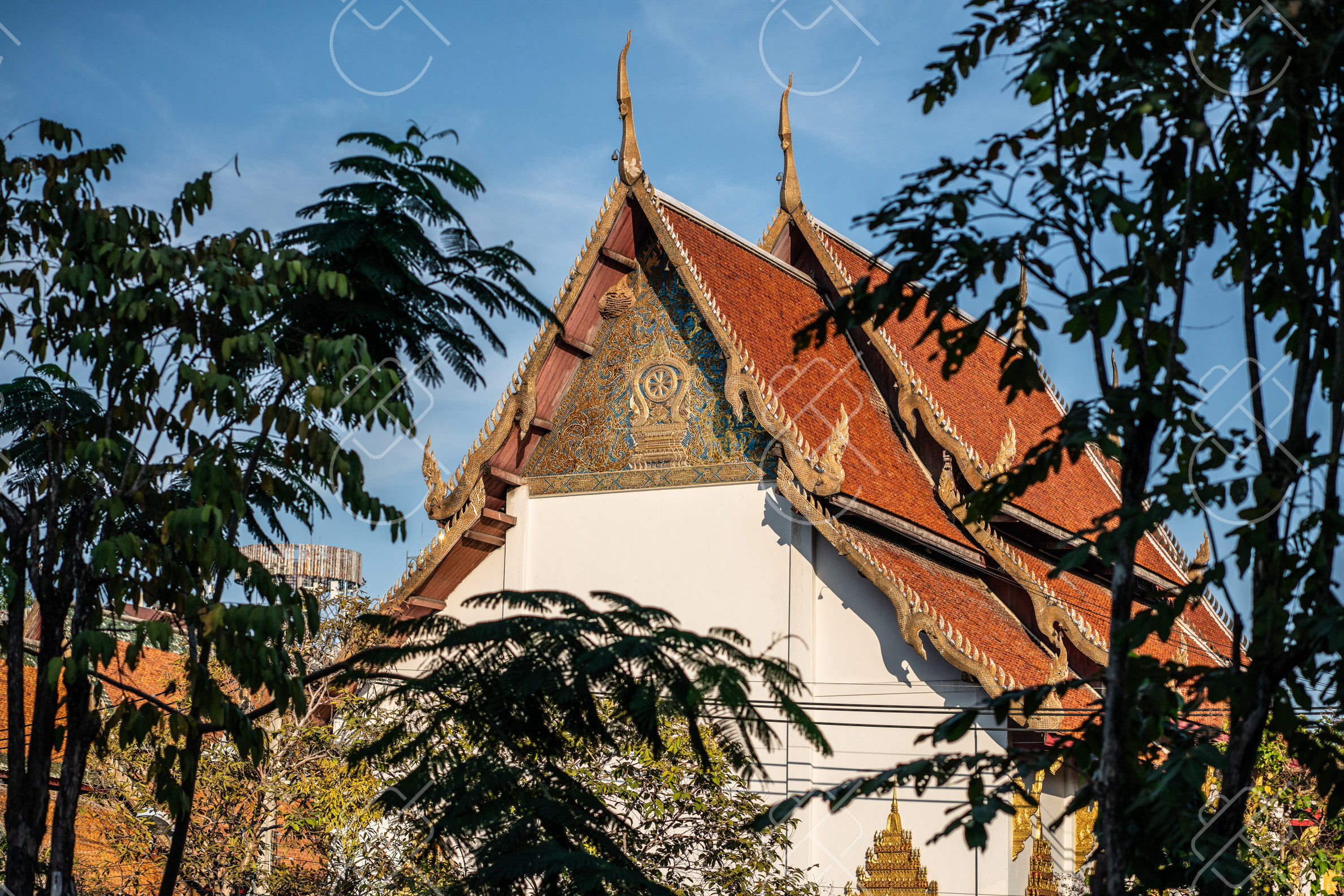
The temple was traditionally founded in 1383, and the golden chedi at the top houses a relic. Walk clockwise around it, as is customary. Do not point your feet at a Buddha image, do not touch monks if you are a woman, and speak quietly in prayer areas. Photographs of the chedi and the view are fine; the interior shrines have their own signs. Early morning is when monks and worshippers are most present, so keep clear of the prayer areas.
Visakha Bucha and Songkran draw large local crowds, with worshippers climbing the mountain and sleeping on the esplanade at Visakha Bucha. If you want a quiet visit, avoid those dates; see our Songkran 2027 guide.
The mountain is at its best in the cool dry season, roughly November to February, when the view over Chiang Mai is clear. From about February to April, burning in the region brings haze that can hide the view entirely; our Chiang Mai burning season guide explains how to check air quality before you commit. The wet season brings cloud and rain but fewer visitors. For a November visit, Yi Peng and Loy Krathong fall in the same window.
Shoulders and knees covered, for both men and women. Shoes come off before the inner terrace and shrine floors.
Most 2026 guides say 30 baht for foreigners, with children free. Some quote 50 baht, so check the sign at the ticket booth.
About 20 baht each way. The alternative is the staircase of roughly 306 to 309 steps.
By shared red songthaew from Chang Phueak Gate for roughly 40 to 100 baht per person each way, by ride-hailing app, or by rented motorbike. The temple is about 15 km from the old city.
No, according to local reports. The 100 baht adult fee for foreigners applies to park attractions such as waterfalls and Pha Lat trail, not to the temple reached by the main road.
Get our new Thailand guides and practical tips by email: where to stay, what to eat, what things cost and the rules that catch travelers out.
Free. No spam, only new guides and tips.
Search verified local fleets with low security deposits and exact model delivery on Localrent.
Get the best deals on where to stay in Thailand — Booking.com.