 Culture & etiquette
By Clever Tourists · Published
Moroccans speak Darija, Moroccan Arabic, which is quite different from the Modern Standard Arabic of textbooks, news and road signs. French is widely used in cities, on menus and in business, and Amazigh (Berber) languages are spoken across the Atlas, the south and the Rif. English is common in the tourist trade and among younger people. The two things that matter most: shukran for thank you, and a calm la, shukran for the steady stream of offers in the medinas.
This page contains affiliate links. If you book or buy through them we may earn a commission, at no extra cost to you.
Each phrase below is shown in Arabic script with a Latin transliteration in brackets. In the respellings, kh is the rough sound in Scottish loch, gh is like a French r, and h in bshhal or lhamdullah is a breathy h from the throat.
As-salamu alaykum (peace be upon you) is the standard greeting and works with everyone, Muslim or not; the reply is wa alaykum salam. Labas? (all good?) is the everyday follow-up, and the answer usually includes lhamdullah, thanks be to God.
| English | Darija | Say it like | When to use it |
|---|---|---|---|
| Hello (peace be upon you) | السلام عليكم (salamu alikum) | sah-LAH-moo ah-LEE-koom | The standard greeting, to anyone. |
| Reply to the above | وعليكم السلام (wa alikum salam) | wah ah-LEE-koom sah-LAHM | When someone greets you first. |
| Hi (casual) | سلام (salam) | sah-LAHM | Quick hello in shops and cafés. |
| Good morning | صباح الخير (sbah lkhir) | SBAH l-KHEER | Mornings. |
| Good afternoon / evening | مسا الخير (msa lkhir) | MSAH l-KHEER | Afternoon onwards. |
| All good? / How are you? | لاباس؟ (labas?) | lah-BAHS | The everyday follow-up to hello. |
| Fine, thanks be to God | لاباس، الحمد لله (labas, lhamdullah) | lah-BAHS, lham-doo-LAH | The usual answer. |
| How are you? (to a man / woman) | كيف داير؟ / كيف دايرة؟ (kif dayr? / kif dayra?) | keef DIE-er / keef DIE-rah | Slightly warmer than labas. |
| Nice to meet you | متشرفين (mtsharfin) | m-tshar-FEEN | When you are introduced. |
| Goodbye | بالسلامة (bslama) | b-SLAH-mah | Leaving a shop, a taxi, anyone. |
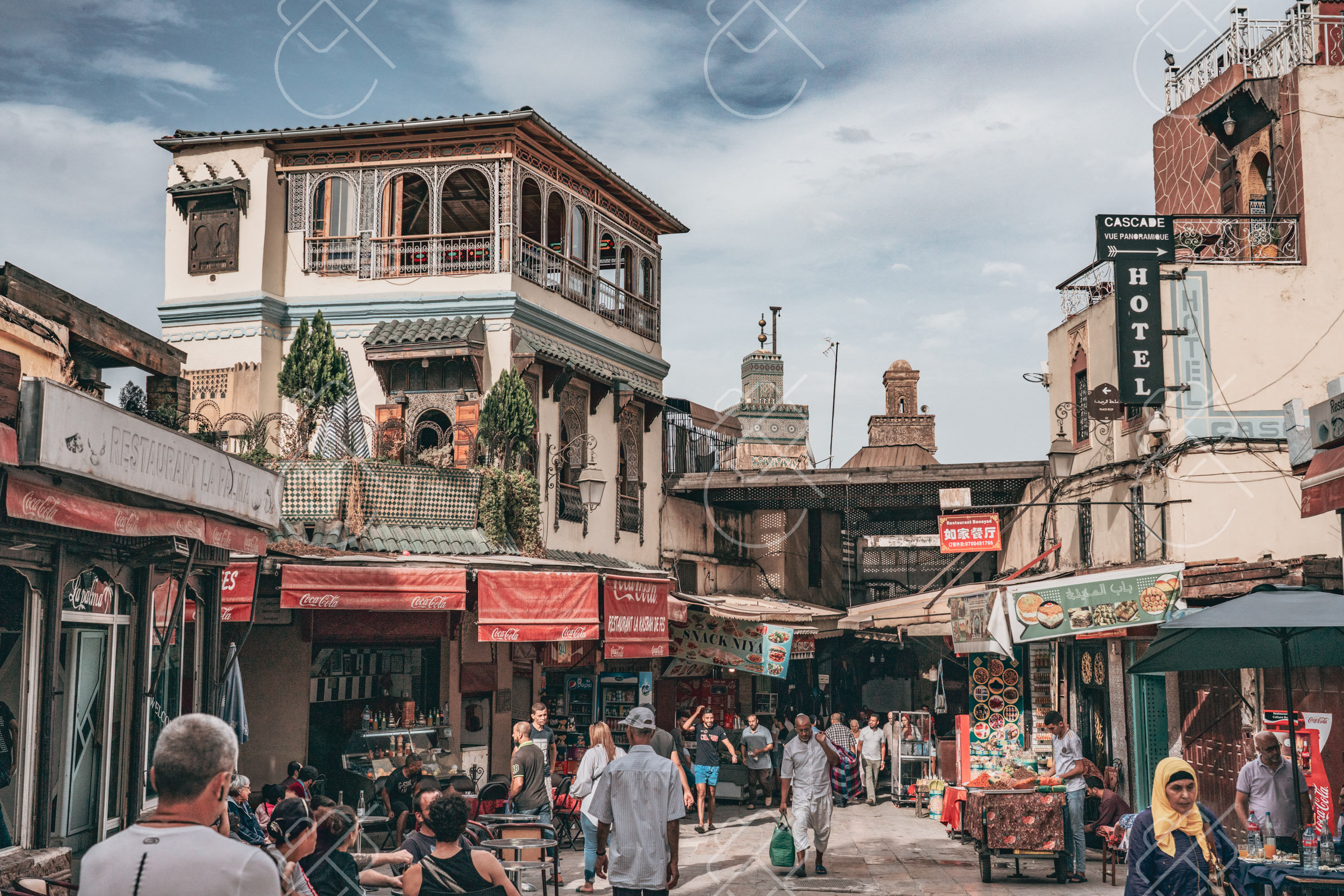
La, shukran (no, thank you) is the phrase you will use most in Marrakech and Fes. Faux guides, shop callers and henna sellers will start conversations constantly; a smile, la shukran and walking on is polite and enough. Stopping to argue only extends it.
Afak (please) is attached to almost every request, and wakha (OK) seals any agreement.
| English | Darija | Say it like | When to use it |
|---|---|---|---|
| Please | عفاك (afak) | AH-fak | On the end of any request. |
| Thank you | شكرا (shukran) | SHOO-kran | All the time. |
| Thank you very much | شكرا بزاف (shukran bzzaf) | SHOO-kran b-ZAF | After real help. |
| You're welcome | بلا جميل (bla jmil) | blah j-MEEL | Replying to thanks. |
| Sorry / excuse me (to a man / woman) | سمح لي / سمحي لي (smeh li / smhi li) | SMEH-lee / SMEH-hee lee | Getting past, getting attention, small apologies. |
| Yes | إيه (iyeh) | EE-yeh | Everywhere. |
| No | لا (la) | lah | Everywhere. |
| No, thank you | لا، شكرا (la, shukran) | lah, SHOO-kran | Touts, faux guides, anyone selling. Keep walking. |
| OK / agreed | واخا (wakha) | WAH-khah | Agreeing to a price or a plan. |
Meals start with bismillah (in the name of God) and food is eaten and passed with the right hand. Mint tea, atay, is offered constantly; accepting a glass is polite.
We have left toasting out on purpose. Alcohol is legal in licensed hotels, bars and some restaurants, but most Moroccans don't drink and there is no everyday Darija toast to learn. Raising a glass and toasting at a table of Moroccans you don't know can be awkward.
| English | Darija | Say it like | When to use it |
|---|---|---|---|
| Is there a table for two? | واش كاينة شي طبلة ديال جوج؟ (wash kayna shi tbla dyal juj?) | wash KAY-nah shee TBLAH dyal JOOJ | Arriving at a restaurant. |
| The menu | le menu (l-menu, from French) | l-meh-NOO | Most restaurant menus are in French anyway. |
| This one (masculine / feminine) | هادا / هادي (hada / hadi) | HAH-dah / HAH-dee | Pointing at a dish or a pastry. |
| Mint tea | أتاي (atay) | ah-TIE | Ordering tea. |
| Delicious | بنين بزاف (bnin bzzaf) | b-NEEN b-ZAF | To the cook or host. Always appreciated. |
| The bill, please | الحساب عفاك (lhsab afak) | l-HSAB AH-fak | When you are ready to pay. |
| I don't eat meat | ما كناكلش اللحم (ma kanakulsh lhem) | mah kah-nah-KOOLSH l-LHAM | The clearest way to say vegetarian. |
| I'm allergic to... | عندي الحساسية د... (andi lhassasiya d...) | AHN-dee l-hah-sah-SEE-yah d... | Follow with the food; show it written down too. |
Practical travel tips, straight to your inbox. Unsubscribe anytime.
Bargaining in the souks is normal and expected, and it is a conversation, not a fight. Ask the price, offer well below it, and meet somewhere in the middle; walking away politely is part of the game, and the price often follows you. Don't start bargaining for something you have no intention of buying, and if a guide brings you to a shop, his commission is in the price. More tactics are in our souk haggling guide.
Listen for rials. Many Moroccans count money in rial, an informal unit worth one twentieth of a dirham. If a stallholder says mia (100) for a few oranges, it may mean 100 rial, which is 5 dirhams. When in doubt, ask for the price in dirhams or have it written down.
The souks run on cash (flus, money). Supermarkets, malls and larger shops take cards; say la carte, the French word, if you want to pay by card.
| English | Darija | Say it like | When to use it |
|---|---|---|---|
| How much is this? | بشحال هادا؟ (bshhal hada?) | b-SHHAL HAH-dah | Pointing at anything in a souk. |
| It's too expensive | غالي بزاف (ghali bzzaf) | GHAH-lee b-ZAF | The opening line of every bargain. |
| Lower the price a bit | نقص شوية (nqes shwiya) | n-KUSS SHWEE-yah | Once you have heard the first price. |
| What's the last price? | آخر ثمن؟ (akhir taman?) | AH-kher tah-MAN | When you are close to agreeing. |
| OK, deal | واخا (wakha) | WAH-khah | Accepting the price. Then pay. |
| Money / cash | فلوس (flus) | FLOOS | Souks, taxis, small cafés. |
Petit taxis inside cities should use the meter (le compteur). Grand taxis between towns are shared and run on fixed fares. Intercity buses leave from the bus station, and CTM and Supratours run their own depots. Train stations are called by the French word la gare.
| English | Darija | Say it like | When to use it |
|---|---|---|---|
| Where is...? | فين كاين...؟ (fin kayn...?) | feen KAY-en | Followed by the place you want. |
| Where is the toilet? | فين بيت الما؟ (fin bit lma?) | feen beet l-MAH | Cafés, restaurants, stations. |
| Bus station | المحطة ديال الكيران (lmahatta dyal lkiran) | l-mah-HAT-tah dyal l-kee-RAN | Intercity buses. Say CTM if you want that company. |
| Train station | لاكار (la gar) | lah GAR | From the French la gare. |
| Airport | المطار (lmatar) | l-mah-TAR | The Arabic word, also on signs. L'aéroport in French works too. |
| Turn left | دور على ليسر (dur ala lisser) | door AH-lah lee-SER | Following directions. |
| Turn right | دور على ليمن (dur ala limen) | door AH-lah lee-MEN | Following directions. |
| Go straight | سير نيشان (sir nishan) | seer nee-SHAN | Following directions. |
| I want to go to this address | بغيت نمشي لهاد العنوان (bghit nmshi l-had lunwan) | BGHEET n-MSHEE l-HAD l-oon-WAN | Taxis. Show the address at the same time. |
| Stop here, please | وقف هنا عفاك (wqef hna afak) | WKEF hnah AH-fak | Taxis. |
Darija numbers differ from Standard Arabic: two is juj, not ithnayn. Prices are written in Western digits, so you only need these for spoken prices, and remember the rial trap above.
| English | Darija | Say it like | When to use it |
|---|---|---|---|
| 1 | واحد (wahed) | WAH-hed | |
| 2 | جوج (juj) | jooj | Standard Arabic ithnayn is not used for counting. |
| 3 | تلاتة (tlata) | TLAH-tah | |
| 4 | ربعة (rbaa) | RUB-ah | |
| 5 | خمسة (khamsa) | KHAM-sah | |
| 6 | ستة (setta) | SET-tah | |
| 7 | سبعة (sebaa) | SEB-ah | |
| 8 | تمنية (tmenya) | TMEN-yah | |
| 9 | تسعود (tesud) | tess-OOD | |
| 10 | عشرة (ashra) | ASH-rah | |
| 100 | مية (mya) | MEE-yah | Could be 100 rial (5 dirhams). Check. |
| 1,000 | ألف (alf) | alf |
From a mobile, 112 connects to emergency services. The direct numbers are 19 for police in cities, 177 for the Gendarmerie Royale in rural areas and on highways, and 15 for ambulance and fire.
| English | Darija | Say it like | When to use it |
|---|---|---|---|
| Help! | عتقوني! (atquni!) | AT-koo-nee | Real emergencies only. |
| Call the police! | عيط على البوليس! (ayyet ala lbulis!) | AY-yet AH-lah l-boo-LEES | Then dial 19, or 112 from a mobile. |
| I want to see a doctor | بغيت نشوف طبيب (bghit nshuf tbib) | BGHEET n-SHOOF TBEEB | Pharmacies and hotel reception. |
| I'm lost | تلفت (tleft) | t-LEFT | Asking for directions in a medina. |
| I don't understand | ما فهمتش (ma fhemtsh) | mah FHEMTSH | Any time. |
| Do you speak English? | واش كتهدر النڭليزية؟ (wash kathder ngliziya?) | wash kat-HDER n-glee-ZEE-yah | Ask this first; many people will also offer French. |
| Slowly, please | بشوية عفاك (bshwiya afak) | b-SHWEE-yah AH-fak | When the answer comes back fast. |
French is understood by most people in cities and is the language of menus, train tickets, banks and pharmacies. If your Darija runs out, French is the natural fallback.
Amazigh (Berber) languages, Tashelhit in the south, Central Atlas Tamazight in the Atlas and Tarifit in the Rif, are official alongside Arabic and written in the Tifinagh alphabet on public signs. Two words are recognised widely: azul (ⴰⵣⵓⵍ, hello, ah-ZOOL) and tanmmirt (ⵜⴰⵏⵎⵎⵉⵔⵜ, thank you, tan-MEERT). Both are modern revivals that many speakers use proudly, though plenty of Amazigh speakers simply say salam.
| English | French | Say it like | When to use it |
|---|---|---|---|
| Hello | Bonjour | bohn-ZHOOR | Shops, hotels, offices. |
| Thank you | Merci | mair-SEE | Everywhere. |
| Please | S'il vous plaît | seel voo PLEH | Any request. |
| How much is it? | C'est combien ? | seh kohm-BYAN | Fixed-price shops and cafés. |
| The bill, please | L'addition, s'il vous plaît | lah-dee-SYOHN, seel voo PLEH | Restaurants. |
| Where are the toilets? | Où sont les toilettes ? | oo sohn lay twah-LET | Cafés and stations. |
| I don't understand | Je ne comprends pas | zhuh nuh kohm-PRAHN pah | Any time. |
| Do you speak English? | Vous parlez anglais ? | voo par-LAY ahn-GLEH | Ask this before switching. |
Greet first, then ask. Starting with salamu alikum before a question, even to a shopkeeper, changes the tone of the whole exchange.
Right hand for eating, giving and taking. The left hand is associated with the bathroom. Eat from the shared tagine with your right hand, and pay and receive change with it.
Accept the tea. Mint tea is the default welcome in homes, shops and riads. One glass is polite, and accepting tea in a shop does not commit you to buy.
Ask before photographing people. Many Moroccans, especially women and older people, don't want to be photographed. Musicians and performers in Jemaa el-Fnaa expect a tip if you do.
Respect prayer and Ramadan. Most mosques are closed to non-Muslims (Hassan II in Casablanca is the main exception). During Ramadan, avoid eating, drinking or smoking in public in daytime; see visiting Morocco during Ramadan.
Our 24-day route from Tangier to the Sahara passes through most of the places mentioned here. More on customs is in what is considered rude in Morocco.
Shukran (SHOO-kran), written شكرا. Shukran bzzaf means thank you very much, and the reply is bla jmil, you're welcome.
Yes. French is understood by most people in cities and is used on menus, train tickets, in banks and in pharmacies. Darija is the everyday language, but French is the natural fallback.
Yes. Darija is Moroccan Arabic, with its own vocabulary and many French and Amazigh loanwords, for example juj for two. Modern Standard Arabic is used on signs and in the news, and Moroccans understand it, but it is not what people speak day to day.
Bshhal? (b-SHHAL), or bshhal hada? for how much is this. Listen for rial: many people count in rial, and 20 rial make one dirham.
La, shukran (lah, SHOO-kran). Said with a smile while you keep walking, it is the polite way to turn down touts and shop callers.
112 from a mobile. The direct numbers are 19 for police in cities, 177 for the Gendarmerie Royale in rural areas and 15 for ambulance and fire.
Practical travel tips, straight to your inbox. Unsubscribe anytime.
Plan your nights in Morocco: hotels on Booking.com.