Home
About us
Destinations
Travel Guides
Recipes
Featured
Photos As Art
Abstract Prints
Locations
Travel Gear
Travel Resources
Favorites
Photo Framer
Explore Photos
ContactSouthern Morocco runs from the rose-colored ramparts of Marrakech up over the High Atlas and down into the pre-Sahara, where oasis towns string along dry riverbeds and the road eventually surrenders to sand. It is a region of strong contrasts: the dense, shadowed lanes of an ancient medina, the ochre geometry of fortified kasbahs, palm groves, and finally the open dunes of Erg Chigaga. Distances are long and the desert sun is fierce, so the journey rewards travelers who set out in the cool of early morning and late afternoon.
Published January 16, 2026
Tap any photo to open it full-screen and order a print.
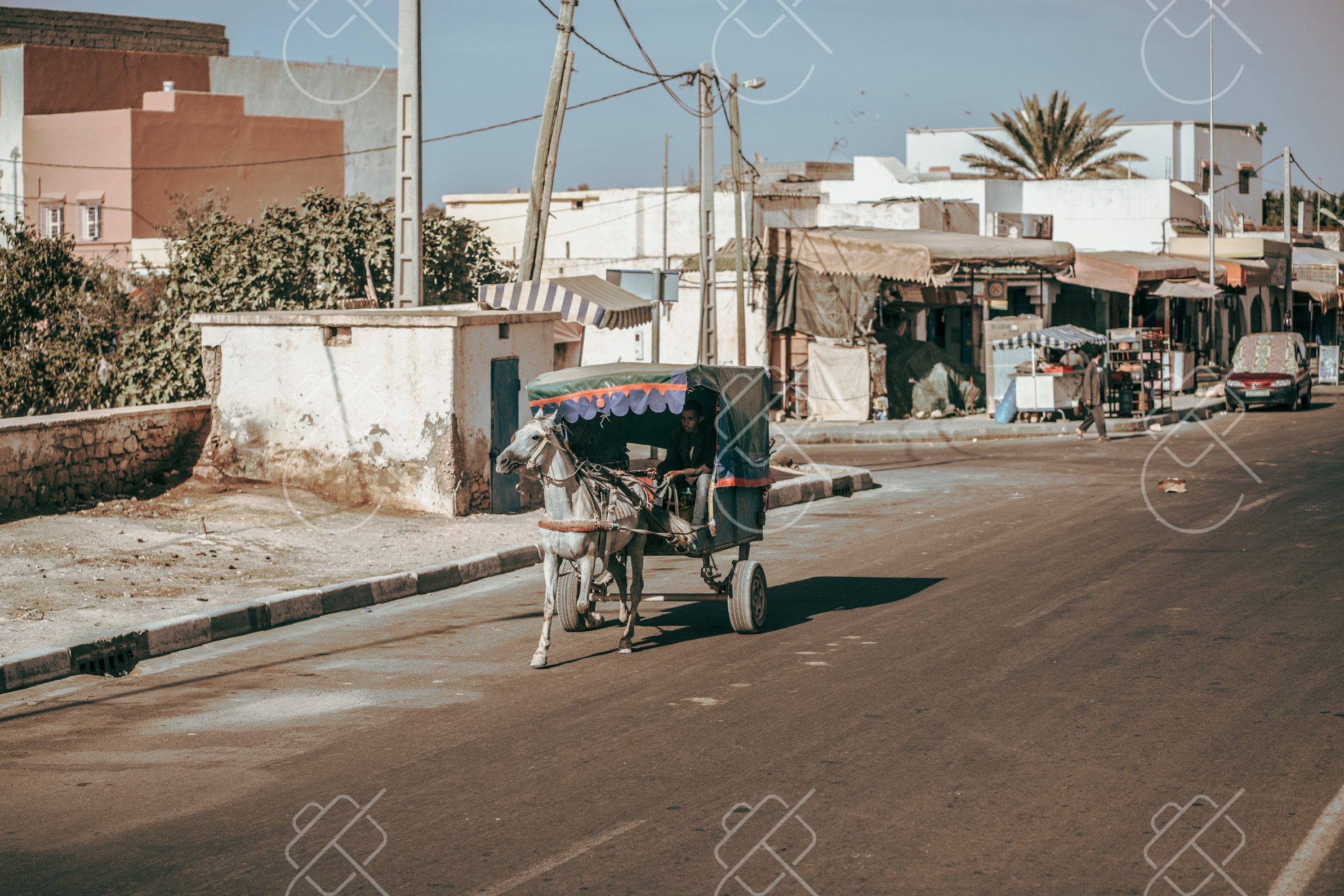
Founded in the 11th century, Marrakech is the largest of Morocco's four imperial cities and the gateway to the south. Its walled medina, a UNESCO World Heritage Site, is built almost entirely of pink-red pisé earth, which gives the city its nickname, the Red City.
The medina is organized around Jemaa el-Fna, a vast square that works as a market by day and an open-air food and performance ground by night. Radiating from it are the souks, covered lanes grouped by trade, and major monuments including the 12th-century Koutoubia Mosque, whose minaret is the tallest structure in the old city and a fixed reference point on the skyline.
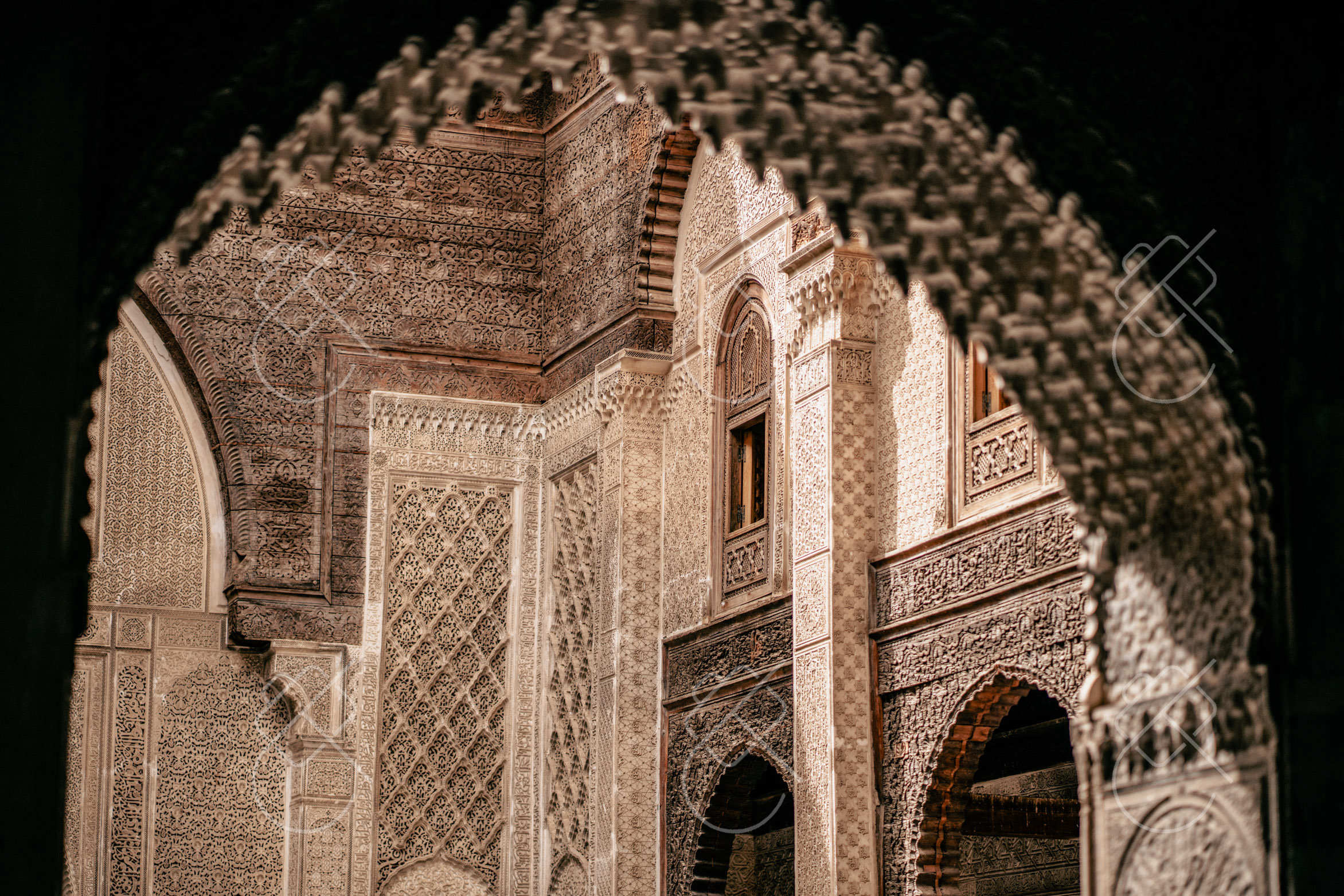
Beyond the square, Marrakech holds a series of enclosed, richly decorated spaces to wander through: the carved cedar and stucco of the Ben Youssef Madrasa, the Saadian Tombs, and the cobalt-blue plantings of the Jardin Majorelle. The shift from the dim, narrow souks into these open courtyards is one of the city's defining experiences.
March to May and October to November offer warm, comfortable days for the medina and gardens; summer is brutally hot and winter nights chilly, though winter days stay pleasantly mild.
A traditional riad inside the medina puts you a short walk from the souks and Jemaa el-Fna; the Gueliz district offers more modern hotels.
Tagine, couscous, harira soup, pastilla, and grilled skewers from the night stalls of Jemaa el-Fna, with mint tea served throughout the day.
The medina lanes are narrow and easy to lose your way in; mornings are quieter and cooler, the best time to explore the souks before they fill up.
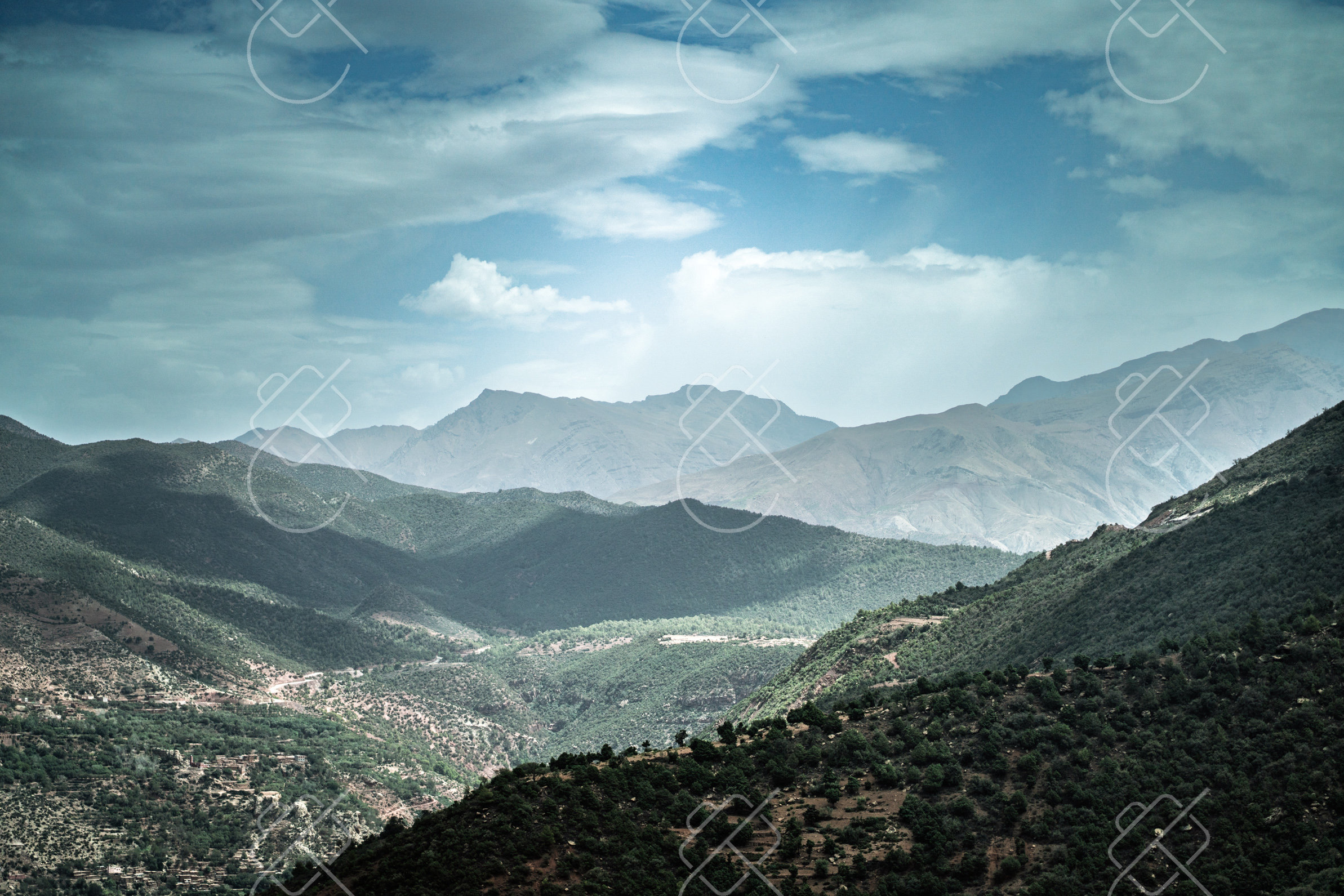
Set south of the High Atlas on the edge of the desert, Ouarzazate is a quiet provincial town that has become a center of Moroccan and international filmmaking, earning it the name Ouallywood. It serves as a base for visiting the surrounding kasbahs and oasis valleys.
The town's reputation rests on its film studios, including Atlas Studios and CLA Studios, where standing sets built for historical and biblical productions can be visited. The surrounding landscape of bare mountains and earthen architecture has stood in for many other places on screen.
Just outside town stands the Kasbah Taourirt, a large earthen fortress once associated with the Glaoui family, and a short drive away is Aït Benhaddou, a fortified village of stacked kasbahs that is a UNESCO World Heritage Site and has stood in for a dozen film and TV productions over the years.
Spring and autumn are ideal for exploring the kasbahs and film studios in comfortable temperatures; the desert-edge town swings between scorching summers and cold winter nights.
Ouarzazate has a range of hotels and kasbah-style guesthouses; staying near Aït Benhaddou lets you reach the ksar at first light before the day-trippers arrive.
Hearty Berber tagines, dates from the surrounding oases, and bread baked in communal ovens.
Cross the riverbed to Aït Benhaddou early in the morning, when the rising sun warms the kasbah walls and the village is still quiet.
the road eventually surrenders to sand
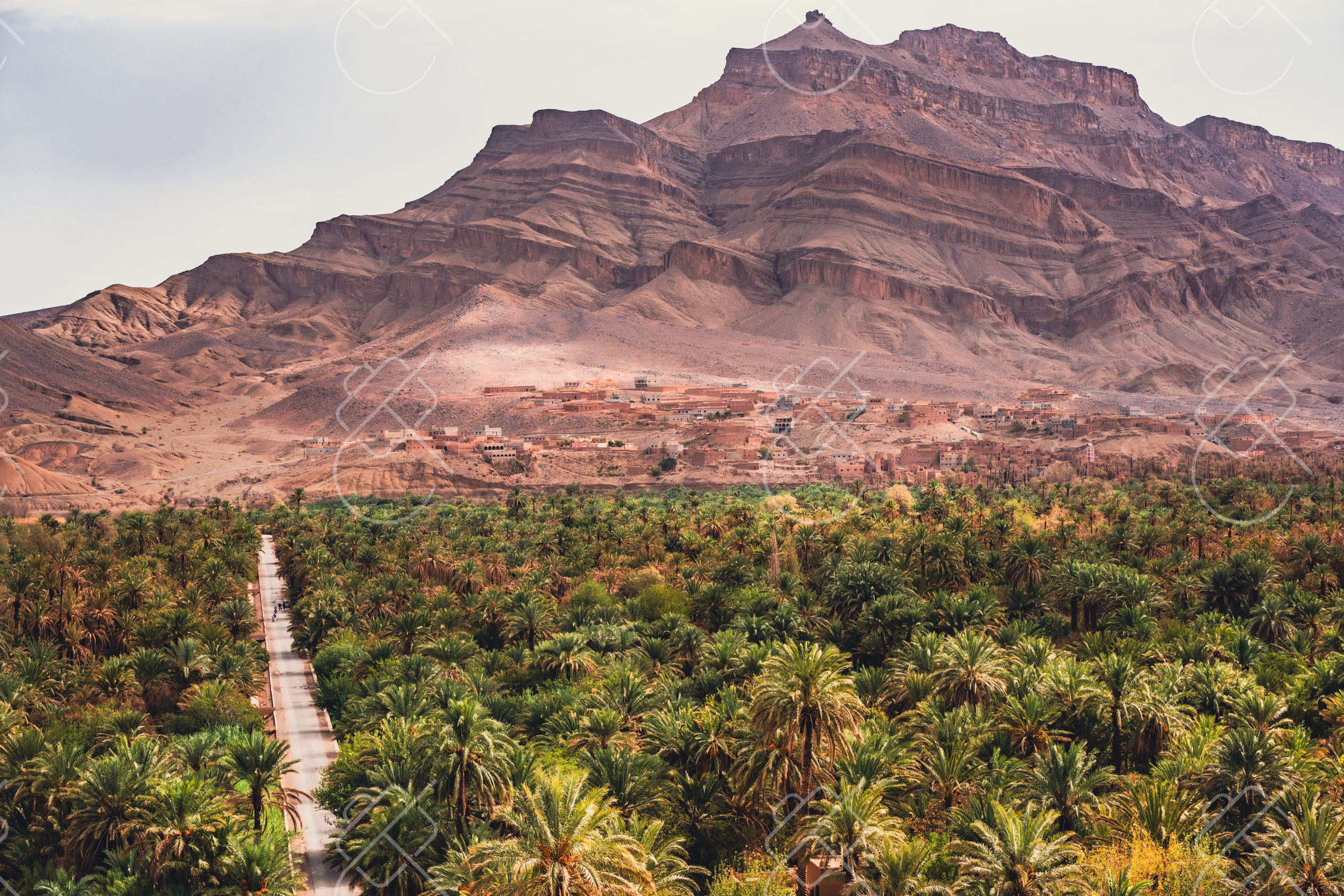
Zagora sits in the Draa Valley, a long oasis corridor of date palms following the Draa River toward the desert. It is a traditional staging point for camel treks and journeys deeper into the Sahara.
The town is best known for a weathered road sign reading Tombouctou 52 jours, a reference to the historic camel-caravan route to Timbuktu that once passed through the region. Around Zagora, the Draa Valley is thick with palm groves and small kasbahs built of mud brick.
Above the town rises Jebel Zagora, a hill with panoramic views over the palmeraie and the river. The valley's mix of green oasis and surrounding desert hills makes it a transitional landscape between the cultivated south and the open Sahara.
October to April brings bearable daytime heat for this gateway to the dunes; avoid the punishing summer, when desert temperatures soar well past comfort.
Zagora has simple hotels and palmeraie guesthouses, and is a common departure point for overnight stays in desert camps.
Dates from the Draa Valley, tagines, and bread cooked over wood fires at desert camps.
Climb Jebel Zagora before dawn to watch the palm groves emerge from shadow as the sun clears the surrounding hills.
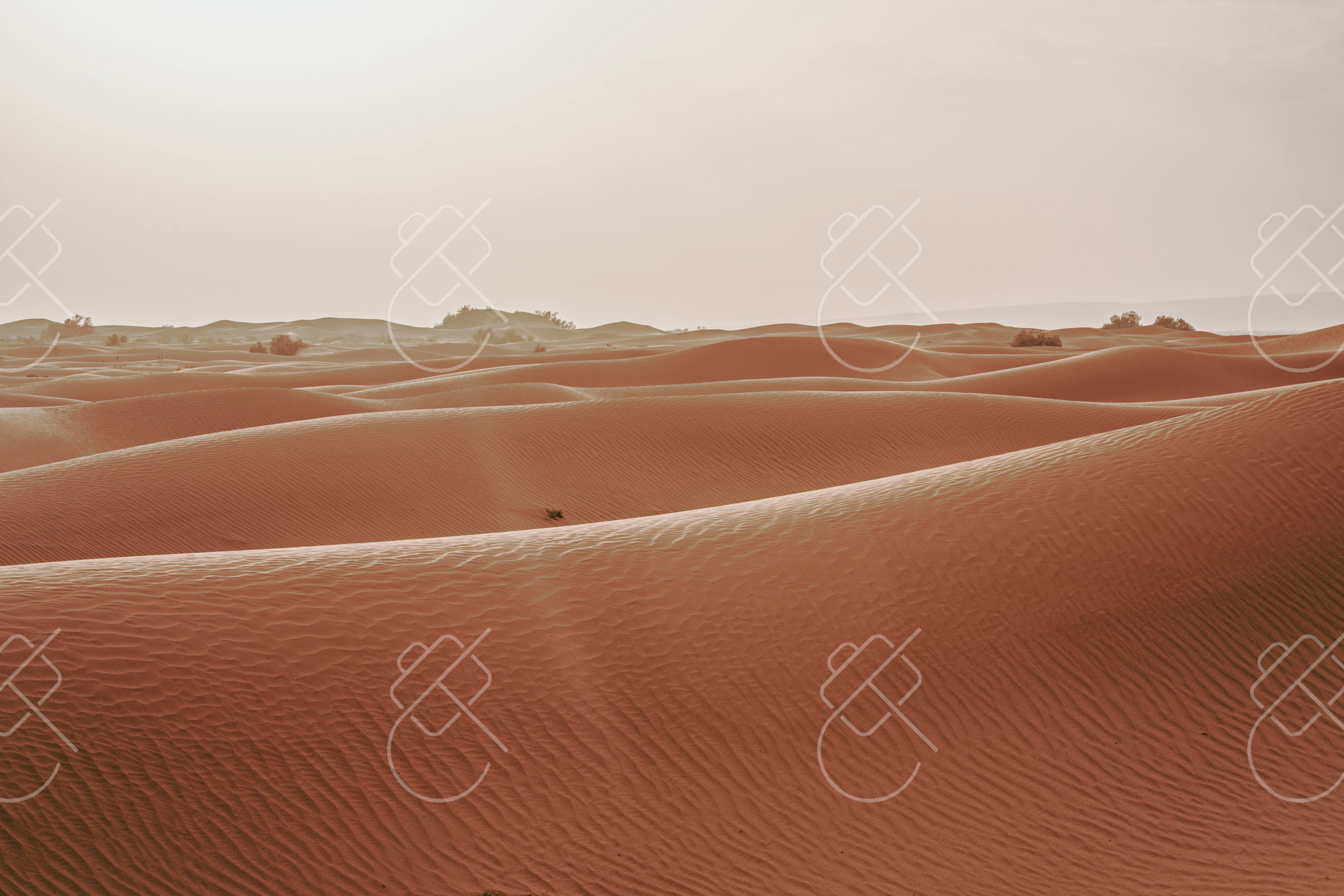
Erg Chigaga is the largest and most remote field of Saharan dunes accessible from southern Morocco, reached by a long off-road drive beyond the end of the paved road at M'Hamid. Its isolation keeps it far quieter than Morocco's more visited dune fields.
The erg stretches roughly 40 kilometers and rises to dunes of around 300 meters, forming a broad sea of sand without nearby towns or roads. Reaching it requires a four-wheel-drive vehicle, and most visitors stay in tented desert camps set among the dunes.
Because it lies so far from settlements, Erg Chigaga has some of the darkest night skies in Morocco and an unbroken horizon of dunes in every direction. The remoteness, the scale and the silence make it the most rewarding place to spend a night out in the Moroccan Sahara.
Visit October through April for tolerable daytime warmth and cool, star-filled nights ideal for desert camping; summer heat in the dunes is dangerous and best avoided entirely.
Tented desert camps among the dunes, ranging from basic to comfortable, reached by four-wheel-drive from M'Hamid or Zagora.
Camp meals of tagine and bread cooked on site, with tea prepared over open fires.
Choose a camp with morning views east over the dunes, so you can step out at first light as the ridgelines and shadows sharpen across the sand.
the ochre geometry of fortified kasbahs, palm groves, and finally the open dunes of Erg Chigaga
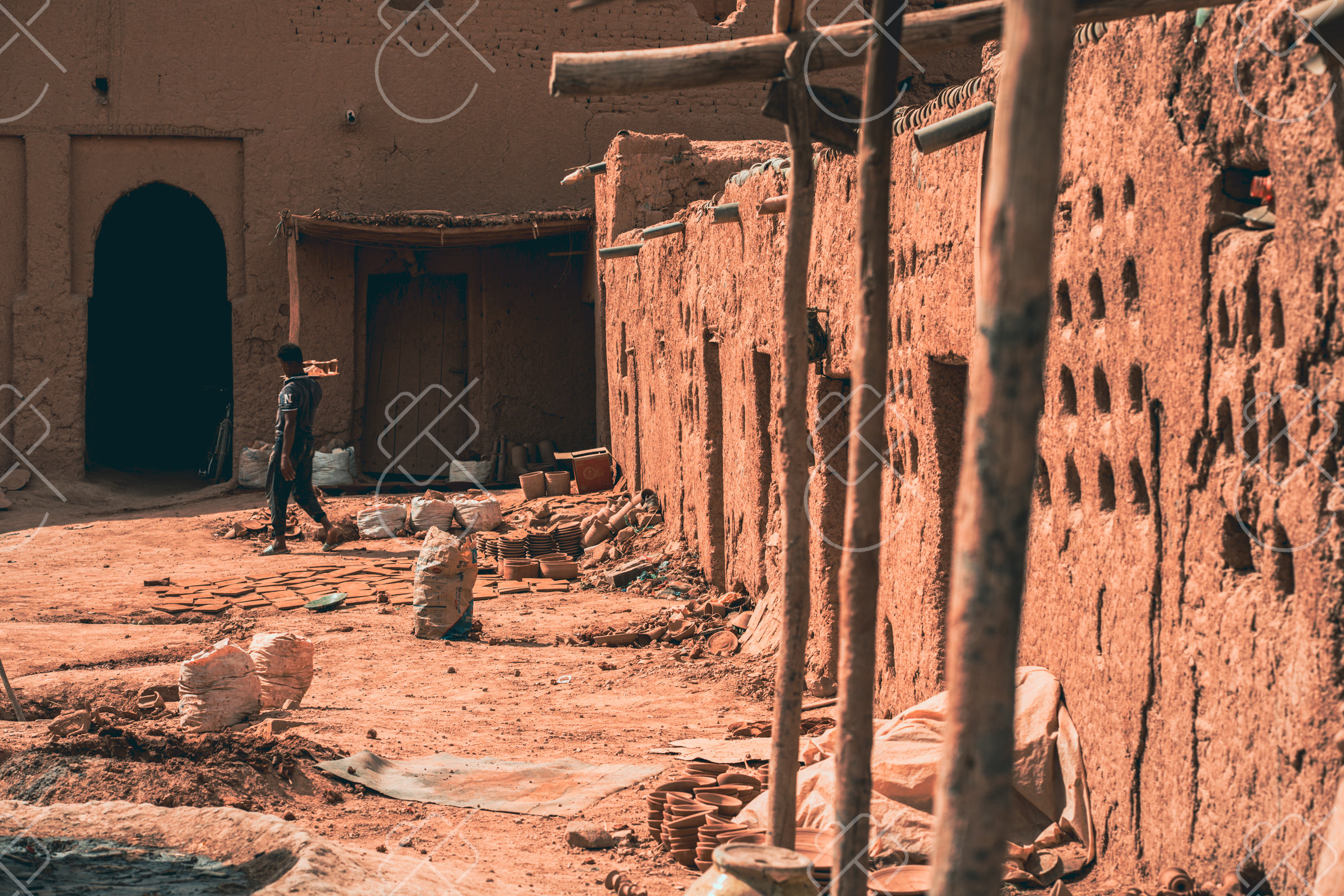
Tamgroute is a small town in the lower Draa Valley known for two things: a centuries-old religious library and a tradition of distinctive green-glazed pottery. It makes a focused, lesser-visited stop between Zagora and the desert.
The town grew around the Zaouia Naciria, a religious complex and Sufi center whose library preserves a collection of antique manuscripts, including illuminated Qurans and works on science and law. The zaouia long served as a place of learning and pilgrimage in the region.
Tamgroute is also a center for green pottery, fired in communal underground kilns and finished with a copper-derived glaze that gives the wares their characteristic green tone. You can walk through the potters' quarter, where stacked ceramics fill the earthen workshops and the kilns smoke below ground.
Spring and autumn offer the most comfortable conditions to visit the ancient library and green-pottery kilns; like the wider Draa Valley, summers are intensely hot.
Most visitors base themselves in nearby Zagora; Tamgroute itself has a few small guesthouses near the zaouia.
Local Draa Valley dishes, dates, and mint tea served in the workshops and guesthouses.
Visit the pottery workshops in the late afternoon, when warm, low light deepens the green glaze and picks out the texture of the earthen kilns.
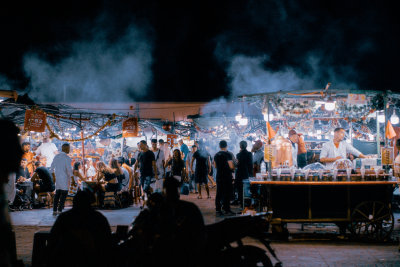
As dusk falls, Marrakech's main square erupts into a smoky maze of food stalls grilling skewers, simmering soups and frying fish. Pull up a bench, point at whatever smells best, and eat shoulder-to-shoulder with locals under the lantern light.
The Sahara has some of the darkest night skies we saw, and a packable travel tripod made the star shots possible.
Explore regional routes with verified local fleets, zero hidden charges, and transparent insurance on Localrent.
Get the best deals on a stay in Marrakech & the Sahara — compare on Booking.com.
Transit cards, local customs, visa rules, and practical travel guides for this region.
See every destination from the 526-day journey:
Browse all destinationsCurious about the gear behind these photos? See the gear list.