Home
About us
Destinations
Travel Guides
Recipes
Featured
Photos As Art
Abstract Prints
Locations
Travel Gear
Travel Resources
Favorites
Photo Framer
Explore Photos
ContactChefchaouen doesn't look like anywhere else in Morocco. Tucked into the Rif Mountains of northern Morocco, the old town is painted, wall to wall and step to step, in a hundred shades of blue — cobalt doorways, powder-blue stairs, indigo alleys that seem to glow in the shade. It is small enough to see in a day and photogenic enough to keep you for a week. Two unhurried days let you wander every lane, climb to the sunrise viewpoint above the town, and slow to the gentle mountain pace the place runs on.
Published July 5, 2026 · Last updated
Tap any photo to open it full-screen and order a print.
Chefchaouen is small — you can see the blue medina in a day — but two days let you do it justice: one to lose yourself in the lanes and the main square, the second for a sunrise climb to the Spanish Mosque and a wander through any corners you missed. There's no need to rush; the town's whole appeal is its slow mountain pace. Come for at least one night, so you have the medina at dawn and dusk after the day-trippers have gone.
Sitting up in the Rif at around 600 metres, Chefchaouen is cooler than lowland Morocco, which makes its shoulder seasons especially kind. Spring and autumn are ideal; summer midday is hot and busy, winter cold but atmospheric.
The Rif hills are green, wildflowers are out, and the temperatures are perfect for walking the steep lanes all day. Arguably the loveliest time to be here.
Warm to hot at midday and at its busiest, though the mountain altitude keeps the evenings pleasant. Shoot the lanes early and late and rest in the shade through the afternoon.
Warm, clear, and calmer than summer, with beautiful long light on the blue walls. Along with spring, the best all-round window of the year.
Cold, with rain and even snow on the surrounding peaks. The town empties, the blue turns deep and moody under grey skies, and you may have the medina almost to yourself.
The blue medina — The old town itself — a web of cobalt lanes and staircases that is the entire reason to come.
The Spanish Mosque viewpoint — The hilltop lookout over the whole blue town beneath the Rif peaks, at sunrise or sunset.
Plaza Uta el-Hammam — The shaded, café-lined main square at the medina's social heart.
The Kasbah — A 15th-century red-walled fortress with gardens and a tower over the rooftops.
Ras el-Maa waterfall — The little cascade at the medina's edge where locals still do their washing.
Akchour waterfalls — A scenic Rif Mountains day hike about an hour away.
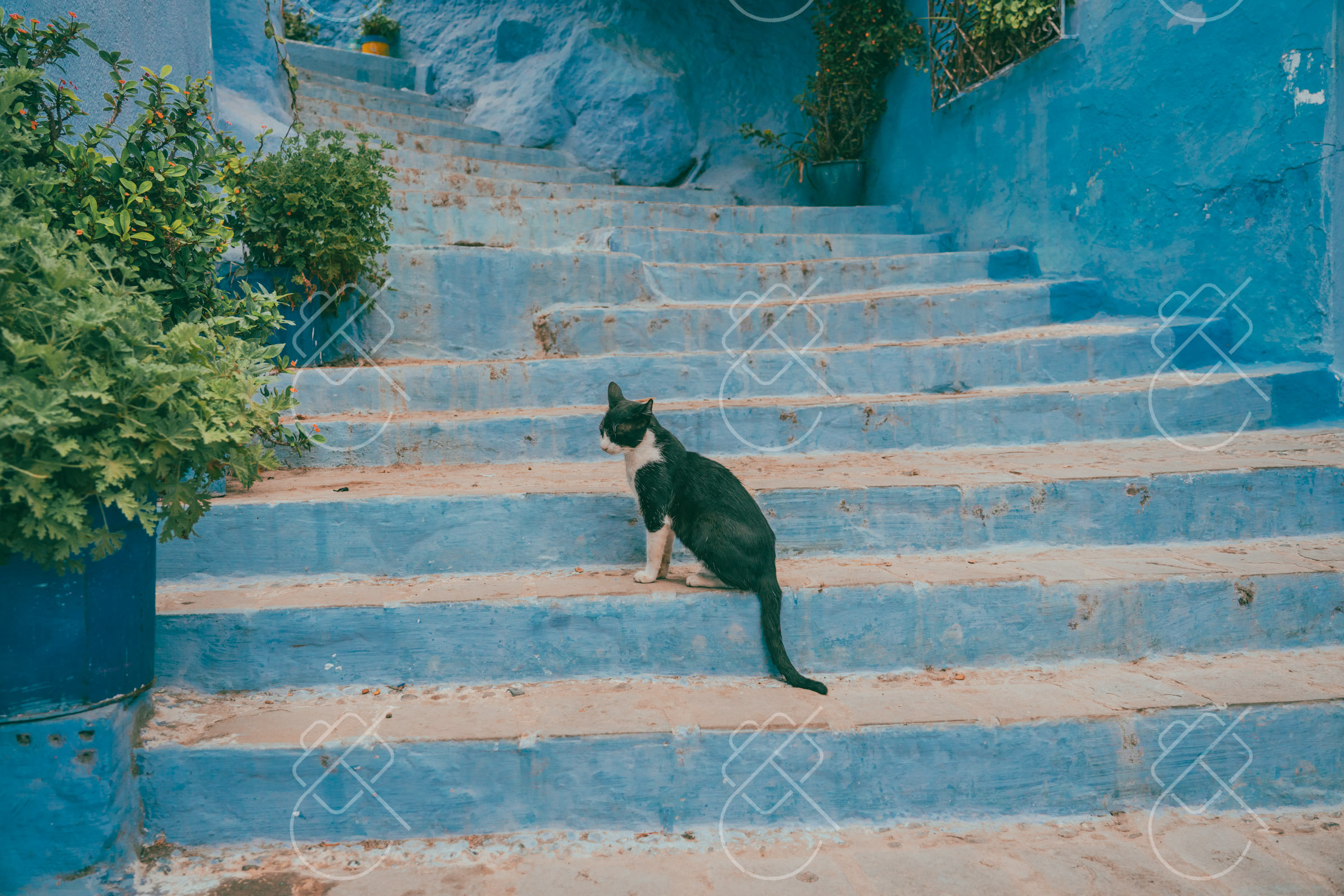
The old town is the attraction — a compact web of blue-washed lanes, staircases, and doorways climbing the hillside. There's no single must-see sight; the medina itself is the sight, and it rewards slow, aimless wandering more than any checklist.
Go out at first light, before the day-trippers arrive from Fes and Tangier, and the lanes are yours: shopkeepers hosing the cobbles, cats on blue steps, pots of geraniums against indigo walls. Every corner is a composition.
Look for the small details as much as the grand alleys — a studded door, a hanging rug, a cascade of flowerpots down a blue staircase.
The first hour after sunrise, before the tour buses arrive — the light is soft, the shade is blue, and the lanes are empty enough to shoot cleanly.
Stay in a small riad inside the medina itself — you'll want to be among the blue lanes at dawn and after the day-trippers leave.
Look for a rooftop café for mint tea and a tagine; the town's goat cheese, made in the surrounding hills, is a local specialty.
The blue walls act like a giant softbox, throwing cool light everywhere; nudge your white balance warmer, or lean into the blue and let it set the mood.
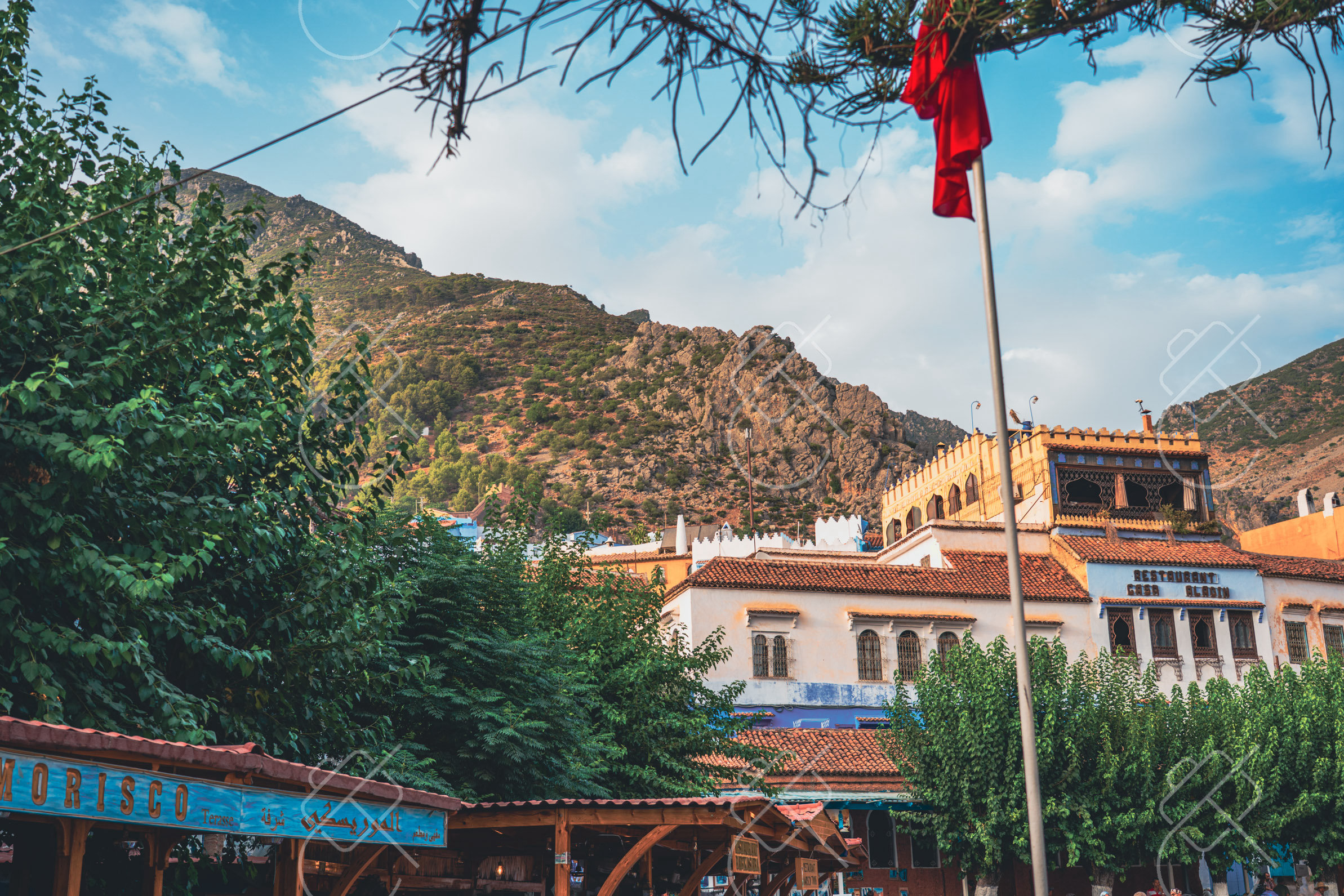
The medina's social heart is Plaza Uta el-Hammam, a shaded square lined with cafés and dominated by the red-walled Kasbah and the octagonal minaret of the Grand Mosque — a warm-toned counterpoint to all that blue.
The Kasbah, a 15th-century fortress, has quiet Andalusian gardens and a tower you can climb for a view over the blue rooftops to the mountains. The square itself is the place to sit, order a tea, and watch the town go about its day.
Come back after dark, when the cafés glow and the square fills with families and the smell of grilling meat.
Late afternoon for warm light on the Kasbah walls, or evening when the square comes alive with café tables and lanterns.
The plaza cafés are made for people-watching over mint tea; try bissara, a warming fava-bean soup, from a stall for a few dirhams.
Climb the Kasbah tower for the one spot in town where you can shoot the blue medina from above without a long uphill hike.
Cobalt doorways, powder-blue stairs, indigo alleys that seem to glow in the shade.
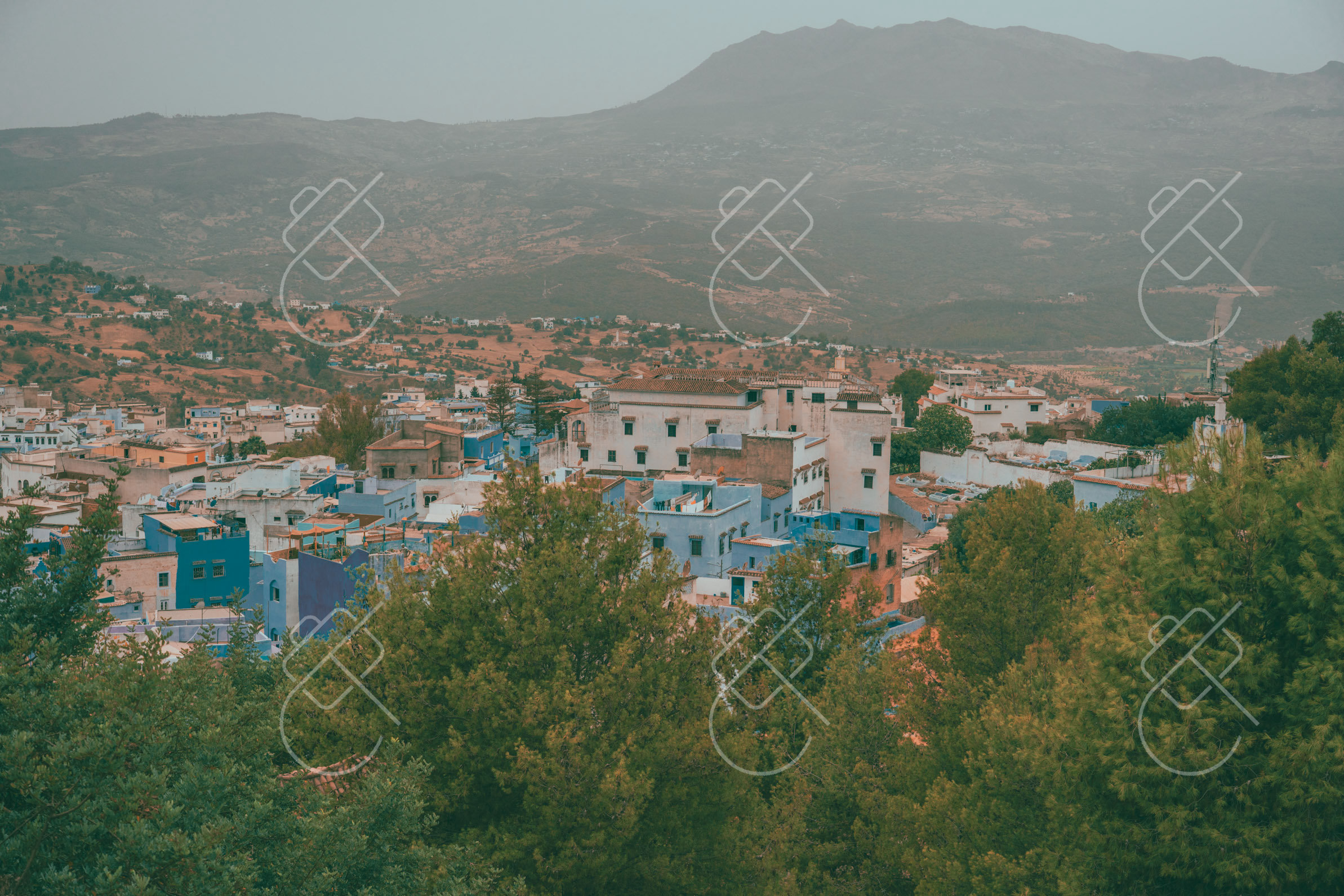
On a low hill east of the medina stands the abandoned Spanish Mosque, and it exists, as far as most visitors are concerned, for one reason: the view. From here the whole blue town spreads out below the Rif peaks — the definitive Chefchaouen photograph, and the place to be for sunrise or sunset.
It's a 20–30 minute walk up a clear path from the edge of the medina. Sunrise is quieter and the light falls onto the face of the town; sunset draws a crowd but sets the hills glowing behind it.
With more time, the Rif beckons: the Akchour waterfalls and the 'God's Bridge' rock arch are a popular day trip into the mountains an hour away.
Sunrise for soft light on the town and an empty hilltop, or sunset for warm light on the mountains — arrive early to claim a spot.
Carry water and a snack for the climb; back down in town, reward yourself with a tagine and a glass of fresh orange juice.
A short telephoto from the Spanish Mosque compresses the blue houses into a dense, layered wash of colour far better than a wide lens, which scatters the town across too much sky.
A loose, walkable route — bend it to your pace and the light.
Start at sunrise in the medina, before the day-trippers arrive, and simply wander — the blue staircases, the flowered doorways, the cats on the steps. Let the lanes lead; there's no wrong turn here.
Rest through the hot middle of the day, then spend the afternoon around Plaza Uta el-Hammam and the Kasbah, climbing its tower for a first look over the rooftops. Stay for the square's evening buzz.
Where to shoot: Blue medina lanes at first light · Flowerpot staircases · The Kasbah tower view · Plaza Uta el-Hammam in the evening
Tip: Chefchaouen is steep and cobbled — comfortable shoes matter more than they sound, and a light layer helps in the cool mountain mornings.
Wake for the walk up to the Spanish Mosque and the classic view of the whole blue town under the Rif peaks in the morning light. Come back down for a slow breakfast and one more loop through any lanes you missed.
If you've the energy, spend the afternoon out in the mountains — the Akchour waterfalls make a scenic half-day — or simply keep photographing the medina as the light changes through the day.
Where to shoot: The blue town from the Spanish Mosque at sunrise · Rif peaks behind the rooftops · Quiet back lanes mid-morning · Akchour waterfalls (optional)
Tip: Chefchaouen is a two-hour drive from Tangier or Fes with no train — a shared grand taxi or a bus is the usual way in; plan the connection before you arrive.
With an extra day, the Rif Mountains beckon: the Akchour waterfalls and the natural rock arch of 'God's Bridge' make a fine half- or full-day hike. Chefchaouen also pairs naturally with the north — the whitewashed medina of Tetouan and the port of Tangier are both a couple of hours away, and many travelers fold the blue city into a loop that also takes in Fes.
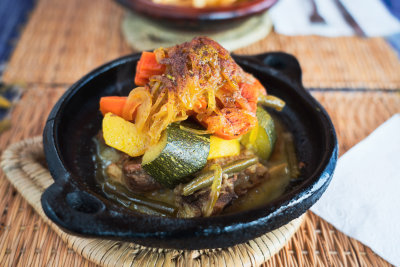
Slow-cooked in a conical clay pot until everything melts together — seasonal vegetables, preserved lemon, olives, and warm spice. In the cool of the Rif it's exactly the right thing to order.
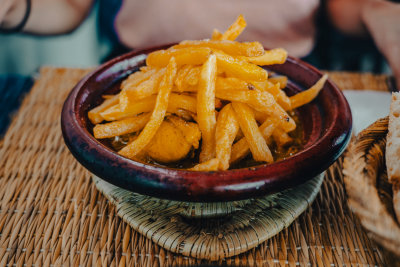
Tender lamb stewed with onions and spices and, in the northern style, crowned with a nest of fries — hearty mountain comfort food after a day on the town's endless stairs.
Explore regional routes with verified local fleets, zero hidden charges, and transparent insurance on Localrent.
Compare stays in Chefchaouen and get the best deals on Booking.com.
Transit cards, local customs, visa rules, and practical travel guides for this region.
See every destination from the 526-day journey:
Browse all destinationsCurious about the gear behind these photos? See the gear list.