 Culture & etiquette
By Clever Tourists · Published
Bahasa Indonesia is the national language across all of Indonesia, Bali included, and it is one of the easiest Asian languages to start: Latin alphabet, no tones, and words that are spelled the way they sound. English is common in Bali's tourist areas, much less so on Java and in the countryside. Two things matter most: greetings change with the time of day (selamat pagi, siang, sore, malam), and people are addressed as Pak (sir) or Bu (madam) rather than by first name. Stress usually falls on the second-to-last syllable. In Bali you will also hear Balinese, so there is a short box of Balinese words at the end.
This page contains affiliate links. If you book or buy through them we may earn a commission, at no extra cost to you.
Greetings follow the clock: selamat pagi until about 11am, selamat siang until about 3pm, selamat sore until dusk and selamat malam after dark. Halo is a perfectly normal casual hello, and apa kabar? is answered with baik (fine).
Goodbye depends on who is leaving. The person going says selamat tinggal (stay well), and the person staying says selamat jalan (go well). Day to day, sampai jumpa (see you) or a time-of-day greeting is more common than either.
| English | Indonesian | Say it like | When to use it |
|---|---|---|---|
| Hello | Halo | HA-lo | Casual, fine with anyone; very common in cities |
| Good morning | Selamat pagi | suh-LA-mat PA-gee | From dawn until about 11am; polite with anyone |
| Good day (midday) | Selamat siang | suh-LA-mat SEE-ahng | About 11am to 3pm, the hot middle of the day |
| Good afternoon | Selamat sore | suh-LA-mat SO-ray | About 3pm until dusk |
| Good evening / good night | Selamat malam | suh-LA-mat MA-lahm | After dark, as a hello or a goodbye |
| How are you? | Apa kabar? | A-pa KA-bar | Friendly and polite; reply "Baik" (BA-eek, fine) |
| Nice to meet you | Senang bertemu dengan Anda | suh-NAHNG ber-TUH-moo DUH-ngahn AHN-da | Polite; "dengan" is often dropped in speech |
| See you later | Sampai jumpa | SAHM-pai JOOM-pa | Everyday goodbye, friendly in any setting |
| Goodbye (you are the one leaving) | Selamat tinggal | suh-LA-mat TING-gahl | Said by the person leaving to those who stay |
| Goodbye / safe travels (they are leaving) | Selamat jalan | suh-LA-mat JA-lahn | Said by the person staying to someone departing |
Indonesian has two words for please. Tolong is for asking someone to do something for you; silakan is for inviting someone to go ahead, as in silakan duduk (please sit). Permisi is the all-purpose excuse me: for squeezing past, entering a shop or calling a waiter.
Call men your age or older Pak and women Bu. On Java, younger staff, drivers and vendors are often Mas or Mbak. Anda is the safe formal "you"; kamu sounds too familiar with strangers and elders. Tidak usah (no need) is the gentle way to wave off a tout or driver.
| English | Indonesian | Say it like | When to use it |
|---|---|---|---|
| Please (asking for something) | Tolong ... | TO-long | Use when asking someone to do something for you |
| Please (go ahead, after you) | Silakan | see-LA-kahn | Offering or inviting: "Silakan duduk" (please sit) |
| Thank you | Terima kasih | tuh-REE-ma KA-see | Safe everywhere; "makasih" (ma-KA-see) is the casual form |
| Thank you very much | Terima kasih banyak | tuh-REE-ma KA-see BAHN-yahk | For real kindness; casual "makasih banyak" |
| You're welcome | Sama-sama | SA-ma SA-ma | Standard reply to thanks, any situation |
| Sorry | Maaf | MA-ahf | Apology; also softens a request ("Maaf, ...") |
| Excuse me (to pass or get attention) | Permisi | per-MEE-see | Squeezing past, calling a waiter, entering a shop |
| Yes | Ya | yah | Neutral; also used as a softener at sentence end |
| No / not | Tidak (casual: nggak) | TEE-dahk (ng-GAHK) | "Tidak" is standard; "nggak" or "gak" in casual speech |
| No need / no thanks | Tidak usah, terima kasih (casual: nggak usah, makasih) | TEE-dahk OO-sah, tuh-REE-ma KA-see | Polite way to wave off touts, drivers, offers |
| Sir / Madam (addressing someone) | Pak (Bapak) / Bu (Ibu) | PAHK / BOO | Men and women your age or older; safe default |
| Brother / Sister (Java, casual) | Mas / Mbak | MAHS / m-BAHK | Young-ish staff, drivers, vendors, mainly in Java |
Get a server's attention with permisi, and ask for things with minta (I'd like): minta menunya for the menu, minta bon for the bill. Many dishes come with chilli or sambal by default, so tidak pedas (not spicy) is worth knowing.
In casual speech daging (meat) can mean beef specifically, so vegetarians should also rule out ayam (chicken) and ikan (fish). Bersulang is the formal word for a toast. Many Indonesians don't drink, and public drunkenness can cause real trouble, so keep toasts for bars and tourist settings.
| English | Indonesian | Say it like | When to use it |
|---|---|---|---|
| A table for two, please | Meja untuk dua orang | MAY-ja OON-took DOO-a O-rahng | If asked "Berapa orang?" (how many?), just say "Dua orang" |
| The menu, please | Minta menunya | MIN-ta muh-NOO-nya | "Minta" means I'd like; polite and natural |
| This one, please | Yang ini | yahng EE-nee | Point at the menu or dish; "Boleh minta ini?" also works |
| Not spicy | Tidak pedas | TEE-dahk puh-DAHS | Many dishes come with chilli or sambal by default |
| A little spicy | Sedikit pedas | suh-DEE-kit puh-DAHS | Middle ground; "tidak terlalu pedas" means not too spicy |
| Delicious! | Enak! | AY-nahk | Compliment the cook or stall owner |
| Cheers! | Bersulang! | ber-SOO-lahng | Formal toast word; many Indonesians don't drink, see notes |
| The bill, please | Minta bon | MIN-ta BON | Add "ya" to soften: "Minta bon, ya?" |
| I'm vegetarian | Saya vegetarian | SA-ya veh-geh-ta-REE-an | Understood in tourist areas; add "tanpa daging" to be clear |
| Without meat | Tanpa daging | TAHN-pa DA-ging | "Daging" can mean beef; also rule out ayam (chicken), ikan (fish) |

Practical travel tips, straight to your inbox. Unsubscribe anytime.
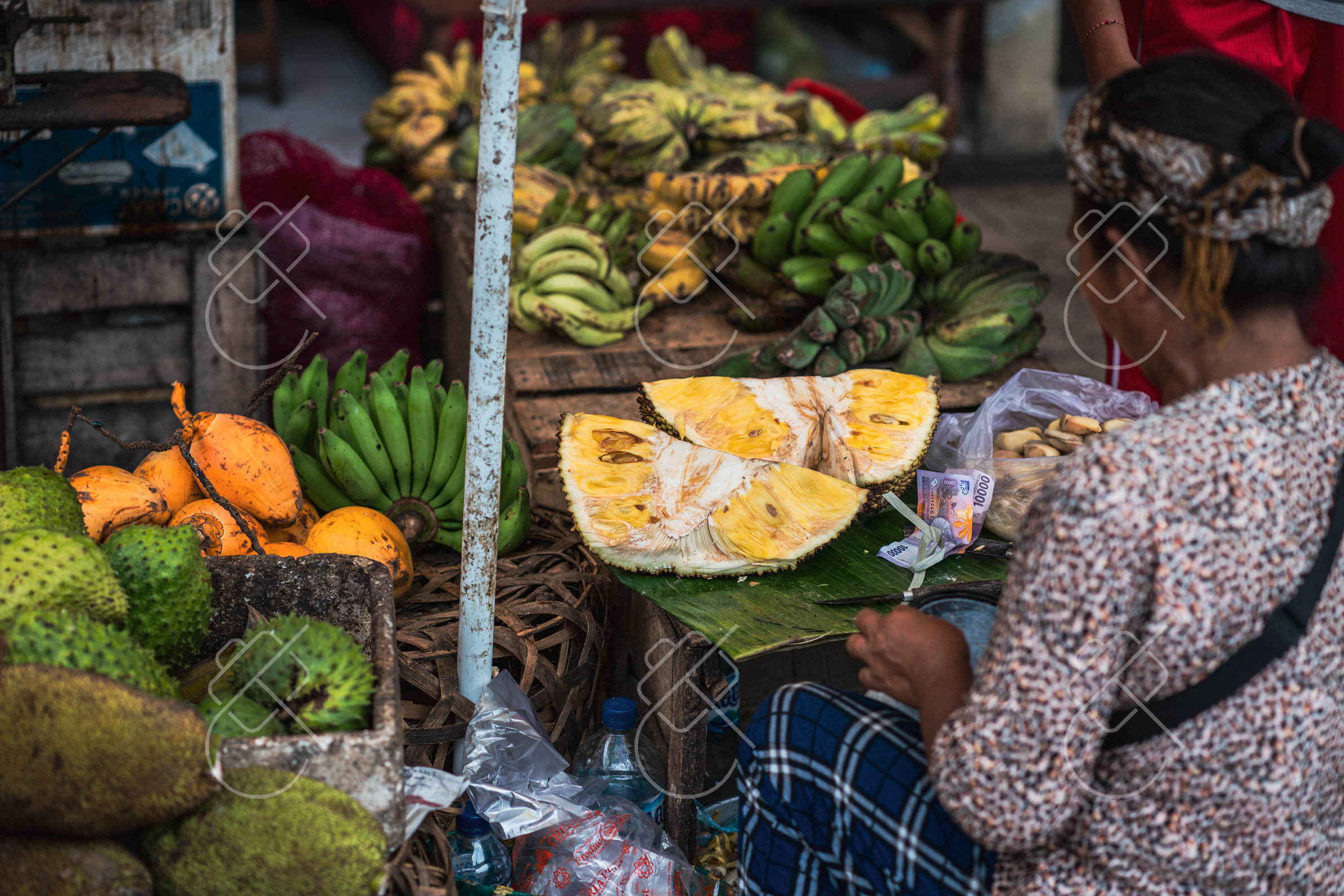
Bargaining is normal in traditional markets, small shops and roadside stalls, but not where a harga pas (fixed price) sign is posted, in supermarkets and department stores, or when buying food. Start with a smile and terlalu mahal (too expensive), then boleh kurang? (can it be less?).
Prices are spoken in thousands of rupiah: lima puluh ribu means 50,000. Markets are mostly cash; cards are fine in malls and hotels.
| English | Indonesian | Say it like | When to use it |
|---|---|---|---|
| How much is it? | Berapa harganya? | buh-RA-pa har-GA-nya | Standard price question anywhere |
| Too expensive | Terlalu mahal | ter-LA-loo MA-hahl | Start of bargaining, said with a smile |
| Can you lower the price? | Boleh kurang? | BO-leh KOO-rahng | Markets and stalls only; not where "harga pas" (fixed price) is posted |
| I'll take it | Saya ambil | SA-ya AHM-bil | Closing a deal; "Baik, saya ambil" means OK, I'll take it |
| Can I pay by card? | Bisa pakai kartu? | BEE-sa PA-kai KAR-too | Cards fine in malls and hotels, rarely at stalls |
| Cash | Tunai | TOO-nai | "Bayar tunai" means pay cash; markets are mostly cash |
On angkot minibuses, passengers call out kiri! (left, meaning pull over to the kerb) to get off. In a taxi or a ride-hailing car, berhenti di sini (stop here) is clearer. Bali has no trains, so the station phrases matter mainly on Java.
| English | Indonesian | Say it like | When to use it |
|---|---|---|---|
| Where is ...? | Di mana ...? | dee MA-na | Put the place after: "Di mana bandara?" |
| Toilet | Toilet / kamar kecil | TOY-let / KA-mar kuh-CHEEL | "Toilet" is everyday; "kamar kecil" is the polite term |
| Train station | Stasiun kereta api | sta-SEE-oon kuh-RAY-ta A-pee | "Stasiun" alone usually works; trains run on Java, not Bali |
| Airport | Bandara | bahn-DA-ra | Short for "bandar udara" |
| Left | Kiri | KEE-ree | "Belok kiri" means turn left |
| Right | Kanan | KA-nahn | "Belok kanan" means turn right |
| Straight ahead | Lurus (or terus) | LOO-roos (TUH-roos) | Both are used for directions |
| Please take me to this address | Tolong antar saya ke alamat ini | TO-long AHN-tar SA-ya kuh a-LA-mat EE-nee | Show the address on your phone as you say it |
| Stop here | Berhenti di sini | ber-HUN-tee dee SEE-nee | Taxi or ride-hailing driver; neutral and polite |
| Stop! (on a minibus/angkot) | Kiri! | KEE-ree | Call it before your stop; add "Pak" or "Bu" to be polite |
Indonesian numbers are regular. Eleven to nineteen add -belas (sebelas, dua belas), tens add -puluh (dua puluh is 20), and se- means one: seratus is 100 and seribu is 1,000. Because prices are said in thousands, confirm the full amount if a price sounds oddly cheap.
| English | Indonesian | Say it like | When to use it |
|---|---|---|---|
| 1 | satu | SA-too | Counting and prices |
| 2 | dua | DOO-a | Counting and prices |
| 3 | tiga | TEE-ga | Counting and prices |
| 4 | empat | um-PAHT | Counting and prices |
| 5 | lima | LEE-ma | Counting and prices |
| 6 | enam | uh-NAHM | Counting and prices |
| 7 | tujuh | TOO-jooh | Counting and prices |
| 8 | delapan | duh-LA-pahn | Counting and prices |
| 9 | sembilan | sum-BEE-lahn | Counting and prices |
| 10 | sepuluh | suh-POO-looh | Counting and prices |
| 100 | seratus | suh-RA-toos | Counting and prices |
| 1,000 | seribu | suh-REE-boo | Counting and prices |
| thousand (in prices) | ribu | REE-boo | Prices are said in thousands: "lima puluh ribu" is 50,000 rupiah |
Indonesia's official tourism site lists police on 110 (or 112 from a mobile), ambulance on 118 or 119, fire on 113 and search and rescue on 115. Tolong means both please and help, so shouted on its own it is a call for help.
| English | Indonesian | Say it like | When to use it |
|---|---|---|---|
| Help! | Tolong! | TO-long | Shout to get attention fast |
| Please call the police | Tolong panggil polisi | TO-long PAHNG-gil po-LEE-see | Police: dial 110 (or 112 from mobiles) |
| I need a doctor | Saya perlu dokter | SA-ya PER-loo DOK-ter | "Saya butuh dokter" also used; ambulance 118 or 119 |
| I'm lost | Saya tersesat | SA-ya ter-SUH-saht | Pair with "Di mana ...?" and a map |
| I don't understand | Saya tidak mengerti | SA-ya TEE-dahk muh-NGER-tee | Polite and clear |
| Is there someone who speaks English? | Ada yang bisa bahasa Inggris? | A-da yahng BEE-sa ba-HA-sa ING-gris | Short form of "Adakah orang yang bisa bahasa Inggris?" |
| Please speak slowly | Tolong bicara lebih pelan | TO-long bee-CHA-ra luh-BEE puh-LAHN | Casual: "Tolong pelan-pelan" (slowly, please) |
Balinese is a separate language with low, middle and high speech levels, chosen by who you are talking to, so nobody expects a visitor to speak it, and virtually every Balinese also speaks Indonesian. A few words still land well. Om Swastiastu is the respectful Hindu greeting that opens ceremonies, meetings and conversations, usually with palms pressed together below the chin; the reply is the same words. Om Shanti Shanti Shanti Om closes prayers, events and letters.
The most useful one is suksma, thank you. Balinese don't normally greet each other by time of day, so rahajeng semeng is polite but rarely heard. We spent 18 days in Bali, from Seminyak up to Munduk, Ubud, Kintamani, Sidemen and Padangbai, and terima kasih worked everywhere.
| English | Balinese | Say it like | When to use it |
|---|---|---|---|
| Hello (Balinese Hindu greeting) | Om Swastiastu | om swahs-tee-AHS-too | Respectful; often with palms together; reply with the same words |
| Thank you | Matur suksma (short: suksma) | MA-toor SOOK-sma | "Suksma" alone is the everyday form |
| You're welcome | Suksma mewali (or mewali) | SOOK-sma muh-WA-lee | Reply to "suksma" |
| Good morning | Rahajeng semeng | ra-HA-jung suh-MUNG | Polite, but locals rarely greet by time of day |
| Peace, peace, peace (closing) | Om Shanti Shanti Shanti Om | om SHAHN-tee SHAHN-tee SHAHN-tee om | Closes prayers, speeches and letters; you will hear it, rarely say it |
| Older brother / older sister (address) | Bli / Mbok | blee / m-BOK | Bali's equivalent of Mas/Mbak for drivers, staff |
| Delicious | Jaen | JA-en | Compliment for Balinese food |
| How much (is this)? | Aji kuda? | A-jee KOO-da | Market Balinese; Indonesian "Berapa?" works everywhere |
Right hand only. Give and receive money and things with your right hand, or both. Don't touch anyone's head, and don't point at people.
Temples and mosques have dress rules. At Balinese temples, cover shoulders to knees; a sarong and sash are often required and usually provided or sold at the entrance, and Balinese custom asks women who are menstruating not to enter. Dress conservatively at mosques, and be especially considerate during Ramadan. Our Bali temple etiquette guide covers the details.
Pak and Bu, not first names. Use Pak or Bu with adults, and permisi to get attention rather than waving or calling out. In Bali, the palms-together sembah goes with Om Swastiastu.
See what is considered rude in Indonesia for the customs that matter more than vocabulary.
Terima kasih (tuh-REE-ma KA-see). Terima kasih banyak means thank you very much, and makasih is the casual short form. The reply is sama-sama (you're welcome). In Bali, the Balinese thank you is suksma.
It is the respectful Balinese Hindu greeting, used to open ceremonies, meetings and conversations, often with palms pressed together below the chin. The reply is the same words. Om Shanti Shanti Shanti Om is the matching closing.
No. English is common in Bali's tourist areas, and almost every Balinese also speaks Indonesian. A few Indonesian words (terima kasih, permisi, berapa?) are still useful in markets, warungs and villages, and outside Bali English is much less common.
Ask berapa harganya? (how much is it?), answer terlalu mahal (too expensive) with a smile, then boleh kurang? (can it be less?). Bargain in traditional markets and stalls, not where a harga pas (fixed price) sign is posted or in supermarkets.
Tolong is please when you ask someone to do something for you. Silakan is please when you invite someone to go ahead, as in silakan duduk (please sit). Tolong on its own, shouted, means help.
Practical travel tips, straight to your inbox. Unsubscribe anytime.
Check how busy Bali hotels are for your dates on Booking.com.