
Home
About us
Destinations
Travel Guides
Recipes
Featured
Photos As Art
Abstract Prints
Locations
Travel Gear
Travel Resources
Favorites
Photo Framer
Explore Photos
ContactEvery road in central Bali seems to bend back toward Ubud eventually. It's been the island's artistic and spiritual center for a century — a town of temples, dance, and woodcarving workshops, ringed by the stepped green rice terraces that show up on every postcard of the island — and it's busy precisely because all of that is genuinely still happening, not staged for the crowds that come to see it.
Published July 23, 2026
Tap any photo to open it full-screen and order a print.
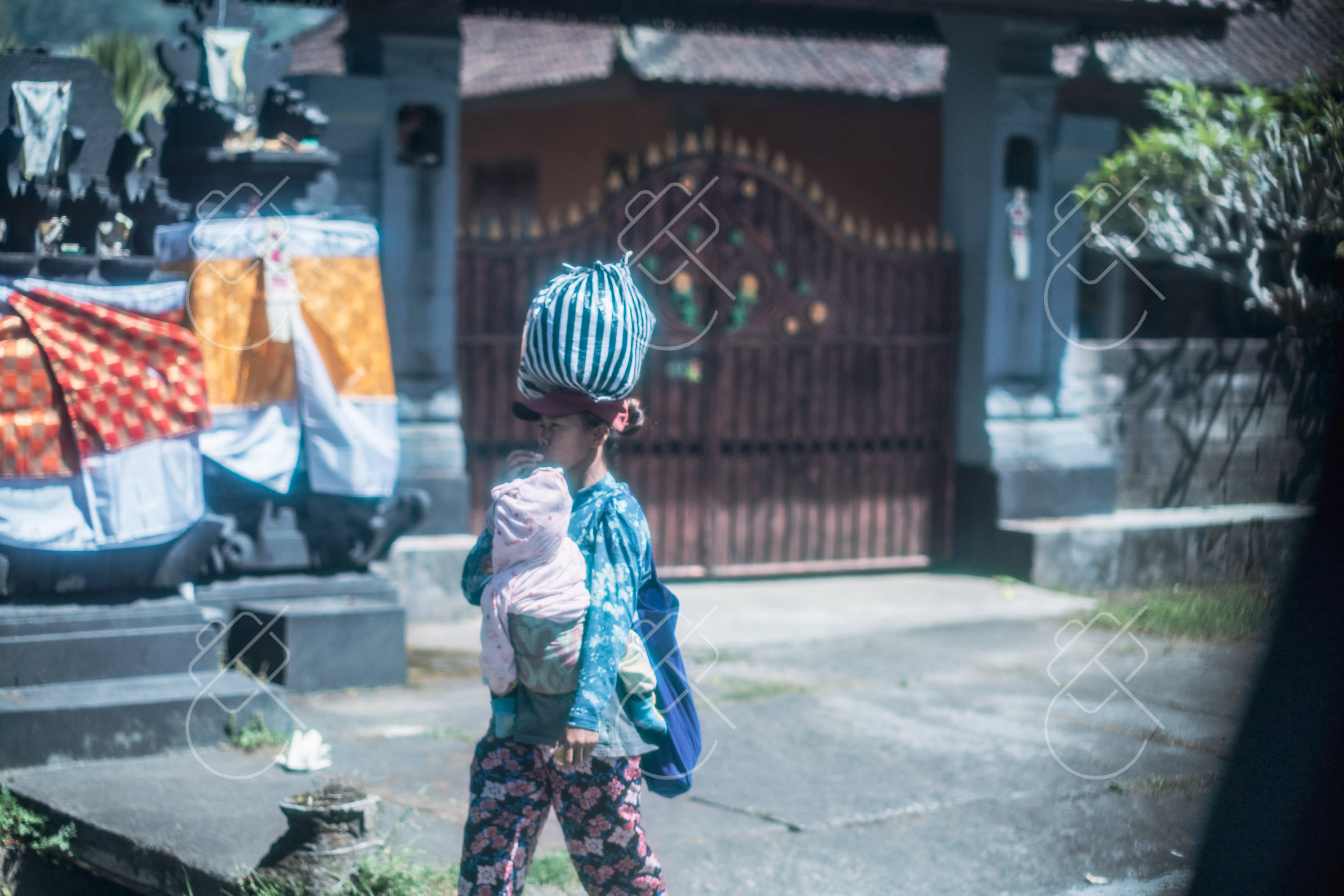
Bali's cultural heart, where a working royal palace, temple ceremonies, and terraced rice paddies share the same town center rather than being spread across an island tour.
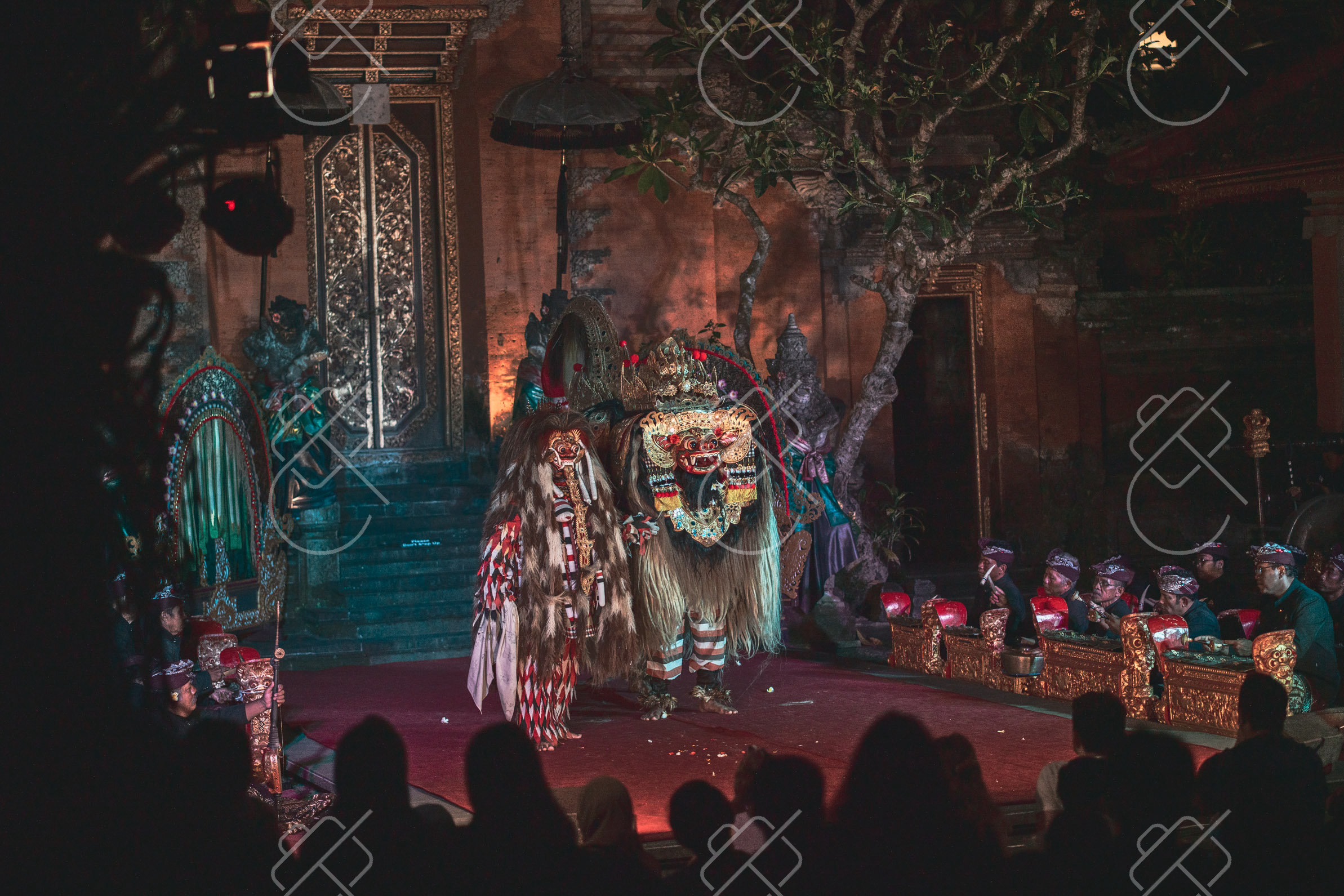
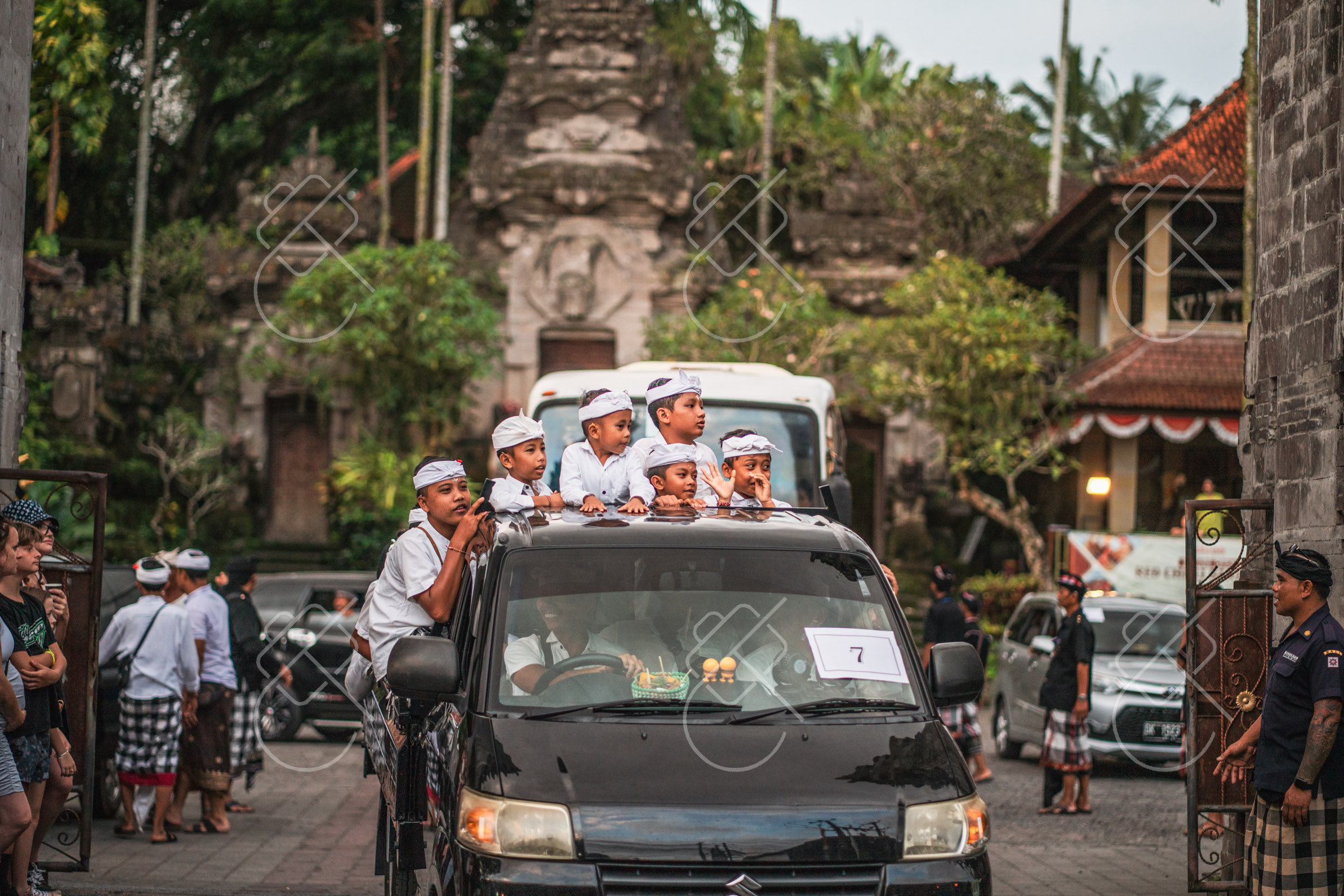
Puri Saren Ubud, the royal palace right on the main crossroads, still belongs to Ubud's royal family and still hosts the town's nightly Balinese dance performances in its outer courtyard — a gamelan orchestra in full ceremonial dress accompanying dancers in the Barong, a masked lion-spirit dance depicting the battle between the protective Barong and the witch Rangda. It's touristy in the sense that anyone can buy a ticket, and completely genuine in that the palace, the gamelan, and the mask-carving traditions behind the costumes all predate tourism here by centuries. Temple ceremonies are a live, ongoing part of town life rather than a museum piece: processions of families in white and gold ceremonial dress, carrying tiered offerings on their heads, are a normal Tuesday at any of the town's working temples, not an event scheduled for visitors.
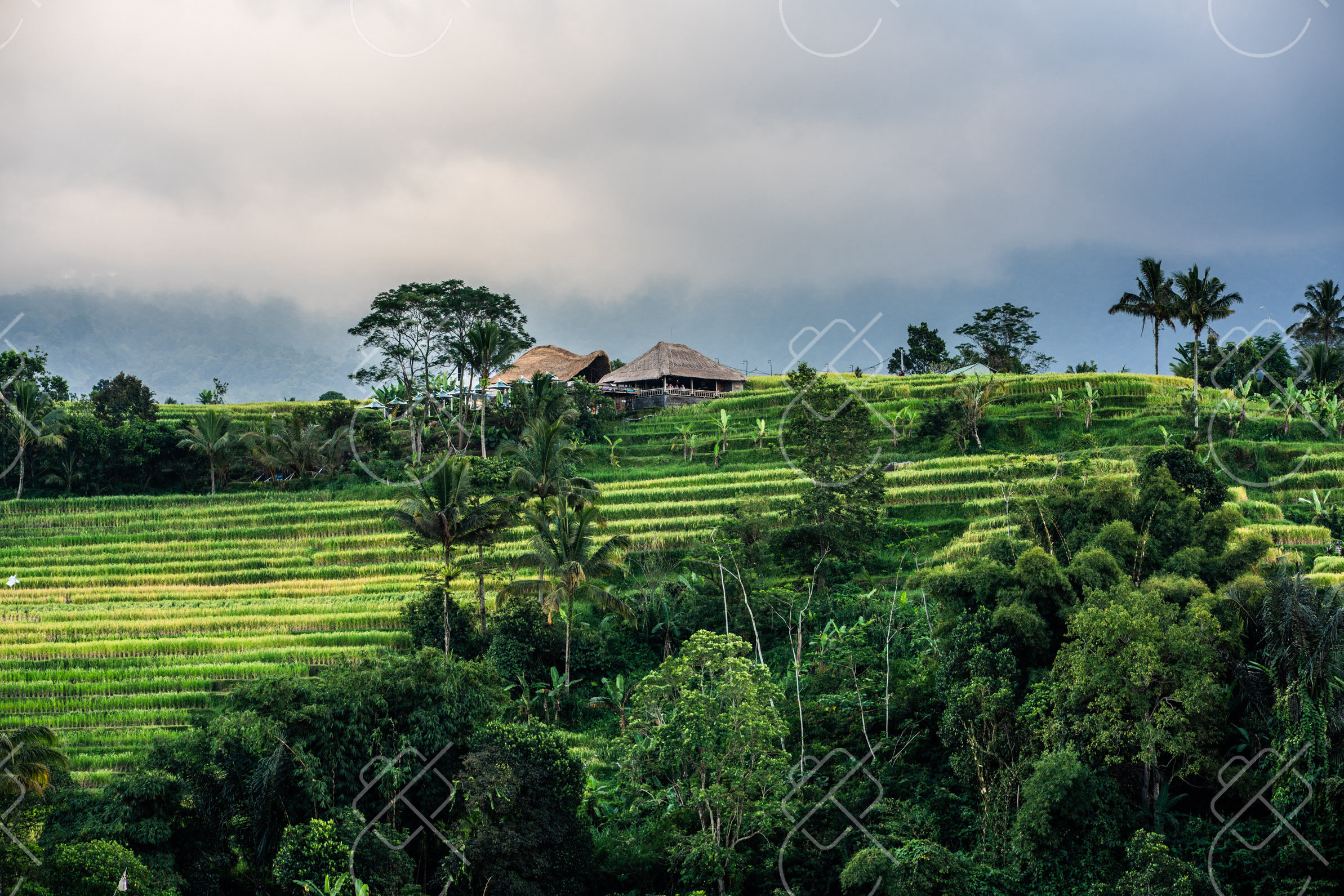
North of the center, the Tegallalang Rice Terraces step down a steep valley in the sculpted curves of the traditional subak irrigation system, a UNESCO-recognized cooperative water-sharing method that's kept these paddies farmed the same way for centuries. The terraces are at their most vividly green in the wet months and quietest in the early morning before the tour buses arrive. The Campuhan Ridge Walk offers a different, less crowded version of the same landscape: an easy, mostly flat path along a grassy ridge above two converging river valleys, walkable straight from the town center without a car.
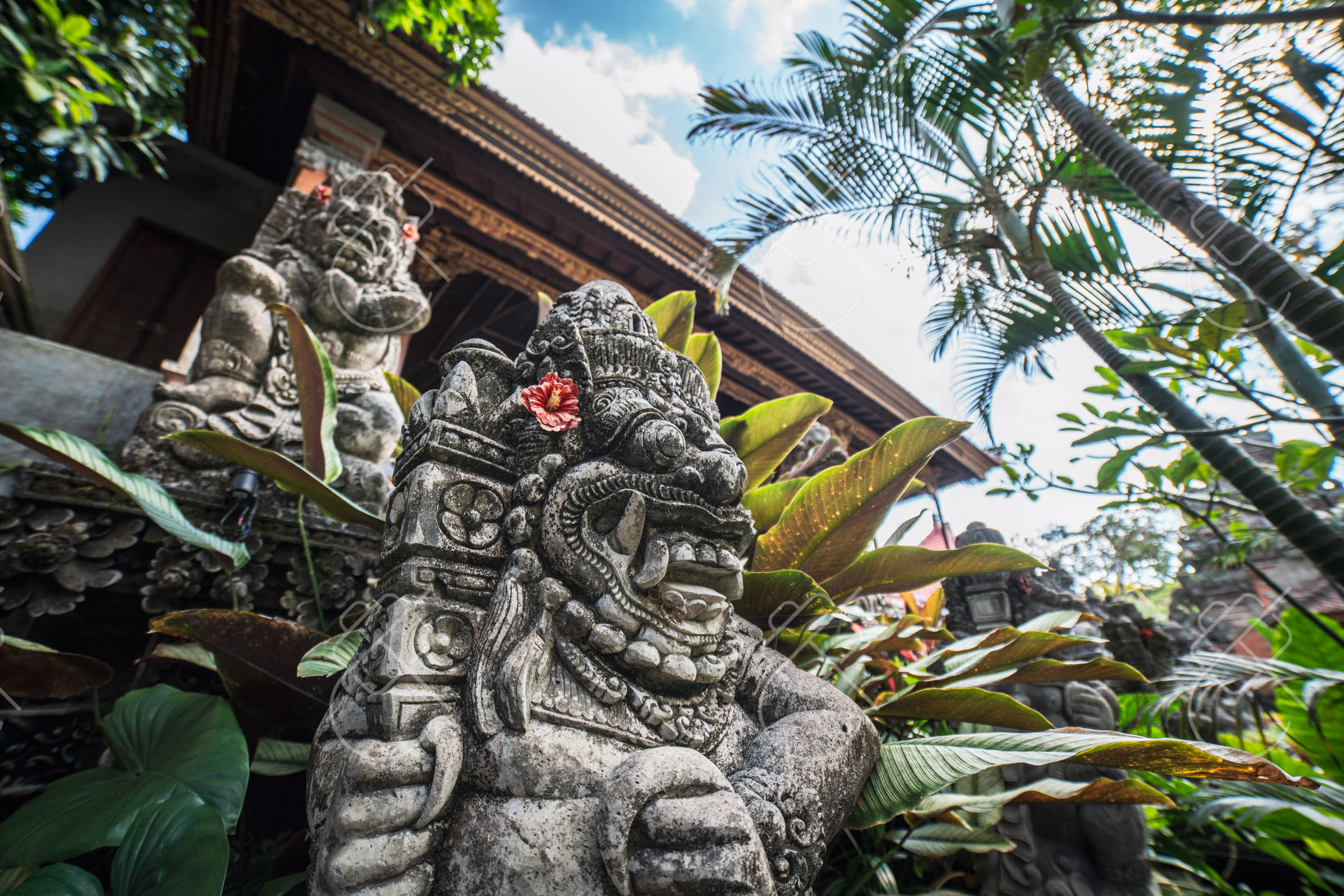
A carved stone temple guardian, decorated with a fresh hibiscus offering
Ubud's temples reward a full day on their own. Goa Gajah, the Elephant Cave, has a meditation cave entrance carved directly into rock in the shape of a demon's face, predating any written record of who built it. Tirta Empul is a working water temple where Balinese Hindus and, respectfully, visitors bathe in a row of spring-fed spouts believed to have purifying properties — bring a sarong and expect it to be a real place of worship, not a photo backdrop. The Sacred Monkey Forest, right at the edge of town, is simultaneously a nature reserve, a temple complex, and home to several hundred long-tailed macaques who have the run of the place and no particular respect for unattended snacks or dangling jewelry.
April to October (dry season) for the most reliable weather and easiest walking on the ridge and rice-terrace paths; the wet season (November to March) brings the terraces to their greenest but adds afternoon downpours most days. Early morning, regardless of season, is the only reliable way to see Tegallalang or the palace courtyard without a crowd.
The town center, within walking distance of the palace and the main market, keeps the Campuhan Ridge Walk and most temples reachable on foot or by a short scooter ride; staying further out toward the rice terraces trades that walkability for a quieter, greener setting.
Babi guling (spit-roasted suckling pig, seasoned with a dense paste of Balinese spices) is the dish Ubud is known for island-wide, sold at warungs that often close as soon as that day's pig runs out. Nasi campur — a plate of rice with a little of everything available that day — is the everyday equivalent, served differently at nearly every warung in town.
Check for a temple ceremony before you arrive rather than after — local calendars run on a 210-day Balinese cycle rather than the Western one, so a village odalan (temple anniversary) or procession can land on any date, and stumbling onto one, respectfully and from a distance, tends to be the most memorable thing about a visit.
Compare Ubud hotels and get the best deals on Booking.com.
We had World Nomads as our travel insurance, covering us for the entire Ubud, Bali, Indonesia leg of the trip — one less thing to worry about.
Transit cards, local customs, visa rules, and practical travel guides for this region.
See every destination from the 526-day journey:
Browse all destinationsCurious about the gear behind these photos? See the gear list.