 Culture & etiquette
By Clever Tourists · Published
Most younger Czechs, and most people working in Prague's hotels, bars and restaurants, speak English; older people and staff in traditional places outside the centre often don't. The one phrase to learn is Dobrý den, the polite hello you say when walking into a shop, and its partner Na shledanou when you leave. Czech stress always falls on the first syllable, which the respellings below show, and the letter ř is a rolled r and a "zh" said at once, written rzh here.
This page contains affiliate links. If you book or buy through them we may earn a commission, at no extra cost to you.
Dobrý den (literally "good day") is the polite greeting for strangers and staff, and it is what you say walking into a small shop. Ahoj and čau are casual, and both mean hello and goodbye, like ciao; keep them for friends and people your age.
When you leave, say Na shledanou. Czechs write it as two words.
| English | Czech | Say it like | When to use it |
|---|---|---|---|
| Hello (polite) | Dobrý den | DOH-bree den | Strangers, shops, staff. |
| Hi / bye (casual) | Ahoj | AH-hoy | Friends and people you call ty. |
| Hi / bye (casual) | Čau | CHOW | Friends. |
| Good morning | Dobré ráno | DOH-breh RAH-noh | Early in the morning. |
| Good evening | Dobrý večer | DOH-bree VEH-cher | Evening greeting. |
| Good night | Dobrou noc | DOH-broh nots | Going to bed or leaving late. |
| How are you? (polite) | Jak se máte? | YAHK seh MAH-teh | Strangers and older people. |
| How are you? (casual) | Jak se máš? | YAHK seh MAHSH | Friends. |
| Nice to meet you | Těší mě | TYEH-shee mnyeh | On being introduced. |
| Goodbye | Na shledanou | NAHS-khleh-dah-noh | Leaving a shop, café or restaurant. |
Prosím is the busiest word in Czech. It means "please", "you're welcome", "here you are", "pardon?" and, from a waiter, "what would you like?". Děkuji is the standard "thank you"; in casual speech you will hear děkuju and díky.
Promiňte covers "excuse me" and "sorry" with strangers; promiň is the casual form. To get past people on a tram, say s dovolením.
| English | Czech | Say it like | When to use it |
|---|---|---|---|
| Please | Prosím | PROH-seem | After any request. |
| Thank you | Děkuji | DYEH-koo-yih | Everywhere. |
| Thanks (casual) | Díky | DEE-kih | Friends, quick exchanges. |
| Thank you very much | Děkuji mockrát | DYEH-koo-yih MOTS-kraht | For real help. |
| You're welcome | Prosím / Není zač | PROH-seem / NEH-nyee zahch | Reply to děkuji. |
| Excuse me / sorry | Promiňte | PROH-mihn-yteh | Strangers. Promiň with friends. |
| Excuse me (getting past) | S dovolením | SDOH-voh-leh-nyeem | On a crowded tram or in a doorway. |
| Yes | Ano | AH-noh | Jo (YOH) is the casual yes. |
| No | Ne | NEH | Answering a question. |
| No, thank you | Ne, děkuji | NEH, DYEH-koo-yih | Turning something down. |
The toast is Na zdraví! ("to health"). Look the other person in the eye as you clink, and clink with the people around you rather than reaching across the whole table. Before eating, people wish each other Dobrou chuť.
In Czech, menu often means a fixed-price lunch, so ask for the jídelní lístek if you want the full menu. To pay, zaplatím, prosím ("I'll pay, please") is what most people say. Tipping is usually rounding up, or around 10% in tourist restaurants; our Prague tipping guide has the detail.
| English | Czech | Say it like | When to use it |
|---|---|---|---|
| A table for two, please | Stůl pro dvě osoby, prosím | STOOL proh DVYEH OH-soh-bih, PROH-seem | At the door of a restaurant. |
| The menu, please | Jídelní lístek, prosím | YEE-del-nyee LEES-tek, PROH-seem | Menu often means the set lunch. |
| Enjoy your meal | Dobrou chuť | DOH-broh KHOOT | Said before eating. |
| It was delicious | Bylo to výborné | BIH-loh toh VEE-bor-neh | Telling the waiter. |
| Cheers! | Na zdraví! | NAH-zdrah-vee | Raising a glass, with eye contact. |
| I'd like to pay, please | Zaplatím, prosím | ZAH-plah-teem, PROH-seem | The usual way to ask for the bill. |
| The bill, please | Účet, prosím | OO-chet, PROH-seem | Also understood. |
| I'm vegetarian | Jsem vegetarián / vegetariánka | sem VEH-geh-tah-ree-ahn / VEH-geh-tah-ree-ahn-kah | Men vegetarián, women vegetariánka. |
| I'm allergic to... | Jsem alergický / alergická na... | sem AH-ler-gits-kee / AH-ler-gits-kah nah | Men -ý, women -á. Nuts: na ořechy (OH-rzheh-khih). |
| Tap water | Kohoutková voda | KOH-hoht-koh-vah VOH-dah | Tap water is safe to drink. |
Practical travel tips, straight to your inbox. Unsubscribe anytime.
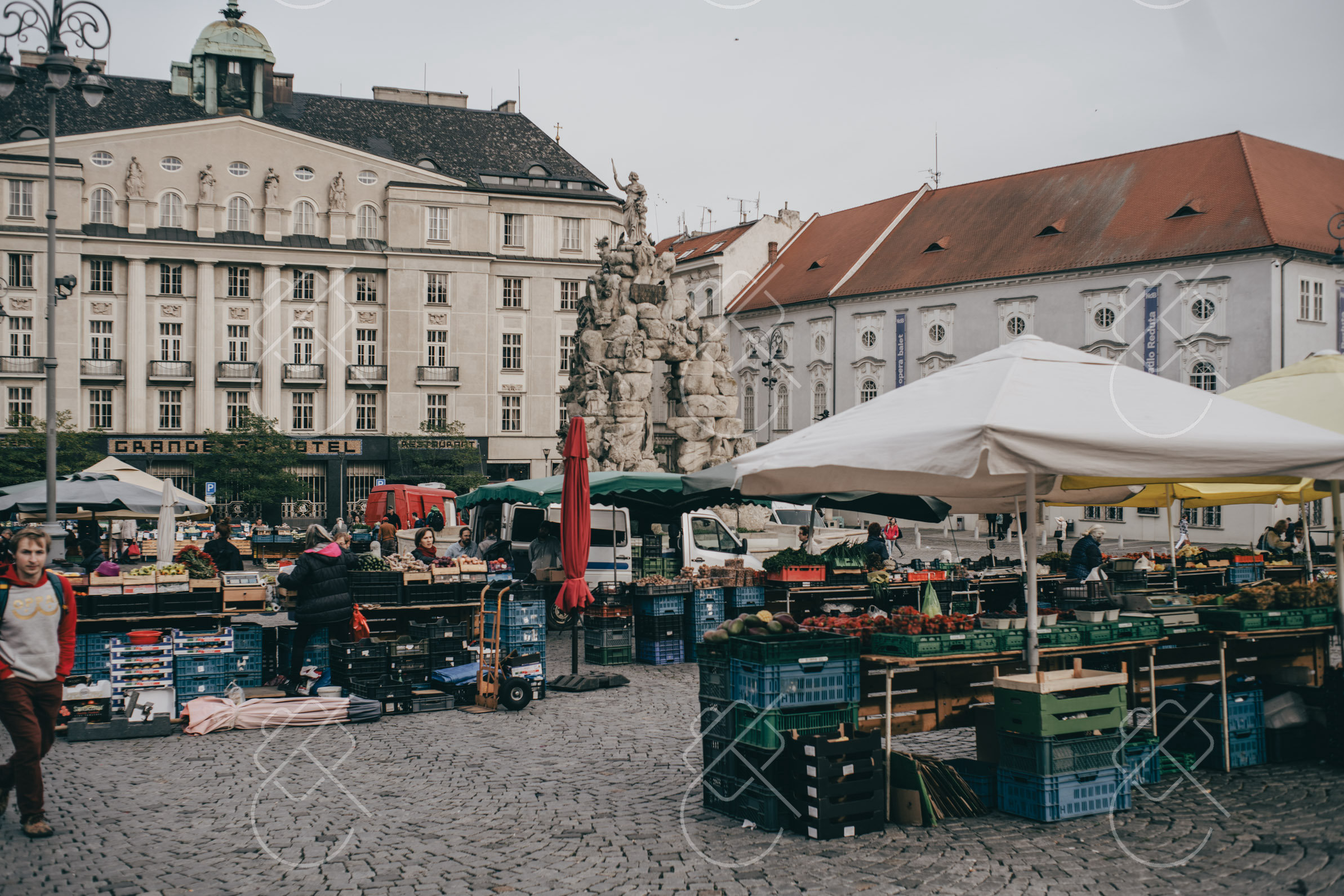
Prices are fixed in shops and at markets, and haggling is not done. The currency is the Czech crown (koruna, Kč), not the euro. Card payment is normal in Prague and most towns, but small stalls, pubs and rural shops may want cash.
Say Dobrý den to the stallholder before you point, and Na shledanou when you leave.
| English | Czech | Say it like | When to use it |
|---|---|---|---|
| How much is it? | Kolik to stojí? | KOH-lik toh STOH-yee | Pointing at an item. |
| This one, please | Tohle, prosím | TOH-hleh, PROH-seem | Pointing. |
| Do you take cards? | Berete kreditní karty? | BEH-reh-teh KREH-dit-nyee KAR-tih | Before you queue. |
| In cash | Hotově | HOH-toh-vyeh | You may hear Platíte hotově nebo kartou? (cash or card?) |
Vlevo and vpravo mean "on the left" and "on the right" (where something is); doleva and doprava mean "to the left" and "to the right" (which way to turn). Prague's main station is Praha hlavní nádraží, usually shortened to hlavní nádraží.
Place names change their endings after do (to): Prague is Praha but a ticket "to Prague" is do Prahy. Station staff will understand the plain name too.
| English | Czech | Say it like | When to use it |
|---|---|---|---|
| Where is...? | Kde je...? | GDEH yeh | Add the place. |
| Where is the toilet? | Kde je záchod? | GDEH yeh ZAH-khot | Signs say WC (VEH-tseh) or toalety. |
| Train station | Nádraží | NAH-drah-zhee | Hlavní nádraží is the main station. |
| Airport | Letiště | LEH-tyish-tyeh | Asking directions or telling a taxi. |
| On the left / to the left | Vlevo / doleva | VLEH-voh / DOH-leh-vah | Following directions. |
| On the right / to the right | Vpravo / doprava | FPRAH-voh / DOH-prah-vah | Following directions. |
| Straight ahead | Rovně | ROV-nyeh | Following directions. |
| Ticket (transport) | Jízdenka | YEEZ-den-kah | Lístek is the everyday word for any ticket. |
| One ticket to Prague, please | Jednu jízdenku do Prahy, prosím | YED-noo YEEZ-den-koo DOH-prah-hih, PROH-seem | At a ticket window. |
One and two change with the gender of what you are counting: jeden lístek (one ticket) but jedna káva (one coffee), dva for masculine nouns and dvě for the rest. For ordering, jedno pivo (one beer) and dvě piva (two beers) are the forms you will use most.
| English | Czech | Say it like | When to use it |
|---|---|---|---|
| 1 | jeden / jedna / jedno | YEH-den / YED-nah / YED-noh | Masculine / feminine / neuter. |
| 2 | dva / dvě | DVAH / DVYEH | Masculine / feminine and neuter. |
| 3 | tři | TRZHIH | Counting and prices. |
| 4 | čtyři | CHTIH-rzhih | Counting and prices. |
| 5 | pět | PYET | Counting and prices. |
| 6 | šest | SHEST | Counting and prices. |
| 7 | sedm | SEH-dum | Counting and prices. |
| 8 | osm | OH-sum | Counting and prices. |
| 9 | devět | DEH-vyet | Counting and prices. |
| 10 | deset | DEH-set | Counting and prices. |
| 100 | sto | STOH | Counting and prices. |
| 1,000 | tisíc | TYIH-seets | Counting and prices. |
112 is the general emergency number and answers in English and other languages. The direct lines are 155 (ambulance), 158 (police) and 150 (fire), but they may answer only in Czech.
| English | Czech | Say it like | When to use it |
|---|---|---|---|
| Help! | Pomoc! | POH-mots | Shouted in an emergency. |
| Call the police! | Zavolejte policii! | ZAH-voh-ley-teh POH-lih-tsih-yih | To a bystander or staff. |
| I need a doctor | Potřebuji lékaře | POH-trzheh-boo-yih LEH-kah-rzheh | At a hotel desk or pharmacy (lékárna). |
| I'm lost | Ztratil jsem se / Ztratila jsem se | STRAH-tyil sem seh / STRAH-tyi-lah sem seh | Men ztratil, women ztratila. |
| I don't understand | Nerozumím | NEH-roh-zoo-meem | When a reply goes over your head. |
| Do you speak English? | Mluvíte anglicky? | MLOO-vee-teh AHN-glits-kih | Polite form, for strangers. |
| Please speak more slowly | Mluvte prosím pomaleji | MLOOF-teh PROH-seem POH-mah-leh-yih | Polite form. |
Say Dobrý den going in and Na shledanou going out of small shops, pharmacies and cafés. Czechs don't usually greet strangers in the street, but walking into a small shop in silence comes across as rude.
Use the polite vy form with adults you don't know. Using the casual ty with a stranger is rude in Czech, not friendly. The phrases above all use vy.
Titles still appear in formal settings. People are pan (Mr) and paní (Mrs, Ms) plus surname, and in hospitals, universities and offices you will hear academic titles used in address, such as pane doktore. A handshake is the normal greeting when you are introduced.
Toast properly. Keep eye contact with each person as you say Na zdraví and clink. Our things to know before visiting the Czech Republic covers money, transport and the other practical surprises.
Děkuji, said DYEH-koo-yih. Casual forms are děkuju and díky, and thank you very much is děkuji mockrát.
Dobrý den (DOH-bree den) to strangers and in shops. Ahoj and čau are the casual hello and goodbye for friends.
Most younger Czechs and most people working in Prague's tourist businesses speak English. Older people and traditional pubs or rural shops are more hit and miss.
Na zdraví, meaning "to health". Look each person in the eye as you clink glasses.
112, which answers in English. The direct lines are 155 for an ambulance, 158 for police and 150 for fire.

Practical travel tips, straight to your inbox. Unsubscribe anytime.
Look up Czech Republic hotels near the places in this guide on Booking.com.