Home
About us
Destinations & Country Guides
Travel Guides
Recipes
Featured
Photos As Art
Abstract Prints
Locations
Travel Gear
Travel Resources
Favorites
Photo Framer
Explore Photos
Contact Food & culture
By Clever Tourists · Published
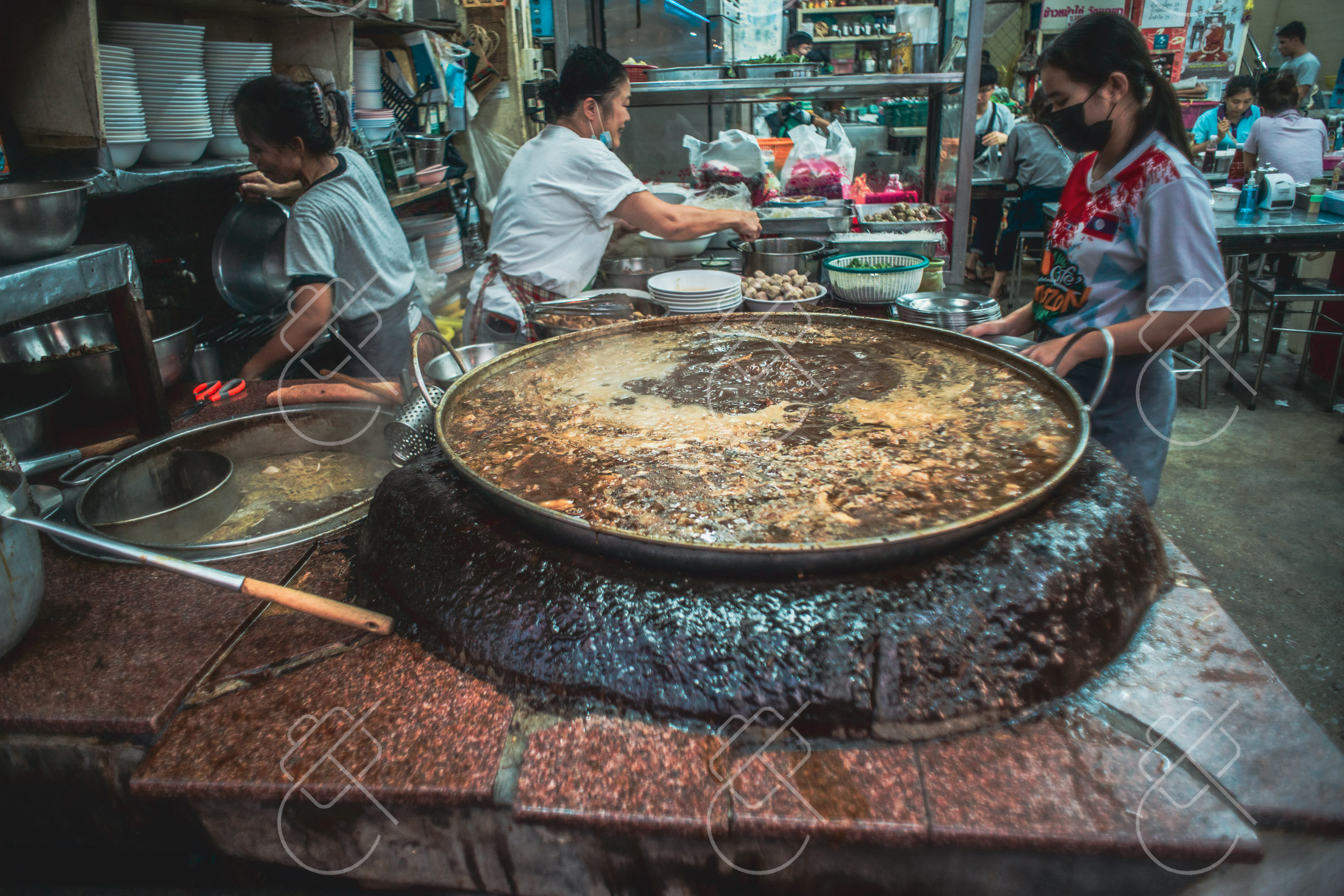
Thailand runs two grocery systems in parallel, and the choice between them is not about price. The supermarket (Big C, Lotus’s, Tops, Makro) is air-conditioned, labelled in English and stocks the branded pantry items you can carry home. The wet market (talat) is where the cooking actually happens: herbs by the bunch, curry paste ground to order, fish still on ice. Most Thai households use both, and so should you.
Nam pla is fermented fish sauce and it is not interchangeable with soy. It is salt, savoury depth and aroma at once, and it goes into almost everything that is not sweet.
Look for first-press or premium grades, which are clearer and smell cleaner than the cheapest bottles. The label usually states the fish used and the province; Phu Quoc-style and Rayong products are common.
Prik nam pla is the table condiment made from fish sauce, lime and chopped chilli. You can buy it ready-made, but it is four ingredients and better fresh.
Red and green pastes are the two you will use most. Green is hotter and fresher-tasting, red is rounder and works with beef and duck as well as chicken.
Massaman is the mild, warm-spiced one with cinnamon and cardamom; panang is thicker and sweeter and is used more like a sauce than a soup.
Supermarket pastes in small tins are perfectly decent and travel well. Wet-market paste, ground in front of you, is better but has a short life and should not go in a suitcase.
Supporting cast: coconut milk (buy the thicker first-press tins), palm sugar in dark blocks, and tamarind as a concentrate or a wet block.
Thailand has one of the densest convenience-store networks anywhere, and the branches are not just for snacks. They are where you buy water in bulk, hot toasties, microwaved rice dishes, and iced drinks served in a plastic bag with a straw.
They are also the reliable place to top up a phone, pay a bill or buy a SIM. For a traveller, that makes them infrastructure rather than a shop.

Durian runs roughly from spring into summer, with the peak varying by region and cultivar. It is sold whole, opened at the stall, and eaten on the spot — most hotels forbid it indoors.
Mango peaks in the first half of the year, which is when khao niao mamuang (sticky rice and mango) is at its best.
Mangosteen, rambutan, longan and lychee overlap in the hot season. Buying them from a market stall costs a fraction of the supermarket price.
Rose apples, pomelo and banana are available year-round, which is why they show up on every breakfast plate.
Cash is normal at markets, cards are normal in supermarkets and convenience stores.
Produce is usually pre-portioned rather than weighed by the customer; at a wet market you say how much you want and the vendor weighs it.
Plastic bags are used generously and freely, including for a single drink. If that bothers you, carry a cloth bag and say no early.
No tipping at shops, though rounding up is common in restaurants.
Fish sauce (nam pla) fills that role for salt and savoury depth, alongside sweet dark soy and oyster sauce in specific dishes. It is not a direct substitute for soy sauce in every recipe.
Yes. Sealed tins and jars from a supermarket travel well and are the practical choice. Fresh wet-market paste is better but spoils quickly.
Roughly spring into summer, with the peak depending on region and cultivar. It is sold whole and opened at the stall.
For produce, herbs and fruit, usually yes, and the quality is often better because it moved less. Supermarkets win on air conditioning, labelling and packaged goods.
Get our new Thailand guides and practical tips by email: where to stay, what to eat, what things cost and the rules that catch travelers out.
Free. No spam, only new guides and tips.
Search verified local fleets with low security deposits and exact model delivery on Localrent.
Get the best deals on a place to stay in Thailand on Booking.com.