Home
About us
Destinations
Travel Guides
Recipes
Featured
Photos As Art
Abstract Prints
Locations
Travel Gear
Travel Resources
Favorites
Photo Framer
Explore Photos
ContactTakayama is a mountain market town in the Hida Alps of Gifu Prefecture, where the Tokugawa shogunate kept a governor's office and merchants grew rich on timber and sake. Its Edo-period core of dark latticed shopfronts survived largely intact, and two morning markets still set up beside the river and the old government house every day of the year. This guide covers the old town, the markets, the festival floats, Hida beef, and the bus out to the thatched farmhouses of Shirakawa-go.
Published October 15, 2026
Tap any photo to open it full-screen and order a print.
Give Takayama two nights. The old town, both morning markets, Takayama Jinya and the Higashiyama temple walk fill one full day on foot; the second day splits between Hida Folk Village in the morning and either Shirakawa-go or an onsen afternoon. Shirakawa-go is a 50-minute Nohi Bus ride away, so it works as a half-day trip or as a stop on the bus onward to Kanazawa. Everything in town is within a 15-minute walk of JR Takayama Station, and the town goes quiet early: most shops in Sanmachi close by 5pm, so do the sights in the morning and save the evening for dinner and the riverside walk.
Takayama sits at about 570 meters in the mountains, so it runs colder than Kyoto or Tokyo in every season. The two festival weeks and the autumn color draw the biggest crowds; late spring and early winter are the quiet windows.
March and early April are still cold, with bare trees and occasional snow. The Sanno Matsuri parades the spring floats on April 14-15, and cherry blossoms along the Miyagawa usually follow in mid to late April, a couple of weeks behind Tokyo.
The rainy season runs through June into July, then days turn warm but cooler than the lowland cities. Hida Folk Village and the Higashiyama temple walk are at their greenest, and Okuhida's alpine valleys open up for hiking.
The Hachiman Matsuri fills town on October 9-10, and maples and ginkgo color from late October into mid-November. This is peak season: book rooms and the Shirakawa-go bus well ahead.
Snow settles on the merchant-house roofs and the thatch at Shirakawa-go, which holds evening light-ups on select dates in January and February that need advance tickets. Pair the cold with an onsen night in Okuhida or Gero.
Sanmachi Suji (old town) — Three parallel lanes of Edo-period merchant houses, sake breweries and craft shops; go before 9am or after 4pm.
Miyagawa Morning Market — Riverside stalls of pickles, miso, apples and crafts between Kaji-bashi and Yayoi-bashi, roughly 7am to noon daily.
Shirakawa-go — UNESCO-listed village of steep thatched gassho-zukuri farmhouses, 50 minutes away by Nohi Bus.
Takayama Jinya — The only surviving Edo-era shogunate regional government office in Japan, with its rice storehouse and interrogation room.
Hida Folk Village (Hida no Sato) — Open-air museum of relocated gassho farmhouses around a pond, a quieter alternative to Shirakawa-go.
Jinya-mae Morning Market — The smaller of the two markets, in the forecourt of Takayama Jinya; pair them in one early walk.
Higashiyama Walking Course — A roughly 3.5 km loop through a temple district of 13 temples and 5 shrines on the town's eastern hillside.
Takayama Festival Floats Exhibition Hall — Rotating display of the ornate yatai floats from the October festival, beside Sakurayama Hachimangu shrine.
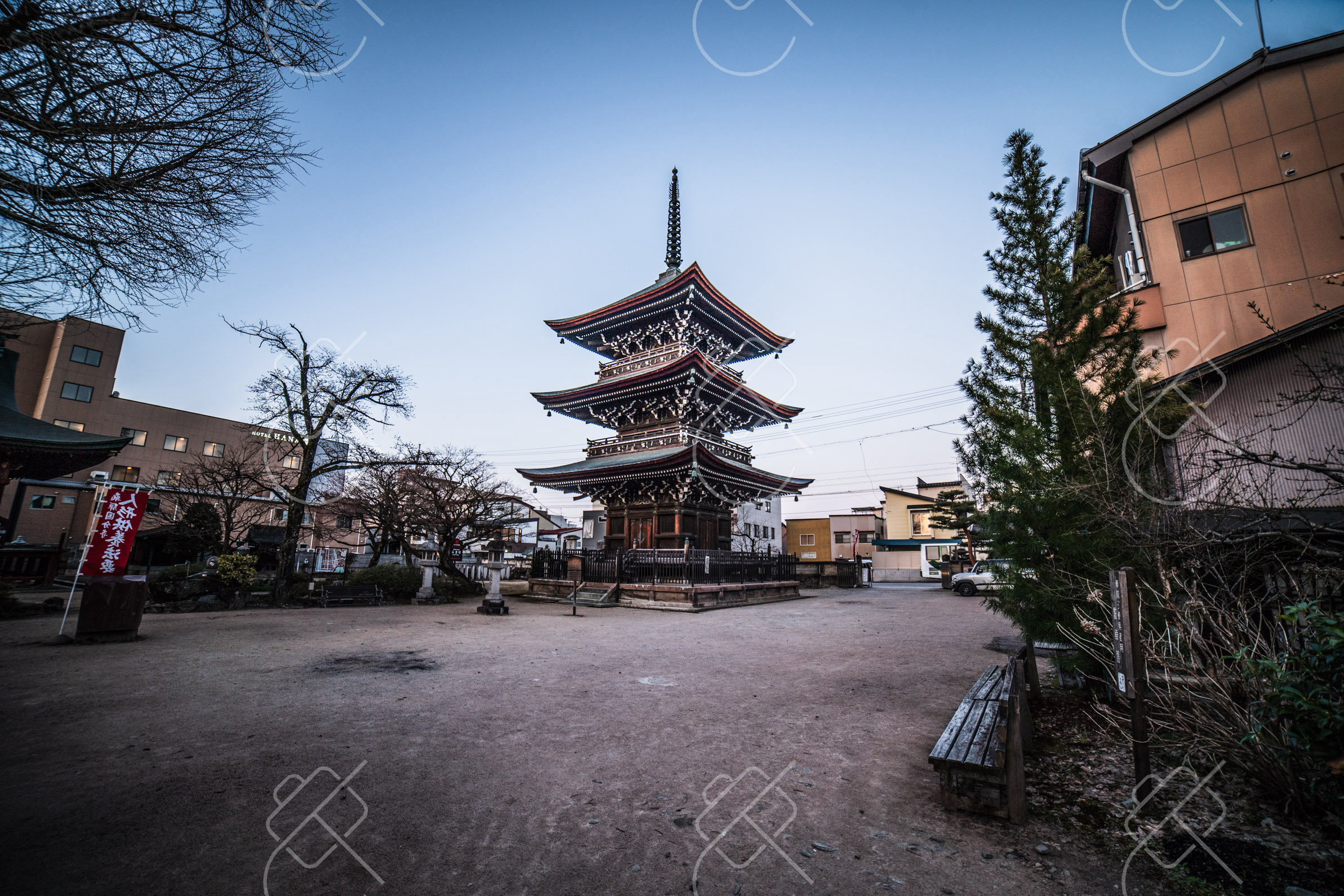
Hida Kokubunji — The town's oldest temple, with a three-story pagoda and a ginkgo said to be over 1,200 years old, near the station.
Kusakabe and Yoshijima Heritage Houses — Neighboring merchant mansions with soaring timber-beamed atriums, a short walk north of Sanmachi.
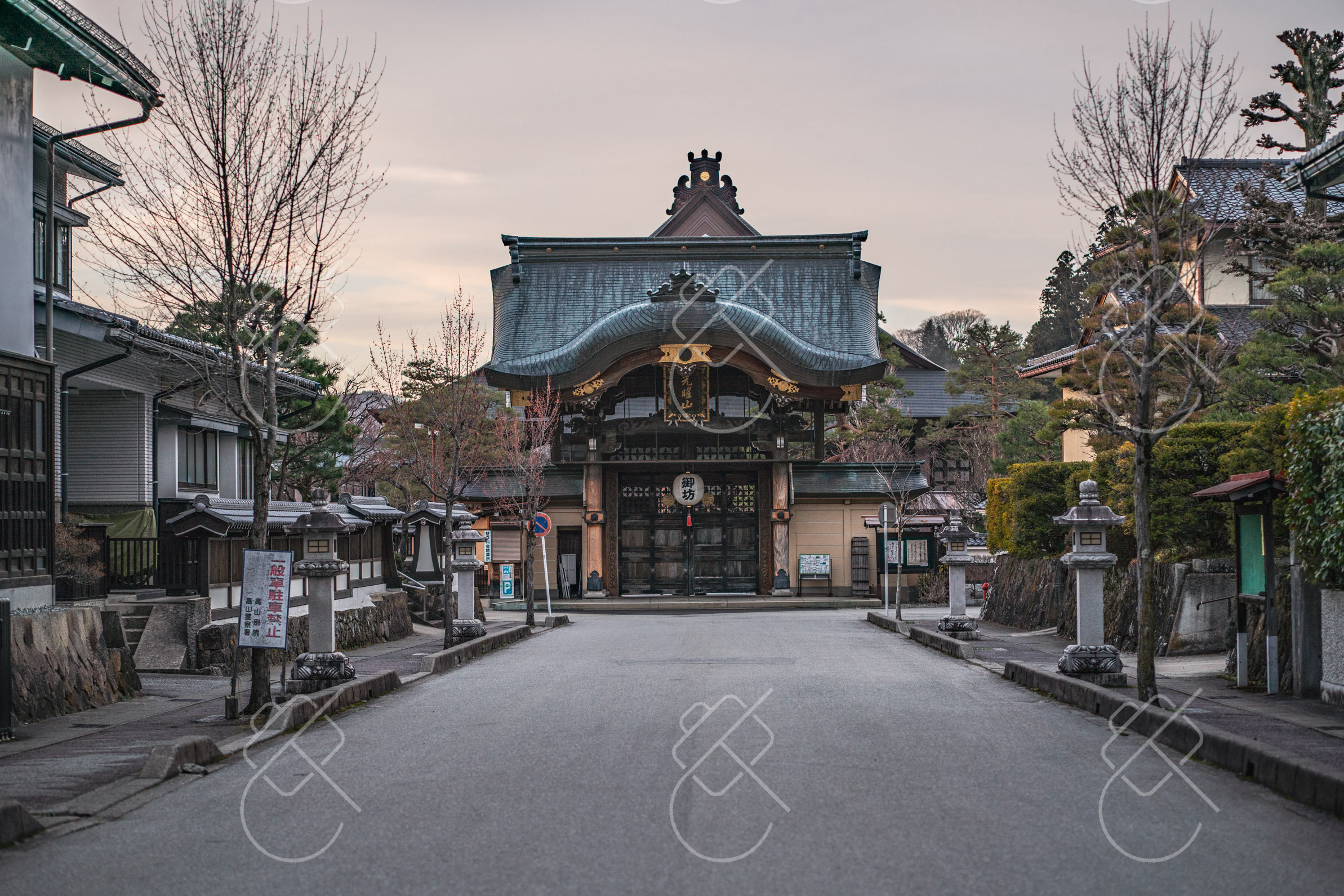
Takayama is a preserved Edo-period merchant town in the Hida mountains of Gifu, known for its Sanmachi old quarter, two daily morning markets, Hida beef, and the festival floats paraded through its streets every April and October.
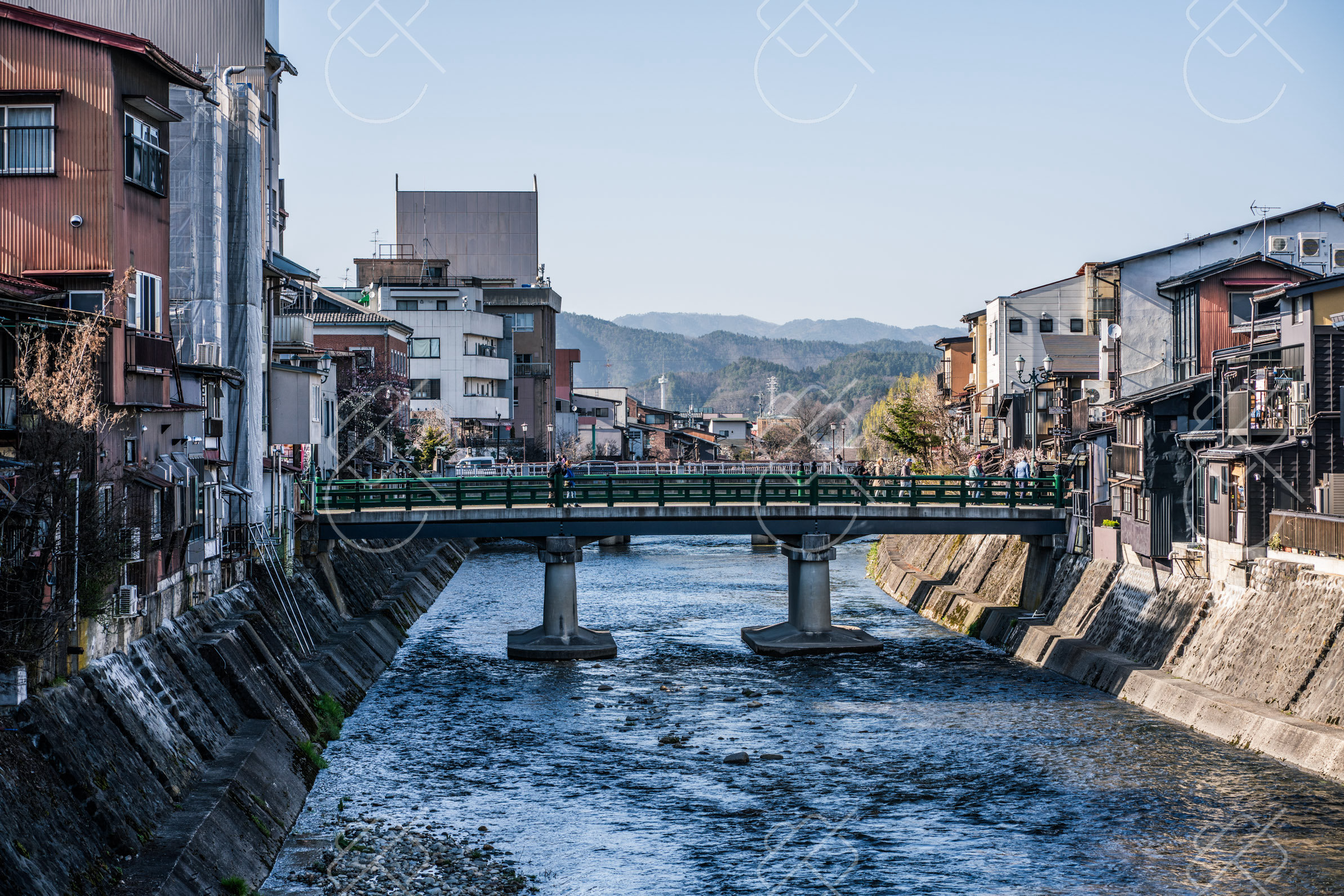
Takayama's old town, Sanmachi Suji, is three narrow parallel lanes (Ichino-machi, Nino-machi and Sanno-machi) of two-story wooden merchant houses with dark latticed fronts, low eaves and stone gutters running with snowmelt along the street edge. Several of the houses are working sake breweries, marked by a sugidama ball of cedar sprigs hanging over the door; most pour tastings for a few hundred yen, and the color of the ball tells you how far along the new season's sake is. Two blocks west stands Takayama Jinya, the regional office the Tokugawa shogunate ran here from 1692 to 1868 after taking direct control of Hida for its timber, and the only building of its kind left in Japan. Its tatami reception halls, rice granary and stark interrogation room cost around ¥440 to see. Mornings belong to the two markets: the Miyagawa Morning Market strings along the east bank of the Miyagawa River and the smaller Jinya-mae market fills the forecourt of the Jinya, both selling pickles, miso, sansai mountain vegetables, apples, and carved crafts until about noon.
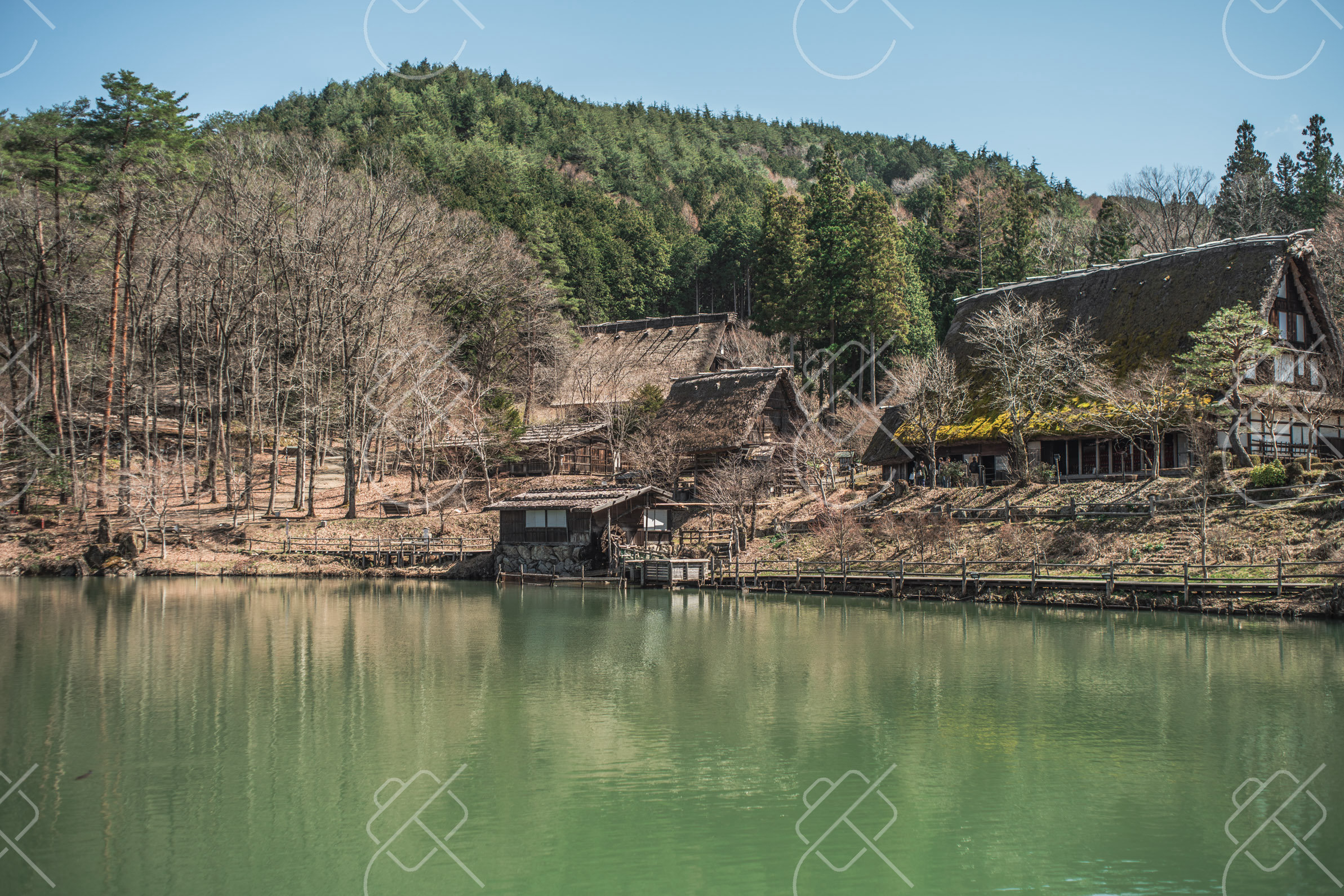
Thatched gassho-zukuri farmhouses around the pond at Hida Folk Village, the hillside still bare in early spring
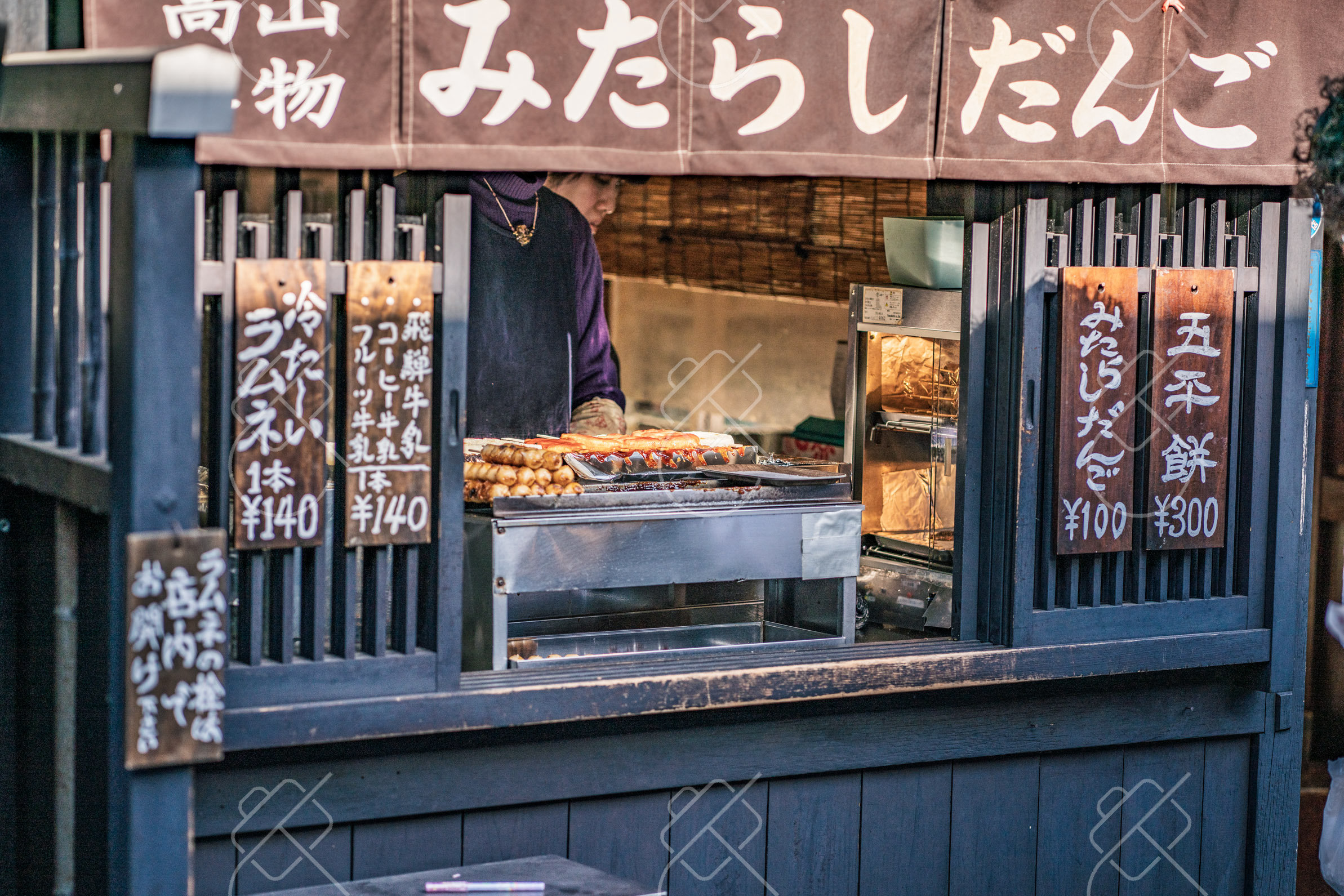
Twice a year the town turns out for the Takayama Festival, counted among Japan's three most beautiful: the Sanno Matsuri on April 14-15 and the Hachiman Matsuri on October 9-10, when up to a dozen gilded and lacquered yatai floats, some carrying mechanical karakuri puppets, are pulled through the streets and lit with lanterns at night. Outside those dates, the Festival Floats Exhibition Hall beside Sakurayama Hachimangu keeps several floats on show. Twenty minutes' walk west of the station, Hida Folk Village gathers about 30 relocated farmhouses, many of them steep-roofed gassho-zukuri thatched houses, around a still pond, with weaving tools, sleds and hearths left inside as if the families had just stepped out. It is the easy preview of Shirakawa-go, the UNESCO-listed village of the same thatched houses 50 minutes away by Nohi Bus. Come back for dinner: Takayama is the home of Hida beef, and the cheapest way in is a grilled Hida beef nigiri sushi on a rice cracker from a Sanmachi street stall.
Mid-October brings the Hachiman Matsuri (October 9-10) and the start of autumn color, and April has the Sanno Matsuri (April 14-15); outside festival dates, aim for the old town before 9am, when the lanes are empty and the markets are just setting up.
Stay between JR Takayama Station and the Miyagawa River, ideally in a ryokan near Sanmachi, so the morning markets and the empty old-town lanes are a five-minute walk away at 7am.
Eat Hida beef grilled on a hoba magnolia leaf with miso (hoba miso), a bowl of Takayama ramen in its thin soy broth with curly noodles, and mitarashi dango, which here are glazed with plain soy sauce rather than the sweet syrup used elsewhere in Japan.
Book the reserved-seat Nohi Bus to Shirakawa-go as soon as your dates are fixed; the early-morning departures sell out weeks ahead in October and November, and the last buses back fill up too.
A loose, walkable route — bend it to your pace and the light.
Start at the Miyagawa Morning Market around 7am, walking the east bank between the Kaji-bashi and Yayoi-bashi bridges while the farmers are still unpacking pickles and apples. Cut across to the Jinya-mae market, then go into Takayama Jinya when it opens at 8:45 to see the tatami halls and rice granary before the tour groups.
Spend late morning in Sanmachi Suji, tasting at a sake brewery under its cedar ball, and eat a Hida beef sushi from a street stall for lunch. In the afternoon, walk the Higashiyama temple loop up to Shiroyama Park, then come back down to the Festival Floats Exhibition Hall and finish with Takayama ramen near the station.
Where to shoot: Miyagawa River from Nakabashi bridge · Sanmachi lanes before 9am · Takayama Jinya's main gate · Hida Kokubunji's pagoda at dusk
Tip: Sanmachi shops close around 5pm and the town is quiet by 8pm, so front-load the day and keep dinner simple.
Take the short bus or a 20-minute walk to Hida Folk Village when it opens and have the pond and thatched farmhouses mostly to yourself; give it about 90 minutes to step inside the houses and see the hearths and weaving rooms.
Head back to the Nohi Bus Center by the station for a reserved bus to Shirakawa-go. Climb to the Shiroyama viewpoint above Ogimachi for the classic view over the thatched roofs, visit the Wada House, and either return to Takayama for the night or continue on the same bus line to Kanazawa.
Where to shoot: Hida Folk Village pond · Moss-covered thatch up close · Ogimachi from the Shiroyama viewpoint · Wada House
Tip: Leave luggage in Takayama station lockers or forward it by takkyubin if you're continuing to Kanazawa; Shirakawa-go has very limited storage.
With an extra day, take the bus 90 minutes into Okuhida Onsen and ride the double-decker Shinhotaka Ropeway to over 2,000 meters for views across the Northern Alps, then soak in an outdoor bath on the way back. Gero Onsen, one of Japan's classic hot-spring towns, is about 45 minutes south on the JR Hida line. Kanazawa, with Kenroku-en garden and its geisha districts, is a little over two hours away by bus via Shirakawa-go.
Get the best deals on Takayama hotels on Booking.com before prices climb.
Through Takayama, Japan and everywhere else on this trip, World Nomads was the travel insurance we carried the whole way.
Transit cards, local customs, visa rules, and practical travel guides for this region.
See every destination from the 526-day journey:
Browse all destinationsCurious about the gear behind these photos? See the gear list.