Home
About us
Destinations & Country Guides
Travel Guides
Recipes
Featured
Photos As Art
Abstract Prints
Locations
Travel Gear
Travel Resources
Favorites
Photo Framer
Explore Photos
ContactCluj-Napoca is Transylvania's largest city and its least picturesque in the postcard sense — which is exactly why it works. It is a university city with a huge student population, a Gothic church at the centre of a vast square, and a cafe culture that runs late. The old town is small enough to walk in an afternoon; the food and the bars are why people stay two nights.
Tap any photo to open it full-screen and order a print.
Cluj-Napoca is Transylvania's biggest city and its main university town, centred on the Gothic St Michael's Church and a square that fills every evening.
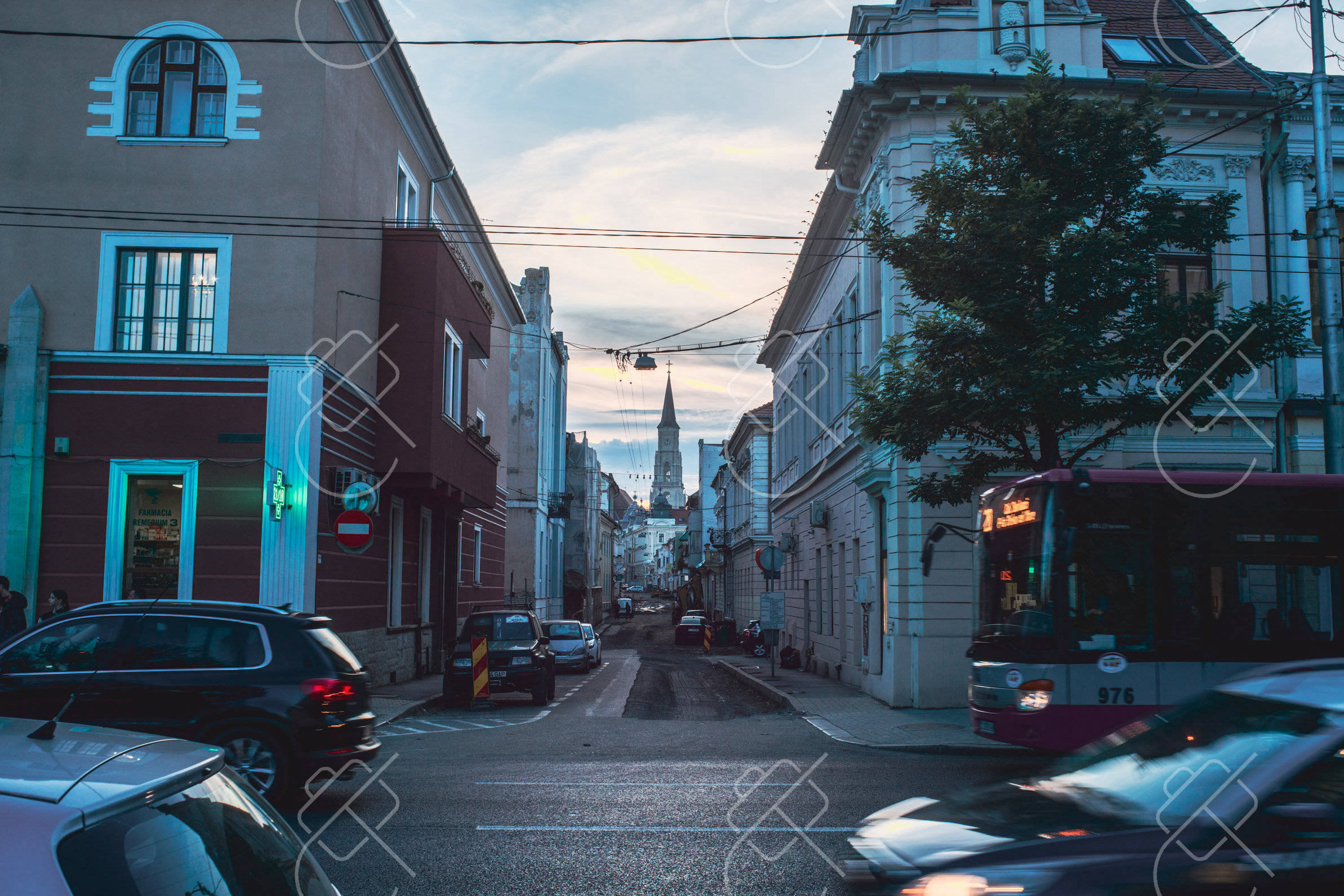
Piața Unirii is the hinge of the city, and St Michael's Church is the hinge of the square — a 14th-century Gothic hall church with a single tall tower, the tallest in Romania before the twentieth century got going. When we visited it was heavily scaffolded for restoration, which is worth knowing because the exterior is much of the point; even wrapped up, the scale of it dominates the square. In front of it stands the equestrian statue of Matthias Corvinus, the 15th-century king of Hungary who was born in this city, and a few doors away his birthplace house is now a small museum. The rest of the old town is a compact ring of baroque and Gothic streets, the Banffy Palace with its art museum, and a knot of pedestrian lanes running toward the river.
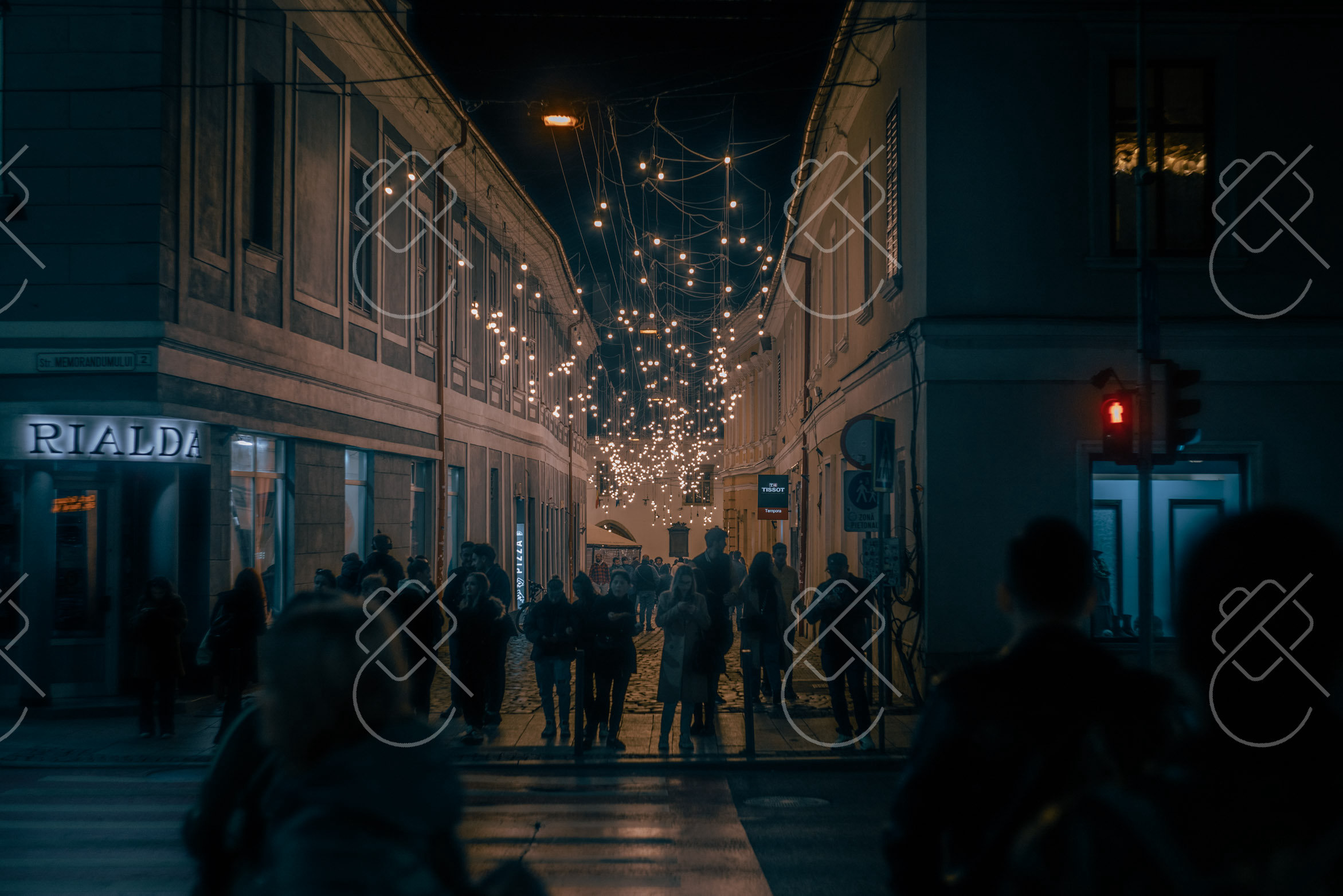
A crowded Cluj street at night under strings of lights
What makes Cluj different from Sibiu or Brașov is that it is a working, young city rather than a preserved one. The student population — tens of thousands of them — keeps the cafes full until late and makes the food scene unusually good for a Romanian city of this size. The Botanical Garden, a short walk from the centre, is the other thing worth an hour: a large, formal, slightly overgrown garden with a glasshouse and a Japanese corner. Cluj is also the practical gateway to the Apuseni mountains and to Turda's salt mine, both within an hour by road, which makes it a better base than its reputation suggests.
May to June or September, when the Botanical Garden is at its best and the student population is in town without the summer heat.
Just off Piața Unirii, in the pedestrian streets toward the river, so the old town and the cafes are both on foot.
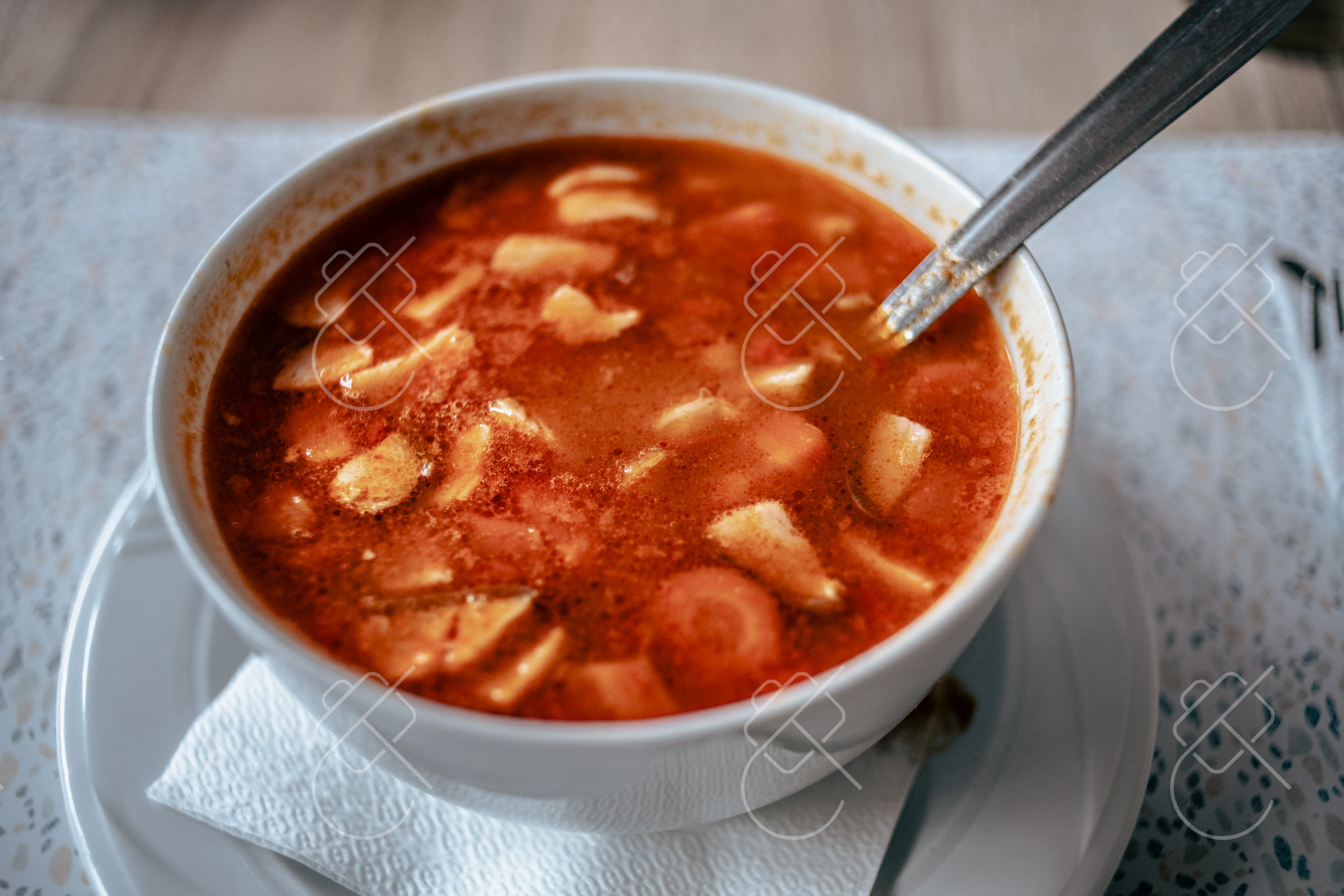
Cluj does the Romanian classics well, but look for the Transylvanian Hungarian influence too — gulyás, chimney cake, and a good papanasi with sour cream and jam to finish.
Check whether St Michael's is still under restoration before planning your visit around the interior — the scaffolding has been up for a long stretch, and the tower view may not be available.
Explore regional routes with verified local fleets, zero hidden charges, and transparent insurance on Localrent.
Get the best deals on your Cluj-Napoca flight before fares rise — Kiwi.com.
Transit cards, local customs, visa rules, and practical travel guides for this region.
Get our new Cluj-Napoca guides and practical tips by email: where to stay, what to eat, what things cost and the rules that catch travelers out.
Free. No spam, only new guides and tips.
See every destination we've photographed:
Browse all destinationsCurious about the gear behind these photos? See the gear list.