
Home
About us
Destinations & Country Guides
Travel Guides
Recipes
Featured
Photos As Art
Abstract Prints
Locations
Travel Gear
Travel Resources
Favorites
Photo Framer
Explore Photos
ContactNinh Binh is the landscape people hope to find when they leave Hanoi: limestone towers rising out of flooded fields, small boats disappearing into caves, and temple roofs tucked against cliffs. It is close enough to visit in a day and far better with two. Stay overnight, take one slow boat journey through Trang An, and leave enough room to follow the rural roads instead of racing between every ticket gate on the map.
Tap any photo to open it full-screen and order a print.
Two days is the sweet spot for Ninh Binh. Give the first morning to Trang An's boat route, then visit Hoa Lu and follow the rural roads home. Use the second day for Bich Dong, the Tam Coc countryside, and either a second boat ride or the Hang Mua viewpoint — not both by default. Stay around Tam Coc or in the countryside rather than Ninh Binh city, and arrive the night before if possible so Hanoi traffic does not consume your best morning.
Ninh Binh changes character with the fields and the weather. There is no single perfect month: the vivid rice season, the coolest walking weather, and the clearest panoramic views do not always overlap. Our April visit brought low cloud, saturated greens, and atmospheric water — excellent for caves and temples, less useful for a summit.
Mild temperatures, fresh growth, and frequent mist or low cloud. The softer light suits the rivers and temple interiors, though distant viewpoints can disappear.
The fields around Tam Coc turn their most photogenic green and gold, with increasing heat, humidity, and the chance of heavy rain. Start early and rest through midday.
Often the best balance for cycling and exposed climbs, with lower humidity and a better chance of long views across the karst.
Cooler and sometimes grey, with quieter roads and less intense vegetation. Bring a light layer for early boats and evenings.
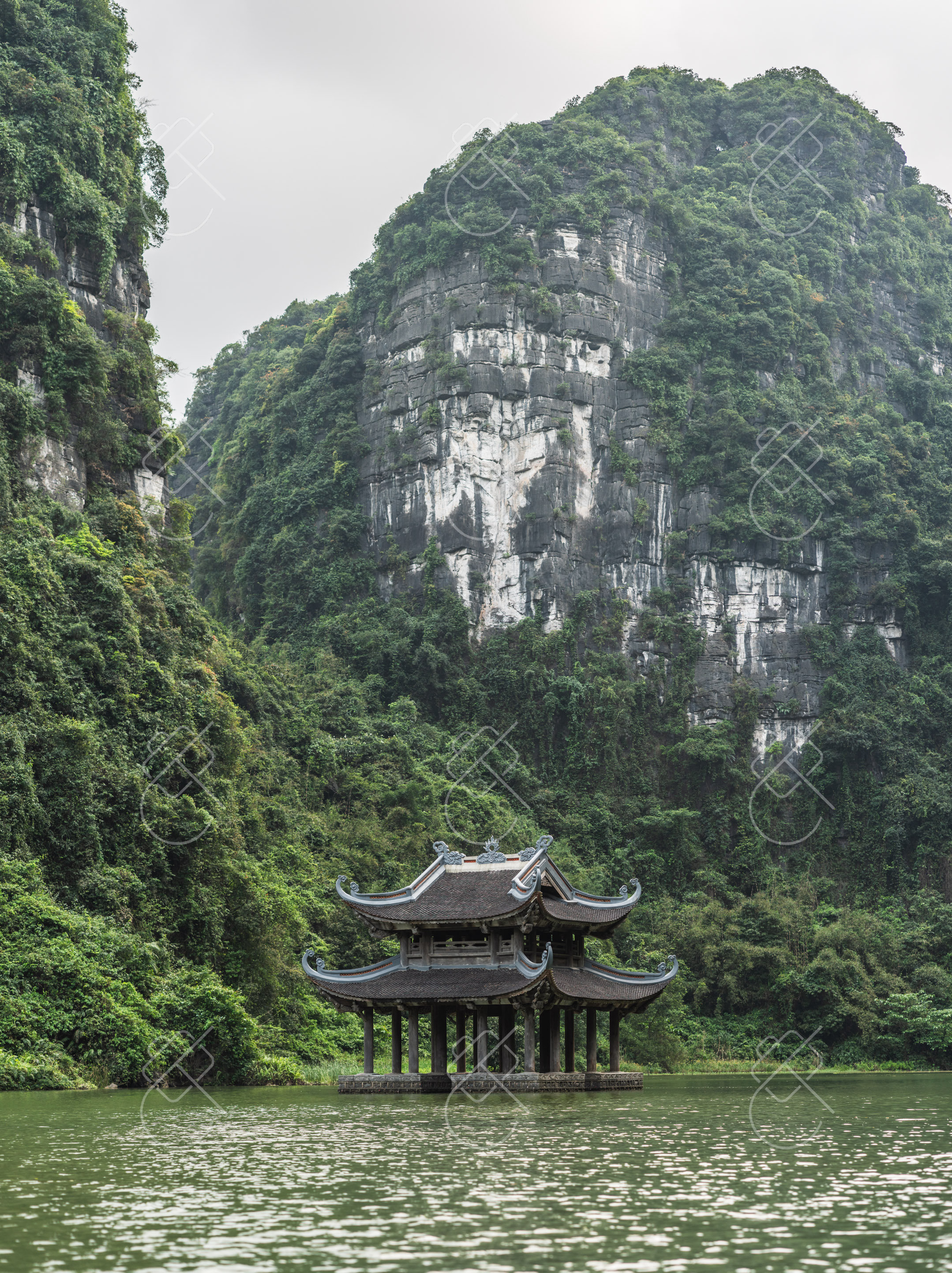
Trang An boat route — A slow journey through flooded valleys, low caves and waterside temples — the defining Ninh Binh experience.
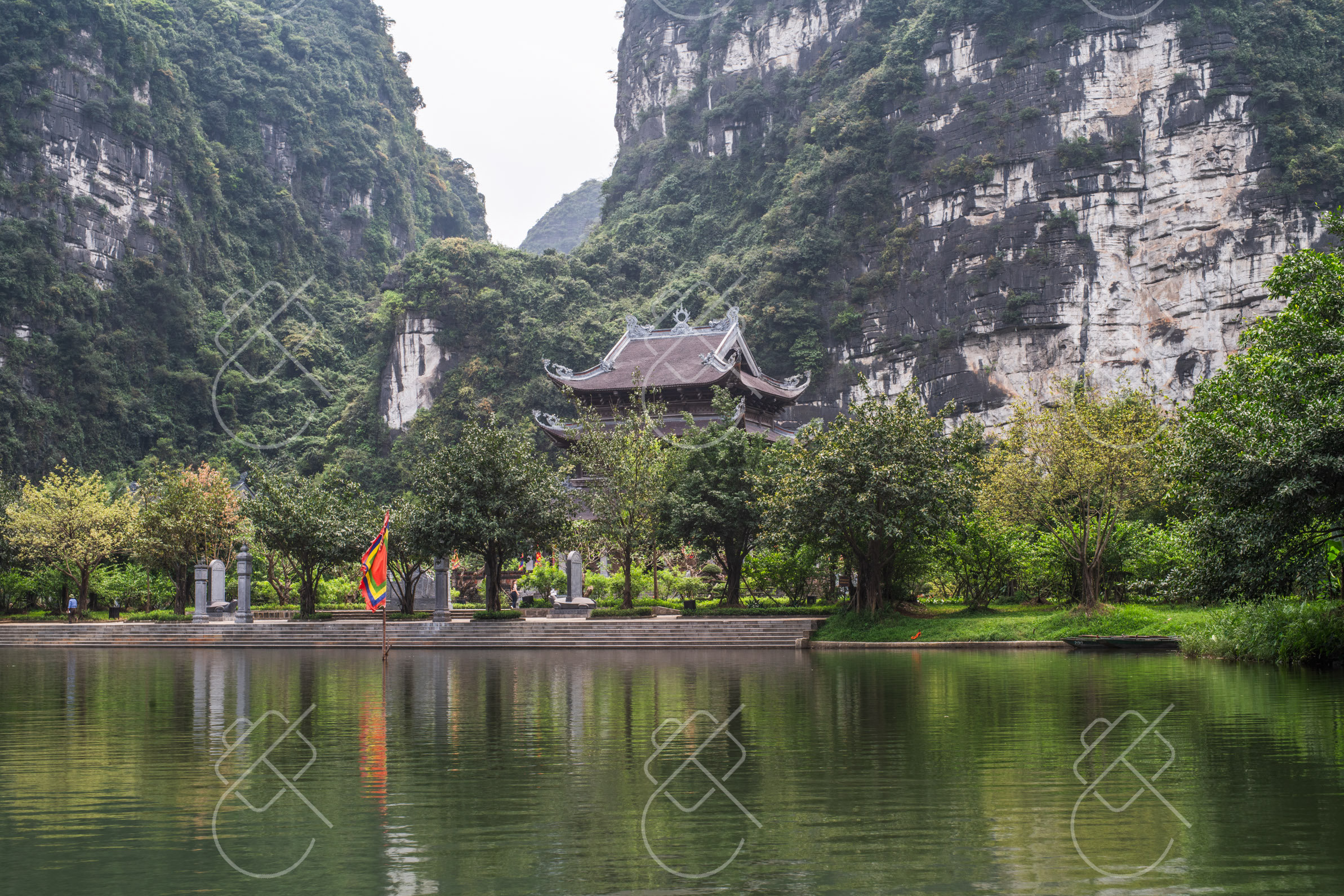
Bich Dong Pagoda — A tiered temple complex built against and into a limestone hillside beyond a lotus pond.
Tam Coc countryside — Rice fields, village lanes and isolated karst towers best explored by bicycle or a slow drive.
Hoa Lu Ancient Capital — Temples and courtyards marking Vietnam's 10th- and 11th-century capital beneath natural limestone defenses.
Tam Coc boat ride — An open river journey through rice fields and three caves, strongest when the fields are in season.
Hang Mua viewpoint — A steep stair climb to the famous river-and-karst panorama — worthwhile only when visibility cooperates.
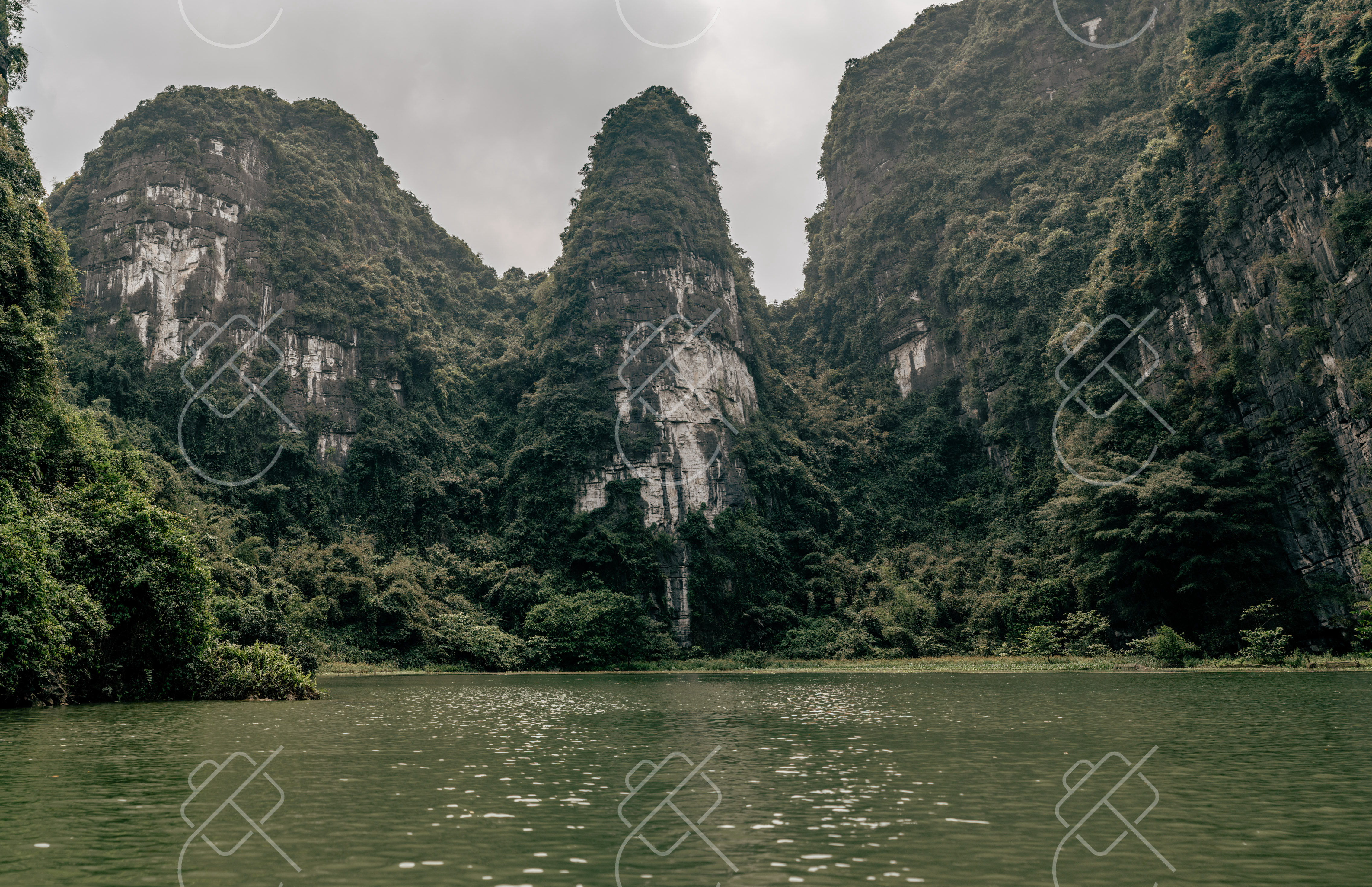
Trang An is a water-level journey through Ninh Binh's limestone interior. Local rowers steer small sampans across still valleys, into low cave passages, and past temples standing directly against the cliffs. Nearby Hoa Lu adds the human history: this naturally fortified basin was Vietnam's capital in the 10th and early 11th centuries.
Several boat routes normally operate from Trang An's main wharf, each combining a different sequence of caves and religious sites. Choose on the day rather than arriving committed to a route described by an old timetable. The strongest moments are the transitions: open water narrowing to a black cave entrance, the sound falling away beneath the rock, then the boat emerging into another valley completely enclosed by forested karst.
A small boat entering one of Trang An's low limestone cave passages
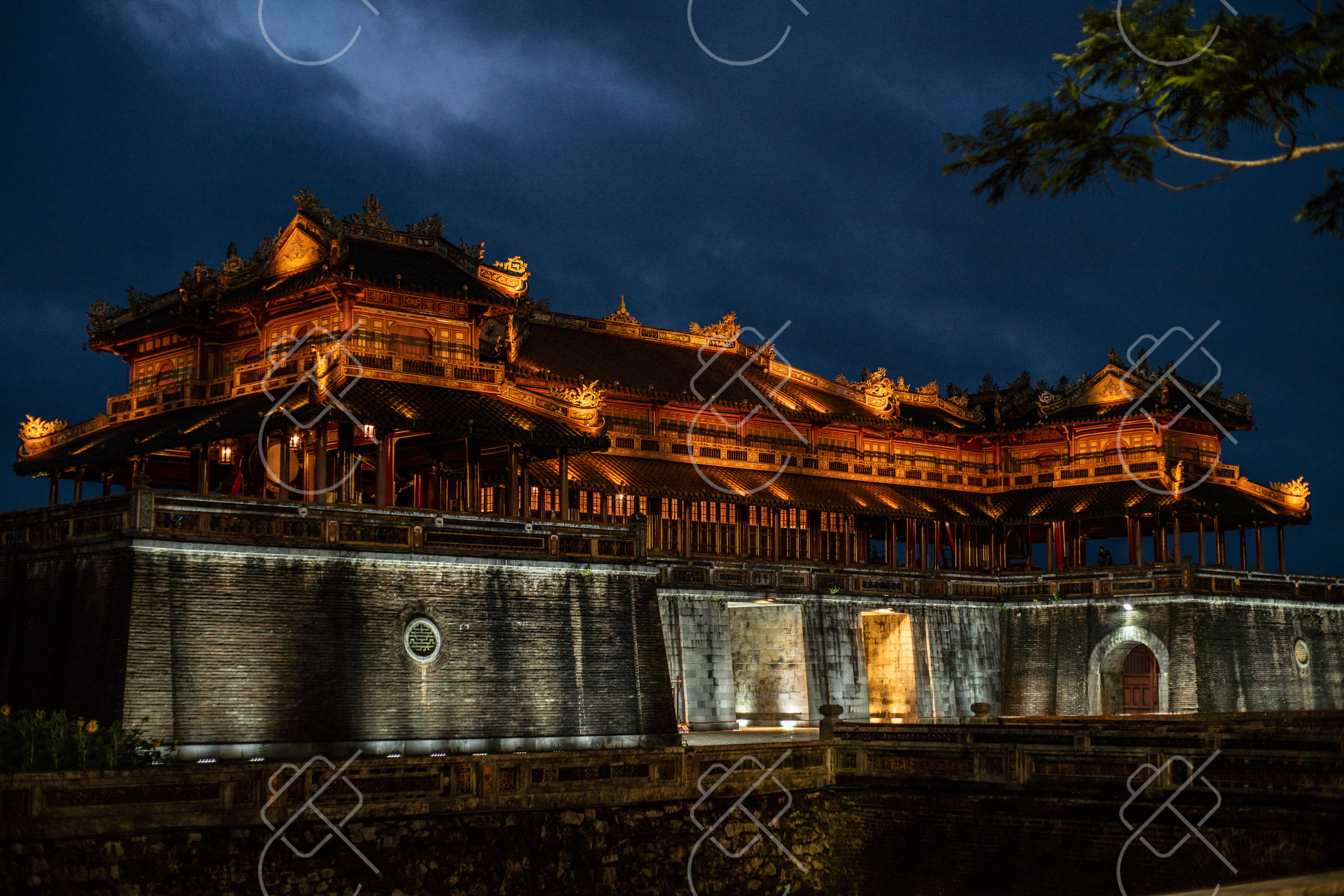
Hoa Lu is not an intact ancient city. Its surviving focus is a compact group of temples associated with the Dinh and Early Le dynasties, with carved wood, tiled roofs, stone gateways, and incense-dark interiors. Visit after the boat route for a useful change of scale, then take the smaller roads back through the fields instead of returning by the fastest main road.
Arrive near opening time, before the Hanoi day-tour groups. Overcast weather works beautifully at water level, while clear afternoons are better for the rural roads.
Stay around Tam Coc for the easiest restaurants and transfers, or choose a countryside homestay between Tam Coc and Trang An for quieter evenings.
Look for com chay, crisped rice served with a savory sauce, and Ninh Binh's goat dishes prepared grilled, stir-fried, or with lemongrass.
Bring water, a hat, a small cushion, and a dry bag. Set the camera for low light before the boat reaches a cave entrance — the transition is too quick to begin changing settings inside.
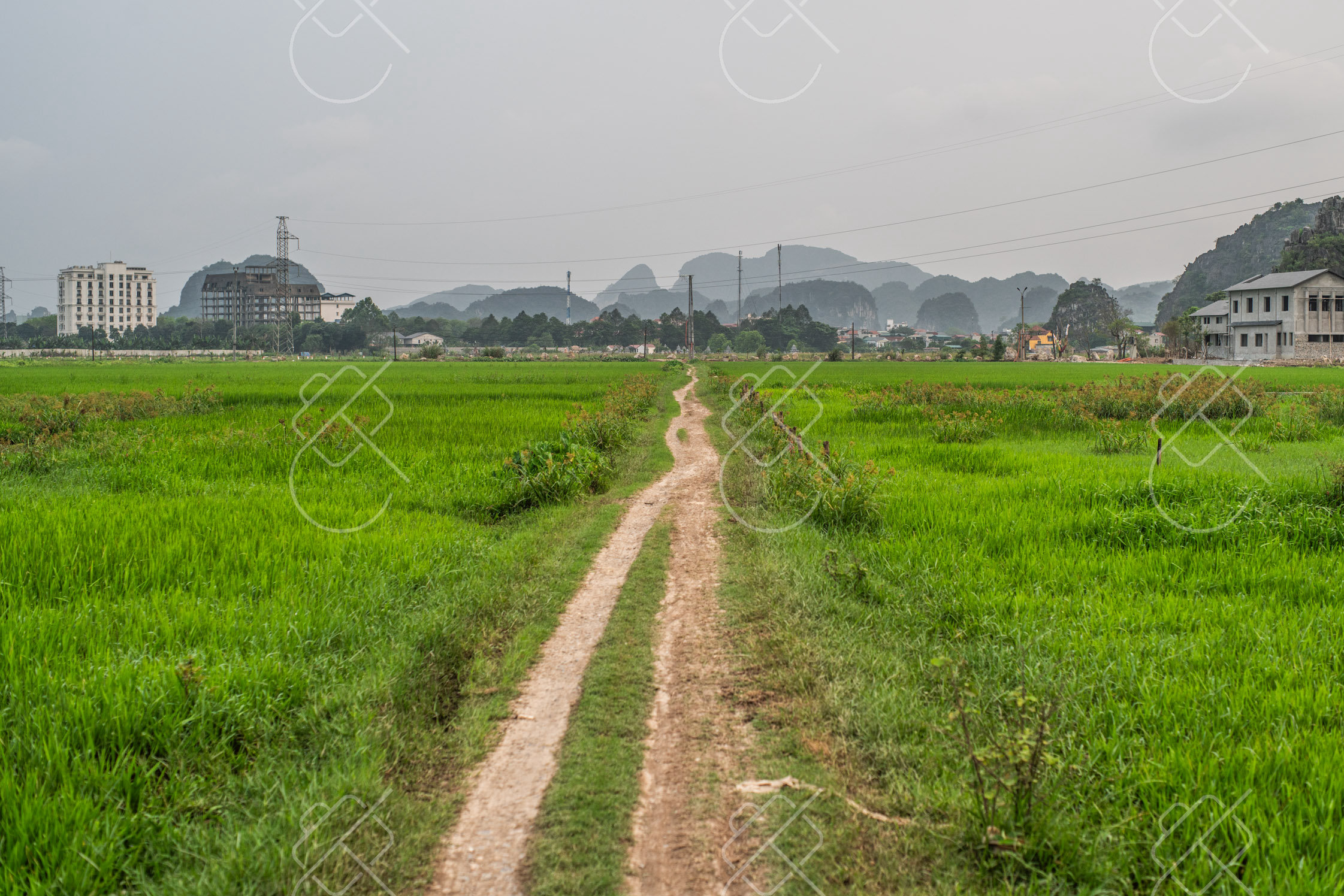
Tam Coc is Ninh Binh's practical traveler base, but the reason to stay here lies beyond its restaurant strip. Bicycles and small roads lead quickly into rice fields, beneath freestanding limestone towers, and out to Bich Dong Pagoda's stone bridge and hillside temples.
Bich Dong climbs through three temple levels built against and partly into the rock. Go early, before the stone steps and small interiors fill with groups. From there, continue cycling rather than doubling back: the flat roads through the fields are where the scale of the karst becomes clearest and where Ninh Binh feels least like a sequence of attractions.
Pagoda roofs rising beneath Ninh Binh's limestone walls
Tam Coc's own boats follow the Ngo Dong River through fields and three caves. Take this second ride when the rice is at its best or when being on the water is the main reason for your visit. Otherwise, one Trang An boat journey is enough. Use the afternoon for the countryside or climb Hang Mua only if the steps are dry and the peaks are clear of cloud.
Start Bich Dong early, then cycle before the midday heat. Save Hang Mua for late afternoon only when visibility is clear and the stone steps are dry.
Tam Coc center is easiest without a scooter; the surrounding countryside is quieter and more scenic if your accommodation provides bicycles or transfers.
Tam Coc has the widest choice of restaurants and cafes. Carry cash for smaller roadside places and parking areas outside town.
Do not treat Trang An and Tam Coc as mandatory duplicates. One boat ride plus unhurried time on the rural roads is the better two-day balance for most visitors.
The water is not simply decoration around the peaks; it is the route through them.
A loose, walkable route — bend it to your pace and the light.
Leave Tam Coc early and reach Trang An before the main day-tour arrivals. Let the boat route occupy the whole morning: the appeal is its slow rhythm through caves, enclosed valleys, and small religious sites, not a list of stops to complete. Carry shade, water, a dry bag, and cash, and ask the ticket office which route is operating best that day.
After lunch, continue to Hoa Lu's dynastic temples. Return by the smaller roads through fields and villages, allowing the late light and weather to decide where you stop. End in Tam Coc for dinner rather than adding another headline attraction.
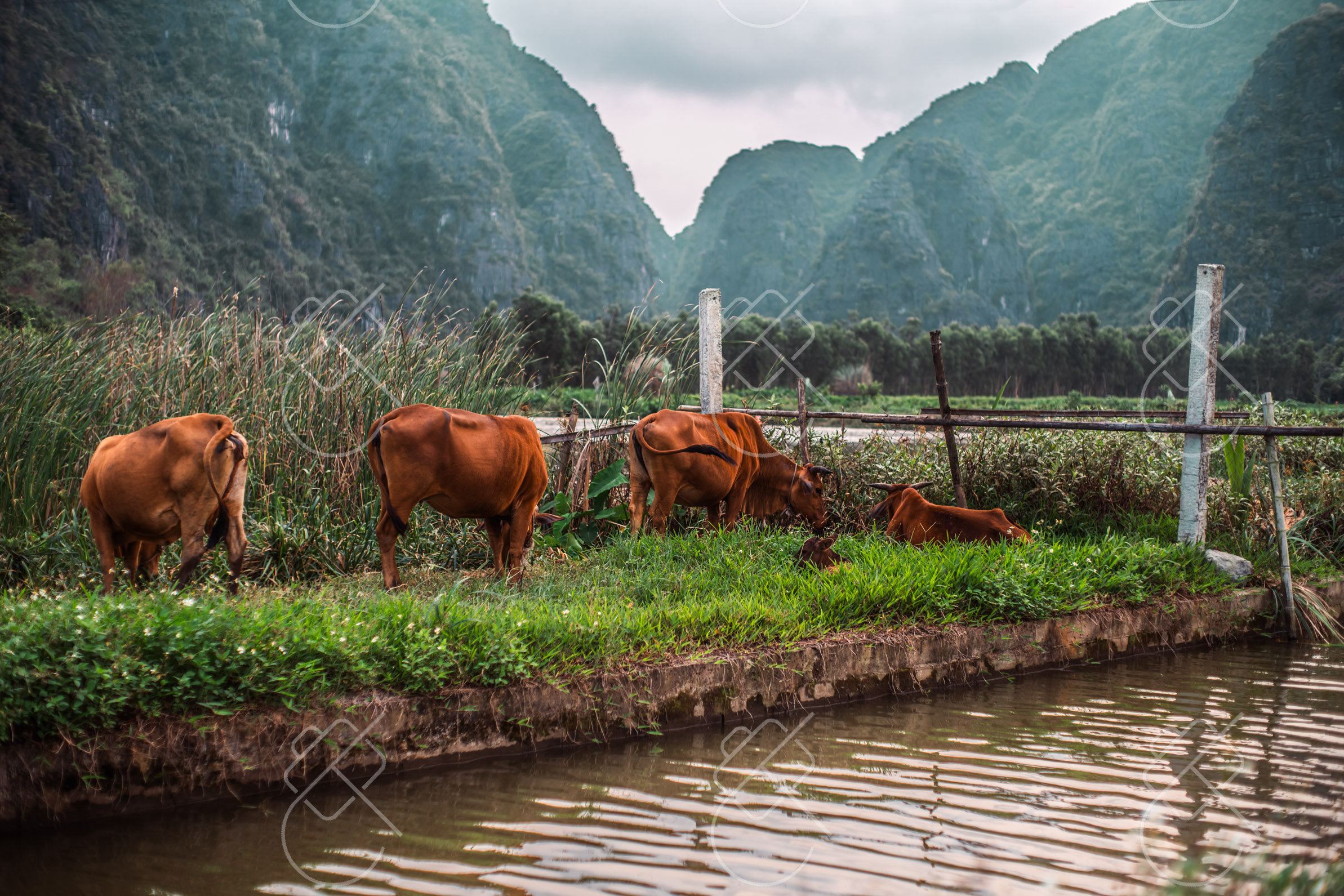
Where to shoot: The first dark cave entrance from water level · Temple roofs framed beneath the cliffs · A single sampan against open karst · Fields and livestock on the road back to Tam Coc
Tip: Sit where you can rotate without obstructing the rower, and increase ISO before entering a cave rather than after the light has already gone.
Cycle to Bich Dong early, crossing the stone bridge before the temple's compact stairways become busy. Continue into the countryside after the visit instead of returning directly to town; the roads are flat, the distances manageable, and the working fields give the karst a sense of scale.
After lunch, choose one: take the Tam Coc boat when the rice and light are strong, climb Hang Mua when visibility is clear, or simply keep cycling. The flexible version is the honest one — cloud can erase the viewpoint, heat can make the staircase miserable, and a second boat ride can feel repetitive after Trang An.
Where to shoot: Bich Dong's bridge and lotus pond · Temple interiors and damp stone stairs · Boats on the Ngo Dong River · Rural tracks leading toward isolated limestone towers
Tip: Decide on Hang Mua after seeing the day's weather. Low cloud is beautiful beside the water and a poor reason to climb hundreds of exposed steps.
With a third day, separate Trang An and Tam Coc onto different mornings, extend the bicycle loop, or add a quieter temple without forcing the weather. Hanoi is roughly 90 kilometers away and easy to connect by train, van, or private transfer; travelers continuing south can use Ninh Binh railway station without returning to the capital.
Explore regional routes with verified local fleets, zero hidden charges, and transparent insurance on Localrent.
Compare stays in Ninh Binh and get the best deals on Booking.com.
Transit cards, local customs, visa rules, and practical travel guides for this region.
Get our new Ninh Binh guides and practical tips by email: where to stay, what to eat, what things cost and the rules that catch travelers out.
Free. No spam, only new guides and tips.
See every destination we've photographed:
Browse all destinationsCurious about the gear behind these photos? See the gear list.