
Home
About us
Destinations
Travel Guides
Recipes
Featured
Photos As Art
Abstract Prints
Locations
Travel Gear
Travel Resources
Favorites
Photo Framer
Explore Photos
ContactJeju City gets the direct flights and the nightlife; Seogwipo, on the island's south coast, gets the weather. It sits on the sheltered, sun-facing side of the volcano, warm enough that it's the center of Korea's citrus industry, and its coastline does something Jeju City's doesn't: cliffs drop straight into the ocean, waterfalls included.
Published July 20, 2026
Tap any photo to open it full-screen and order a print.

The south coast of Jeju Island, where a waterfall drops straight into the sea and the warmest slopes in Korea grow the country's citrus.
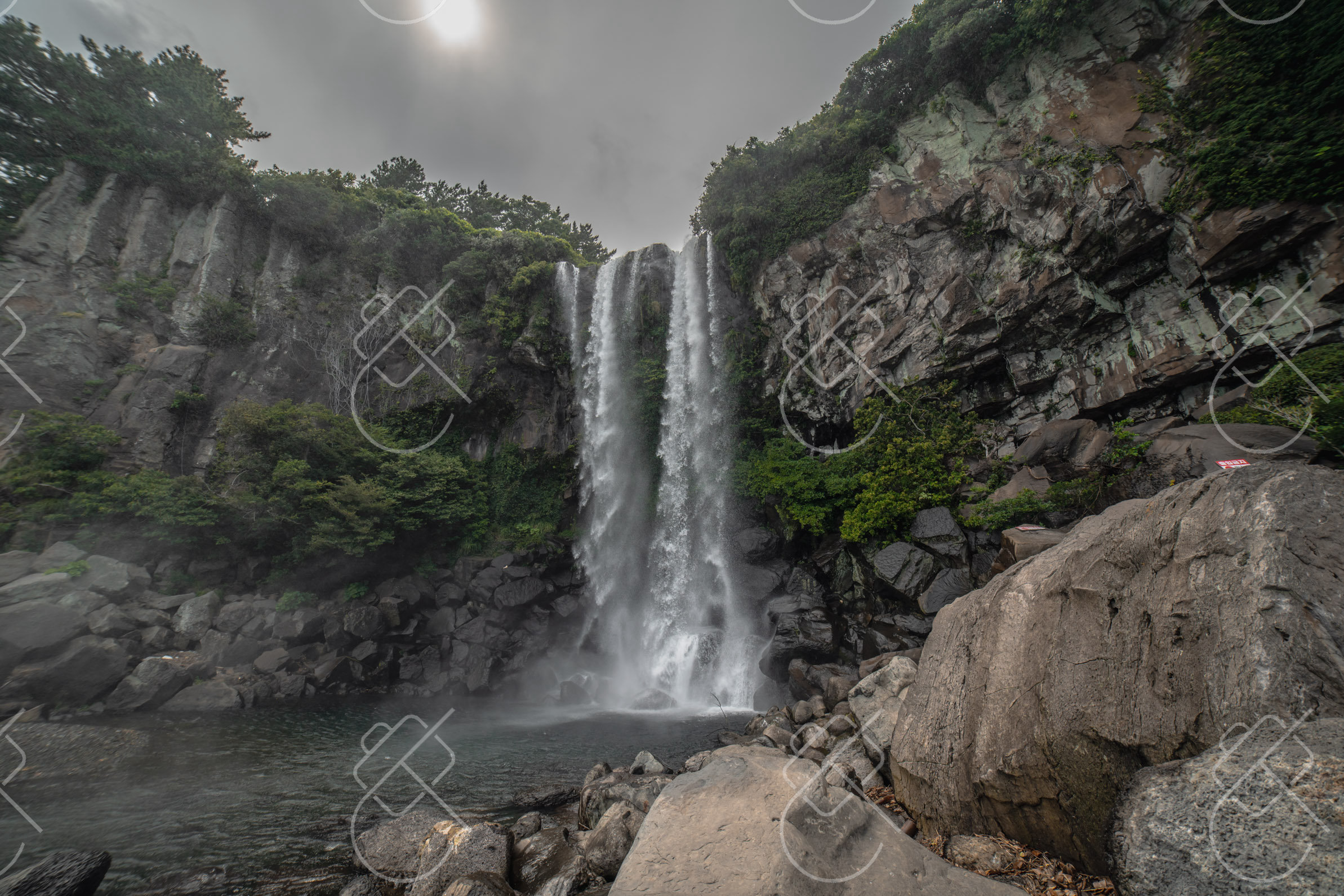
Jeongbang Falls is the reason to come. It drops about 23 meters in twin, sometimes triple streams off a black basalt cliff directly into the ocean, and it's routinely cited as the only waterfall in Asia that does this rather than feeding a river or a landlocked pool. You can walk down onto the rocky shore at its base and stand close enough to feel the spray blow sideways off the sea wind, with the cliff-lined coast curving away on either side and Seogwipo's harbor town visible in the distance.
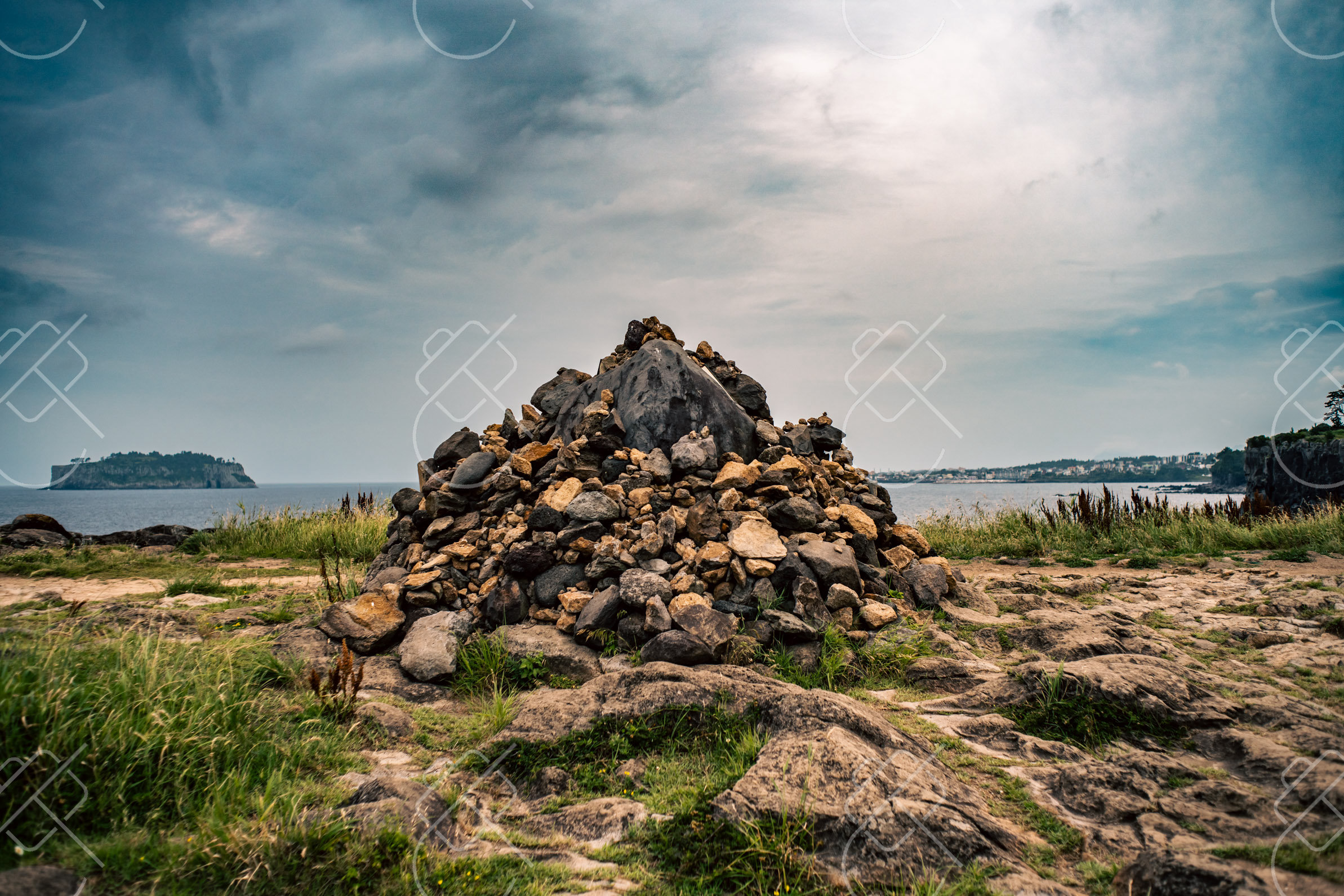
The coast on either side of the falls is walkable, part of the Jeju Olle Trail, the network of numbered coastal walking routes that circles the whole island. This stretch runs along volcanic sea cliffs with small offshore islands sitting just off the rocks, and stacked stone cairns, left by walkers, mark the trail at scenic overlooks the way they do on pilgrimage routes elsewhere in the world.
Jeongbang Falls dropping in twin streams toward the sea
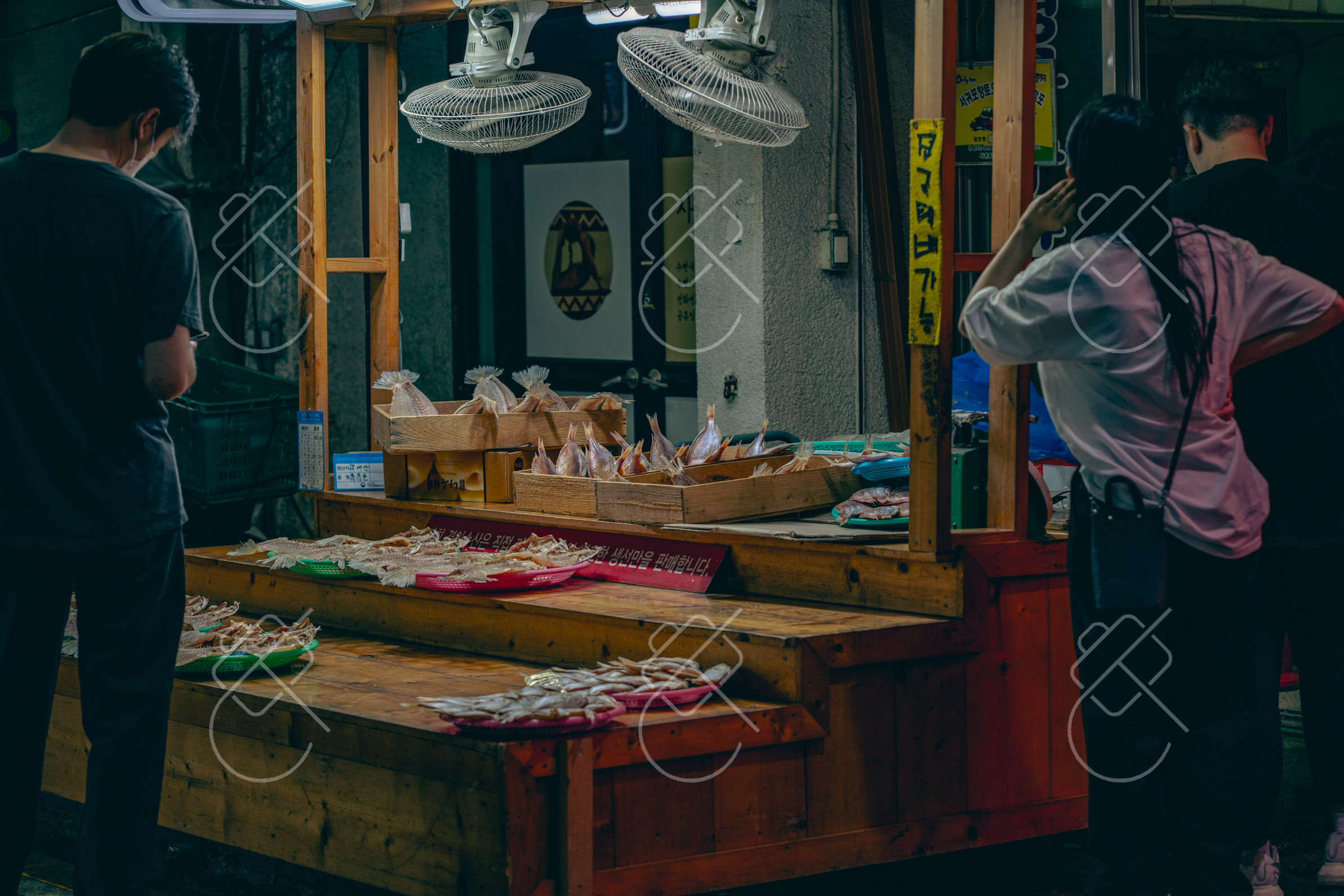
Seogwipo Maeil Olle Market, a covered market street in the town center, is both a genuine produce-and-seafood market and the starting point for one of the Olle trail courses, so it fills with a mix of locals doing their shopping and walkers gearing up or cooling down. Stalls sell fish straight off the boats, tangerines and hallabong by the crate, and enough fried and grilled street food to make it a meal stop on its own rather than just a photo op.
Spring (March to April) for mild weather and citrus blossom, or fall (September to November) for the clearest coastal visibility. Summer is Jeju's monsoon season — the falls run heaviest but the sky is often grey and misty, which has its own moody appeal but comes with real rain.
Base yourself in Seogwipo's town center near the harbor and market for walking access to both the falls and the coastal trail; stay in Jeju City instead only if nightlife and the airport matter more than the coast.
Hallabong, a Jeju citrus hybrid bred for a sweeter, easier-to-peel fruit than a standard tangerine, is grown on the slopes right around Seogwipo — buy it by the net bag at the Maeil Olle Market rather than at a tourist stand elsewhere on the island.
Walk down to the base of Jeongbang Falls rather than just viewing it from the clifftop road — the rocky shoreline at sea level is where the waterfall actually meeting the ocean becomes obvious, and it's a short, easy scramble down from the parking area.
Get the best rates and deals on Seogwipo hotels through Expedia.
Transit cards, local customs, visa rules, and practical travel guides for this region.
See every destination from the 526-day journey:
Browse all destinationsCurious about the gear behind these photos? See the gear list.