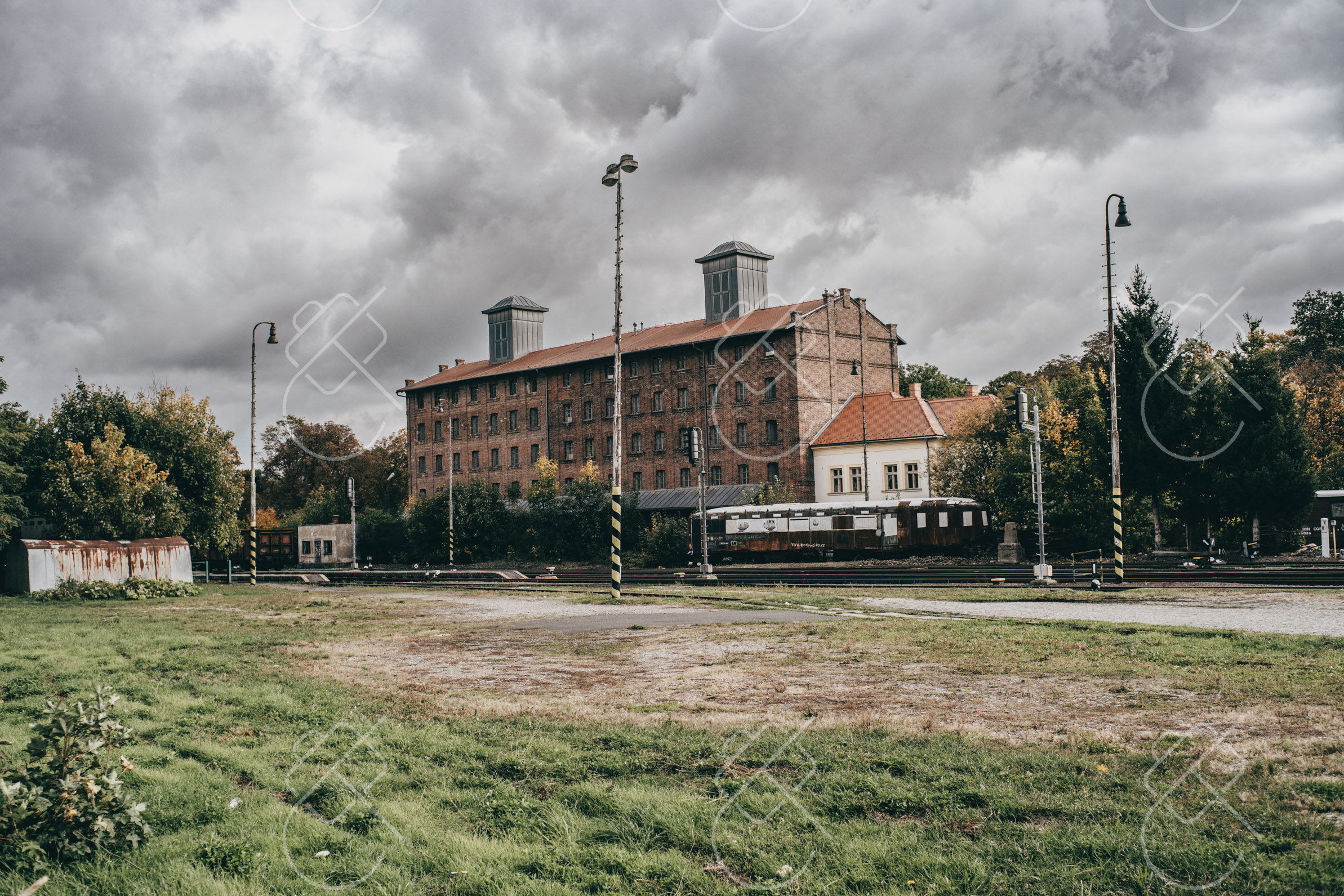
Central Europe is worth the trip for the food alone. From Czech roast duck with dumplings to Hungarian lángos fresh off the fryer, here are the dishes to seek out across Central Europe.
Tap any photo to open it full-screen and order a print.
01 / 09
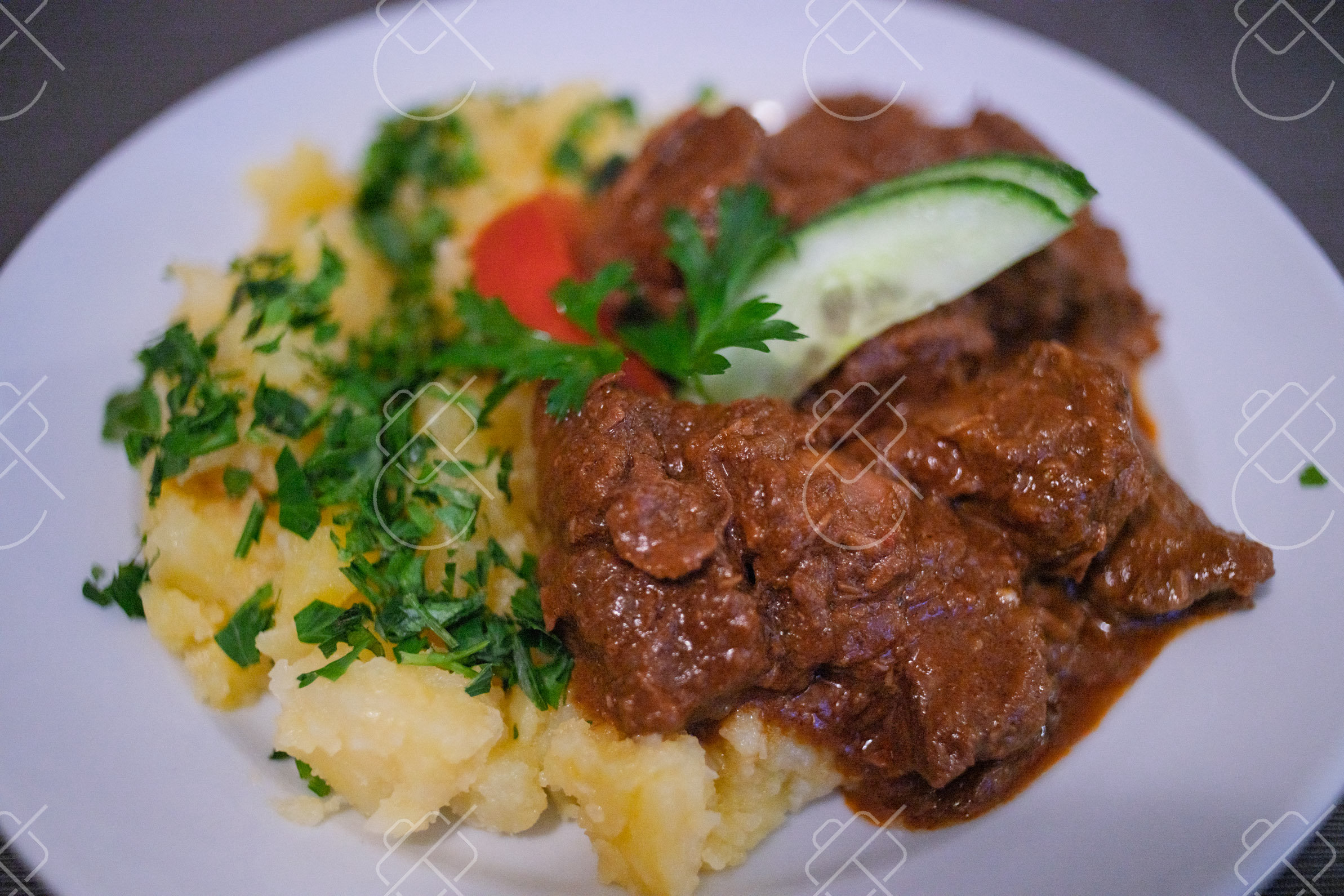
Hungarian beef goulash (pörkölt) with mashed potato
This rich, paprika-laced beef stew is the soul of Hungarian cooking, simmered slowly until the meat is meltingly tender and served here over buttery mashed potato with fresh parsley. A cool slice of cucumber and tomato cut through the deep, savory gravy, making it a hearty introduction to Central European comfort food.
Goulash began as a herdsmen's dish on the Great Hungarian Plain — gulyás literally means 'herdsman' — slow-cooked over open fires by cattle drovers. Paprika, brought by the Ottomans and embraced in the 18th and 19th centuries, turned it into the national dish; the thicker, stew-like version with less broth is properly called pörkölt.
02 / 09
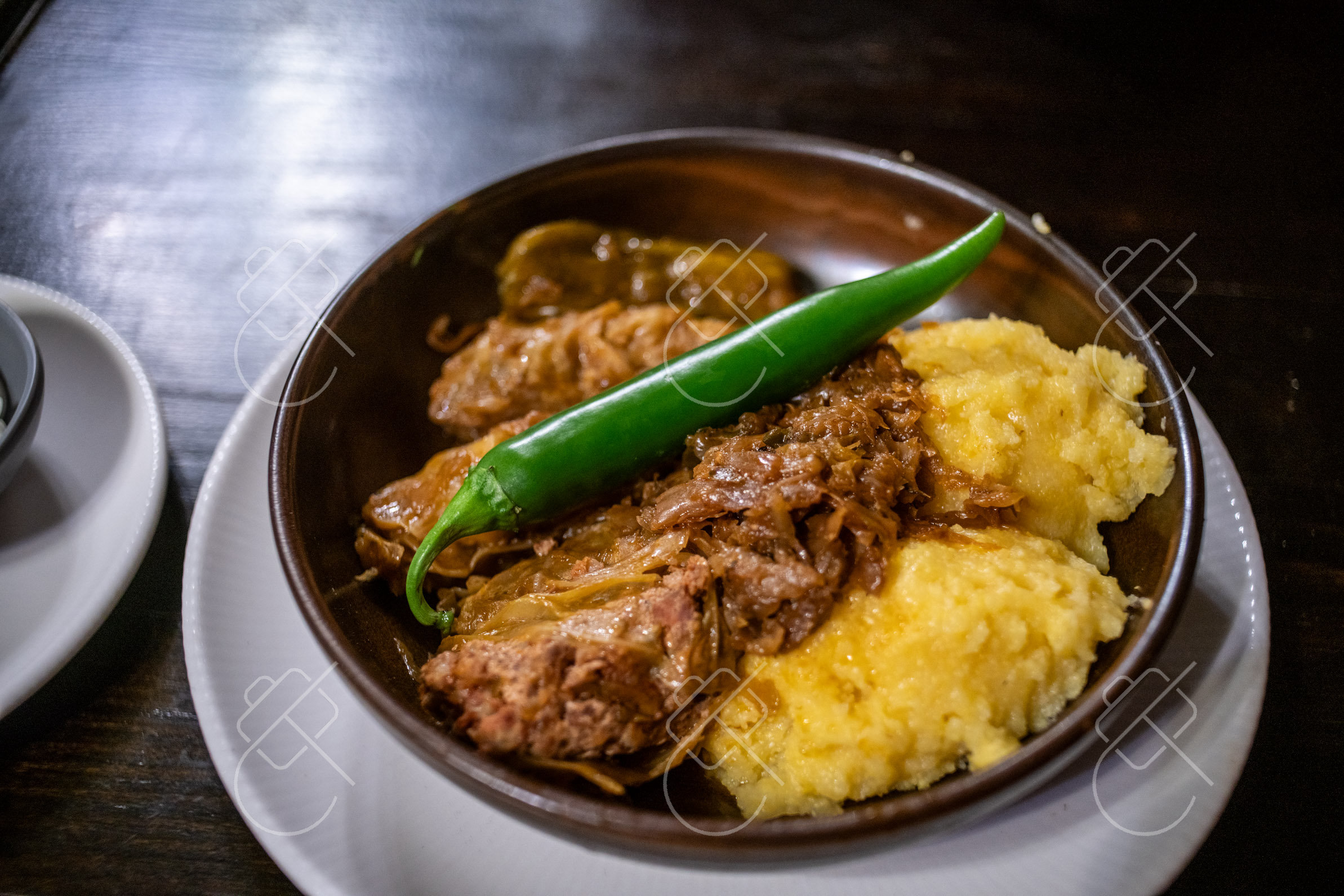
Sarmale (cabbage rolls) with mămăligă (polenta)
Sarmale — cabbage rolls of spiced pork and rice, slow-simmered until tender — are Romania's national comfort dish, served with mămăligă (polenta) and sour cream.
Sarmale are Romania's celebration dish, served at Christmas, Easter and weddings. The technique of wrapping spiced meat and rice in soured cabbage came with the Ottomans (from the Turkish sarma, 'to wrap'), but Romanians made it their own with smoked pork and a side of mămăligă — the cornmeal polenta that fed the countryside for centuries.
03 / 09
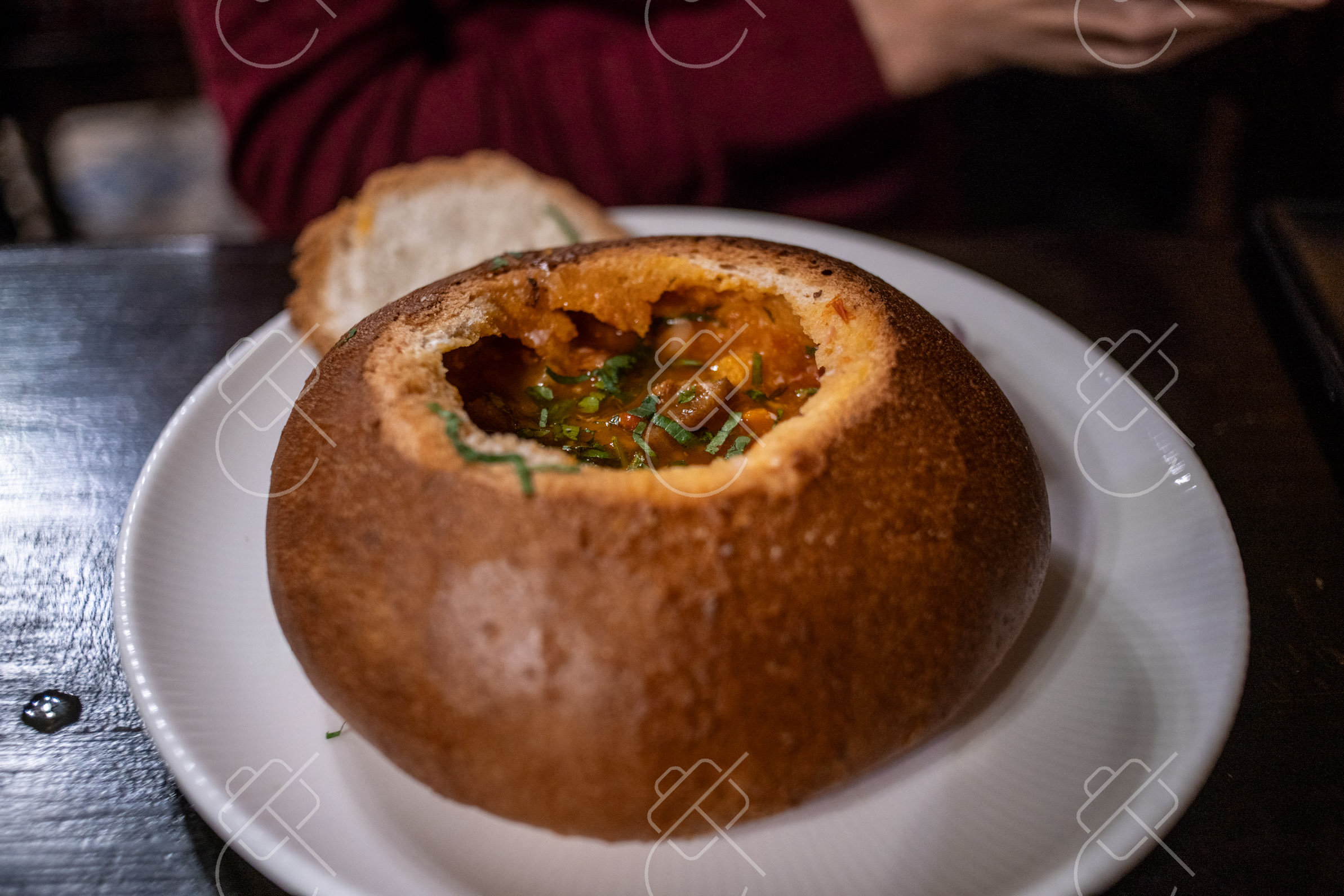
Ciorbă soup served in a bread bowl
Romania's beloved sour soup, or ciorbă, is ladled steaming into a hollowed-out round loaf so the crust soaks up every drop of the tangy, herb-flecked broth. Crowned with a torn-off bread lid, it is rustic, warming, and the kind of dish that defines a chilly day in the Carpathian heartland.
Ciorbă is the sour soup at the heart of Romanian cooking, its tang traditionally from borș, fermented wheat bran. Versions run from ciorbă de burtă (tripe) to hearty meat-and-vegetable bowls; serving it inside a hollowed loaf is a warming, rustic flourish.
04 / 09
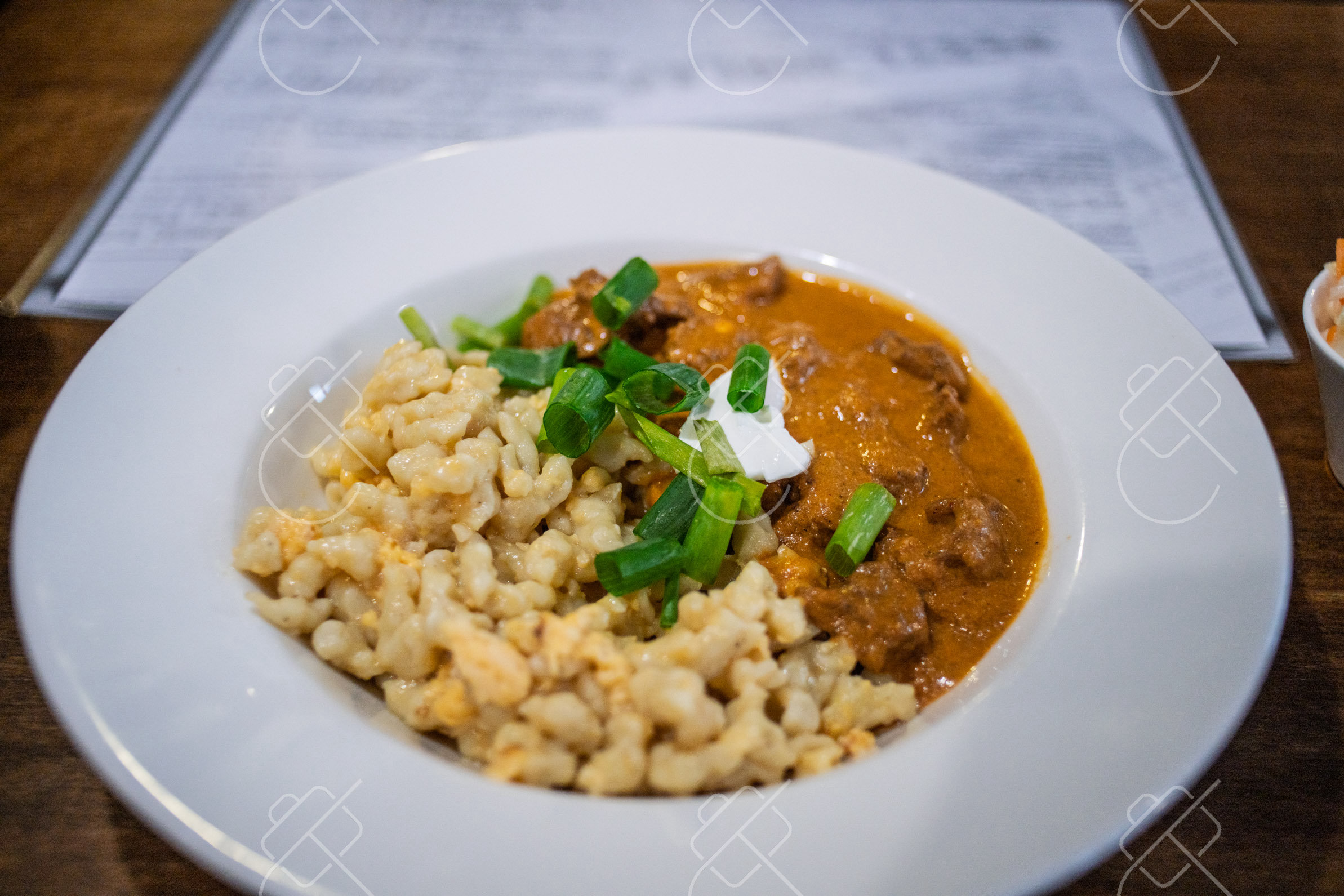
Hungarian paprika stew (pörkölt/gulyás) with pasta
A rich, paprika-red meat stew served in a wide bowl alongside a small portion of buttery pasta or nokedli dumplings. It is the kind of hearty, slow-cooked dish that defines Hungarian home cooking.
Paprika is so central to Hungarian identity that Szeged and Kalocsa built their economies on it, and the spice arrived via the Ottomans and the Balkans. Stews like this are classically served over nokedli or csipetke — little hand-pinched egg-pasta dumplings.
05 / 09
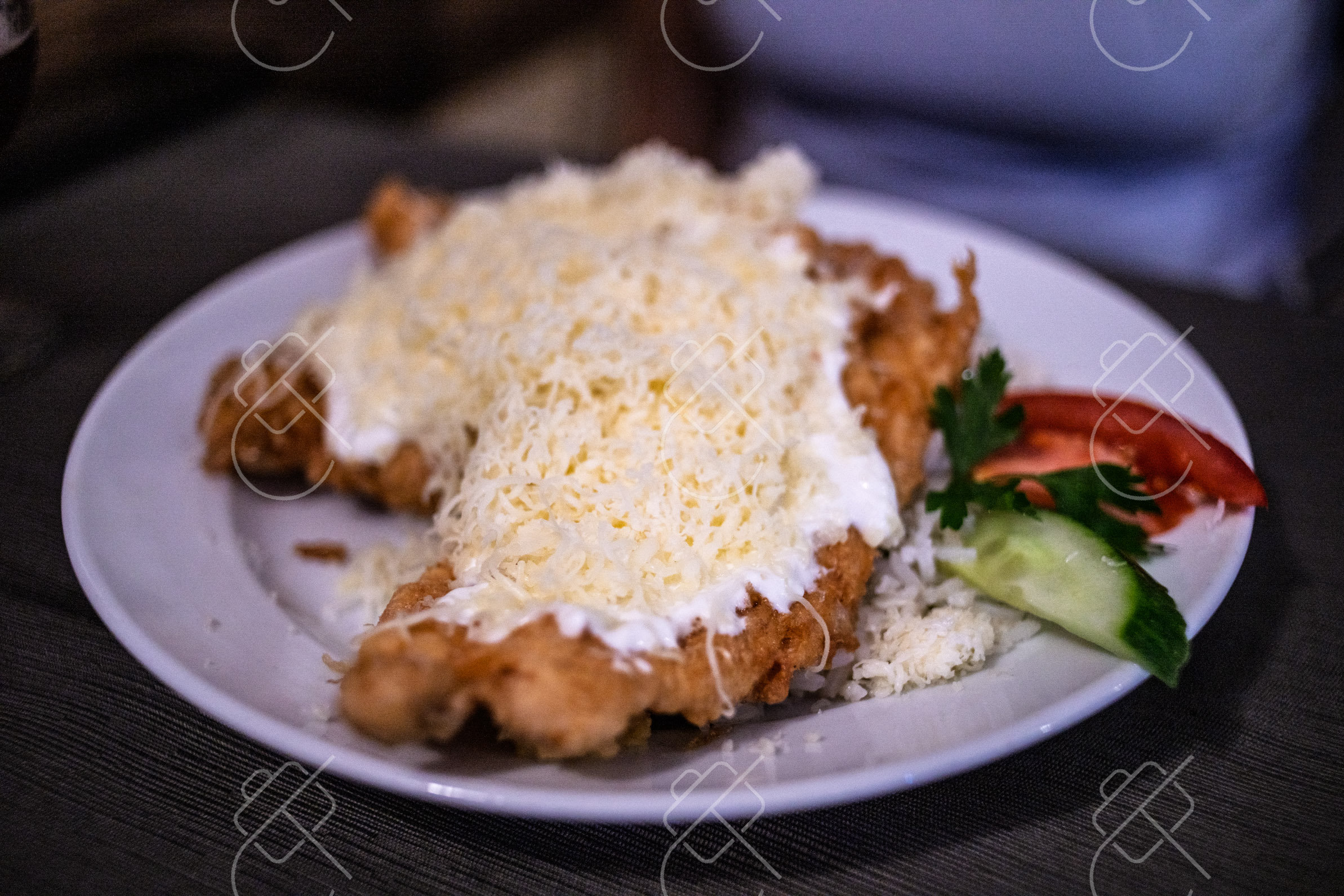
Breaded fried cutlet with rice
A golden breaded and fried meat cutlet plated with steamed rice and a fresh side salad. Crisp schnitzel-style cutlets like this are a staple on Central European menus.
The breaded cutlet — rántott hús in Hungary, řízek in Czechia — is Central Europe's beloved comfort food, a cousin of the Wiener schnitzel that spread across the Habsburg empire. Whether pork or chicken, it's a Sunday-lunch fixture from Vienna to Budapest.
06 / 09
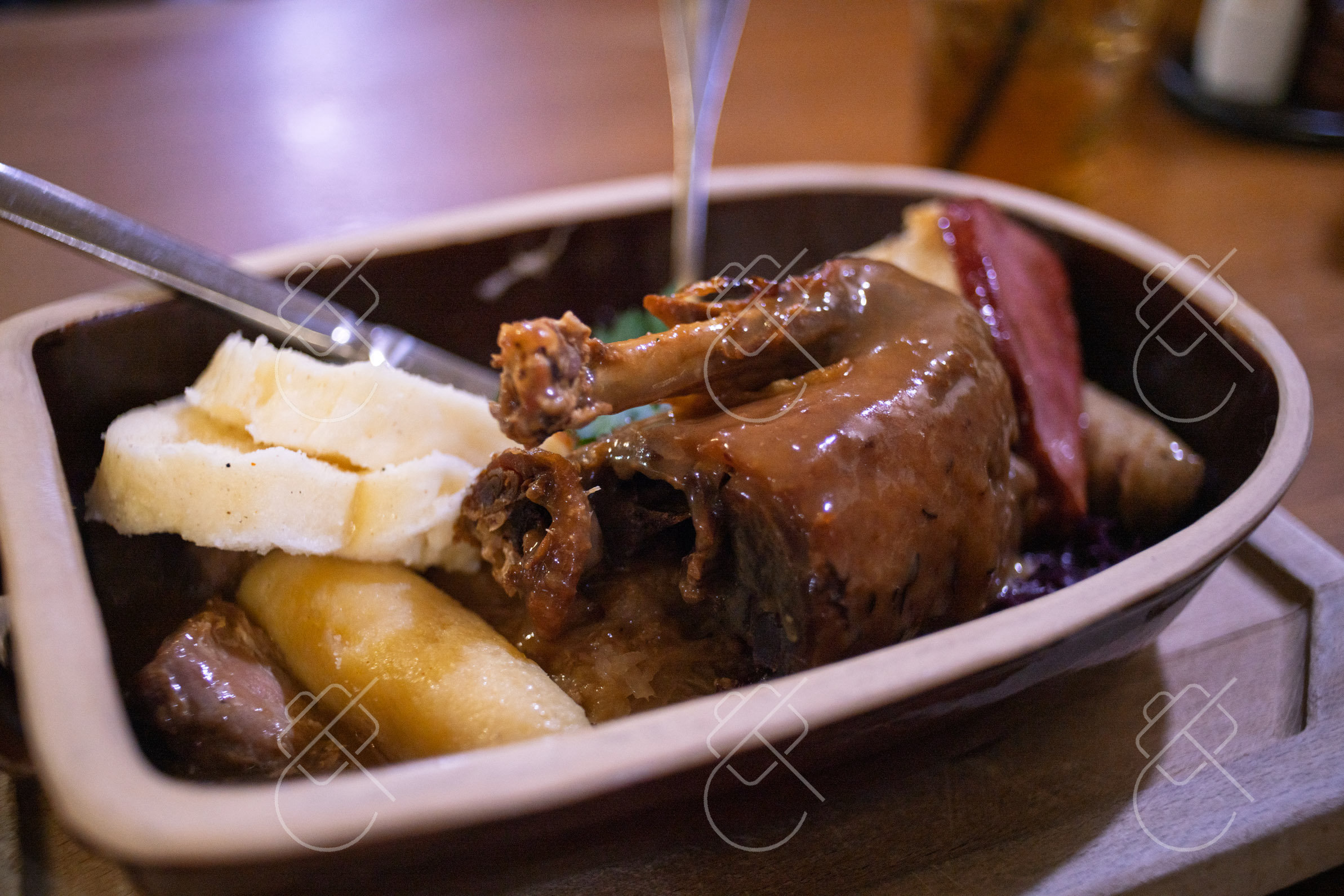
Roast duck with bread dumplings and red cabbage
A duck leg roasted until the skin crackles and the meat falls from the bone, glazed in its own dark gravy and plated with slices of bread dumpling and potato dumpling to soak up the sauce, alongside sweet-and-sour braised red cabbage.
Duck or pork with dumplings and cabbage — kachna (or vepřo) se zelím a knedlíky — is the classic Czech Sunday lunch, built around two distinct dumplings: houskové knedlíky, a steamed bread dumpling sliced into rounds, and bramborové knedlíky, made from potato. The cabbage is usually braised with caraway or a touch of sugar and vinegar to balance the richness of the meat.
07 / 09
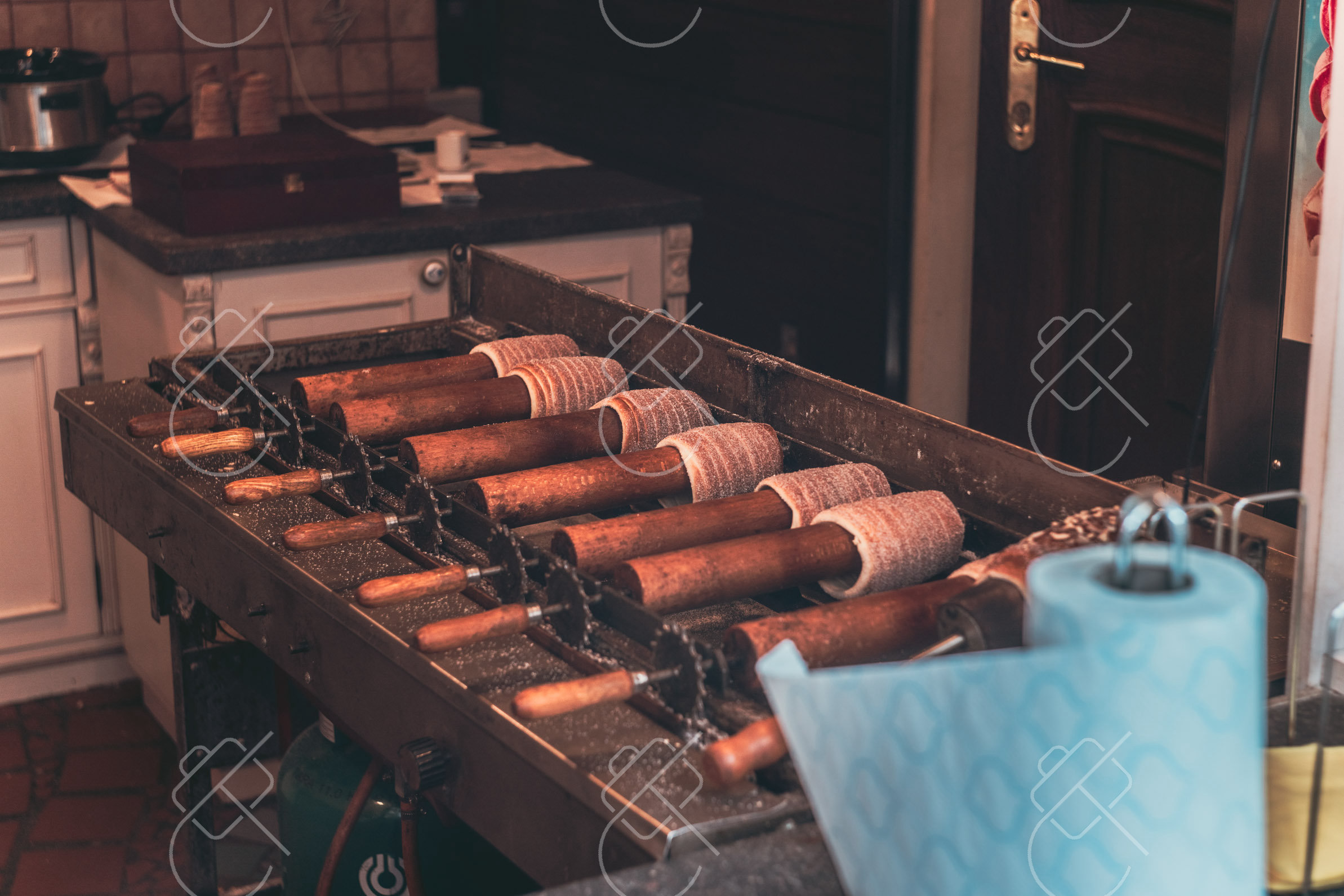
Trdelník (Czech chimney cake) on the grill
Rolled dough wound around wooden spits, dusted with sugar, and slowly turned over an open grill until the outside caramelizes into a crisp, spiraled shell — a common sight and smell on Prague's Old Town streets.
Trdelník is often sold to visitors as a ‘traditional Czech’ sweet, but the pastry's roots trace to the Transylvanian Saxon kürtőskalács tradition; it only became a fixture of Prague street food in the 1990s and 2000s. Wherever it started, the method hasn't changed — dough wrapped around a wooden roller, grilled to order, then rolled in sugar and sometimes cinnamon, walnuts, or chocolate.
08 / 09
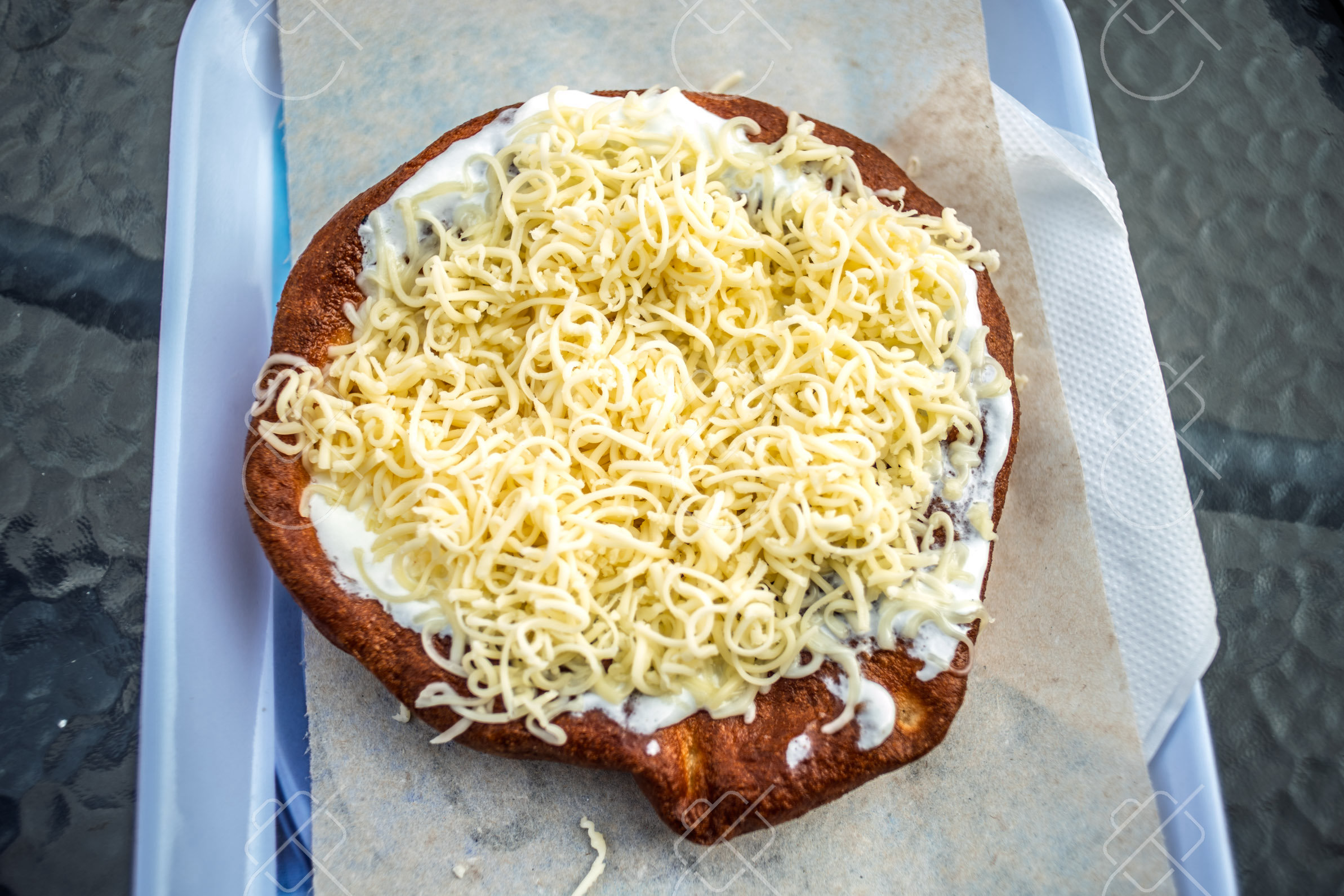
Lángos (Hungarian fried dough) with sour cream and cheese
A round of yeasted dough deep-fried until golden and blistered, then piled high with tejföl (sour cream) and a thick layer of shredded cheese — Hungary's favorite market and street food.
Lángos takes its name from láng, Hungarian for flame, from its origins as dough baked in the residual heat of a wood-fired oven. It later moved to the deep fryer and became a staple of markets, fairs, and thermal bath complexes, where a fried lángos is practically a rite of passage after a soak.
09 / 09

Tokaji Aszú with pogácsa
A glass of deep amber Tokaji Aszú catches the late-day light on a sunlit wooden table, its honeyed color the signature of the region's famous dessert wine, served alongside a plate of warm, cheese-topped pogácsa — small savory biscuits.
Tokaj's volcanic soil and autumn mists create ideal conditions for botrytis, the ‘noble rot’ that shrivels grapes and concentrates their sugars into Tokaji Aszú — a sweet wine once so prized that Louis XIV of France is said to have called it ‘the wine of kings, the king of wines.’ Made mostly from Furmint grapes and aged in volcanic-tuff cellars, it's Hungary's most famous export. Pogácsa, a dense, savory scone-like biscuit, is a classic pairing, its saltiness cutting through the wine's sweetness.