
Home
About us
Destinations
Travel Guides
Recipes
Featured
Photos As Art
Abstract Prints
Locations
Travel Gear
Travel Resources
Favorites
Photo Framer
Explore Photos
ContactMunich is Bavaria's capital and Germany's most Alpine-adjacent big city, where a compact medieval core of onion-domed church towers and gabled townhouses opens onto beer gardens shaded by chestnut trees. The Frauenkirche's twin copper domes anchor the skyline above Marienplatz, while the former royal Residenz, a few streets away, holds room after room of Renaissance and Rococo excess.
Published September 19, 2025
Tap any photo to open it full-screen and order a print.
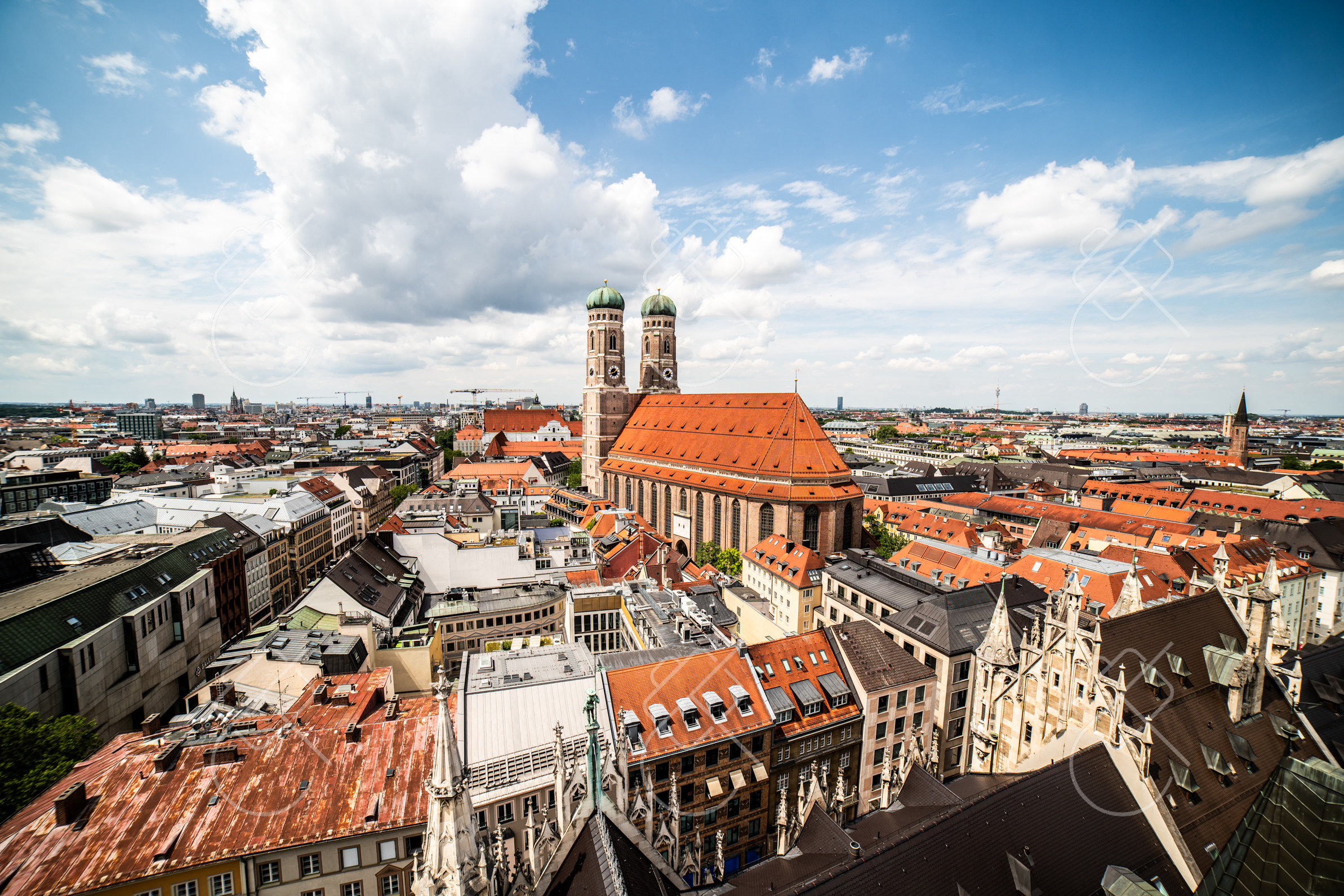
Munich is Bavaria's capital, a city built around a medieval core of onion-domed church towers, beer hall tradition, and one of Europe's grandest former royal palaces, the Residenz, tucked just behind Marienplatz.
Marienplatz has been Munich's central square since the 12th century, and the Neues Rathaus that dominates one side of it still draws a crowd at 11am, when the mechanical figures of the Glockenspiel chime out a jousting tournament and a coopers' dance from the tower balcony. Climb the tower of St. Peter's Church just south of the square (locals call it Alter Peter) rather than the cathedral itself, and the whole old town opens up below: terracotta rooftops running out toward the horizon, the Neues Rathaus's neo-Gothic spires, and beyond them the Frauenkirche's two brick towers, each capped with a green copper onion dome that leans slightly inward. Those domes, visible from almost anywhere in the city center, are as much a symbol of Munich as any beer hall — Gothic brick below, distinctly Bavarian above.
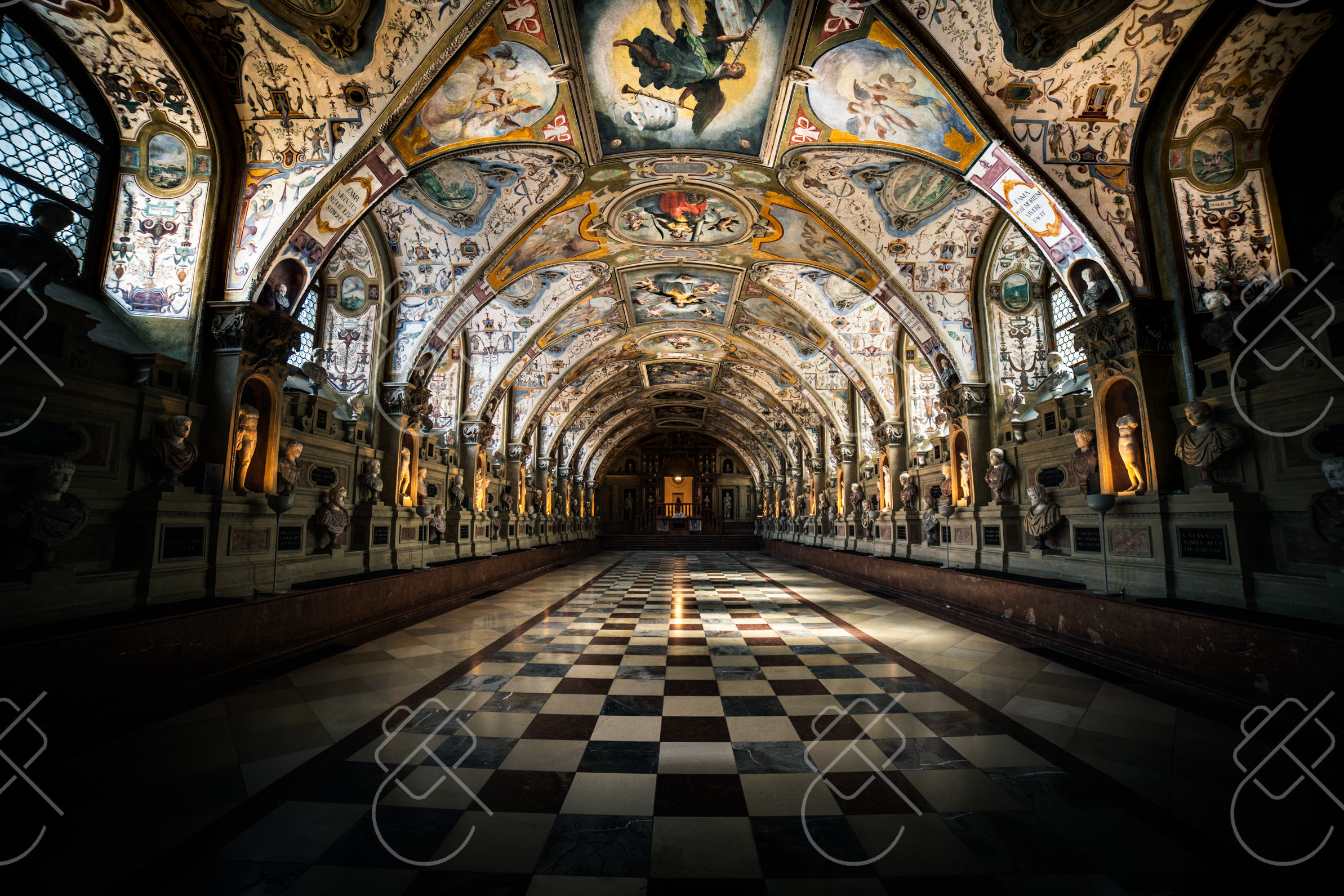
The frescoed, barrel-vaulted Antiquarium hall inside Munich's Residenz palace
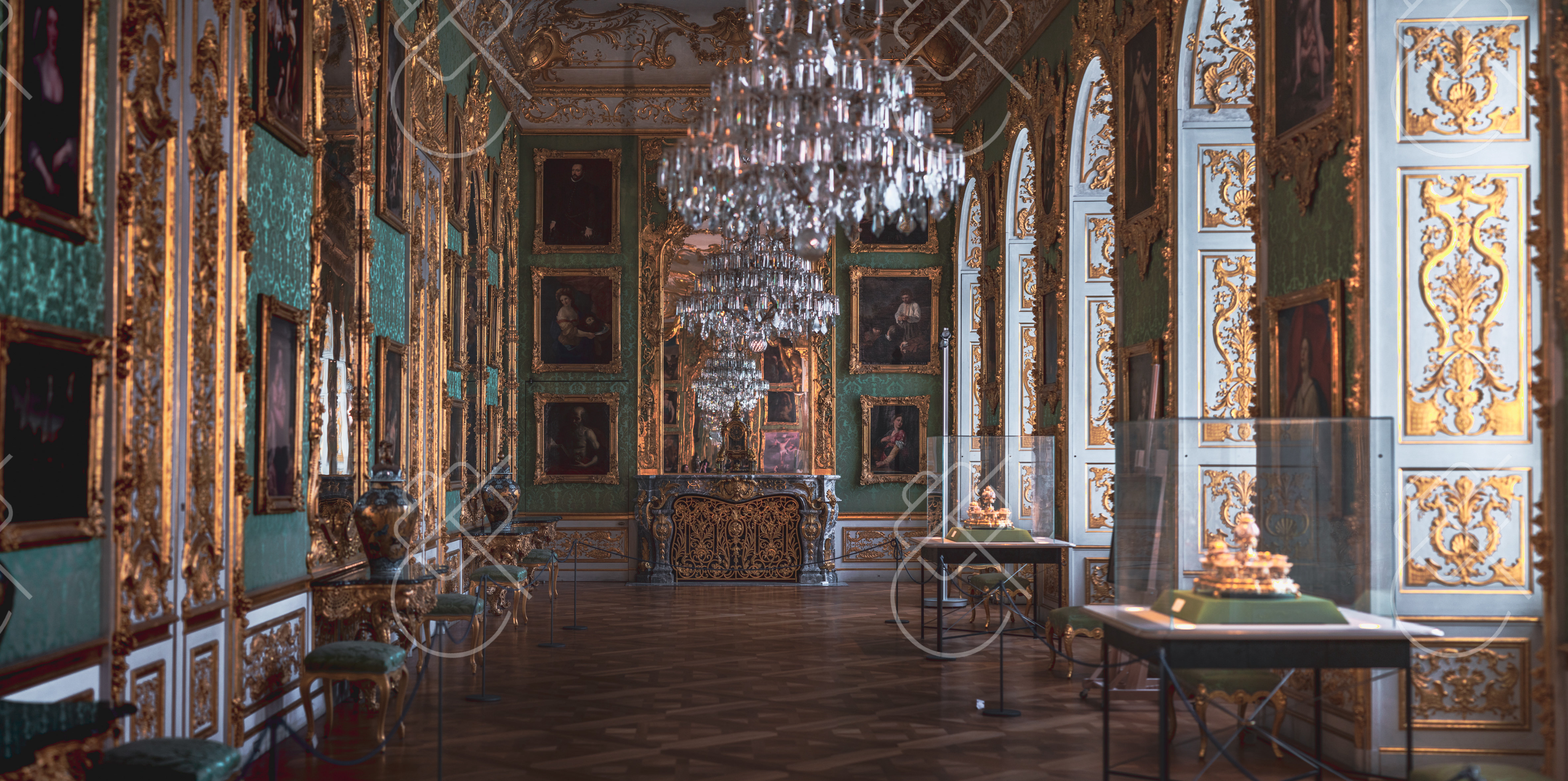
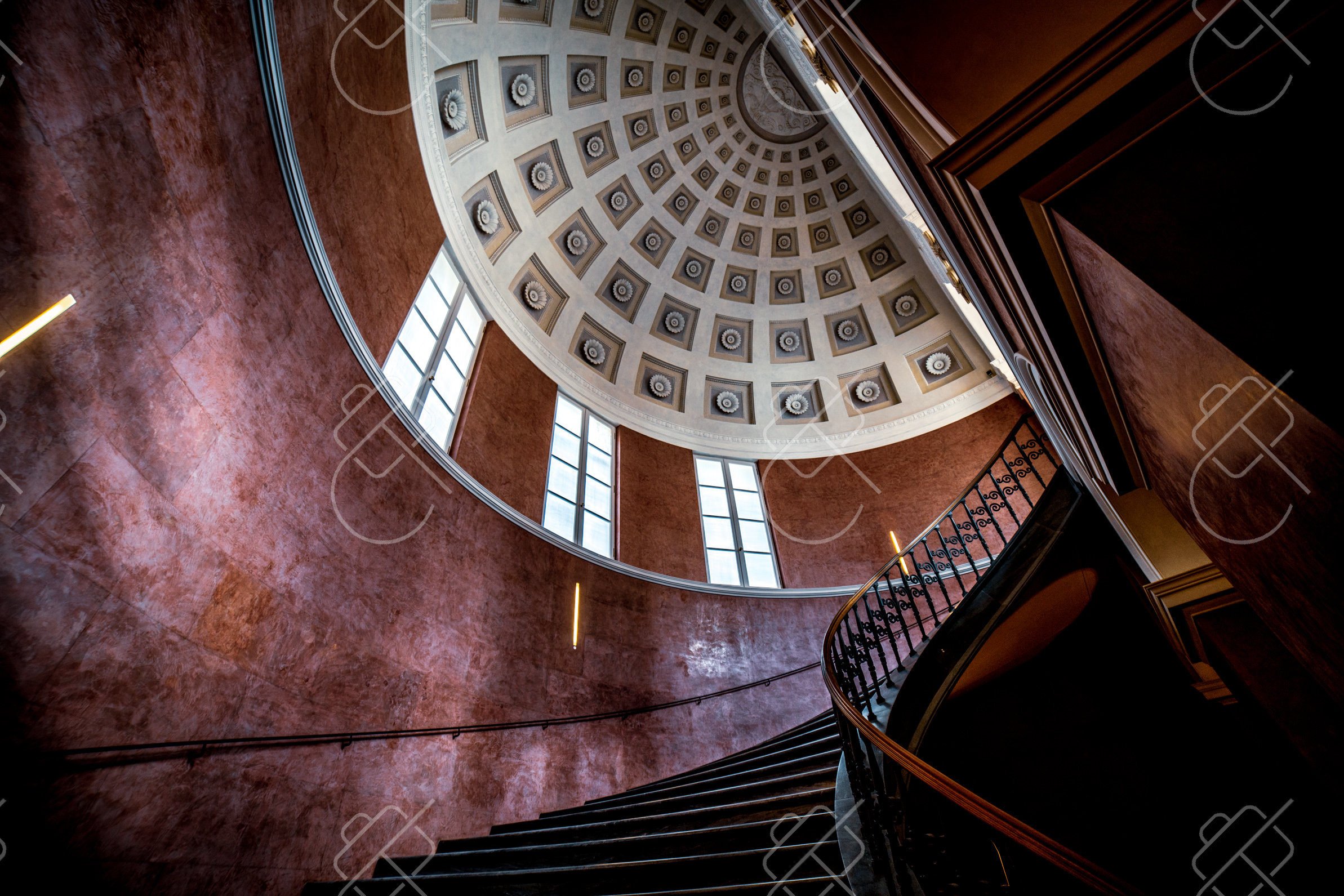
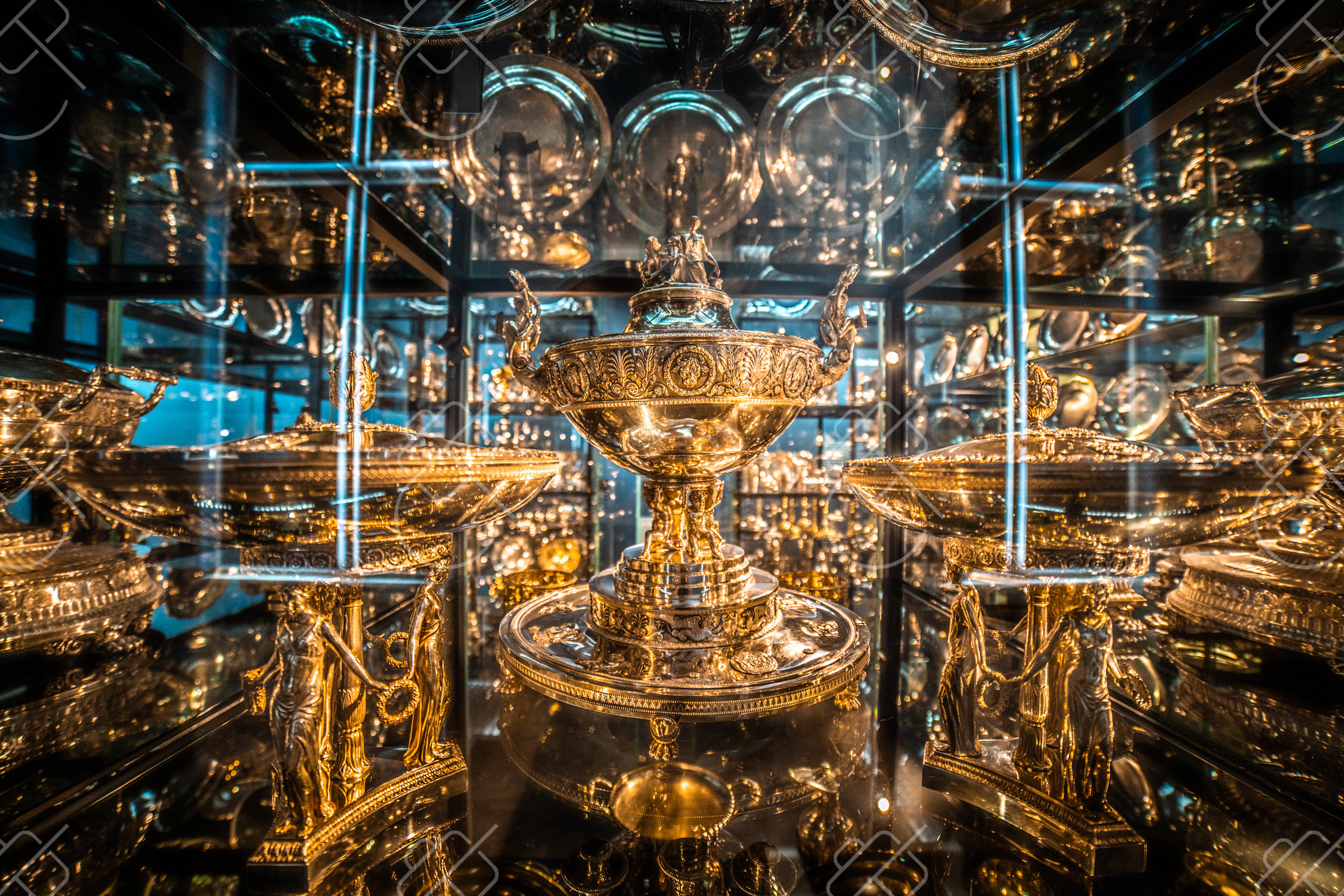
A few streets north of Marienplatz, the Residenz was the seat of Bavaria's Wittelsbach rulers for over 400 years, and it's less a single palace than a compound of them, expanded room by room across centuries. The Antiquarium is the showpiece: a barrel-vaulted Renaissance hall over 60 meters long, its ceiling covered in grotesque frescoes and lined with busts of Roman emperors. From there the museum route runs through the gilded, chandelier-lit Ahnengalerie portrait gallery, a grand staircase that spirals up beneath a coffered stone dome, and the Schatzkammer treasury, where jeweled crowns and gold reliquaries sit case after case. It's an easy half-day, and worth pairing with an evening in the Hofbraeuhaus a few blocks away or one of the beer gardens in the nearby English Garden.
Late May through September, when beer garden season is in full swing and outdoor seating stays open into the evening.
Base yourself in the Altstadt-Lehel district just north or east of Marienplatz, within walking distance of the Residenz, the Frauenkirche, and the beer halls.
Weisswurst, the white veal sausage traditionally eaten before noon with sweet mustard and a pretzel, and Schweinshaxe (roast pork knuckle) with a liter of Helles at a beer hall or beer garden.
Climb Alter Peter (St. Peter's Church), not the Frauenkirche, for the classic rooftop view straight across Marienplatz to the Neues Rathaus and the Frauenkirche's domes.
Get the best deals on flights and hotels to Munich on Expedia.
We had World Nomads as our travel insurance, covering us for the entire Munich, Germany leg of the trip — one less thing to worry about.
Transit cards, local customs, visa rules, and practical travel guides for this region.
See every destination from the 526-day journey:
Browse all destinationsCurious about the gear behind these photos? See the gear list.