
Home
About us
Destinations
Travel Guides
Recipes
Featured
Photos As Art
Abstract Prints
Locations
Travel Gear
Travel Resources
Favorites
Photo Framer
Explore Photos
ContactA bend in the River Avon cradles Bath, its honey-colored limestone streets built almost entirely during the Georgian boom of the 18th century atop a Roman spa town. The Royal Crescent, Pulteney Bridge, and the steaming Roman Baths themselves are close enough to cover on foot in a long weekend. It's one of the few English cities where the entire center is a UNESCO World Heritage Site.
Published February 3, 2025
Tap any photo to open it full-screen and order a print.
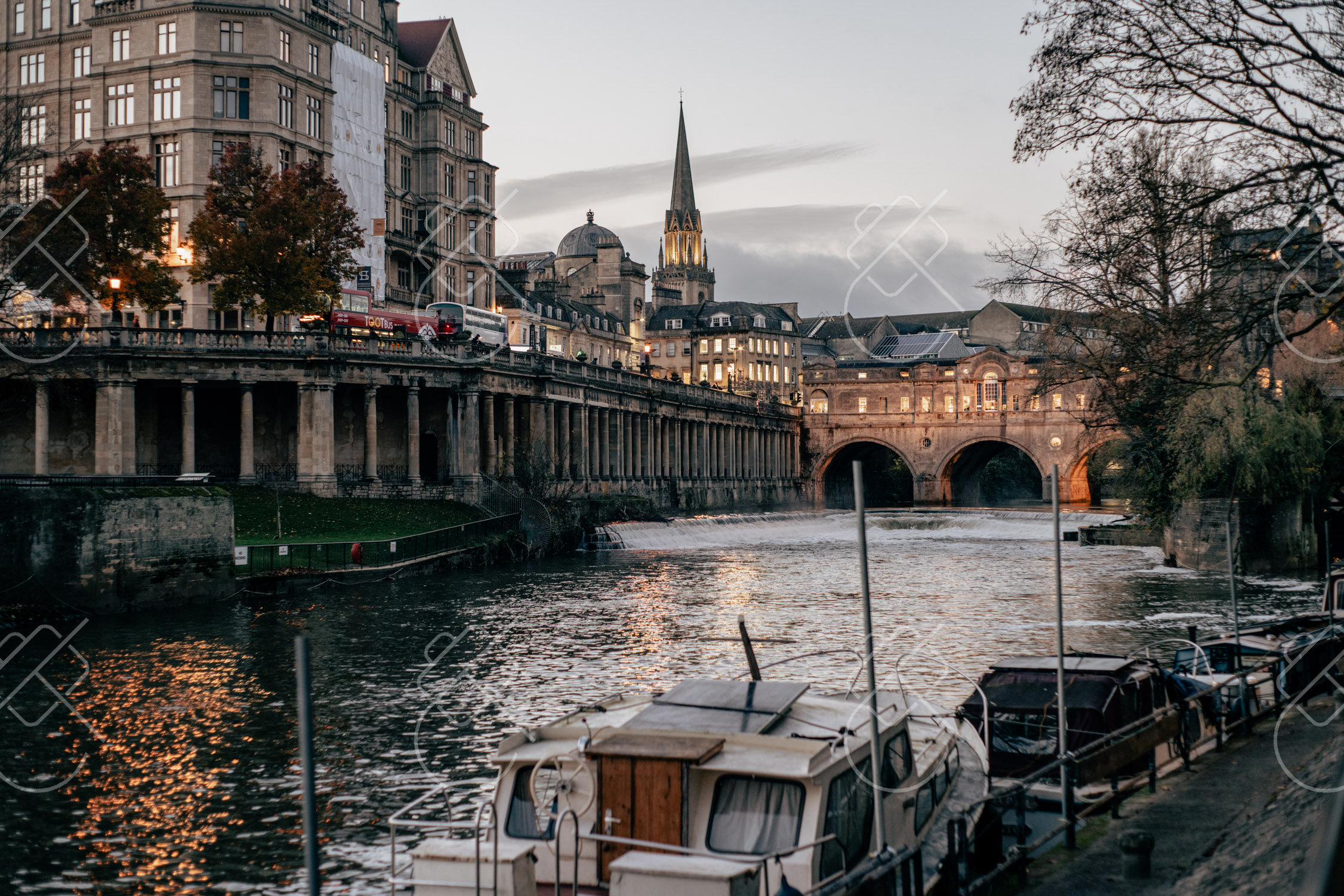
Bath is England's only entire UNESCO World Heritage city, built from pale gold limestone over a genuine Roman bathing complex still fed by natural hot springs. Georgian architecture — crescents, terraces, and Pulteney Bridge — frames a compact, walkable center on a horseshoe bend of the River Avon.
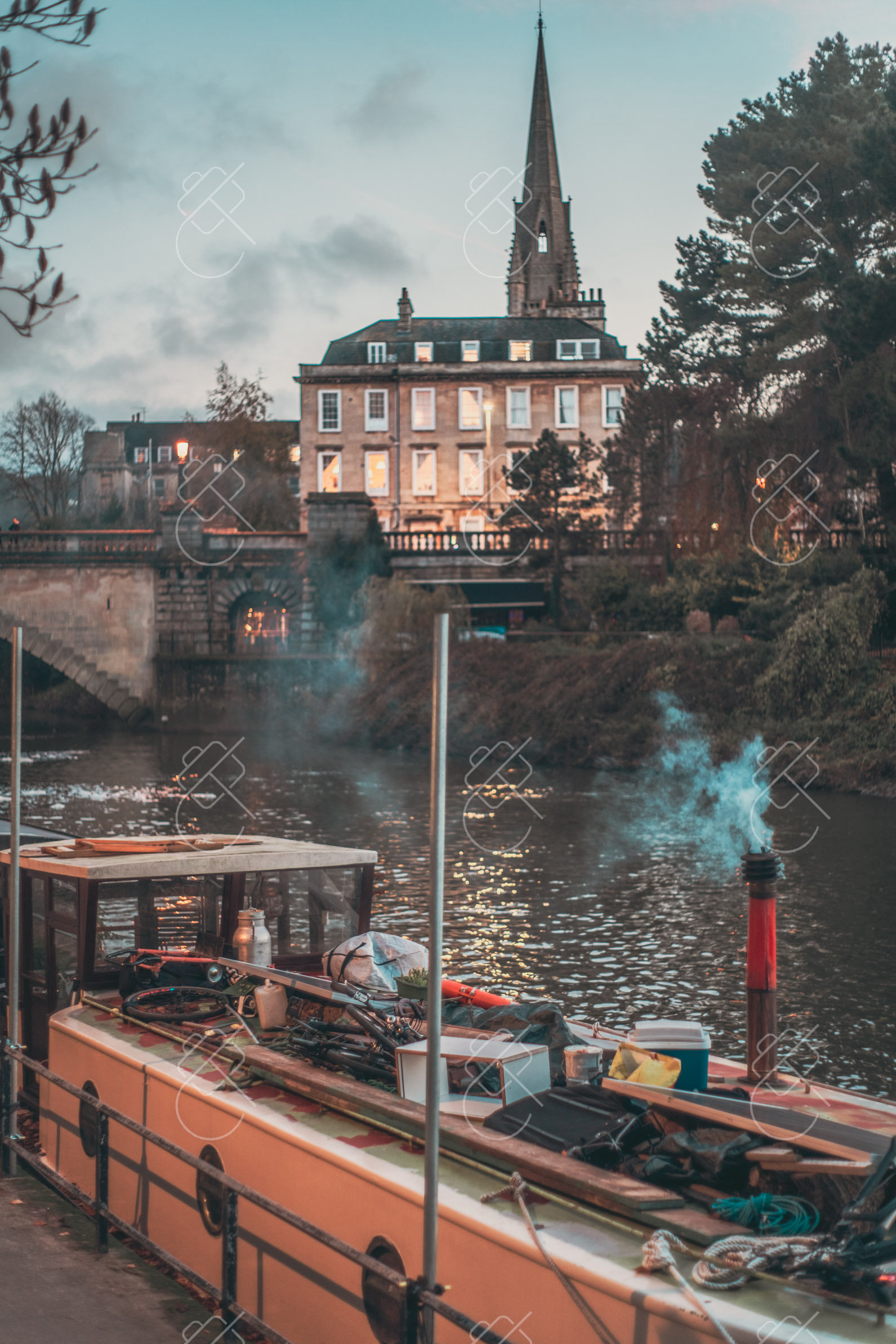
The Romans built a temple and bathing complex here around the hot springs in AD 60, and much of it survives underground in remarkable condition, including the lead-lined Great Bath and its original Roman paving. What visitors see above ground today is almost entirely Georgian: after the springs came back into fashion in the 18th century, architects John Wood the Elder and Younger rebuilt the city in a single uniform style, using pale gold Bath stone quarried from the hills outside town. The result is the Royal Crescent, a sweeping row of thirty terraced houses behind one curved façade of Ionic columns, and Pulteney Bridge, one of only a handful of bridges in the world lined with shops on both sides, a stepped weir spilling beneath it into the River Avon. Walk the river path at dusk and you'll pass narrowboats moored along the bank, chimney smoke drifting past lit Georgian windows.
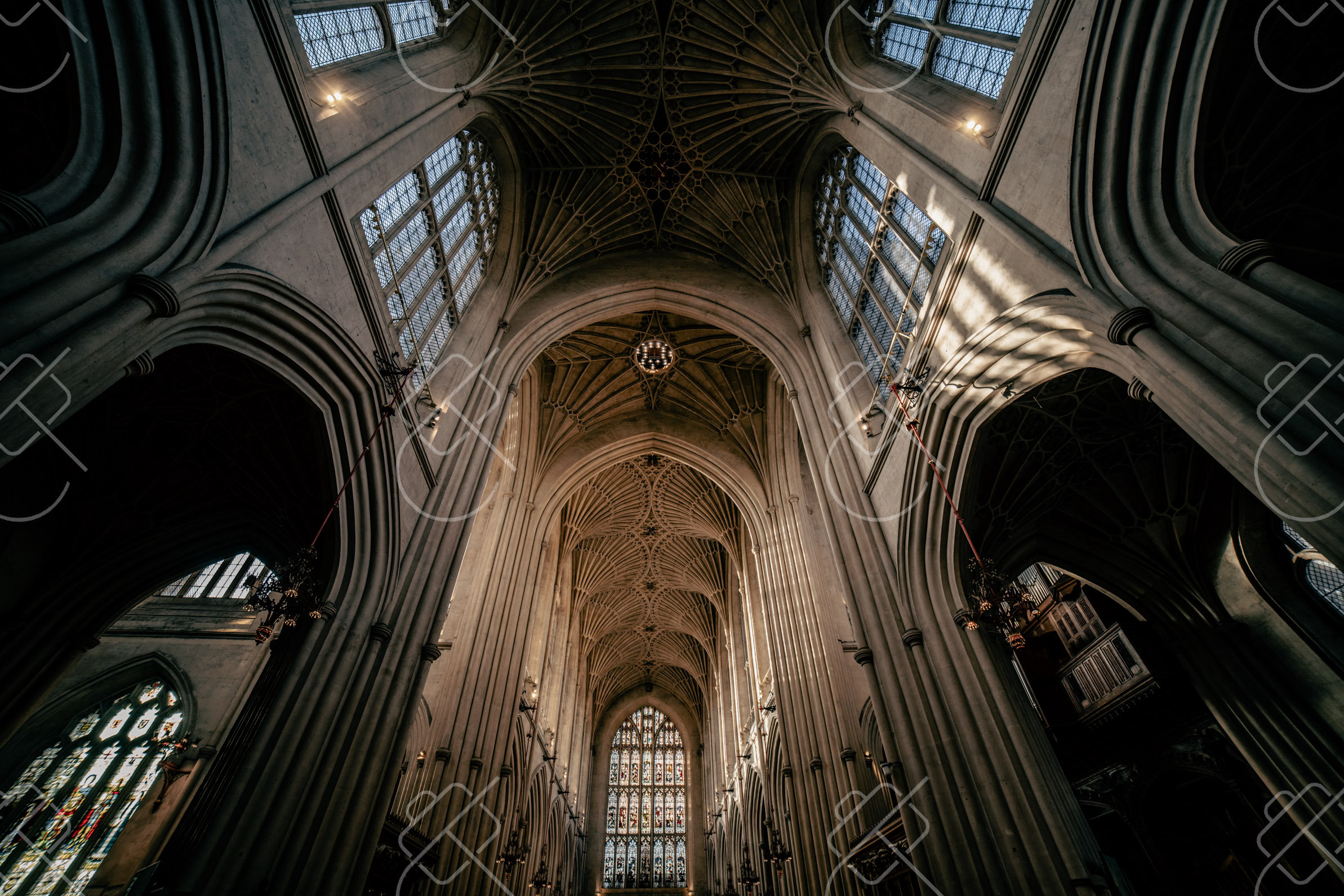
Fan-vaulted ceiling of Bath Abbey, one of England's finest Gothic interiors
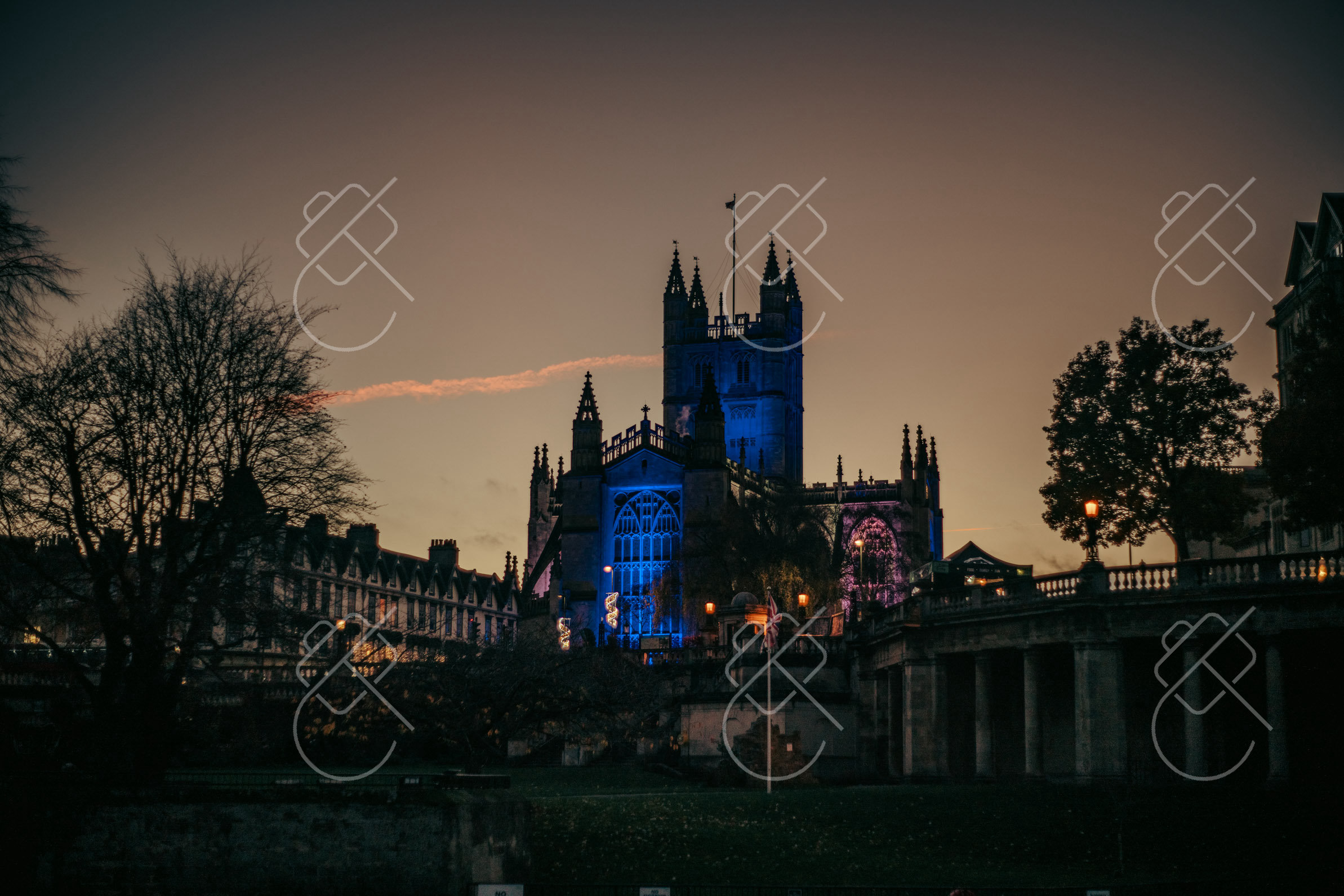
Bath Abbey anchors the city center, a soaring fan-vaulted parish church rebuilt in the late 15th century on the site of a Norman cathedral and a Saxon monastery before that; its ceiling is one of the finest examples of fan vaulting in England, and the floodlit west front glows over the Abbey Churchyard after dark, especially around Christmas when a market fills the square. Jane Austen lived in Bath in the early 1800s and set both Northanger Abbey and Persuasion here, and the city still trades on that literary pedigree — secondhand bookshops packed floor to ceiling with leather-bound volumes are tucked along Broad Street and the lanes below the Abbey, the kind of place to lose an hour without meaning to. Between the Abbey, the Baths, and the Georgian terraces, the whole center is walkable in a single day, though Bath rewards a slower pace with an extra afternoon to spare.
Late September through November for mild weather, fewer crowds than summer, and autumn color along the Crescent's lawns and the river.
Base yourself around Great Pulteney Street or the lanes near the Abbey, close enough to walk to the Baths, the Crescent, and the river in any direction.
Sally Lunn's serves a version of the Bath bun that's been made in the same house since the 1680s, and the Pump Room next to the Baths does a proper afternoon tea beneath chandeliers, with a live pianist most days.
Skip the daytime crowds at the Roman Baths and instead walk the river path from Pulteney Bridge to Bathwick at dusk, when the narrowboats and Georgian terraces light up and the tour groups have gone.
Throughout Bath, England, NordVPN kept our data private on the patchy WiFi you find on the move.
Get the best deals on your Bath stay with Booking.com.
Transit cards, local customs, visa rules, and practical travel guides for this region.
See every destination from the 526-day journey:
Browse all destinationsCurious about the gear behind these photos? See the gear list.