
Home
About us
Destinations
Travel Guides
Recipes
Featured
Photos As Art
Abstract Prints
Locations
Travel Gear
Travel Resources
Favorites
Photo Framer
Explore Photos
ContactNot every stop on a road trip needs to be a sprawling destination. Cangas de Onís is a small town in Spain's Asturian foothills, built around one striking scene — its ivy-covered Roman bridge over impossibly clear water — worth a stop on the way toward the Picos de Europa.
Published March 27, 2026 · Last updated
Tap any photo to open it full-screen and order a print.
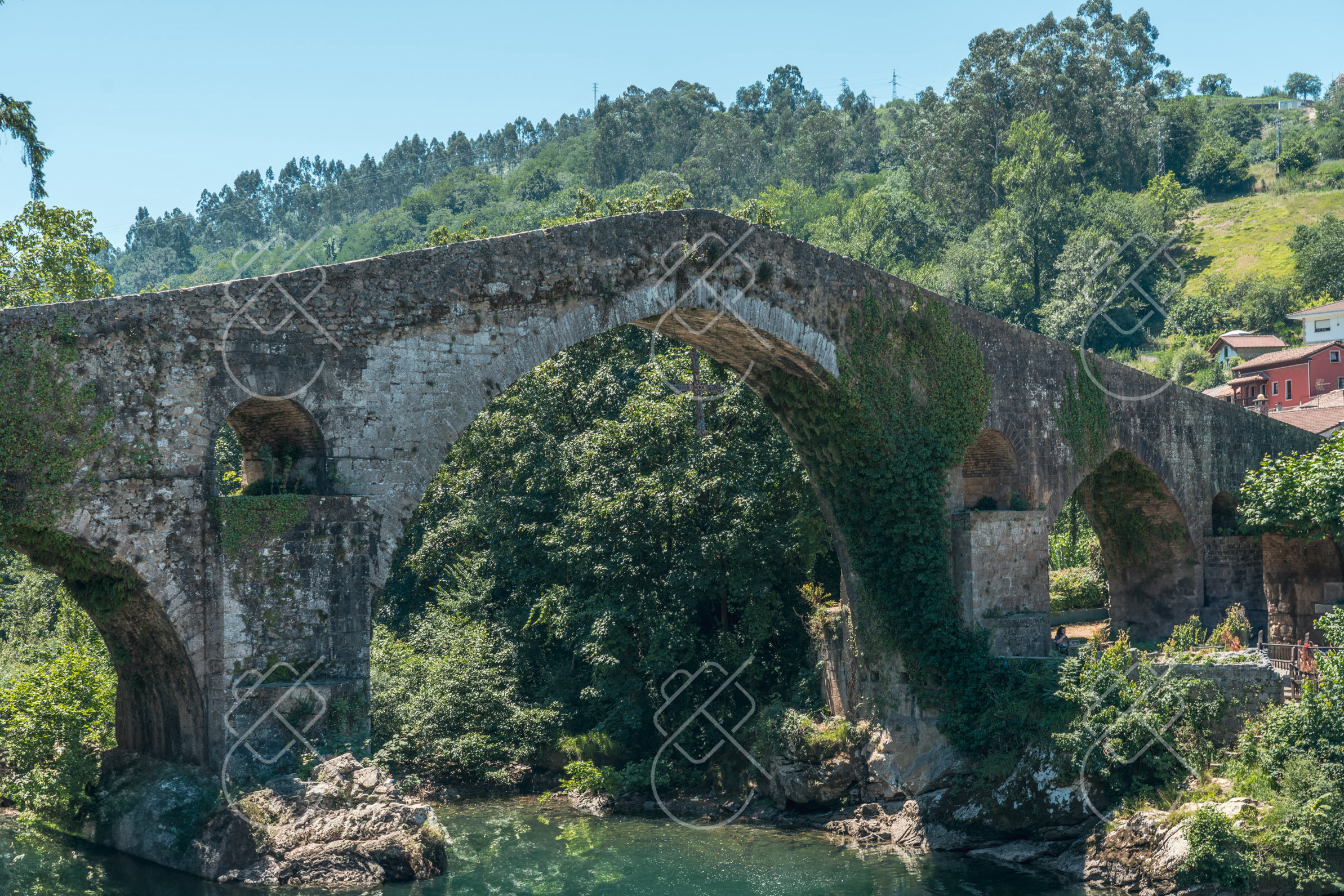
A quiet riverside town in the Asturian foothills, built around its famous ivy-clad Roman stone arch bridge over a clear green river.
Cangas de Onís is known throughout Spain for one striking scene: a stone arch bridge, its stonework softened by centuries of ivy, spanning a river running clear green-blue over a bed of smooth, rounded stones. Locals have long called it the Puente Romano, though the bridge standing today is now dated by historians to the medieval period, likely built over an earlier Roman-era river crossing on the same site. A replica of the Cross of Victory hangs suspended from the bridge's central arch — the original, a Christian relic tied to the 722 Battle of Covadonga fought a few kilometers away, is kept in Oviedo Cathedral. A hillside settlement is visible in the distance, and dense trees and rocky terrain crowd the banks on both sides.
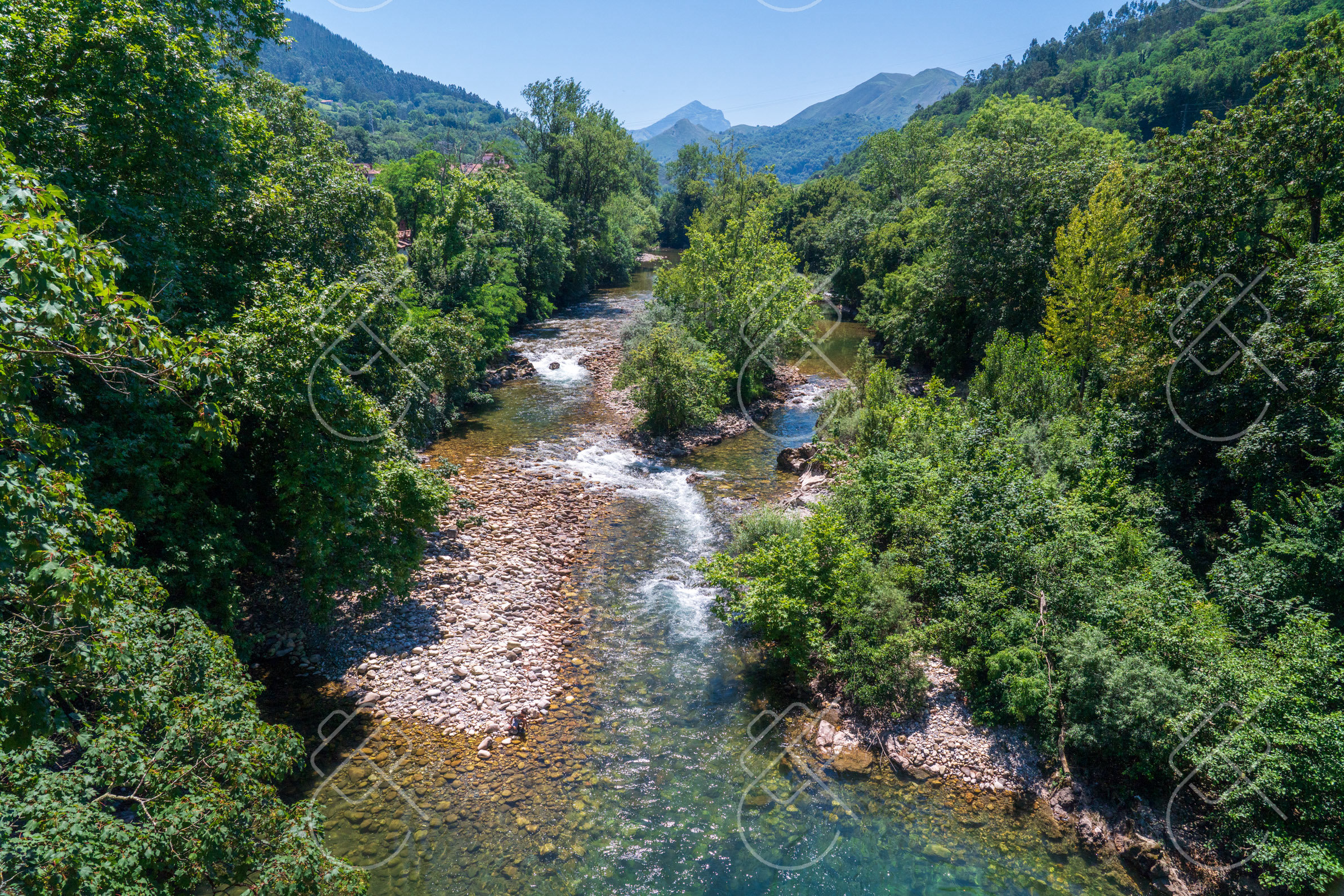
The Sella river winding through the Picos de Europa foothills
Cangas de Onís briefly served as the first capital of the Kingdom of Asturias, founded in the years after Pelayo's 722 victory at Covadonga — widely regarded as the opening battle of the centuries-long Reconquista. That history is easy to miss in a town this small; the bridge, the river, and a scattering of old stone buildings nearby are the main draw today, along with a Sunday market that still fills the streets near the river. It's the kind of place worth a stop for the light on the water and the texture of the old stonework, on the way between the coast and the mountains.
Midday in late spring through summer, when the sun is high enough to light the riverbed and turn the water a vivid blue-green.
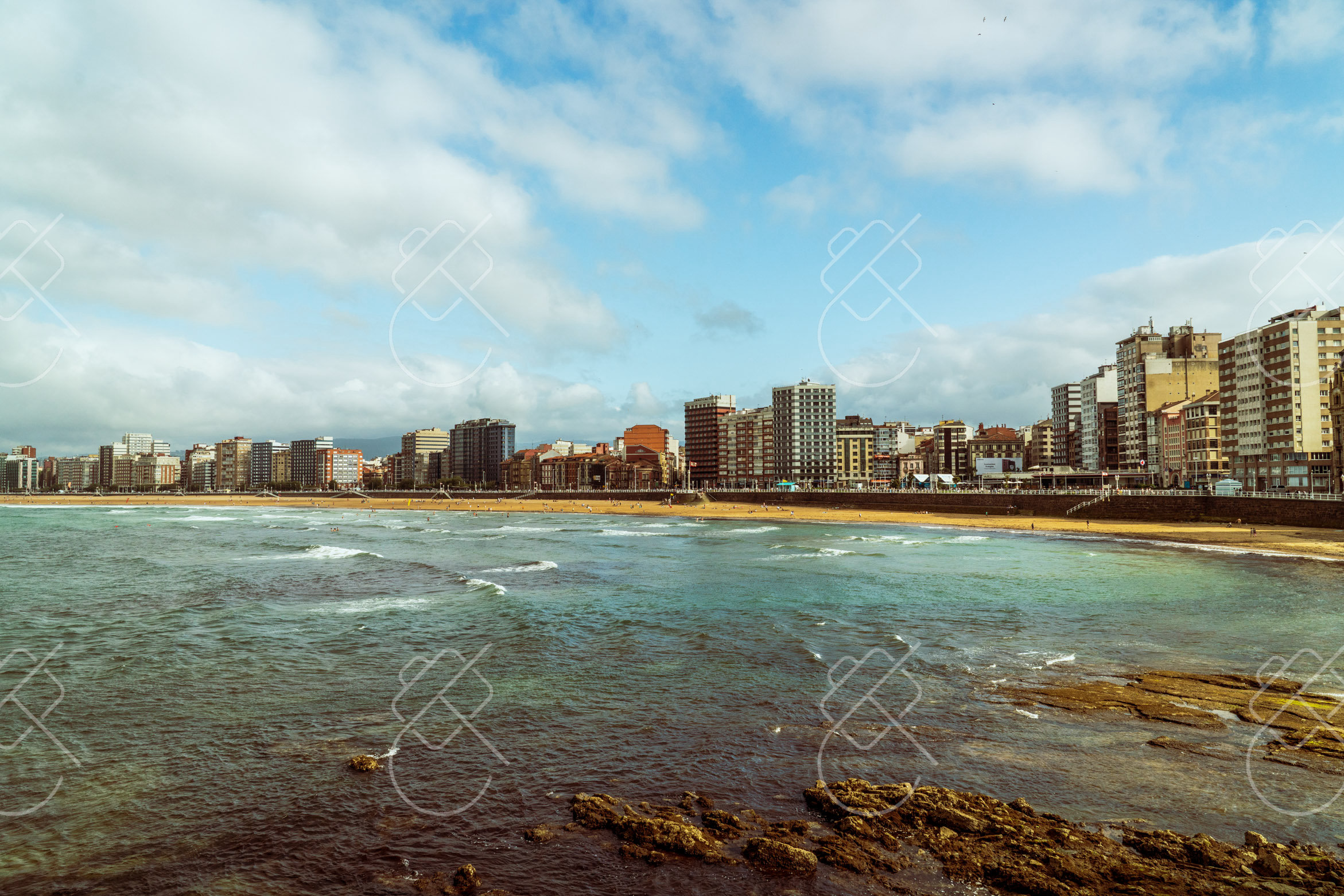
A good overnight base for the Picos de Europa — otherwise pair it with a night in Gijón and push on toward the mountains.
Try fabada asturiana, a hearty bean-and-chorizo stew, with a pour of local sidra poured from a bottle held high overhead to aerate it — the traditional escanciado technique used at any sidrería in town.
Shoot the bridge from river level to get the ivy-covered arches reflected in the still water, rather than from the road above.
Get the best deals on a place to stay in Cangas de Onís on Booking.com.
Transit cards, local customs, visa rules, and practical travel guides for this region.
See every destination from the 526-day journey:
Browse all destinationsCurious about the gear behind these photos? See the gear list.